If you really want to stop a burglar, you have to learn to think like one. It's not about being paranoid; it's about being smart. You need to spot the easy targets, the convenient hiding spots, and the predictable patterns they look for before they do. A solid defense always starts with understanding the offense.
Thinking Like an Intruder to Find Your Weak Spots
The first move in securing your home isn't running out to buy new locks or a fancy camera system. It’s simpler than that: you need to change your perspective. Take a walk around your property, both inside and out, and try to see it through the eyes of someone looking for the path of least resistance.
Most burglars are opportunists, not the master thieves you see in heist movies. They're looking for an easy score with the lowest possible risk of getting caught. They scan for homes that look empty, have obvious security flaws, or offer plenty of cover to work without being seen.
The Mindset of an Opportunist
An intruder's main goal is to get in and out as quickly and quietly as possible. They aren't looking for a challenge. This means they’re actively looking for common slip-ups that signal an easy target.
Here are a few things that practically roll out the welcome mat for them:
- Overgrown Landscaping: Those tall, dense bushes right up against your house? They’re a burglar’s best friend. They offer perfect cover from nosy neighbors and passing cars, giving an intruder all the time in the world to work on a window or door.
- Predictable Routines: If you leave for work at 8:05 AM and get home at 5:15 PM every single day, you’re creating a reliable window of opportunity. An observant criminal can learn your schedule in just a couple of days.
- Signs of an Empty Home: Mail piling up, trash cans overflowing, a completely dark house night after night—these are all dead giveaways that no one's home. It’s these little details that make your house a prime target, especially when you're on vacation.
A lot of people think burglaries only happen in the dead of night. The truth is, most residential break-ins happen during broad daylight when homes are most likely to be empty.
This isn't just a hunch; the stats back it up. A home burglary happens roughly every 25.7 seconds in the United States. FBI data consistently shows the most common hours for a break-in are between 10 am and 3 pm—right when most of us are at work or school. Summer months like July and August see a spike, while February tends to be the quietest. You can dig into more of these home burglary statistics on ADT.com.
What Burglars Are Actually Looking For
Forget what you've seen in movies. Most burglars aren't trying to haul away your 70-inch TV or antique furniture. They’re after small, high-value items they can grab quickly, carry easily, and turn into cash fast.
Their typical shopping list looks something like this:
- Cash and credit cards
- Jewelry and watches
- Prescription medications
- Laptops, tablets, and smartphones
- Firearms and personal documents (like passports)
Knowing this helps you figure out what to secure inside your home. A high-quality safe that’s bolted to the floor is a much smarter investment for these items than stashing them in a sock drawer—which, by the way, is one of the first places a burglar will check.
By pinpointing these weak spots and understanding what an intruder is really after, you can start building layers of defense that make your property a much harder, and far less appealing, target.
Fortifying Doors and Windows From The Ground Up
It's easy to get caught up in high-tech alarms and digital security, but the truth is, most break-ins are a lot more low-tech. It often comes down to brute force and basic physics. An intruder's first test will almost always be your doors and windows, so making them as tough as possible is the single most important thing you can do to protect your home.
The goal is simple: create physical barriers that are just too much trouble. Make it too loud, too difficult, or too time-consuming for a would-be burglar to bother.
Thinking like a burglar is the key to stopping one. They’re looking for the easiest path with the biggest reward, and your job is to make the "method" part of their plan fall apart.
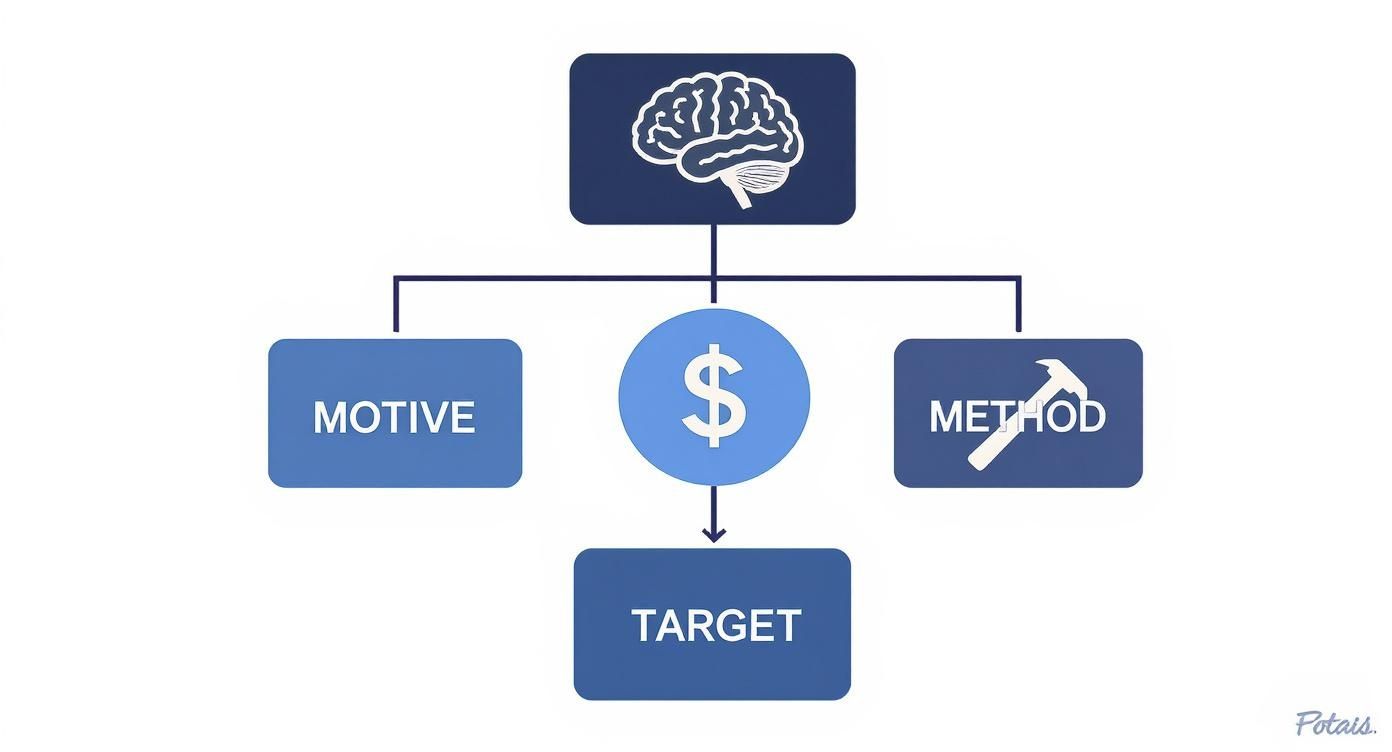
When you make your home a difficult target, you disrupt their plan at its core. They'll likely just move on to an easier house down the street.
Reinforcing Your Main Entry Points
Most people think a locked door is a secure door. From my experience, that's rarely the case. The type of door, the lock, and the frame it's attached to make all the difference.
Consider this: an astonishing 34% of burglars just walk right through the front door. Another 22% use the back door, and 23% come through a first-floor window. Add it all up, and a staggering 81% of break-ins happen at ground level.
Here’s a quick rundown of common entry points burglars love to exploit, and how you can shut them down.
Entry Point Vulnerability and Solutions
| Entry Point | Common Weakness | Recommended Upgrade | Difficulty |
|---|---|---|---|
| Front Door | Hollow core, weak jamb, standard lock | Solid-core door, reinforced strike plate, Grade 1 deadbolt | Medium |
| Back Door | Often out of sight, weaker than front door | Solid-core door, deadbolt, security camera | Medium |
| Sliding Glass Door | Flimsy factory latch | Security bar, shatterproof film, pin lock | Easy |
| First-Floor Windows | Weak latches, hidden from view | Secondary locks, security film, reinforced frames | Easy to Medium |
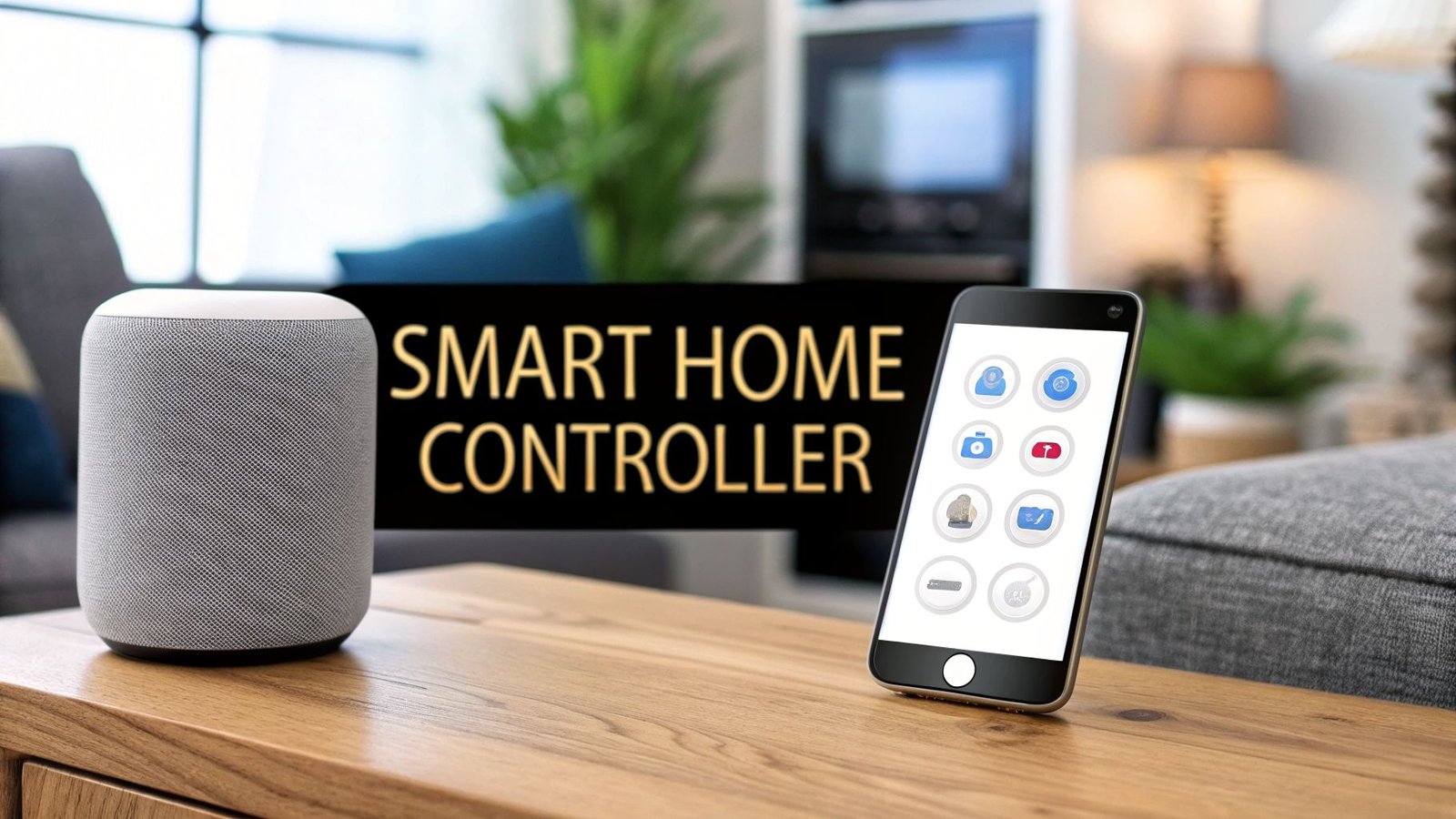
| Garage Door | Thin panels, old opener mechanism | Modern opener, brace kit, smart controller | Medium |
Making these upgrades is the foundation of a truly secure home. You're turning what burglars see as easy opportunities into frustrating dead ends.
Securing Doors, Windows, and Sliding Doors
To truly secure your doors, you need to think about the entire system—door, lock, and frame.
- Go for a Solid-Core Door: If you can knock on your exterior door and it sounds hollow, it's a major vulnerability. A swift kick can break it open. Swap it out for a solid-wood, fiberglass, or metal door.
- Install a Grade 1 Deadbolt: Not all deadbolts are created equal. Look for an ANSI Grade 1 rating. This is the highest residential security standard, meaning it's built to resist picking, drilling, and brute force.
- Beef Up the Door Frame: Here’s a pro tip: the door frame is often the weakest link. The flimsy strike plate that comes with most locks is installed with short screws. Replace it with a heavy-duty strike plate secured by 3-inch screws that bite deep into the wall stud behind the jamb. This one small, cheap upgrade can stop a door from being kicked in.
Even if you're renting, you have options. Swapping out a lock is often permitted, and many smart locks are designed for easy installation and removal. You can find some great options in our guide on the best smart locks for apartments at https://automatedhomeguide.com/best-smart-locks-for-apartments/.
Sliding glass doors are another favorite target because their factory-installed latches are notoriously weak. The simplest fix? A security bar in the track. It physically stops the door from opening, no matter what. For an extra layer of defense, apply a security film to the glass. If an intruder tries to smash it, the film holds the shards together, making entry a loud and prolonged ordeal.
Don't Overlook The Garage Door
I see this all the time: a home with a reinforced front door and locked windows, but a garage door that's an open invitation.
An attached garage is one of the most common security blind spots. It gives a burglar a hidden, private space to work on breaking through the interior door that leads directly into your home.
Make sure your garage door opener uses rolling-code technology, which prevents thieves from capturing the signal. If your door is old and flimsy, it might be time for an upgrade. You can learn about the best overhead door solutions for your home to find one that's both secure and fits your style.
And always, always treat the door from the garage into your house like any other exterior door. It needs a Grade 1 deadbolt, and it needs to stay locked. By taking care of these physical weak points first, you build a strong foundation for your entire home security plan.
Using Smart Tech for 24/7 Peace of Mind
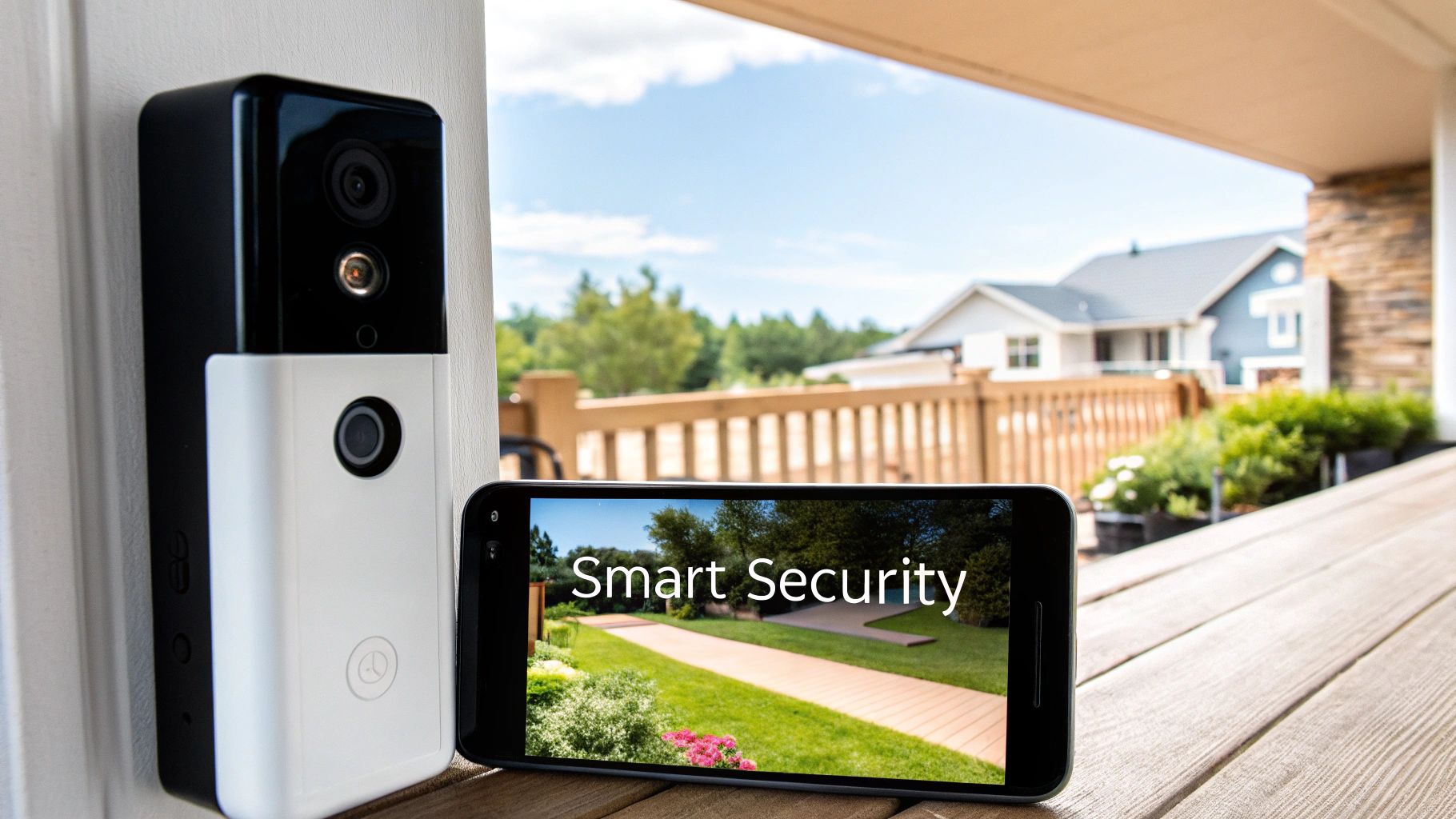
Physical barriers are your first line of defense, but let's be honest—in today's world, they're not always enough. Smart technology adds a powerful, responsive layer of security that’s always on guard. When you build an ecosystem of connected devices, you transform your home from a passive structure into an active guardian, giving you real control and visibility from anywhere.
Think of it as a digital tripwire around your property. An integrated system of cameras, sensors, and locks works together. When one component detects a problem, the others can react in an instant—lights flash on, an alarm might sound, and you get an alert sent straight to your phone.
Building Your Digital Fortress with Camera Systems
Security cameras used to be reserved for businesses, but now they are the essential eyes of any smart home. The statistics don't lie: homes without a visible security system are a staggering 300% more likely to be burglarized. A camera isn't just for recording—it's a powerful deterrent.
The trick is putting the right cameras in the right spots.
- Video Doorbells: This is non-negotiable for the front door, the most common entry point for everyone. You can see and speak with anyone who approaches, whether you're on the couch or on vacation. They’re also a fantastic tool for stopping package theft in its tracks.
- Floodlight Cameras: These are perfect for lighting up dark zones like the backyard, driveway, or side of the house. The motion-activated floodlight is often enough to send a prowler running, and the camera captures clear footage of what set it off.
- Discreet Outdoor Cameras: Place these under eaves or overhangs to watch over other access points, like a back patio door or vulnerable ground-floor windows. Just seeing them can convince a would-be burglar to find an easier target.
Placement is everything. You need to make sure your cameras cover the main entryways with a clear, unobstructed view. If you’re digging into specific brands, a detailed Homeboy Security Camera review can give you an idea of the features to look for.
Smart Locks and Sensors: Your Instant Alert System
While cameras give you eyes on the property, smart locks and sensors are your home's digital nervous system. They’re the first to feel when something isn't right and let you know immediately.
Smart locks are about so much more than just ditching your keys. You can set them to lock automatically, grant temporary access codes to a dog walker or contractor (no more spare keys floating around!), and see a detailed log of who came and went, and when.
A smart lock paired with a video doorbell is a game-changer for managing your front door. You can see who’s there on your phone, have a quick chat, and then unlock the door for them remotely. It’s security and convenience rolled into one.
Door and window sensors are simple, cheap, and incredibly effective. These little two-piece devices send an alert the moment a connection is broken—meaning a door or window has been opened. Stick them on every ground-floor access point, and you'll know instantly about any unauthorized entry.
Professional vs. DIY Alarms: Who Responds to the Alert?
So you have your cameras and sensors in place. Now what happens when one gets triggered? This is where you need to decide between a self-monitored (DIY) system and one that's professionally monitored.
There's no single right answer here; it all comes down to your budget, lifestyle, and how much responsibility you want.
Here’s a quick look at how they stack up:
| Feature | Self-Monitored (DIY) | Professionally Monitored |
|---|---|---|
| Alerts | Sends notifications directly to your phone. | Alerts a 24/7 monitoring center. |
| Response | You are responsible for calling the police or fire dept. | Trained pros contact emergency services on your behalf. |
| Cost | Lower upfront cost, usually no monthly fees. | Higher initial cost, plus a monthly subscription fee. |
| Best For | Budget-conscious homeowners, renters, and the tech-savvy. | Families, frequent travelers, or anyone wanting total peace of mind. |
A DIY system puts you in the driver's seat. You get the alert, you assess the situation (maybe by checking your camera feed), and you decide whether to call 911. It's a fantastic and affordable way to get your feet wet with home security.
On the other hand, a professionally monitored system takes that burden off your shoulders. If an alarm goes off, a dedicated team verifies the emergency and dispatches the authorities for you. This is invaluable if you're on a plane, in a meeting, or simply can't get to your phone. If you're ready to explore complete setups, our guide on the top smart home security systems is a great place to start comparing your options.
Ultimately, smart technology gives you a proactive defense. It empowers you to keep an eye on things, scare off intruders before they even try anything, and respond to threats with confidence, no matter where you happen to be.
Turn Your Yard Into a Natural Deterrent
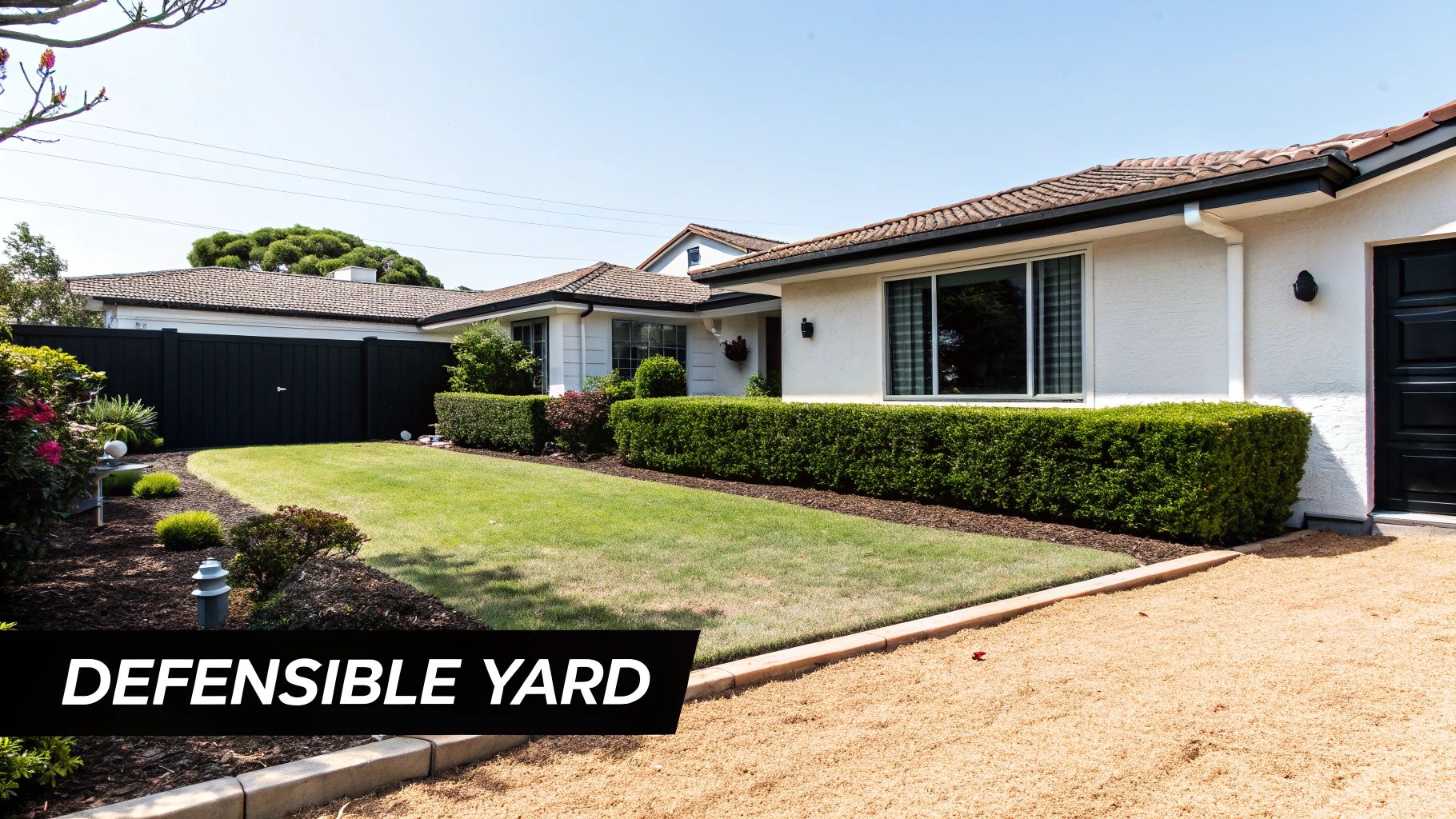
Your home's security doesn't start at the front door—it begins at the property line. Think about it: your yard can either be a shadowy playground for intruders to work unseen, or it can be a well-lit, open space that puts them on display. A few smart landscaping choices can turn your yard from a security liability into a powerful first line of defense.
This whole idea is a cornerstone of a strategy called Crime Prevention Through Environmental Design (CPTED). The goal is simple: use your physical environment to make crime much harder and riskier. You're creating a "defensible space"—a property that looks occupied, cared for, and, most importantly, visible to everyone.
Cultivate Clear Sightlines
Burglars love the dark and hidden spots. Overgrown shrubs right under your windows or dense trees near the foundation are perfect cover. From there, they have all the time in the world to pry open a window, totally hidden from neighbors or passing cars.
Your first job is to take away that cover. You need to create clean, unobstructed views from the street to your home and from your windows out to your property's edge.
- Shrubs and Bushes: Keep everything planted near the house trimmed below the window sills. A good rule of thumb is no higher than three feet.
- Tree Canopies: Prune the lower branches of your trees up to about six or seven feet off the ground. This technique, called "limbing up," stops people from using them as a screen to sneak up to your house.
This isn't just about security; it makes your home look great, too. A tidy yard sends a clear signal that someone is home and paying attention, which is a surprisingly effective deterrent.
A well-lit, open yard is a burglar's worst enemy. It robs them of the element of surprise and cranks up their chances of being seen. Treat your landscaping like an extension of your security system, where every open space is an invisible sensor.
Plant Defensively with Hostile Vegetation
While you're clearing out potential hiding spots, you can also add plants that create an uncomfortable barrier. I'm talking about "hostile vegetation"—plants with thorns, spines, or prickly leaves that nobody wants to crawl through.
Planting these strategically under windows or along a fence line makes those access points a whole lot less appealing.
Some great, low-maintenance options include:
- Barberry: A tough shrub with surprisingly sharp thorns and dense branches.
- Holly: Its classic spiny leaves create a formidable, year-round barrier.
- Hawthorn: This can be a large shrub or a small tree, but either way, it comes with impressive thorns.
Tucking a row of these under your ground-floor windows creates a painful obstacle course. Just be sure to place them where they won't snag you or block an emergency exit.
Light Up Your Property
A dark house is a magnet for trouble. Good lighting is one of the most effective and affordable ways to secure your home's exterior. You don't need to turn your home into an airport runway; the goal is just to eliminate dark corners and shadowy entry points.
A layered lighting strategy is the way to go:
- Entryway Lights: Keep the lights on at your front, back, and garage doors from dusk till dawn. It looks welcoming to you and your guests but acts as a clear warning to others.
- Motion-Activated Floodlights: Put these over the driveway, in the backyard, and along the sides of your house. The sudden blast of light is startling and usually enough to send someone running.
- Low-Level Pathway Lighting: Use subtle, low-voltage lights to illuminate walkways. This adds a touch of class while ensuring there are no completely dark zones on your property.
For an even bigger impact, combine your lighting with cameras. Many of the best WiFi security cameras for outdoor use now come with built-in floodlights. This setup is a one-two punch: the light exposes an intruder, and the camera captures their every move.
Building Habits and Community for Lasting Security
All the high-tech gadgets and reinforced doors in the world won't do much good if you don't use them consistently. The best security system is only as strong as the habits you build around it.
This is where everything comes together. Technology is just a tool; it's the daily, almost unconscious, actions that truly fortify your home. This is about making security second nature and tapping into your most powerful asset: a watchful community.
The Power of Routine
Real security isn't just hardware; it's a routine. It’s the small, repetitive things you do every day that make your home a hard target. Forgetting to lock a back door or arm the alarm just once is exactly the kind of slip-up a burglar is looking for.
Developing a simple "departure routine" is one of the most effective habits you can form. It doesn't need to be complicated—just a quick mental scan that takes less than a minute before you head out.
- Lock All Doors: Is the deadbolt thrown on the front door, back door, and the door leading to the garage?
- Check Windows: Are all ground-floor windows fully closed and latched?
- Arm the System: Make arming your alarm the very last thing you do. Every single time.
When you're leaving for a longer trip, your routine needs to expand a bit. The goal here is to make it look like someone is still home. Stop your mail and newspaper deliveries, ask a neighbor to wheel your trash cans to the curb on trash day, and use smart plugs to have your lights turn on and off at random intervals.
Your Digital Footprint Matters
Burglars don't just stake out houses in person anymore; they scout on social media. That amazing photo you just posted from the beach is a public announcement that your home is vacant for the next week.
Hold off on sharing your vacation pictures until you’re back home. Make sure your kids and everyone else in the family understand this rule, too. It’s a simple change in habit that takes away a key piece of intelligence for a would-be thief.
A connected neighborhood is a force multiplier for home security. When neighbors look out for one another, you create a network of eyes and ears that no single security system can replicate.
Knowing the people on your street is one of the most underrated security strategies out there. A neighbor who knows your car and your daily schedule is far more likely to spot a strange vehicle in your driveway or someone snooping around your property.
Creating a Home Security Routine
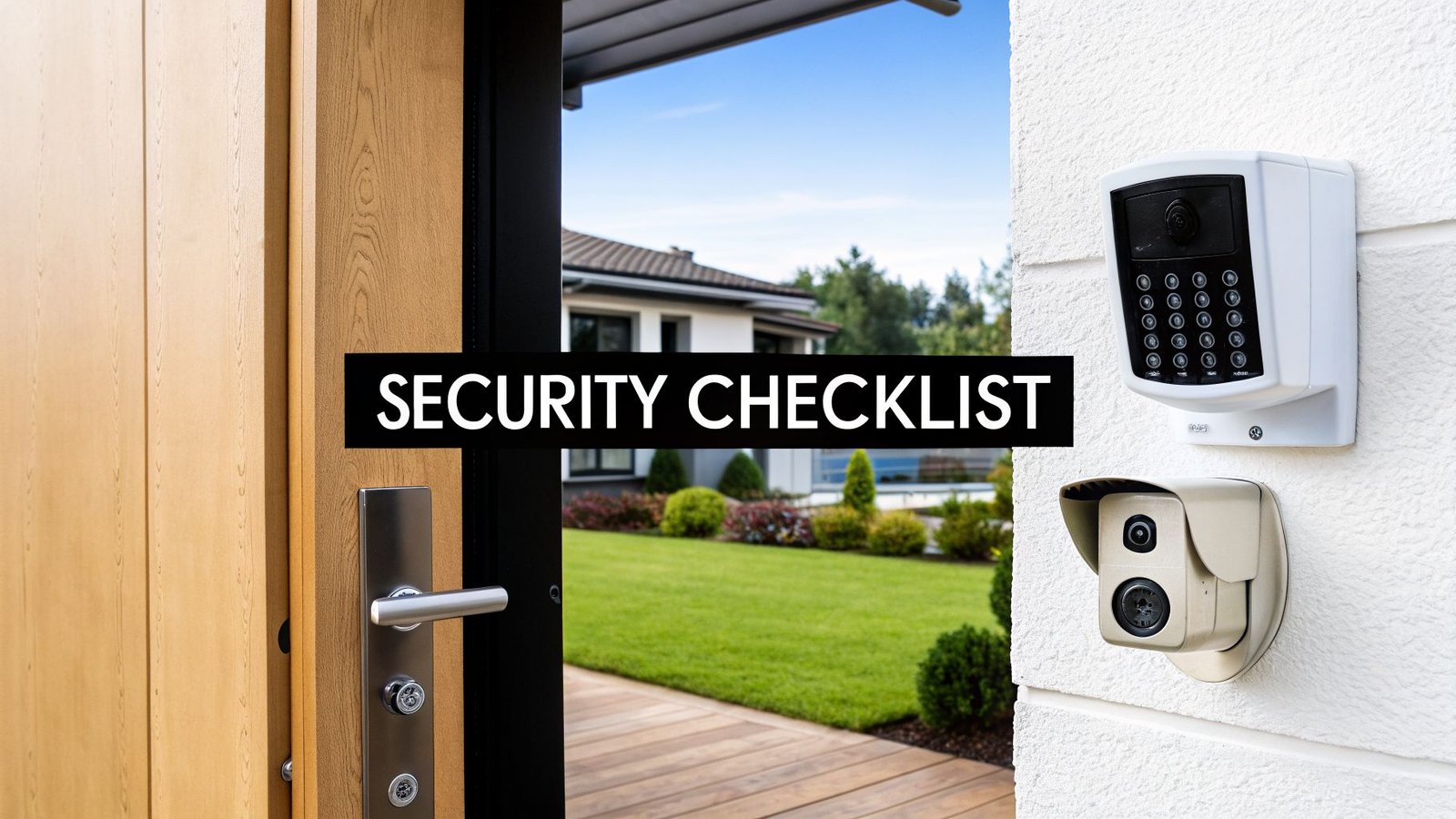
Good habits are the foundation of a secure home. This checklist helps turn individual actions into a consistent routine, ensuring nothing gets missed whether you're gone for an hour or a week.
| Frequency | Task | Purpose |
|---|---|---|
| Daily | Lock all doors & windows upon leaving/at night. | Prevents easy access for opportunistic burglars. |
| Daily | Arm security system when leaving or at bedtime. | Ensures sensors and alarms are active when you need them. |
| Daily | Bring in mail, packages, and newspapers promptly. | Avoids visual cues that signal an empty house. |
| Weekly | Test motion-sensor lights and cameras. | Confirms your electronic surveillance is working correctly. |
| Weekly | Check landscaping for new hiding spots. | Keeps sightlines clear and eliminates cover for intruders. |
| Pre-Vacation | Pause mail/newspaper delivery. | Stops the pile-up that advertises your absence. |
| Pre-Vacation | Set up smart light timers. | Creates the illusion that someone is still at home. |
| Pre-Vacation | Inform a trusted neighbor of your travel dates. | Adds an extra set of eyes on your property while you're away. |
By integrating these tasks into your life, security stops being a chore and becomes a natural part of protecting your home.
The Strength of a Connected Neighborhood
You don't need to become best friends with everyone on the block. A friendly wave, a quick chat while getting the mail, or swapping phone numbers for emergencies can build a strong foundation of trust and awareness. When a community is connected, everyone gets an extra layer of informal surveillance for free.
Organized neighborhood watch programs can elevate this to the next level by establishing direct lines of communication with local law enforcement. And these efforts genuinely work. While the United States has a burglary rate of 271 per 100,000 people, burglaries saw a 7.6% decline in 2023. This suggests that the combination of better security and community vigilance is having a real impact, as detailed in these burglary rate trends on World Population Review.
Ultimately, burglar-proofing your home isn't about one single solution. It’s a layered strategy that weaves together physical barriers, smart technology, consistent habits, and the strength of a community that looks out for each other. When you get all those pieces working in sync, you create the kind of secure environment that brings real peace of mind.
Got Questions? We've Got Answers
You've got the rundown on hardware, smart tech, and the daily habits that make a home a tough target. But as you start to put it all into practice, it's natural for a few more specific questions to pop up. Let's tackle some of the most common ones I hear from homeowners.
Think of this as the final piece of the puzzle—addressing those practical, real-world concerns to help you lock down your security plan with total confidence.
Are Those Security Signs and Stickers a Waste of Time?
You know the ones—the little blue octagons on a stick in the front yard or the decal on a sliding glass door. Do they actually do anything? Absolutely. They work as a powerful psychological bluff.
Most burglars aren't master criminals; they're opportunists looking for the path of least resistance. A study of convicted burglars revealed something telling: 60% said they'd flat-out skip a house if they saw an alarm system was present. A simple sign screams "risk" and "effort," and that's the last thing they want. It immediately plants the idea of blaring sirens, security cameras, and a much higher chance of getting caught.
My Take: A sign or sticker is one of the cheapest, most effective deterrents you can buy. It makes the average thief second-guess their choice and move on. Just make sure you actually have the system to back it up if a more determined intruder decides to call your bluff.
Is a Dog a Good Burglar Deterrent?
A barking dog can be a fantastic line of defense. That sudden, loud commotion is a burglar's kryptonite because it shatters their cover of silence and draws a ton of unwanted attention from everyone within earshot. It doesn't even have to be a big dog—a small, yappy one can create just as much chaos.
But don't rely on Fido as your sole security plan. Some intruders are comfortable around dogs and might even come prepared with treats to quiet them down. More importantly, your dog can’t dial 911 when you're not there.
- The Good: Their barking is an incredible early-warning system, often alerting you before someone even gets to the door.
- The Bad: Some dogs are too friendly. They can be pacified or distracted, and they can't actually summon help.
Your dog is basically the best living motion detector you could ask for. Treat them as an invaluable layer in your security setup, but not as a replacement for a monitored alarm system.
How Can I Secure My Home on a Shoestring Budget?
You don't need to spend a fortune to make a massive difference in your home's security. In my experience, some of the most effective upgrades are the cheapest—or even free. It's all about focusing on the basics that give you the most security for your dollar.
Here’s where to start when funds are tight:
- Beef Up Your Door Frames: This is the single best investment you can make. A heavy-duty strike plate and a box of 3-inch screws will cost you less than a pizza, but they make your door exponentially harder to kick in.
- Jam Your Doors and Windows: A simple wooden dowel cut to fit the track of a sliding glass door or a horizontal window is a cheap but incredibly effective physical barrier. An intruder can defeat a lock, but they can't defy physics.
- Get Out the Pruning Shears: This one just costs you a bit of time on a Saturday. Trim back those overgrown shrubs under your windows and remove any low-hanging tree branches. This eliminates perfect hiding spots and gives a clear line of sight from the street.
- Start Small with DIY Sensors: You don't have to wire up your entire house at once. Begin with a couple of affordable peel-and-stick sensors on your front and back doors. You can easily build out your system from there as your budget allows.
By tackling these high-impact, low-cost steps first, you can build a seriously solid security foundation without breaking the bank.
Ready to build a smarter, safer home with expert guidance? Explore the latest in home security and automation at Automated Home Guide and find the perfect solutions for your peace of mind. Visit us at https://automatedhomeguide.com to get started.

Leave a Reply