Feeling the sting of a high utility bill? You're not alone. The good news is that you can start cutting those costs right now, without spending a dime. It all begins with a few smart habit changes and a quick look around your house to spot the most obvious energy vampires.
Start Saving Money Today With Quick Wins
Before you even think about shelling out for expensive upgrades, the most powerful tool you have is your own daily routine. Changing how you use energy and water costs nothing but a little awareness, yet it can deliver a noticeable drop on your very next bill.
Think of it this way: this isn't about making big sacrifices. It's about being smarter with what you already have. You’d be surprised how much money literally leaks out through tiny drafts or gets eaten up by gadgets that aren't even on.
Conduct a DIY Home Energy Walkthrough
First things first, it's time to play detective in your own home. A simple 30-minute walkthrough with a notepad is often all it takes to uncover the hidden culprits behind your high bills.
Here's what to hunt for:
- Phantom Power Drains: Look at everything that stays plugged in 24/7. Your TV, game console, coffee maker, and that nest of phone chargers are all silently sipping power. This "phantom load" can easily account for up to 10% of your monthly electricity usage.
- Obvious Air Leaks: Stand near your windows and exterior doors. Can you feel a draft? Check the spots where pipes and wiring enter your home from the outside. All those tiny gaps combined can be like leaving a small window open all winter.
- Water Heater Settings: Pop down to your water heater and check the thermostat. Most are set too high from the factory. For most families, 120°F (49°C) is plenty hot and dialing it down can lead to some serious savings.
This quick audit gives you an instant, actionable checklist. For a deeper dive, there are plenty of proven tips to reduce your electricity bill that you can put into practice today.
"The easiest dollar you'll ever save is the one you don't have to spend in the first place. A quick home energy audit reveals exactly where those dollars are going, empowering you to stop the waste without spending a dime."
Adopt Energy-Saving Habits
With your list of problem spots in hand, the next move is to tweak your daily habits. These aren't drastic lifestyle changes; they're small, consistent adjustments that really add up.
A perfect example is your thermostat. You can save as much as 10% a year on heating and cooling just by turning the temperature back 7°-10°F for 8 hours a day, like when you're at work or asleep. It's one of the single most effective changes you can make.
These behavioral shifts are more powerful than you might think. Research shows that homeowners who combine smart habits with simple tools like a programmable thermostat can lower their total electricity use by 5–12% and slash consumption during peak hours by a whopping 10–25%.
To help you get started, here's a table summarizing some of the most impactful, easy-to-implement actions you can take this week.
Table: Immediate Actions for Lower Utility Bills
| Action | Estimated Annual Savings | Effort Level |
|---|---|---|
| Unplug electronics not in use | $100–$200 | Low |
| Turn thermostat back 7°-10°F for 8 hours/day | Up to 10% on heating/cooling | Low |
| Lower water heater to 120°F | $36–$61 | Low |
| Use cold water for laundry | $50+ | Low |
| Air-dry dishes and clothes | $30–$100 | Medium |
Even tackling just one or two items from this list can make a tangible difference on your next bill, proving that big savings don't always require a big investment.
Optimize Your Appliance Use
Your large appliances—the washer, dryer, and dishwasher—are the heavy hitters of home energy consumption. Simply changing when and how you use them can make a huge difference.
Check if your utility company offers a Time-of-Use (TOU) plan. With these plans, electricity is cheaper during "off-peak" hours (usually overnight) and more expensive during "peak" hours when everyone is home from work and school.
You can really game the system in your favor with a few simple adjustments:
- Run laundry and dishes at night. Instead of doing chores right after dinner, set the delay start on your dishwasher and washing machine to run while you're sleeping.
- Wash clothes in cold water. About 90% of the energy a washing machine uses is for heating the water. Unless you're washing heavily soiled items, cold water works just fine and saves a ton.
- Keep your fridge and freezer full. An empty fridge has to work harder to cool down the warm air that rushes in every time you open the door. A full one is more efficient because the cold items inside help maintain the temperature. If it’s looking a bit bare, even a few jugs of water will help.
- Air-dry whenever possible. Skip the energy-sucking heat cycle on your dishwasher by using its air-dry setting. And when the weather's nice, nothing beats a clothesline for fresh, free drying.
Weekend DIY Projects for Lasting Savings
Ready to roll up your sleeves for some real savings? You'd be surprised how much of an impact you can make on your utility bills with just a few hours of work over a weekend. These are the kinds of high-impact, low-cost projects I always recommend starting with because they tackle energy waste head-on without needing a contractor or a big budget.
Most houses are riddled with tiny, invisible leaks. That air you're paying a fortune to heat in the winter and cool in the summer? It’s constantly seeping out through gaps around your windows, doors, and even electrical outlets. Sealing those up is one of the most satisfying and effective ways to stop throwing money away.
Hunt Down and Seal Air Leaks
First things first, you need to play detective. On a windy day, just run your hand along window frames and exterior door jambs—you’ll often feel the drafts immediately. For the less obvious spots, I like to use a lit incense stick. Just hold it near a suspected leak and watch the smoke; if it wavers or gets pulled in a direction, you’ve found a culprit.
Once you’ve mapped out your problem areas, it's time to get to work.
- Windows and Doors: For any stationary cracks and joints, a steady bead of caulk is your best friend. For the parts that move, like the bottom of a door or a window sash, install some quality weatherstripping.
- Outlets and Switches: This is a big one that people miss. Those outlets on your exterior walls can let in a surprising amount of air. Grab some pre-cut foam gaskets from the hardware store and pop them behind the faceplates. It's a five-minute job.
Honestly, you can knock out most of this in a single afternoon. To make sure you don't miss anything, our home energy audit checklist can be a great starting point for building your plan of attack.
Insulate Your Hot Water System
Think about your water heater for a second. It works 24/7, constantly using energy to keep a huge tank of water hot. You can give it a huge efficiency boost by wrapping the tank in a pre-cut insulating blanket. This project takes less than an hour and can slash that standby heat loss by 25–45%. That's a real, tangible saving you'll see every month.
While you're at it, don't stop at the tank. Insulating the first several feet of hot water pipes coming out of the heater is another smart move. It means less heat escapes as the water travels to your faucet, so you get hot water faster and waste less energy (and water) waiting for it.
Tackling air leaks and insulating your water heater are classic weekend warrior projects for a reason. They offer a tangible, immediate return on a very small investment of time and money, directly addressing two of the biggest sources of hidden energy waste in any home.
Make the Switch to LED Lighting
Here's one of the fastest wins you can get. If you’re still using old-school incandescent bulbs, you’re basically running tiny, inefficient space heaters that happen to glow. Switching to modern LED lighting is a no-brainer for immediate savings.
It’s amazing how much things have changed. Lighting used to account for up to 15% of a home's electricity consumption. Now, thanks to LEDs, that number has plummeted. An LED bulb uses 70–90% less power and can last up to 25 times longer than an incandescent one. You save on your energy bill and on buying new bulbs for years to come. For a deeper dive, check out the energy efficiency findings on Energy Institute's site.
My advice? Start with the lights you use the most—think kitchen, living room, and entryway. Yes, the upfront cost for the bulbs is a bit higher, but the payback period is incredibly short. For anyone wondering how to lower utility bills, this is one of the smartest and simplest upgrades you can make.
Strategic Upgrades That Pay for Themselves
While simple habits and DIY fixes give you some quick wins, the real, lasting savings come from strategic home upgrades. These are the bigger-ticket items that attack the root causes of energy waste and can permanently lower your home's power consumption.
Think of these as long-term investments. Yes, they require more cash upfront, but the right upgrades don't just put a dent in your utility bills—they often pay for themselves over time and can even boost your home's resale value. This is where you graduate from simply managing your energy use to truly mastering it.
Finding Your Home's Biggest Energy Vampires
Before you start pricing out new equipment, you need to know where the real problems are. In almost every home, the biggest energy hogs are the systems that control the temperature: your heating and cooling (HVAC) system and the "envelope" that's supposed to keep that conditioned air inside—your windows, doors, and insulation.
An old, clunky HVAC unit is a classic energy vampire. A system that's over 15 years old can be shockingly inefficient compared to modern models, meaning you're paying more for less comfort. The same is true for old, single-pane windows that do next to nothing to stop the summer heat or winter cold from seeping in.
Upgrading Your HVAC for Maximum Efficiency
If your HVAC system is getting up there in years, replacing it with a high-efficiency model is one of the single most impactful upgrades you can make. When you start shopping around, you'll see two key ratings that tell you everything you need to know:
- SEER2 (Seasonal Energy Efficiency Ratio 2): This measures an air conditioner's cooling efficiency. Higher is better. A modern unit might have a SEER2 rating of 15 or more, while your old clunker could be chugging along at an 8 or 9.
- AFUE (Annual Fuel Utilization Efficiency): This is for furnaces and tells you how much of your fuel actually becomes heat. A furnace with a 95% AFUE rating means that for every dollar you spend on fuel, 95 cents goes directly into warming your home. The rest is wasted.
This isn't just about saving a few bucks here and there. According to the Global Energy Outlook report, targeted home retrofits that include a high-efficiency HVAC replacement can slash a home's total energy use by 20–30%. Savings like that can dramatically shorten the time it takes for the new system to pay for itself.
Don't Underestimate Your Home's Insulation
You can install the most efficient HVAC system in the world, but if your attic is barely insulated, you're still just paying to heat and cool the great outdoors. Heat rises, and in the winter, it goes straight out through your roof. In the summer, the sun bakes your attic, turning it into an oven and forcing your AC to run nonstop.
Beefing up your attic insulation is often one of the most cost-effective upgrades out there, and it has a surprisingly fast ROI. It’s far cheaper than a new HVAC unit or a house full of new windows but can deliver a similar level of savings by creating a powerful thermal barrier.
An investment in proper insulation is an investment in efficiency. It reduces the workload on your HVAC system, extending its lifespan while simultaneously cutting your monthly energy costs. It’s a foundational upgrade that makes every other energy-saving effort more effective.
The infographic below gives a great overview of some other powerful DIY actions you can take to see immediate results.

As the graphic shows, simple things like sealing air leaks, wrapping your water heater, and swapping in LED bulbs are fantastic starting points for anyone serious about lowering their utility bills.
Cost vs. ROI on Major Home Energy Upgrades
It's one thing to talk about savings, but it helps to see the numbers laid out. Major upgrades are an investment, and understanding the potential return is key to making a smart decision.
Here’s a quick comparison of some of the most common long-term energy efficiency projects to give you a sense of what to expect.
| Upgrade | Average Cost | Potential Annual Savings | Typical Payback Period |
|---|---|---|---|
| Attic Insulation | $1,500 – $3,500 | $200 – $600 | 4 – 7 years |
| High-Efficiency HVAC | $7,000 – $15,000+ | $400 – $1,200 | 8 – 15 years |
| Energy-Efficient Windows | $8,000 – $24,000 | $150 – $500 | 15 – 20+ years |
| Tankless Water Heater | $2,500 – $5,500 | $100 – $250 | 10 – 20 years |
These are just estimates, of course. Your actual costs and savings will depend on your home's size, your climate, and your local utility rates. But it clearly shows how an investment in something like insulation can pay for itself relatively quickly, while bigger projects like windows are more about long-term value and comfort.
Unlocking Rebates and Incentives to Cut Costs
That sticker price on a new HVAC system or a full set of windows can feel intimidating. The good news? You almost never have to pay that full amount out of pocket.
Federal, state, and local governments—not to mention your own utility company—offer a ton of incentives to encourage homeowners to make these exact kinds of upgrades. They want you to use less energy!
These perks usually come in one of three forms:
- Tax Credits: The federal government often provides tax credits that let you deduct a percentage of the upgrade cost right off what you owe in taxes.
- Rebates: Your local electric or gas company might offer you direct cash back for buying a specific ENERGY STAR® certified furnace, air conditioner, or water heater.
- Low-Interest Loans: Some programs offer special financing with great rates specifically for energy efficiency projects, making them much more affordable upfront.
Before you buy anything, spend a few minutes on the ENERGY STAR Rebate Finder. A little research here can easily uncover thousands of dollars in savings, turning what looks like a major expense into a very smart financial move.
Using Smart Home Tech to Automate Savings
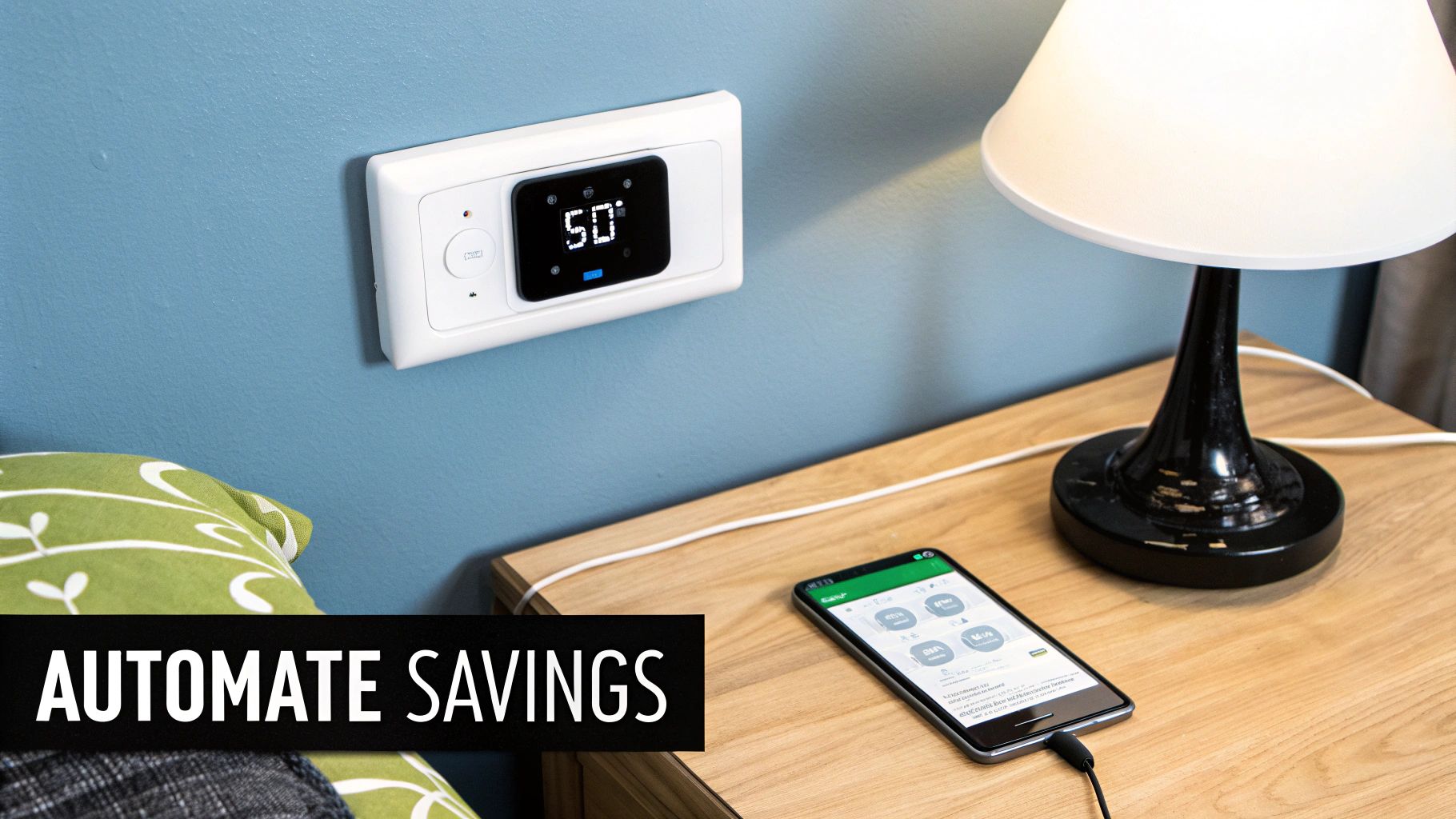
Manual adjustments and weekend projects can make a real dent in your bills, but to find the next level of savings, you need to put your home to work for you. Smart home technology has moved far beyond simple convenience; it's now a powerful tool for getting a handle on your energy use and automating efficiency.
These devices learn your family's daily rhythm, make subtle adjustments in the background, and give you clear data on where every dollar is going. This shifts your strategy from constantly reacting to high bills to a proactive, "set-it-and-forget-it" system that chips away at your costs around the clock.
The Brains of the Operation: Smart Thermostats
Let's face it: your HVAC system is almost certainly the biggest energy hog in your house. A smart thermostat is the single most effective gadget you can install to tame it. Unlike an old programmable model that just follows a clunky, fixed schedule, a modern smart thermostat actually learns your household's patterns.
It figures out when you leave for work, when you usually get back, and even when you’re away on vacation. Based on that, it dials back the heating or cooling to save a bundle while you're out and has the house perfectly comfortable the moment you walk in the door. Many even use geofencing—tracking your phone's location—to start warming or cooling the house as you head home.
The savings here are very real. Fine-tuning your heating and cooling without even thinking about it can lead to a significant drop in your monthly bill. For a full breakdown of the potential return on investment, our guide on smart thermostat energy savings dives deep into how quickly these devices pay for themselves.
Hunting Down Phantom Load with Smart Plugs
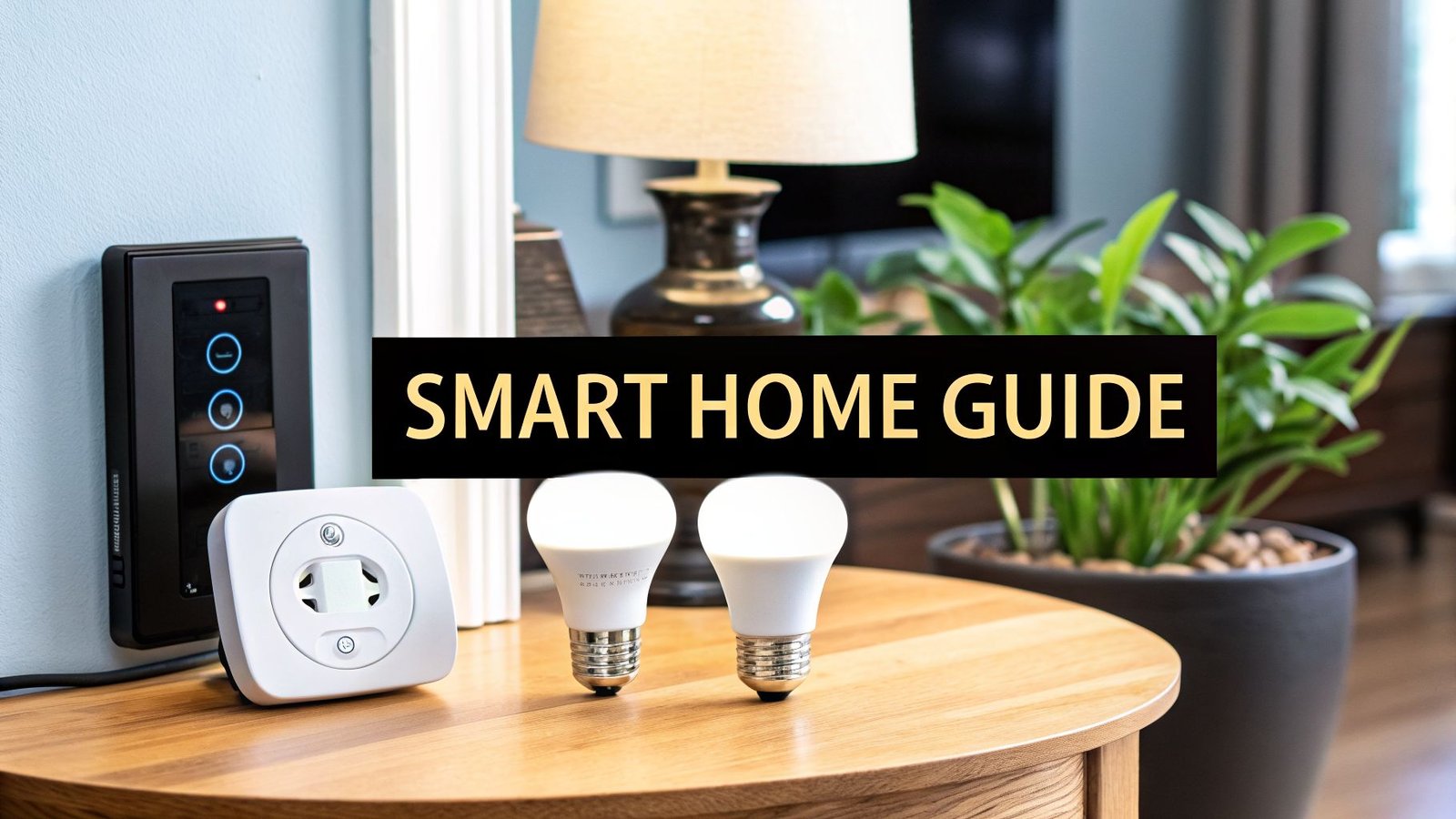
Remember those "phantom loads"—the energy sucked up by electronics that are off but still plugged in? Smart plugs are your secret weapon against this sneaky energy drain. These simple little devices fit between an outlet and an appliance's power cord, giving you control over the power flow right from an app on your phone.
But their real strength is in scheduling. You can create a simple rule to completely cut power to your entire entertainment center from midnight to 6 a.m. That means your TV, soundbar, and gaming console use zero electricity while everyone is asleep.
Here are a few prime targets for smart plugs:
- Entertainment Centers: TVs, game consoles, and streaming devices are some of the worst phantom power offenders.
- Home Office Setups: Computers, monitors, and printers are often sipping power even when they're in sleep mode.
- Kitchen Gadgets: Coffee makers, microwaves, and air fryers with those little digital clocks are always on.
By placing a few smart plugs in key spots, you can finally shut down that wasteful background hum for good.
Smart home technology transforms energy management from a daily chore into an automated system. By learning your routines and eliminating waste, devices like smart thermostats and plugs create consistent, effortless savings that manual adjustments alone can't match.
Creating an Efficient Ecosystem
Going beyond just thermostats and plugs, other smart devices can work together to create an even more efficient home. Smart lighting lets you schedule lights to turn off and dim them to save energy. Add in smart motion sensors, and you can have the lights and even the temperature adjust automatically when a room is empty.
The real magic happens when you connect these devices to a central smart hub like Amazon Alexa or Google Home. You can create powerful "routines" that manage everything at once. Imagine a "Goodnight" routine that, with a single voice command, locks the doors, shuts off every light in the house, and sets the thermostat to an energy-saving temperature.
This integrated approach makes sure no energy is wasted. The data these devices collect also offers incredible insights, showing you exactly which appliances are guzzling the most power and when. This helps you make even smarter choices over time. To get more ideas for optimizing your setup, you can explore how smart home technology can help you save on utility bills. It’s all about building a home that isn't just smart, but one that actively works to keep your money in your pocket.
Tackling Water Waste to Lower Your Bill
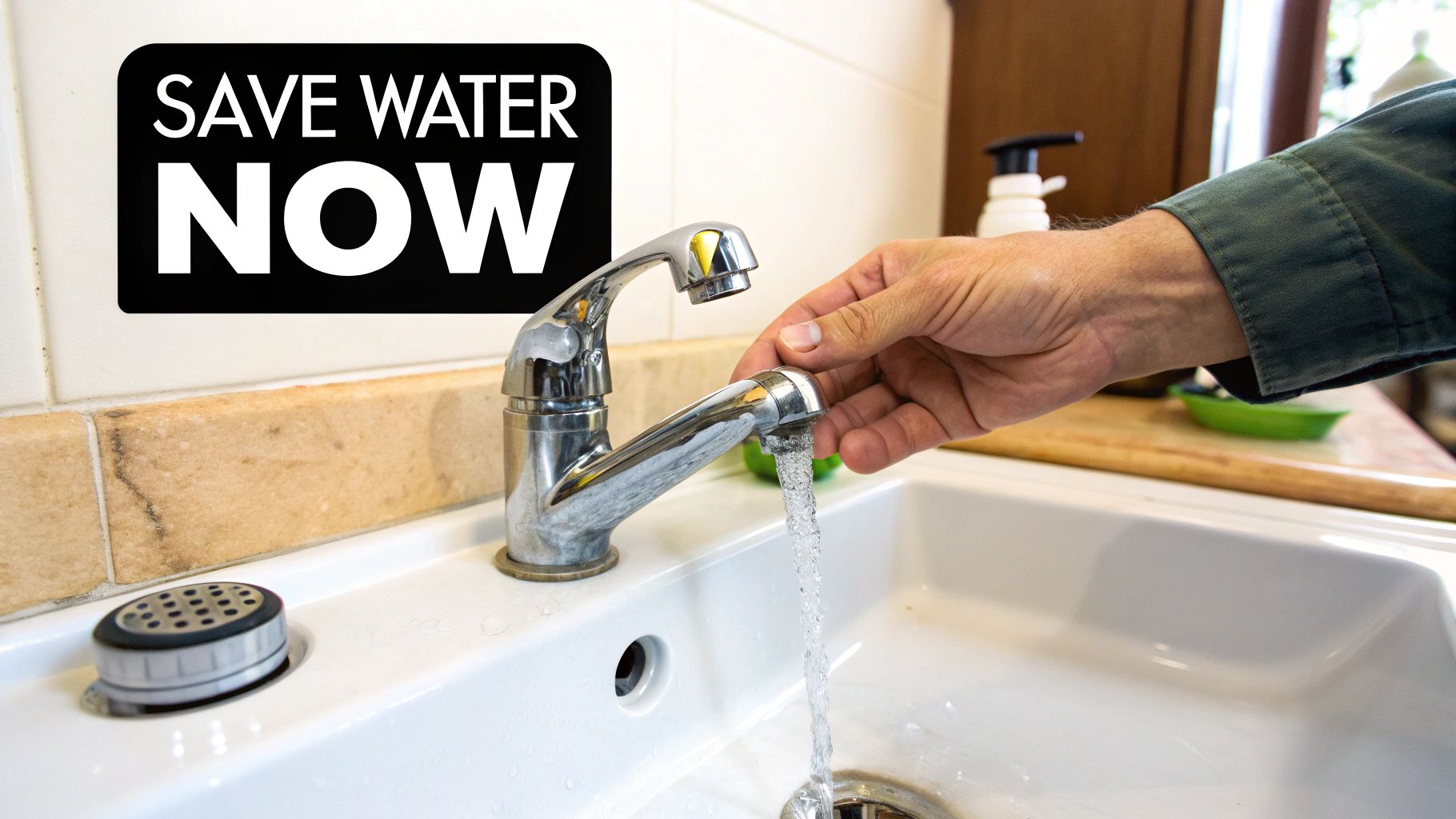
When we think about utility bills, our minds usually jump straight to electricity and gas. But your water bill can be a silent budget-breaker, quietly creeping up month after month. The truth is, reining in your water usage is a surprisingly powerful way to cut costs, and it all starts with plugging the leaks—literally.
That little drip from a faucet or a toilet that never seems to stop running might feel like a minor annoyance, but they’re a constant drain on your wallet. A single leaky faucet can waste thousands of gallons of water over a year. The good news? Most of these common household leaks are simple and cheap to fix.
Finding and Fixing Hidden Leaks
Your first mission is to become a leak detective. Some culprits are obvious, like that steady drip, drip, drip from the kitchen sink. Others are much sneakier and can go unnoticed for years, wasting an incredible amount of water and money.
The toilet is often the most notorious offender. An easy way to check for a silent leak is to add a few drops of food coloring to the toilet tank. Don't flush, and just wait for about 15 minutes. If you see any of that color seeping into the bowl, you've got a leak. It’s usually caused by a faulty flapper, a part that costs just a few dollars to replace.
Another trick is to check your water meter. Take a reading, then make sure absolutely no one in the house uses any water for at least a couple of hours. If the meter's reading has changed when you check it again, you have a leak somewhere in your system. For real peace of mind against expensive water damage, you might want to look into the best smart water leak detectors, which can send an alert straight to your phone the second a problem starts.
Upgrade Your Fixtures for Efficiency
Once you've stopped the active drips, the next move is to reduce how much water you use with every flush, shower, and hand wash. This is where upgrading to modern, efficient fixtures gives you an excellent return on your investment.
If your home was built before the mid-1990s, chances are your toilets are old, inefficient water hogs that use 3.5 gallons or more per flush. In contrast, modern high-efficiency toilets use 1.28 gallons or less—a massive reduction that adds up fast.
Consider these high-impact, water-saving upgrades:
- Low-Flow Showerheads: A WaterSense-labeled showerhead can slash your shower's water use by 30% or more without making you feel like you've lost any water pressure.
- Faucet Aerators: These are tiny, inexpensive screens you screw onto the tip of your faucets. They mix air into the water stream, cutting flow while keeping the pressure feeling strong.
- High-Efficiency Toilets: This is a bigger investment, for sure, but it can make a huge dent in your water bill, especially in a busy household.
A household's leaks can account for nearly 10,000 gallons of water wasted every year and ten percent of homes have leaks that waste 90 gallons or more per day. Finding and fixing them is a critical first step.
Adopt Water-Wise Outdoor Habits
For many homeowners, the biggest opportunity for water savings is right outside the back door. Your lawn and garden can consume a staggering amount of water, especially in the warmer months. Adopting smarter watering and landscaping strategies can dramatically lower your bill.
One of the easiest changes is to start watering your lawn in the early morning. This simple shift minimizes how much water evaporates in the sun and wind, making sure more of it actually gets to the plant roots where it's needed. It's also better to water deeply but less often, which encourages the grass to grow deeper, more resilient roots.
For a more substantial impact, look into xeriscaping—a style of landscaping that uses native, drought-resistant plants. These plants are already adapted to your local climate and require far less water once they're established, saving you time, effort, and money. Even simple things like adding a layer of mulch around your plants can help the soil retain moisture, letting you run the sprinkler less often.
Got Questions About Utility Savings? We've Got Answers.
Diving into home efficiency can feel a bit overwhelming. From big upgrades to small tweaks, it's natural to have questions about where to start and what will actually make a difference. Let's tackle some of the most common ones I hear from homeowners and renters alike.
What’s the Single Biggest Bang-for-Your-Buck Action I Can Take Today?
If you want immediate results, focus on two things: your thermostat and air leaks. It’s a simple but incredibly effective one-two punch.
Dropping your thermostat by 7-10 degrees for 8 hours a day (think: while you're at work or sleeping) can slash your heating and cooling costs by up to 10% a year. That’s a huge win for zero financial investment.
Next, go on a draft hunt. Grab a roll of weatherstripping or a tube of caulk and seal up those obvious gaps around your windows and doors. You’ll be shocked at how much you’re paying to heat or cool the neighborhood. This simple combo delivers a noticeable impact on your very next bill.
Are Big-Ticket Upgrades Like New Windows Actually Worth the Money?
This is a classic question, and the honest answer is: it depends entirely on what you have now. If your home still has old, single-pane windows or your furnace is old enough to vote, then yes, a modern upgrade can deliver a fantastic long-term payback.
A new, high-efficiency HVAC system, for example, can often cut your heating and cooling expenses by a whopping 20-40%. But before you write a massive check, I always recommend getting a professional energy audit first.
An energy audit might show that your real energy hog isn't your windows, but your poorly insulated attic. Fixing that could give you a much faster and better return on investment for a fraction of the cost. It’s all about finding your home’s weakest link.
I’m a Renter. Am I Stuck With High Bills?
Not at all! Renters have a surprising amount of power to lower their bills without making any permanent changes. It all comes down to mastering your habits and using a few clever, temporary upgrades.
Start with the easy stuff. Get into the habit of unplugging electronics, or put them on smart plugs. Cut a few minutes off your shower, switch to washing clothes in cold water, and be a stickler about that thermostat. Each small change compounds over the year.
You can also make a few renter-friendly improvements:
- Window Insulation Film: This stuff is magic in the winter. It’s just a clear film you apply over your windows that dramatically cuts down on heat loss.
- Draft Stoppers: Those simple fabric "snakes" you place at the bottom of a drafty door work wonders.
- LED Bulbs: Swap out the old incandescent bulbs for your own LEDs. It’s an instant and easy way to drop your electricity consumption. Just keep the old ones to swap back when you move out.
And don't forget to pester your landlord about fixing leaky faucets! It's also worth checking if your utility offers a "time-of-use" plan. If you can run your dishwasher or do laundry during off-peak hours, you can save a ton without changing a single thing about your apartment.
Ready to build a smarter, more efficient home? Head over to Automated Home Guide for detailed reviews, practical tutorials, and expert tips on the best smart home gear for saving money and simplifying your life. Find your next project at https://automatedhomeguide.com.







Leave a Reply