When you're expecting a baby, you spend months preparing. You pick out a crib, you paint the nursery, you wash tiny clothes. But one of the biggest—and most important—jobs is looking at your home through a brand new lens: a child's. Childproofing is all about spotting and fixing potential dangers, from falls and bumps to poisoning and electrical shocks.
It all begins with the basics, like installing safety gates and cabinet locks, anchoring heavy furniture, and covering every single outlet. But this isn't a one-and-done task. It's a living process that has to change and adapt as your stationary newborn grows into a crawling, climbing, and endlessly curious toddler.
Why Childproofing Is More Than Just a Checklist
Bringing your baby home for the first time is incredible. It also has a way of turning your once-familiar living space into what feels like a minefield of potential hazards you’d never even considered before. That feeling can be seriously overwhelming, but the goal here is to turn that worry into a concrete, manageable plan.
Learning how to childproof your home isn’t just about ticking boxes. It’s about committing to a safe environment that grows right alongside your child's milestones. You have to get down on their level—literally—and see your home through their eyes, anticipating the trouble they might get into before it ever happens.
Adopting a Proactive Safety Mindset
Effective childproofing is all about being proactive, not reactive. You have to understand that the moment your baby learns to roll over, crawl, and then walk, their world (and their ability to get into things) expands exponentially. The corner of that coffee table that was no big deal last week is suddenly a major hazard tomorrow.
This timeline gives you a great visual of how your priorities will shift over time. For a newborn, it's all about a safe sleep space. For a toddler, it's about managing their innate desire to climb on, over, and into everything.

As you can see, childproofing is a continuous journey. You have to stay one step ahead of your child’s next developmental leap.
This forward-thinking approach is so important because accidents happen in a split second. For a deeper dive, this comprehensive guide on how to childproof your home offers some excellent additional perspectives. And while we're focused on child safety here, thinking about the bigger picture is also smart; our guide on how to secure your entire home can help with overall family safety.
The statistics are pretty sobering. A recent report found that a staggering 59 percent of families have had a child get injured at home. Over half of those injuries could have been prevented with better safety measures.
What’s even more surprising is that while 80 percent of parents say childproofing is a top priority, the data shows there’s a huge gap between knowing and doing. This guide is designed to help you bridge that gap with practical, real-world strategies.
Childproofing Priorities by Age and Developmental Stage
To help you focus your efforts where they matter most, this table breaks down the key risks and priorities for each major developmental stage. It’s a great way to see what’s coming next so you can prepare your home in advance.
| Age Group | Mobility Level | Primary Risks | Top Childproofing Priorities |
|---|---|---|---|
| Newborn (0-6 Months) | Limited (rolling, wiggling) | Suffocation, falls from surfaces, burns | Safe sleep environment (firm mattress, no loose bedding), baby monitors, smoke/CO detectors, water heater temperature control. |
| Crawler (6-12 Months) | Crawling, pulling up | Electrical shocks, poisoning, choking, falls | Outlet covers, cabinet/drawer locks, securing cleaning supplies/meds, anchoring furniture, baby gates at stairs. |
| Toddler (1-3 Years) | Walking, running, climbing | Falls from heights, drowning, tip-overs | Window guards/stops, door locks (especially exterior and bathroom), furniture anchors, toilet locks, continued use of gates. |
| Preschooler (3-5 Years) | Advanced climbing, opening doors | Access to hazards (matches, tools), wandering | Higher door locks or alarms, securing garages/sheds, ongoing education about safety rules (e.g., "hot," "don't touch"). |
Think of this table not as a rigid set of rules, but as a roadmap. Every child develops at their own pace, so observing your little one's budding skills is the best way to know when it's time to implement the next layer of protection.
Making Your Living Room and Stairs Safe
The living room is where your family lives. It’s for forts, movie nights, and quiet moments. But all that activity, furniture, and electronics can make it a minefield for a curious little one. Childproofing these central areas means learning to see them through a toddler's eyes—where every drawer is a ladder and every cord is a toy.
First things first: anchor your heavy furniture. It’s easy to overlook just how dangerous that beautiful bookshelf or TV stand can be. All it takes is a determined toddler using open drawers to climb, and a seemingly stable piece of furniture can tip over in an instant. This isn't a "nice-to-have"; it's a must-do.
Every new piece of furniture should come with an anti-tip kit. Use it. If you have older furniture or lost the hardware, you can grab affordable furniture straps and anchors from any hardware store. Simply attach one end to the furniture and screw the other directly into a wall stud. It’s a five-minute job that can prevent a serious tragedy.
Dealing with the Cord Chaos
Now, let's tackle that nest of wires behind your entertainment center. To a child, dangling cords are an irresistible temptation. A quick pull can send a lamp, speaker, or gaming console crashing down. Worse, they pose serious strangulation and electrical risks.
Your mission is simple: get every cord out of sight and out of reach.
- Cord Covers: These are lifesavers. They're basically plastic channels that stick to your walls or baseboards, hiding the wires inside. You can even paint them to match the wall, so they blend right in.
- Cable Management Boxes: Have a bulky power strip with a million plugs? A cable management box is your best friend. It neatly contains the entire mess, making it inaccessible to little fingers.
- Zip Ties or Velcro Straps: For any leftover slack, bundle the cords together and tuck them securely behind the furniture, far away from where your child plays.
Cleaning up the cord jungle isn't just about aesthetics. It's about removing one of the most common and overlooked hazards in the living room.
Getting Serious About Stair Safety
Stairs are, without a doubt, one of the biggest fall risks for young children. The numbers are frankly terrifying. In 2022, the U.S. Consumer Product Safety Commission linked stairs, ramps, and landings to a staggering 309,321 emergency room visits for kids under five. That makes stairs the number one cause of in-home injuries for this age group. Another report found over 93,000 young children are treated for stair-related falls annually. You can dig into more of these findings in Safe Home's comprehensive report.
This is precisely why a properly installed safety gate isn't optional. When it comes to stairs, the type of gate you choose and where you put it is critically important.
My Two Cents: Never, ever use a pressure-mounted gate at the top of a staircase. A child can easily push against it, dislodge the whole thing, and tumble down the stairs with the gate. The top of the stairs always needs a hardware-mounted gate.
Hardware-mounted gates screw directly into your wall or banister, creating a rock-solid barrier that won't budge. Pressure-mounted gates, which just use tension to stay in place, are fine for less critical areas like doorways or the bottom of the stairs.
Here’s a quick breakdown to make the choice clear:
| Gate Type | Best Use Case | Installation | Security Level |
|---|---|---|---|
| Hardware-Mounted | Top of stairs, high-traffic areas | Screws into wall studs or banisters | Highest |
| Pressure-Mounted | Bottom of stairs, doorways, room dividers | Uses tension, no drilling required | Moderate |
When you're installing a hardware-mounted gate, find the studs in the wall for the strongest possible anchor. If you have to drill into a wooden banister post, I'd recommend using a wood clamp and a small piece of scrap wood to prevent the post from splitting. And don't just set it and forget it—give the gate a regular wiggle to make sure the screws are tight and the latch is working perfectly. A secure gate is a cornerstone of a safe home.
Tackling the High-Hazard Zones: Kitchens and Bathrooms

Kitchens and bathrooms are a different beast altogether. They’re filled with a unique mix of hazards—from chemicals and sharp tools to scalding water and slippery floors. These rooms demand a focused strategy that goes way beyond locking a few drawers. We're talking about creating layers of safety to stay one step ahead of a toddler's relentless curiosity.
For a small child, the kitchen is a wonderland of shiny knobs to twist, handles to pull, and cabinets to empty. Your job is to systematically neutralize these temptations, starting with the most dangerous ones first.
Securing Kitchen Cabinets and Appliances
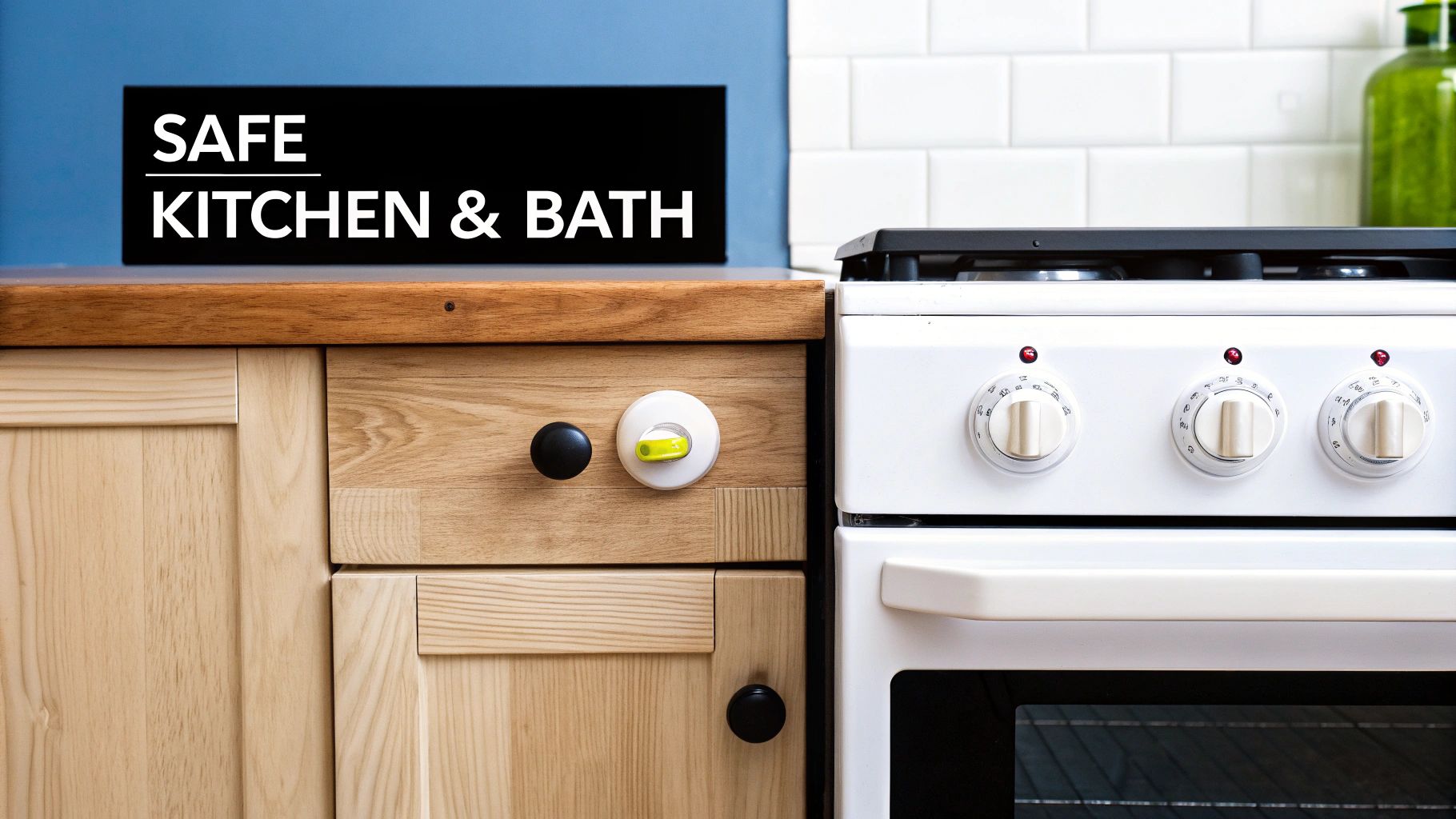
The first order of business is locking down anything a child shouldn't touch, taste, or turn on. That means every single cabinet and drawer within their reach needs a lock or latch, especially those hiding cleaning supplies, knives, glassware, or heavy pots and pans.
You've got a few great options for locks, and each has its place:
- Magnetic Locks: These are my personal favorite. They’re completely invisible from the outside, so they won't mess with your kitchen's aesthetic, and they only open with a special magnetic "key."
- Adhesive Strap Locks: Perfect for renters or for securing appliances like refrigerators, dishwashers, and ovens. They're a breeze to install, but a really determined toddler might figure them out eventually.
- Spring-Action Latches: These are the classic, inexpensive choice. They're surprisingly effective—you just press down on the latch from inside the slightly opened drawer or door to release it.
It's genuinely startling how often this critical step is overlooked. A recent study found that 3 in 10 parents with toddlers keep medicines and cleaning products in unlocked, low-to-the-ground cabinets. That’s a massive risk, especially when you consider that preventable home injuries are a leading cause of harm to young kids. You can dive into the specifics in the full Safe Kids Worldwide report.
Beyond the cabinets, turn your attention to the appliances. Stove knob covers are non-negotiable for preventing a child from turning on a burner. Get into the habit of always turning pot handles toward the back of the stove, and unplug small appliances like toasters and blenders when they're not in use.
Transforming the Bathroom into a Safe Space
The bathroom presents three major dangers: drowning, scalding, and poisoning. The good news is that each one can be managed with simple tools and new habits. The risk of drowning in even an inch of water is terrifyingly real, which is why constant supervision is paramount.
First up, get a toilet lock. To a curious toddler, the toilet is a fascinating splash park just waiting for them to drop their toys (or your phone) into. A simple lock puts a stop to that.
Next, let's talk about water temperature. A child’s skin is far more sensitive than ours, and a serious burn can happen in seconds. You can easily prevent this by setting your home's water heater to a maximum of 120°F (49°C). It's still plenty hot for adults but dramatically lowers the risk of severe scalds.
Always, always test the bathwater with your wrist or elbow before putting your child in the tub. Even with the water heater adjusted, it’s that crucial final check to make sure the temperature is just right.
Finally, treat the medicine cabinet like a bank vault. All medications, vitamins, and toiletries must be stored in a high, locked cabinet. Never leave them on the counter, not even for a second. The same goes for razors, nail scissors, and other sharp grooming tools.
For an added layer of protection in rooms with so much water, you might want to see what we think are the best smart water leak detectors. These gadgets can alert you to small leaks before they become big problems, preventing water damage and dangerous slip hazards.
By methodically working through these specific risks, you can turn these high-hazard zones into much safer environments for your little explorer.
Creating a Truly Safe Nursery and Bedroom
A child’s bedroom should be their sanctuary—a safe haven for sleeping, playing, and growing. But it’s also a room where hidden dangers can lurk, often catching even the most careful parents off guard. To make this space truly secure, we have to look at it through a child's curious eyes, starting with the centerpiece of any nursery: the crib.
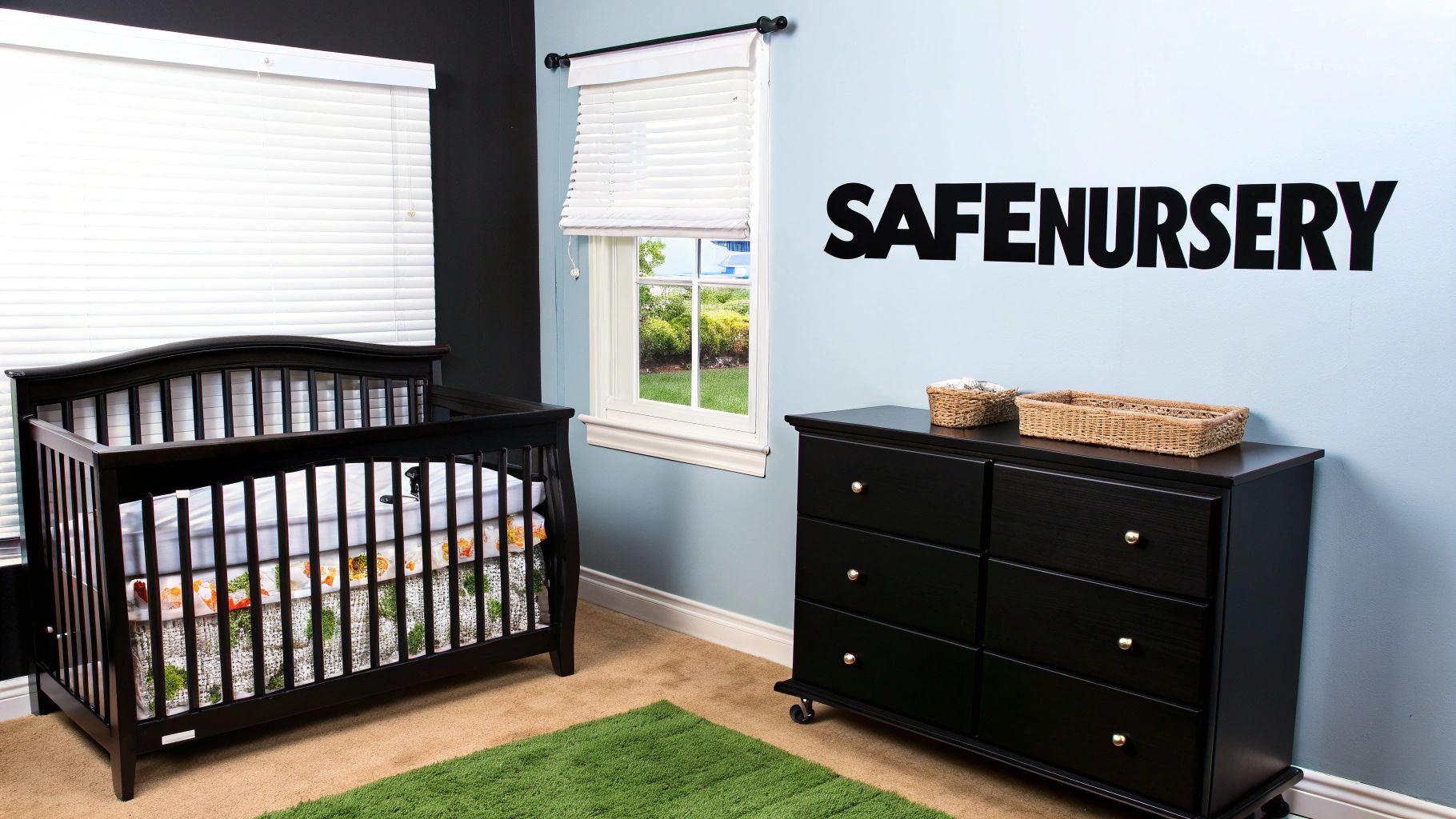
The latest safe sleep guidelines are refreshingly simple. A crib needs just two things: a firm mattress and a snug-fitting sheet. That’s it. You'll want to avoid no bumpers, no blankets, no pillows, and no stuffed animals. It might feel a little stark, but an empty crib is the safest crib, dramatically cutting down on suffocation risks.
This "less is more" mindset is a huge part of childproofing your home effectively. It's often about removing hazards, not just adding locks. As you get started, you can find plenty of inspiring newborn nursery ideas that perfectly balance this essential safety with beautiful, calming design.
Preventing Furniture Tip-Over Tragedies
Once the crib is sorted, the biggest threat in a child's room is heavy furniture. That sturdy-looking dresser, bookshelf, or changing table? To a toddler, it’s a mountain waiting to be climbed. Using open drawers as a ladder, a small child can topple a heavy piece of furniture in a heartbeat.
This is why anchoring furniture is absolutely non-negotiable. Every tall or heavy item in the room must be secured to the wall with an anti-tip kit. These kits are cheap, easy to find, and often come with new furniture. The installation is simple: one bracket goes on the furniture, the other goes into a wall stud, and a strap connects them. It’s a five-minute job that can prevent a life-altering tragedy.
You'd think a bedroom is the safest place in the house, but a recent report shatters that myth. While 95 percent of parents consider their child's room safe, beds or bedding were involved in a staggering 190,080 injuries for kids under five in a single year. You can learn more about these unexpected dangers in the 2023 Childproofing Report by Safehome.org.
Securing furniture is one of those critical steps that addresses a danger many of us underestimate until it's far too late.
Securing Windows and Cords
Windows bring two very different dangers into the room: falls and strangulation. To prevent falls, you need window guards or stops that limit the opening to no more than four inches. This is especially crucial for any windows on upper floors. And please remember, a window screen is only strong enough to keep bugs out, not a child in. They can pop out with very little force.
The other hazard comes from the cords on blinds and curtains, which pose a serious strangulation risk. The only truly safe solution here is to go completely cordless. Switch to cordless blinds or shades to eliminate the danger entirely. If you can't replace them right away, you must get those cords up and out of reach using a cord cleat installed high on the wall.
Here’s a quick safety checklist for the window area:
- Install Window Guards: Make sure upper-floor windows can't open more than four inches.
- Go Cordless: For ultimate peace of mind, replace any corded blinds or shades.
- Secure Existing Cords: If you have them, wrap cords tightly around a cleat mounted high on the wall.
- Move Furniture Away: Keep cribs, beds, and anything climbable well away from windows.
Finally, do one last sweep for electrical hazards. Cover every unused outlet with sliding safety covers—they're far more effective than the simple plastic plugs that toddlers can easily pull out. Take a look at any lamp or baby monitor cords and secure them tightly against the wall with cord covers. This keeps them from becoming something a child could trip on or pull down.
Using Smart Technology for Added Peace of Mind
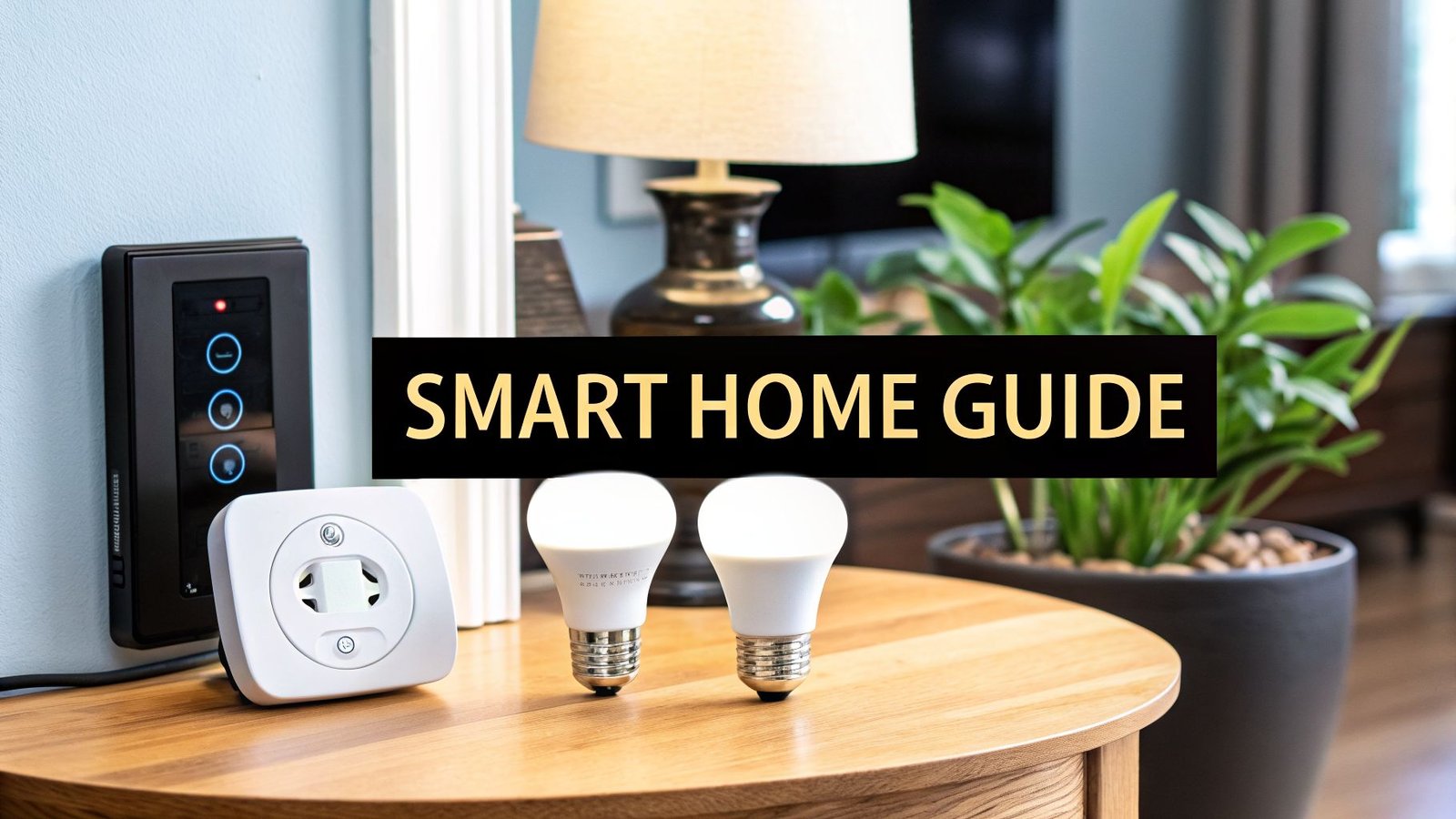
While latches, gates, and outlet covers are the bedrock of childproofing, modern tech gives us a powerful second layer of security. Smart home devices, when used thoughtfully, can give you real-time alerts and remote control, creating a safety net that works hand-in-hand with the physical stuff. It’s not about replacing the classics; it's about making your childproofing smarter and more responsive.
And it's a fast-growing area for a reason. The global baby proofing market hit USD 1.5 billion in 2023 and is on track to reach USD 2.5 billion. Parents are clearly looking for these tech-based solutions, a trend that took off when families spent more time at home—with 42.3 percent of parents beefing up their childproofing efforts. For a deeper dive, you can check out the research behind home safety trends.
Smart Sensors and Locks for Doors and Windows
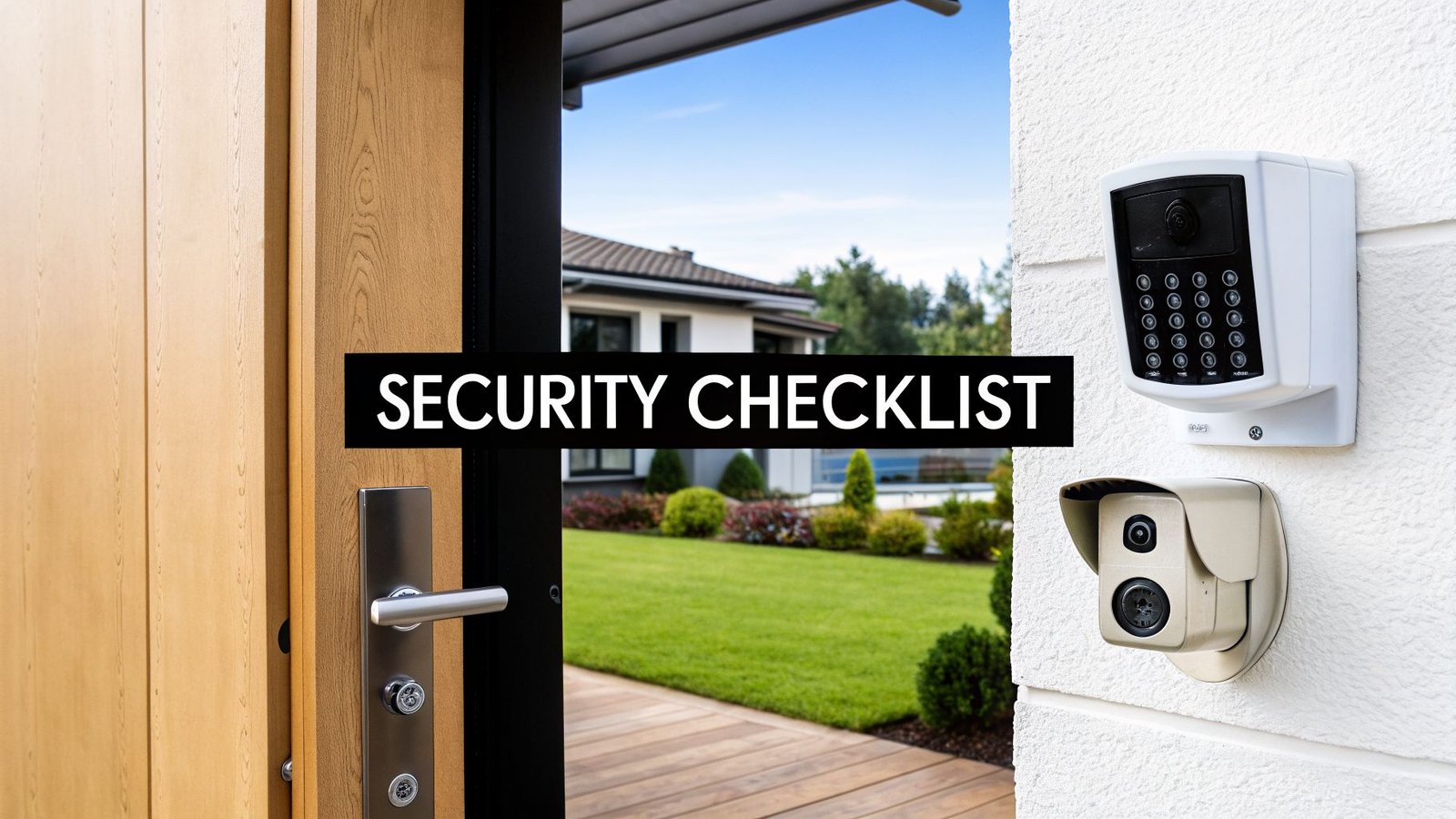
One of the biggest heart-stopping moments for any parent is realizing a toddler has silently opened a door. This is where smart sensors are an absolute game-changer. These little two-part devices stick to any door, window, or even a medicine cabinet and send an instant alert to your phone the second it's opened.
That means you’ll know right away if your little one has figured out the front door, is trying to open a window in their room, or has gotten into the cabinet under the sink. You can even set different alerts—a quiet chime for the pantry door, but a loud, urgent alarm for the door to the pool or garage.
Smart locks build on this beautifully. They give you the power to:
- Check lock status from anywhere: Did I remember to lock the back door? Just check your phone.
- Get alerts for activity: Get a notification whenever a door is unlocked, whether someone uses a key or a keypad code.
- Set auto-lock timers: You can program the door to lock itself automatically after being closed for one minute, so it’s never left unlocked by accident.
This kind of tech offers incredible peace of mind, especially when you're juggling a million things at once.
Smart Cameras and Outlets for Monitoring and Control
Indoor cameras can be a great way to keep an eye on a playroom from another part of the house, but they come with a huge responsibility: protecting your family’s privacy. When you're shopping for a camera, look for models with strong encryption and two-factor authentication. Always set a unique, complex password, and stick to placing them in common areas, not private spaces like bedrooms or bathrooms.
The goal here is supervision, not surveillance. It’s for checking on the kids in the playroom while you’re making dinner or making sure a new babysitter is engaged. When they’re not needed, turn them off to maintain a sense of privacy and trust at home.
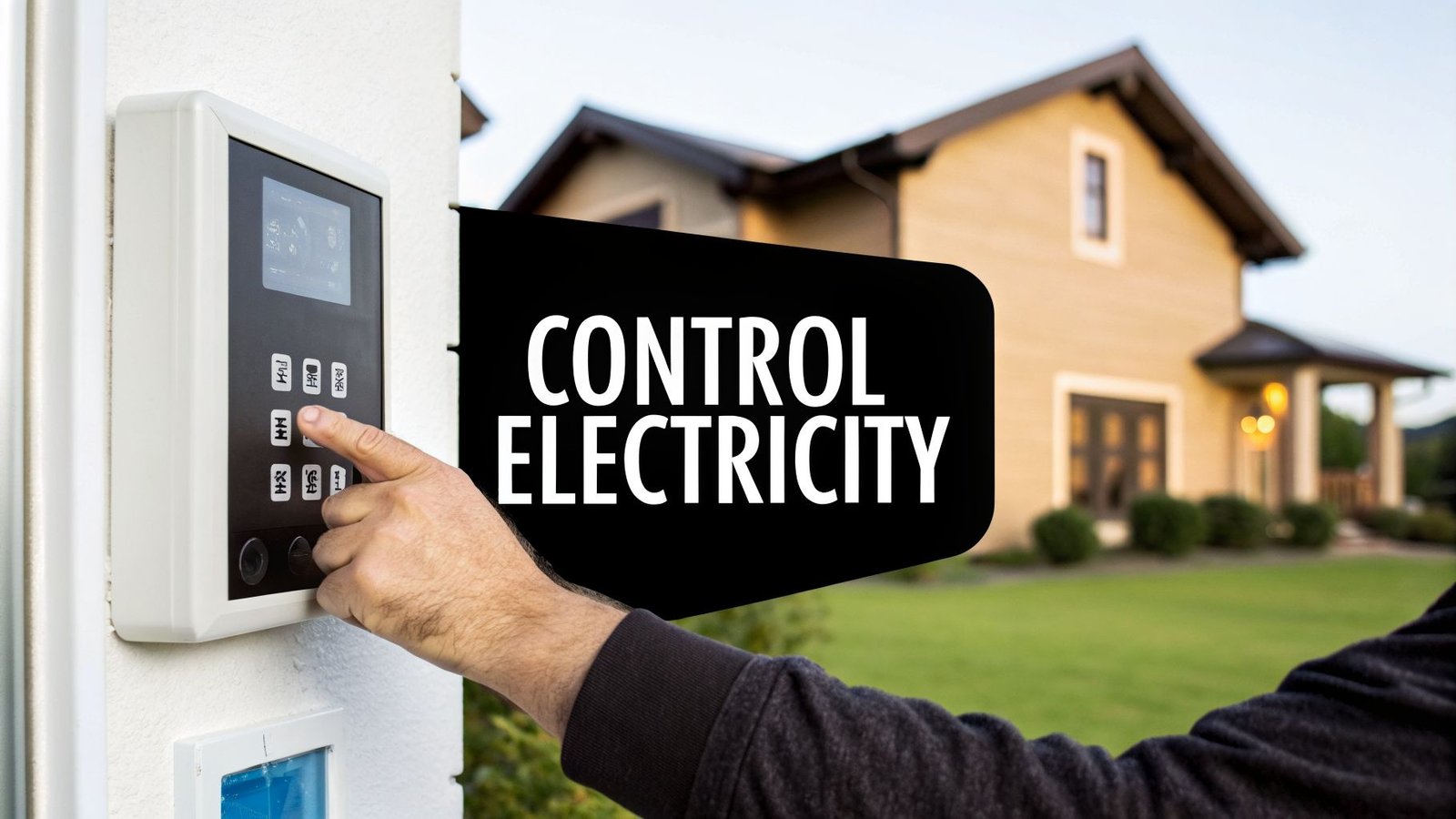
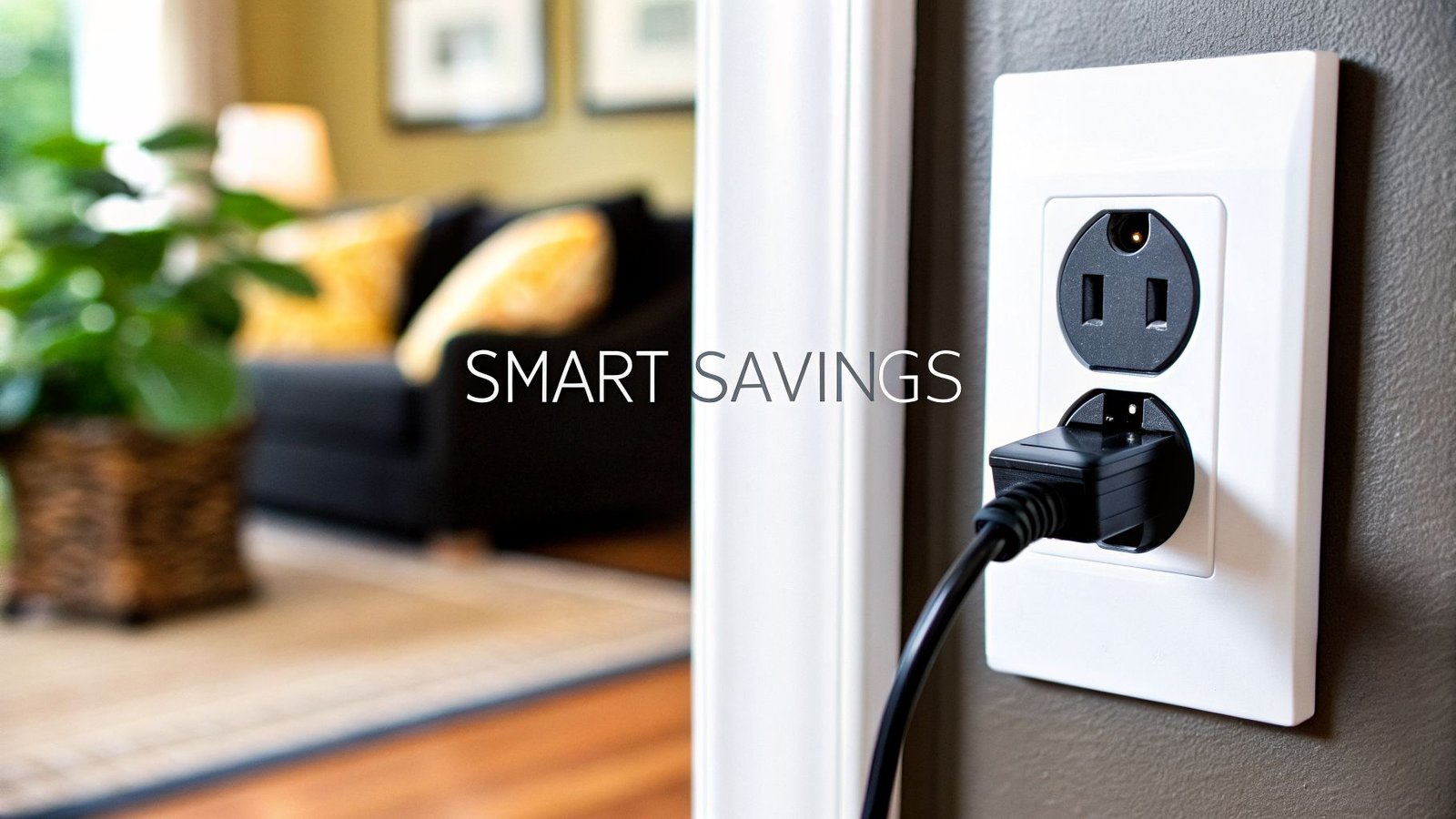
Smart outlets are another brilliant piece of childproofing tech. You plug the device into your regular wall socket, then plug an appliance into it. From a simple phone app, you can completely cut power to that outlet.
This is a lifesaver for things like floor lamps with dangling cords, entertainment centers packed with electronics, or kitchen appliances you want to make sure are off-limits. You can even set schedules to automatically kill the power to certain devices after bedtime, creating a nearly foolproof electrical safety system. When you combine these tools, you can build one of the most effective smart home security systems designed specifically with your child’s safety in mind.
Keeping Up: Your Ongoing Childproofing and Maintenance Plan
Think of childproofing as a living part of your home, not a one-and-done project you can cross off a list. It needs to grow and change right along with your child.
The magnetic lock that’s pure magic against a curious crawler might become a fun puzzle for a determined two-year-old. That once-impenetrable baby gate? It's now a climbing challenge for your little adventurer. To keep them truly safe, you have to stay one step ahead.
Your Quarterly Safety Check-In
I recommend setting a reminder on your phone to do a quick safety walkthrough every 3 months. It only takes about 30 minutes, and this little habit can catch a problem before it turns into a real scare. The best way to do this is to get down on their level—literally. See your home from their perspective again.
Here’s a simple checklist for your walk-through:
- Tug on every lock and latch. Seriously, give them a good pull. Adhesive on locks, especially in a steamy bathroom, can lose its grip over time.
- Shake the gates. Grab your baby gates with both hands and give them a firm wiggle. Are the screws in the wall mounts still tight? Does the gate latch click securely into place without any fuss?
- Test the anchors. Gently push on the top of your anchored furniture. You shouldn't feel any give or see any slack in the straps. If you do, it's time to tighten those screws.
Adapting as They Grow
The real game begins when your child's brain starts working faster than your initial childproofing plan. A toddler who has seen you tap the magnetic key to open a cabinet a dozen times might just figure out the trick. This is when you have to pivot.
I always tell parents to think of childproofing in layers. When your child figures out the first layer of defense—like a simple slide lock—it’s time to upgrade. The next layer might be a magnetic lock or a childproof knob cover they can't physically operate yet.
Your strategy has to evolve. For instance, the moment they start climbing, your entire risk assessment changes. That cute armchair is now a launchpad to the kitchen counter. The low-hanging pothos plant is now a Tarzan rope. Learning how to childproof your home is less about a single set of rules and more about constantly re-evaluating your space through the eyes of a child with brand-new skills and endless curiosity.
Your Top Childproofing Questions, Answered
Even with the best checklist in hand, you're going to have questions as you start making your home safer for your little one. That's completely normal. Let’s tackle some of the most common things parents ask.
When Should I Really Start This?
Honestly? Sooner than you think. The sweet spot is usually during the second trimester of pregnancy. This gives you a nice, long runway to research products, get them delivered, and install everything without that last-minute panic.
My advice is to get the big stuff out of the way first. Think anchoring heavy furniture and installing those sturdy, hardware-mounted gates. You can leave the smaller tasks, like popping in outlet covers or adding cabinet locks, for closer to your due date. The main goal is to have all the major hazards handled before your baby suddenly decides to become a world-class crawler, which can happen in the blink of an eye.
The biggest mistake I see parents make is waiting until the baby is already on the move. It turns a manageable project into a frantic, stressful race against their a tiny, fast-moving target. Start early.
Do I Need to Buy the Most Expensive Gear?
Not at all. A high price tag doesn't automatically mean a product is safer or better. A simple, budget-friendly spring-action latch, for example, can keep a curious toddler out of a cabinet just as well as a fancy magnetic lock. The "best" product is simply the one that solves your specific problem and is installed correctly.
Instead of focusing on price, look for these things:
- Safety Certifications: Check for certifications from groups like the Juvenile Products Manufacturers Association (JPMA). This tells you it’s been tested against established safety standards.
- Correct Installation: A $100 gate installed improperly is far more dangerous than a $30 one that's securely anchored to the wall studs. The installation is everything.
- Your Child’s Personality: You know your kid best. Some toddlers are little escape artists who can figure out any latch in minutes. They might need a more complex lock. Others couldn't be bothered.
Is It Possible to Childproof Without Making My House Look Awful?
Yes, one hundred percent. The idea that childproofing means your home has to look like a daycare center is a total myth. These days, a lot of safety gear is designed to be discreet and even stylish. For instance, magnetic locks are installed on the inside of cabinets, so they're completely invisible from the outside.
You can also find some really sleek, modern baby gates that actually complement your decor instead of sticking out like a sore thumb. Cord concealers can be painted to match your wall color, making them blend right in. It's all about finding solutions that work with your home, not against it. Thoughtful childproofing proves safety and style can absolutely go hand-in-hand.
At Automated Home Guide, we're committed to helping you integrate smart, effective safety solutions into your home. Explore our guides to find the best technology for protecting your family. Find out more at https://automatedhomeguide.com.





Leave a Reply