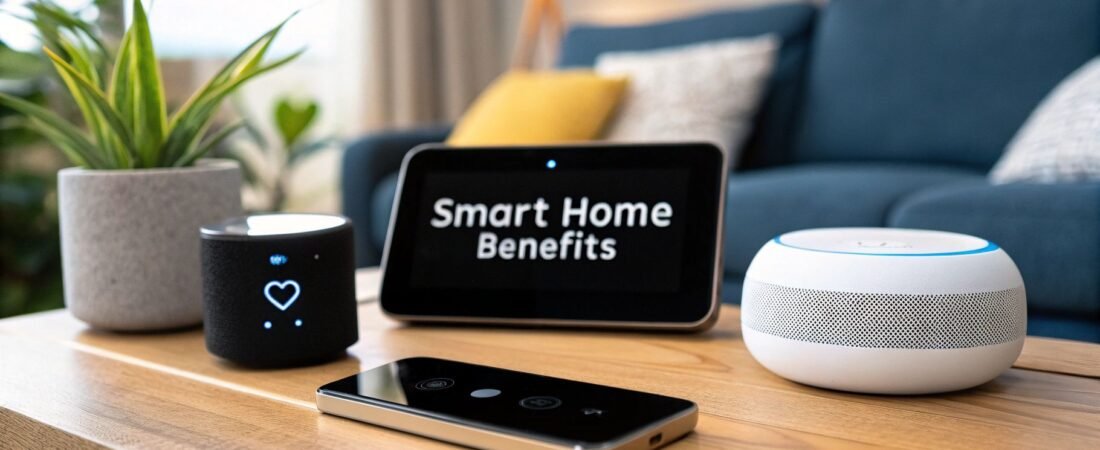
At its core, a smart home delivers on three big promises: more convenience, tighter security, and better energy efficiency. These systems link your home's devices together, letting you manage them from afar, put daily chores on autopilot, and get instant updates, all of which makes your living space feel more intuitive and in-sync with your life.
What Exactly Is a Smart Home and Why Does It Matter
Let's cut through the noise. A smart home is more than just a house full of fancy gadgets; it’s a connected ecosystem where all your devices talk to each other to make your life easier.
Think of it like an orchestra. You have individual instruments—the lights, the thermostat, the door locks—but the smart hub is the conductor, making sure they all play together in perfect harmony. This is what creates a home that seems to anticipate your needs and respond instantly.
The real magic happens in this integration. Instead of juggling a dozen different apps and remotes, you get one central command center for your entire home. This ability to automate routines and keep an eye on things from anywhere is a game-changer. If you want to get into the nitty-gritty of how it all works, our guide on what is smart house technology is a great place to start.
The Three Pillars of a Smart Home
The whole concept of a smart home really boils down to three fundamental benefits. Each one tackles a major part of our daily lives, offering real-world solutions to common headaches. Once you see how they work together, the value of a connected home becomes crystal clear.
Here are the main areas where a smart home really shines:
- Convenience and Automation: This is all about getting time back in your day. Imagine your coffee maker brewing your first cup the moment your alarm rings, or the entryway lights flipping on as you pull into the driveway. It's about removing the little frictions of daily life.
- Safety and Security: This pillar is designed for pure peace of mind. You can check your security cameras from a beach halfway around the world, get a notification if the back door was left unlocked, or let a dog walker in remotely without ever handing over a key.
- Energy Efficiency and Savings: A smart home is a smarter home when it comes to your bills. A smart thermostat, for instance, learns your comings and goings so it isn't blasting the heat in an empty house, which can trim your energy costs by 10-15%.
The image below gives you a great visual of how these benefits all stem from a central hub, creating a complete smart home ecosystem.
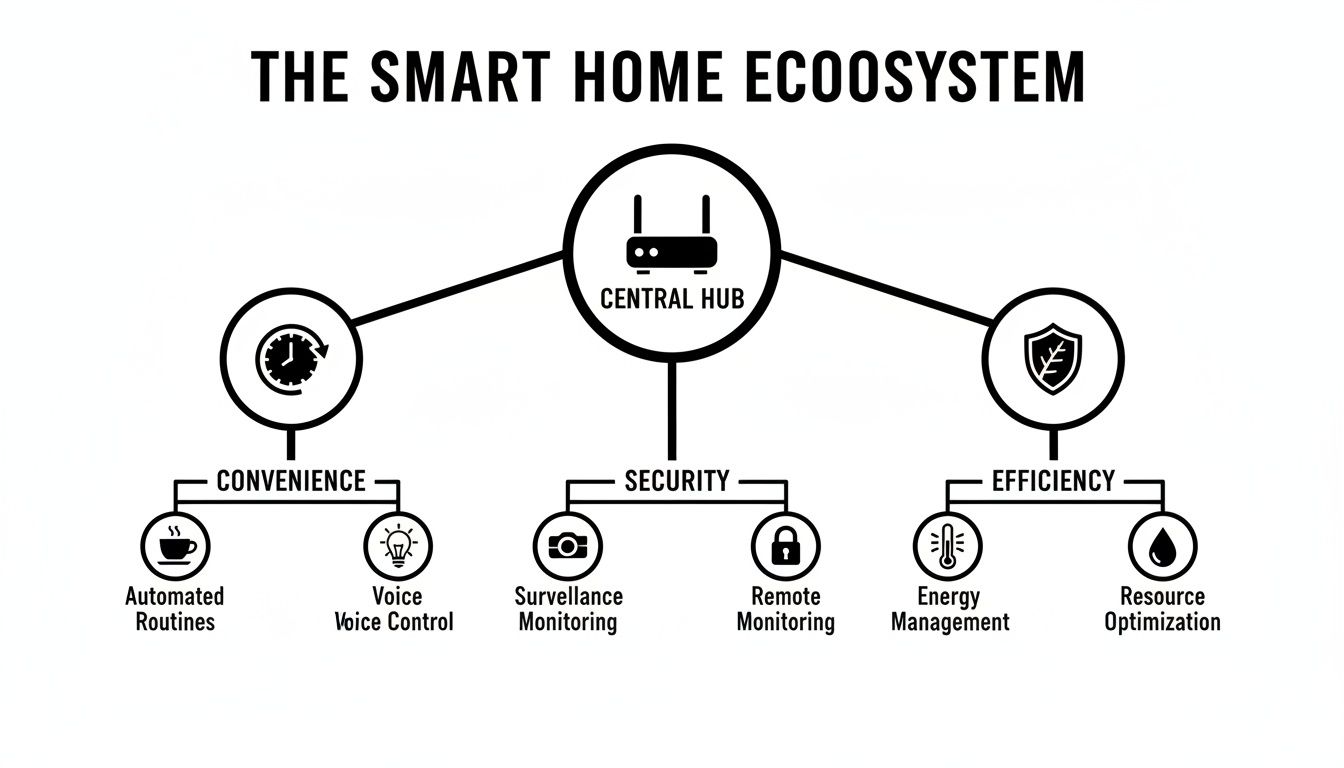
This setup shows that true "smart living" isn't about one cool device. It’s about how an army of devices works together to make your life better.
A smart home is not just about remote control; it's about creating a home that is more intuitive, secure, and resource-conscious. It adapts to your lifestyle, not the other way around.
As we dive deeper into the specific perks throughout this guide, you'll see how these three pillars are the foundation for a much more comfortable and manageable home.
How Smart Technology Fortifies Your Home's Security
One of the biggest reasons people jump into the smart home world is for the peace of mind it offers. Let's be honest, traditional alarm systems are a bit dated. They're reactive, usually making a lot of noise after someone has already broken in. Smart security, on the other hand, is a completely different ballgame. It's like having a proactive, ever-watchful guard for your home, giving you eyes, ears, and control from literally anywhere.
Think of it this way: your security system suddenly has a brain. Smart cameras with built-in AI can tell the difference between the mail carrier dropping off a package and a raccoon wandering across your lawn. This means you only get alerts that actually matter, cutting down on the noise and keeping you genuinely connected to what's happening back home.
This massive shift from passive alarms to active, intelligent security is why the market is exploding. Global spending on smart homes is on track to hit a staggering $173 billion by 2025, and security gadgets are leading the charge. The proof is in the pudding: homes with smart security systems are reported to deter up to 300% more break-ins than homes with just an old-school alarm. That’s the power of being able to see what’s happening and get an alert on your phone in real-time.
Remote Access and Total Control
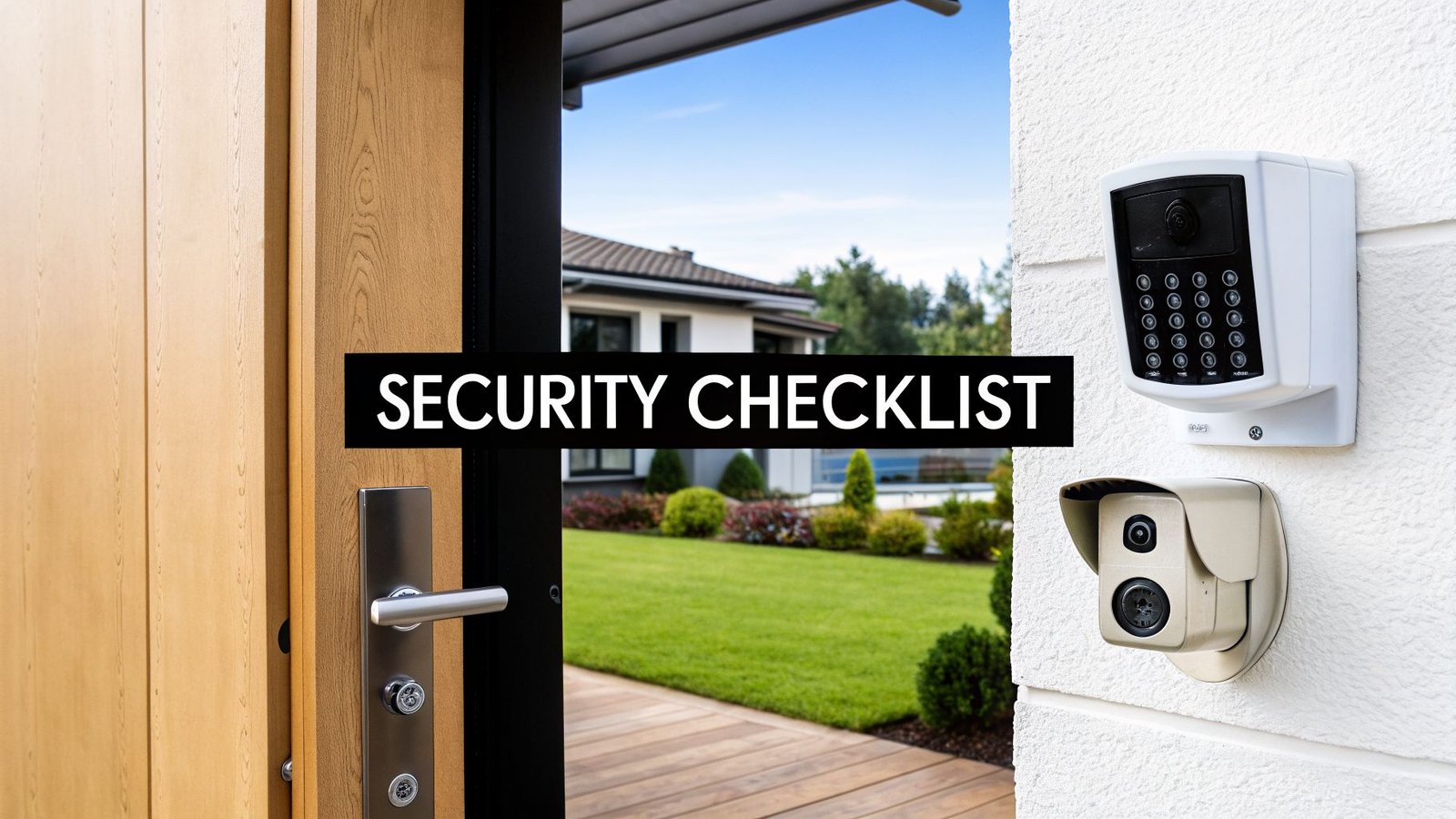
Remember that nagging feeling on your way to work, "Did I lock the front door?" Those days are gone. Smart locks and garage door openers put that control right into the palm of your hand, wherever you are.
If a family member gets home from school and realizes they forgot their key, you can unlock the door for them from your desk with a quick tap on your phone. No more spare keys under the doormat—which, by the way, is the first place a burglar looks.
- Grant Temporary Access: Have a contractor or dog walker coming by? You can create a temporary digital "key" or access code that only works during a set window of time. Once they're done, the access simply expires. Secure and simple.
- Receive Real-Time Alerts: Your phone can buzz you the moment a door is locked or unlocked. This gives you a running log of who’s coming and going, so you're always in the loop.
- Automate Locking: You can even set your doors to automatically lock themselves every night at 10 PM, or whenever your phone's GPS shows you've left the neighborhood. It's an effortless, set-it-and-forget-it layer of security.
With smart security, your home stops being a static building. It becomes a responsive environment that you can manage and interact with from afar, delivering a sense of security that's hard to beat.
For a cool, real-world example of this tech, check out a smart biometric fingerprint padlock. It’s the kind of device that blends keyless convenience with seriously advanced security.
Intelligent Surveillance That Sees Everything
Today's smart security is so much more than just locks. When you integrate cameras and sensors, you create a complete defensive shield around your property, and your smartphone becomes the command center for all of it.
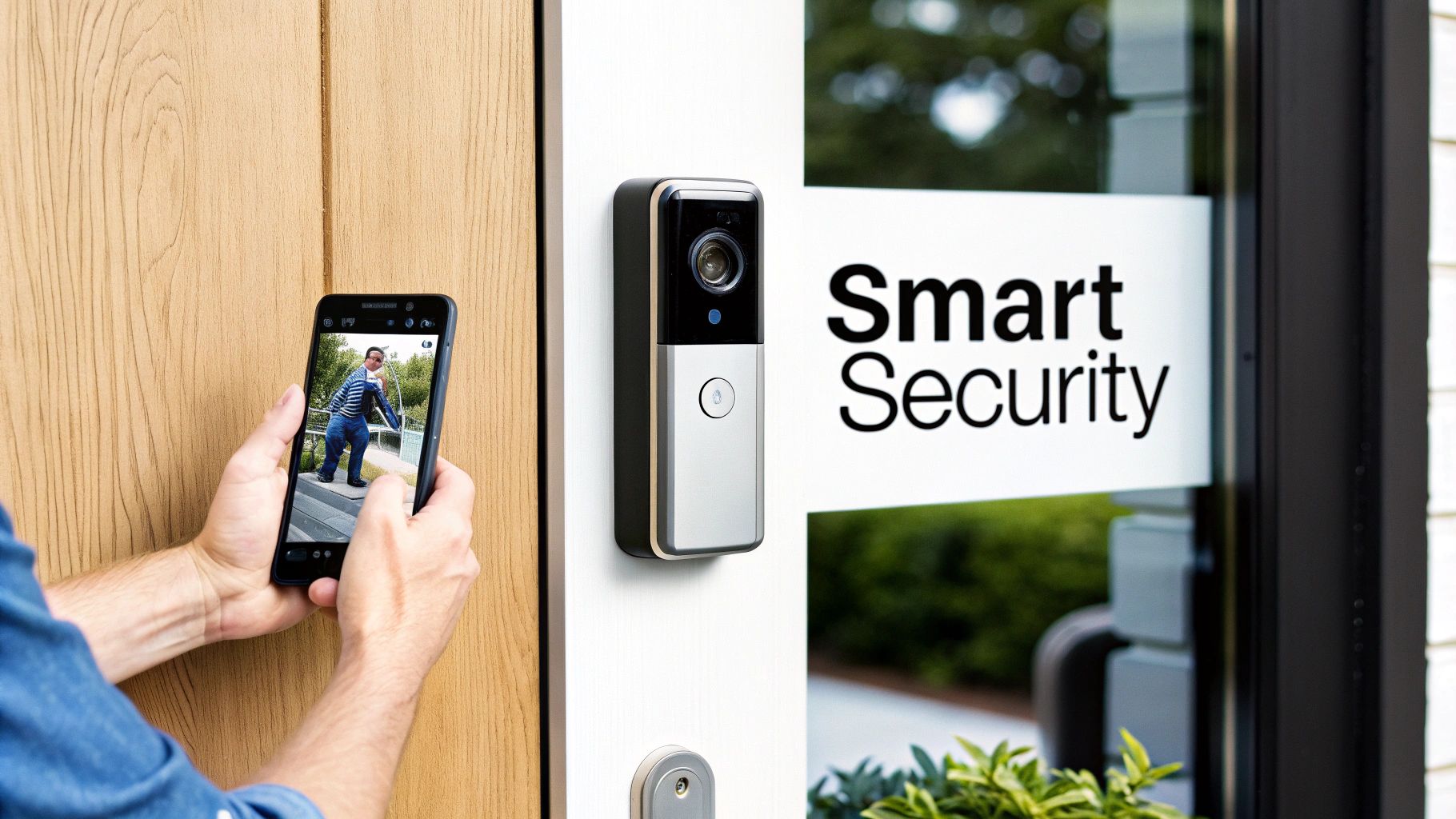
Video doorbells are the perfect example. Someone rings your bell, and a video call pops up on your phone. You can see them and talk to them, whether you're just upstairs or halfway across the world on vacation. This lets you tell the delivery driver where to hide a package or scare off a potential porch pirate before they even try anything.
This kind of situational awareness is at the heart of all good smart home security systems, which are designed to tie multiple devices into one seamless network.
Creating a Secure and Responsive Environment
The real magic happens when all these smart devices start working together. It’s not about having a bunch of individual gadgets; it’s about creating a connected ecosystem that responds intelligently when something is wrong.
Picture this: a motion sensor on a back window gets tripped at 2 AM. A traditional alarm would just start screeching. A smart system, however, can kick off a whole chain of events automatically:
- Instant Illumination: Every smart light inside and outside your house can immediately flip on to full brightness, flooding the area with light and startling any intruder.
- Visual Verification: The closest security camera instantly starts recording and pushes a live feed straight to your phone so you can see exactly what's happening.
- Automated Lockdown: All smart locks on your doors can engage at the same time, securing every potential exit.
This kind of coordinated response turns your home into an active participant in its own defense. It's an intelligent shield that doesn't just tell you about danger—it takes immediate, practical steps to deal with it. That's a level of security that used to be reserved for high-tech commercial buildings, but now it's available for your own home.
Gaining Back Your Time With Seamless Home Automation
Beyond feeling safer, one of the most immediate perks of a smart home is getting your time back. Think about all the tiny, repetitive tasks that fill your day—they add up. Smart home automation essentially acts as your personal assistant, taking care of those little chores so you can focus on things that actually matter.
It's about making your daily rhythm smoother. Imagine waking up not to a blaring alarm, but to a gentle "Good Morning" routine you’ve created. Your smart blinds can slowly open to let in the morning sun, the heat can kick on to your favorite temperature, and your smart plug can have the coffee maker brewing before your feet even hit the floor. This isn't some far-off concept; it's a real-world way to start your day more peacefully.
That same convenience can be applied to almost anything. The real magic happens when you bundle multiple actions into a single command. Instead of fumbling with different switches and apps, you can create "scenes." For example, a "Movie Night" command could instantly dim the lights, lower the shades, and fire up your TV and soundbar—all with one tap or a simple voice command.
Your Personal Command Center
The true power of home automation clicks when you can control your entire home without thinking about it. Voice assistants like Amazon Alexa and Google Assistant become the brain of the operation, letting you manage dozens of devices without lifting a finger. It's especially handy when your hands are full—just ask your house to turn on the kitchen lights as you walk in with groceries.
This transforms your home from a passive space into a responsive partner. For instance, your home can get ready for your arrival using your phone's location as a trigger. It can automatically:
- Cool or heat the living room to your ideal temperature right before you get home.
- Turn on the porch and entryway lights so you never walk into a dark house again.
- Unlock the front door as you approach, saving you from juggling keys and bags.
It's these small, interconnected actions that create a genuinely effortless and stress-free living experience. Your home starts adapting to your life, not the other way around.
The goal of smart automation isn't just about cool gadgets; it's about removing friction from your daily life. Every task you automate is another moment you get back for yourself, your family, or your hobbies.
How Smart Automation Transforms Daily Routines
Let’s get practical and see how smart solutions really compare to the old way of doing things. The real difference is that automation is proactive—it handles tasks before you even have to think about them. For a deeper look at how this works on a larger scale, you can explore different strategies to automate tasks and reclaim your time.
This table shows the practical impact of smart home automation on everyday tasks, highlighting the gains in convenience and efficiency.
How Smart Automation Transforms Daily Routines
| Traditional Task | Smart Home Solution | Key Benefit |
|---|---|---|
| Waking up to a loud alarm clock | An automated 'Wake Up' scene that gradually brightens lights, raises blinds, and starts playing gentle music. | A less stressful and more natural start to your day, easing you into your morning. |
| Manually checking and locking doors at night | A 'Goodnight' routine that locks all doors, turns off all lights, and adjusts the thermostat with a single command. | Eliminates the nightly chore of walking through the house, ensuring your home is secure with zero effort. |
| Adjusting thermostat for comfort | A smart thermostat that learns your schedule and automatically adjusts the temperature when you leave and before you return. | Consistent comfort without constant manual adjustments, combining convenience with energy savings. |
| Watering the lawn on a set timer | A smart sprinkler system that checks local weather forecasts and skips watering sessions if rain is predicted. | Saves water and money by only watering when necessary, adapting intelligently to its environment. |
As you can see, each example follows the same core idea: automation works quietly in the background to make your life easier. By taking dozens of small decisions and actions off your plate every day, it frees up your mental energy for more important things, turning your house into a true sanctuary.
Cutting Utility Bills with Smart Energy Management
Beyond the cool factor and added security, one of the best reasons to invest in a smart home is that it can genuinely put money back in your pocket. A connected home is an efficient one, constantly working behind the scenes to trim your energy consumption without you having to think about it. This isn't about sitting in the dark or being cold; it's about eliminating waste.
Think of your home as a vigilant financial manager, always looking for ways to cut unnecessary spending. A traditional home is like an employee who leaves every light on and cranks the heat even when no one is around. A smart home, on the other hand, is the sharp manager who ensures resources are only used exactly when and where they're needed.
This kind of intelligent energy management turns a smart home from a neat gadget into a sound financial decision. Over time, the devices not only pay for themselves but keep delivering savings year after year. A smarter home is a more economical one.
Intelligent Climate Control That Learns Your Life
Your heating and cooling system is probably the biggest energy hog in your house. A regular thermostat is pretty basic—you set a temperature, and it stays there, dutifully heating or cooling an empty home for hours while you're at work or out for the day. This is where smart thermostats completely change the game.
These clever devices actually learn your daily schedule and habits. They figure out when you typically leave, when you're on your way home, and even which rooms you spend the most time in. With that data, they build a custom heating and cooling schedule that perfectly matches your lifestyle, keeping you comfortable when you're there and saving a ton of energy when you're not.
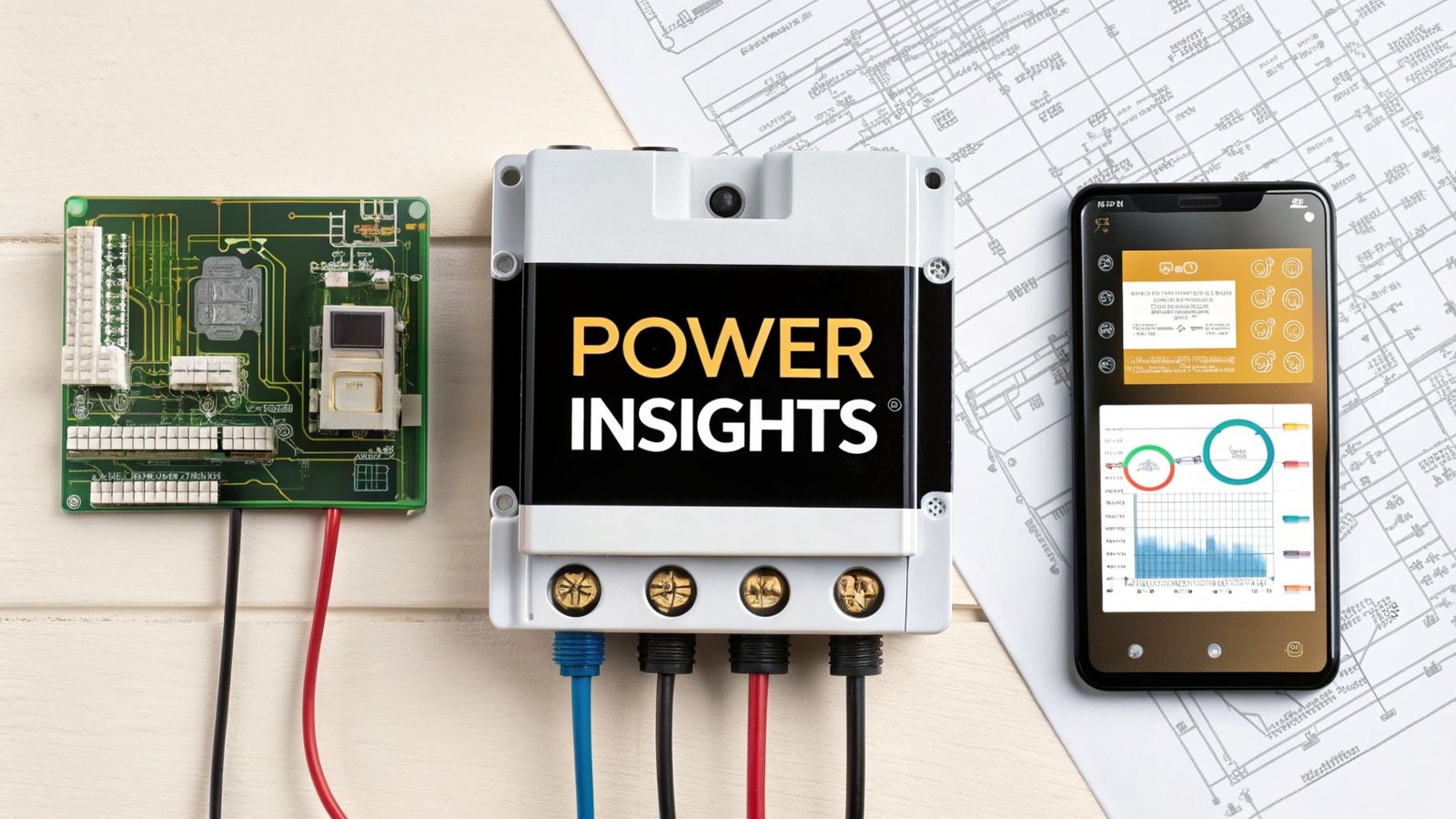
The savings add up fast. Real-world data shows that a smart thermostat alone can slash energy use by 10-15% on average. That translates to real money—about $131-$145 in your pocket each year. And when you start integrating them into a whole-home system, the potential for savings gets even bigger. You can get more stats on the smart home market and its growth from Fortune Business Insights.
Smarter Lighting for Every Room
How often do you walk through your house just to turn off lights left on in empty rooms? Smart lighting automates that little chore right out of existence, making wasted electricity a thing of the past. It’s about so much more than just turning lights on with your phone; it’s about creating an intelligent lighting grid that adapts to your life.
Here’s how it works in the real world:
- Motion-Activated Lights: Sensors automatically flip the lights on when you walk into a room and turn them off after you leave. This is a game-changer for high-traffic areas like hallways, bathrooms, and kitchens.
- Automated Dimming: You can schedule lights to dim in the evenings to save power (and create a relaxing mood) or to brighten slowly in the morning to help you wake up naturally.
- Geolocation Control: By connecting to your phone's location, your lighting system can tell when you've left the house and automatically shut everything off. It can then turn a few key lights on to welcome you when you pull into the driveway.
This kind of precise control means you’re only ever paying for the electricity you actually need. For more practical ideas, our guide on creating an energy-efficient smart home has plenty of tips.
Banishing Energy Vampires for Good
Here's a sneaky one: even when your electronics are "off," many of them are still drawing a small amount of power. Experts call this standby power or "phantom load," and it’s basically energy vampirism. It can account for up to 10% of your household's total electricity use. These silent energy drains are everywhere, from your TV to your coffee maker.
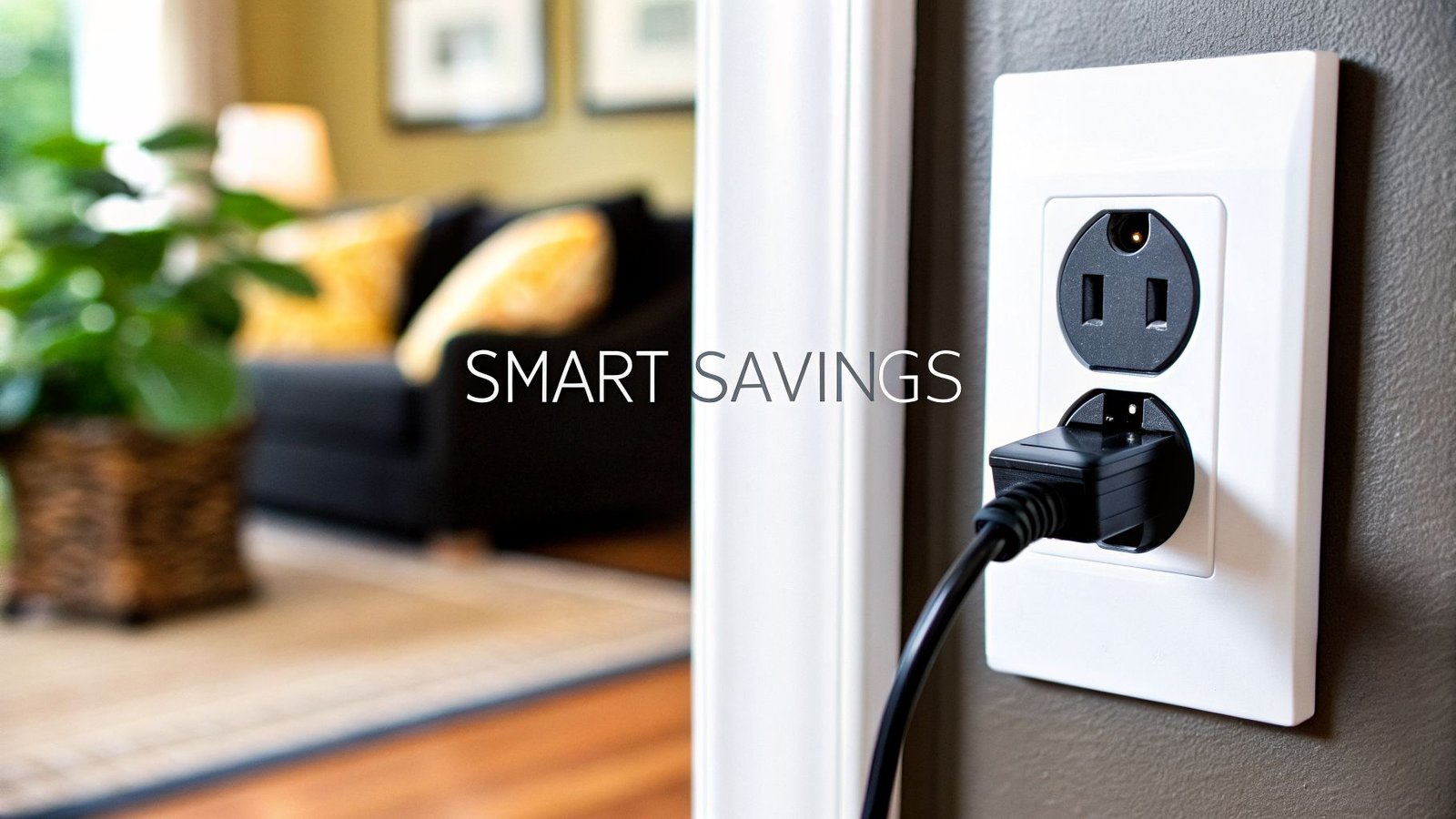
Smart plugs are the secret weapon against these energy vampires. By plugging your devices into them, you gain the power to cut off their electricity supply completely when they're not in use.
You can set a schedule to power down your entire entertainment center overnight or use a single voice command to shut off a whole group of non-essential gadgets as you walk out the door. It's a simple but incredibly effective way to stop paying for electricity you aren’t even using.
Enhancing Daily Comfort and Creating the Perfect Ambiance
Beyond the practical stuff like security and savings, one of the real joys of a smart home is how it can fundamentally improve your quality of life. This is where your home stops being just a building and starts becoming a responsive environment that actively works to make you feel more comfortable and relaxed.
Think of your home as a personal assistant that’s a master of atmosphere. It’s not just about turning things on and off remotely; it’s about creating personalized scenes that fit your mood and what you're doing, making every moment you spend at home that much better.
This kind of fine-tuned control is what turns a house into a true home—a sanctuary built around you.
Lighting That Adapts to Your Life
Smart lighting is probably the single biggest player when it comes to setting a mood. Standard lights are pretty boring: they're either on or off. Smart lighting, on the other hand, can completely change the feel of a room with a voice command or a preset schedule, which has a real impact on your mood and even your productivity.
For instance, you can program your lights to follow your body's natural circadian rhythm. In the morning, they can gradually brighten with cool, energizing tones to help you wake up and feel focused. Come evening, those same lights can automatically shift to a warmer, softer glow, gently signaling that it's time to unwind.
Smart home technology lets you design your environment with intention. Instead of you adapting to your home's limitations, your home adapts to you, creating a living experience that just flows.
This control is amazing for special occasions, too. A "Dinner Party" scene could dim the lights to a cozy, welcoming level, while a quick "Movie Night" command cues the perfect theater-like darkness.
An Immersive Audio and Visual Experience
Of course, comfort isn't just about what you see. It's also about what you hear and how your whole environment feels. A smart home can orchestrate all these elements to work in harmony, creating a truly immersive space.
This is where multi-room audio systems and automated blinds really shine. They work in tandem to craft the ideal sensory backdrop for your life.
- Follow-Me Music: Imagine your favorite playlist or podcast following you seamlessly from the kitchen to the living room and out onto the deck. With a multi-room audio setup, the sound just flows with you, providing a continuous soundtrack to your day.
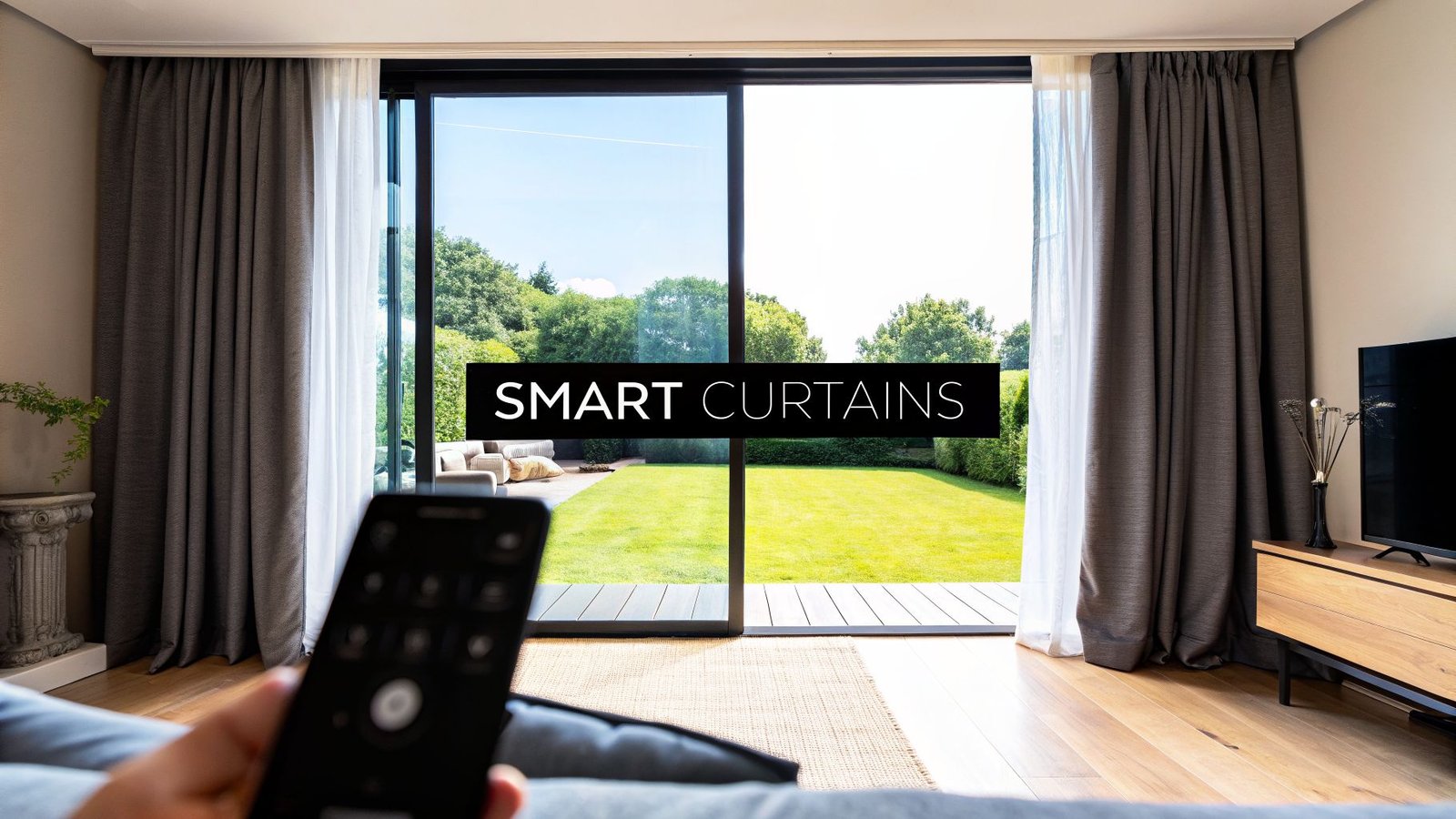
- Optimized Natural Light: Smart blinds can be set to open and close with the sun. They can welcome in the energizing morning light, automatically block out the harsh afternoon glare, and close for privacy at night—all without you lifting a finger.
When you sync these systems, you create a space that feels perfectly tuned to whatever you're doing, whether you're entertaining, working, or just kicking back.
A Healthier Indoor Environment
True comfort also means breathing easy. Your smart home can actively keep an eye on your indoor air quality, making a real contribution to your family's health.
Smart air purifiers and humidifiers are perfect examples. These aren't just dumb machines running on a timer; they use built-in sensors to detect airborne pollutants like dust, pollen, and even VOCs. If the air quality dips, they kick on automatically to filter the air, ensuring you're always breathing clean air. For anyone with allergies or asthma, this is a game-changer.
Getting Started and Protecting Your Privacy
Diving into the world of smart homes is genuinely exciting, but it’s completely normal to wonder where to start and how to keep your data safe. The trick is to begin small and be intentional about building your system, keeping both convenience and digital security in mind from the very first plug.
After all, so much of what makes a smart home great relies on it being connected to the internet, which automatically makes privacy a top concern.
Think of securing your smart home like you secure your actual house. You wouldn't use one flimsy key for your front door, back door, and garage, right? The same logic applies here. Your first line of defense—and it's a big one—is using strong, unique passwords for your Wi-Fi network and for every single smart device app. A password manager can make this surprisingly painless.
On top of that, you should always turn on two-factor authentication (2FA) whenever a device or app offers it. This adds a crucial second step to logging in, usually a code sent to your phone, which makes it dramatically harder for someone who isn't you to get into your accounts.
Your First Steps Into Smart Technology
The easiest way to keep from getting overwhelmed is to pick one device that solves a real problem for you. This approach lets you get a feel for the benefits of automation right away without a huge investment in time or money. Once you see how it fits into your daily routine, you can add more devices at your own pace.
A central hub is often a great place to begin, since it can grow with you. Here are three solid choices for a first purchase:
- Smart Speakers: An Amazon Echo or Google Nest Hub can immediately become the command center for all your future gadgets. Even on their own, they're useful for playing music, setting kitchen timers, or getting quick answers to questions.
- Smart Plugs: These little adapters are incredibly simple and versatile. You can plug a regular lamp, a fan, or even a coffee maker into one, and suddenly you can control it with your phone or your voice. It’s an instant upgrade for your "dumb" appliances.
- Smart Lighting: Just swapping out a few light bulbs for smart ones can completely change the mood of a room. It's a fun and easy way to play around with scheduling lights to turn on before you get home or creating custom scenes for movie night.
Think of your first smart device as a cornerstone. Choose something that solves a small, daily annoyance. The goal is to build confidence and understand how these devices fit into your life before you commit to a larger system.
Choosing Your Ecosystem and Staying Safe
As you start adding more devices, you'll want them to talk to each other. This is where picking an "ecosystem" comes into play. The big three are Amazon Alexa, Google Home, and Apple HomeKit. When you're shopping, just look for a "Works with Alexa" or "Hey Google" logo on the box to make sure a new device will slot right into your setup.
Beyond just getting things to work together, it’s really important to consider the reputation of the brands you buy. Stick with well-known manufacturers that have a history of pushing out regular security updates and are transparent about their privacy policies.
Here are a few final security habits to get into:
- Keep Firmware Updated: Manufacturers constantly release updates to patch security holes. Go into your device settings and enable automatic updates whenever you can.
- Review Device Permissions: When you install a new app, be mindful of what it's asking for. Does your smart plug really need access to your contacts? If it doesn't seem necessary, don't grant permission.
- Secure Your Router: Your Wi-Fi router is the front door to your entire smart home. Make sure you've changed the default administrator password (the one on the sticker) and have its security settings cranked up.
By taking these measured steps, you can confidently build a smart home that's not only more convenient and comfortable but also one that respects and protects your privacy.
Frequently Asked Questions About Smart Homes
Even after seeing all the benefits, it's totally normal to have a few questions before you start buying smart devices. Let’s clear up some of the most common things people ask about, from what it costs to get started to how it impacts your Wi-Fi.
Getting these answers will help you feel confident as you take the first step. The whole point is to build a home that's safer, more efficient, and just plain easier to live in—and that starts with making a smart decision.
How Much Does a Smart Home Cost to Set Up?
This is the best part: you can start small and build it out over time. There's no need to drop a ton of money all at once to start enjoying the perks of a smart home. Most people just begin with one or two gadgets that solve a real problem for them.
Here are a few easy, budget-friendly ways to dip your toes in:
- Smart Plugs: For about $10-$20 a pop, these little devices can make just about anything you plug into a wall "smart."
- Smart Speakers: An Amazon Echo Dot or Google Nest Mini usually costs less than $50 and gives you a central hub for voice commands.
- Smart Lighting: You can grab a single smart bulb for as little as $15, which is a fantastic way to experiment with setting different moods with your lights.
Once you have a starting point, you can add things like smart thermostats or security cameras when it makes sense for you and your budget. Because it’s a piece-by-piece process, building a fully decked-out smart home can be surprisingly affordable.
Do All Smart Devices Work Together?
That's a fantastic question, and the answer is… not always automatically, but it's a lot simpler than it used to be. A few years ago, you had to worry about sticking to a single brand for everything. Now, things are much more open thanks to common platforms.
Think of it like this: you need to choose a central "ecosystem" to be the brain of your home. The big three are Amazon Alexa, Google Home, and Apple HomeKit.
When you're shopping for a new device, just look for a little badge on the box that says "Works with Alexa" or "Compatible with Google Home." As long as your gear is made for the same ecosystem, it’ll play nicely with everything else, letting you run it all from one app or with your voice.
Do I Need Super-Fast Internet for a Smart Home?
You definitely need a stable internet connection, but you probably don't need to upgrade to the most expensive plan your provider offers. Most smart gadgets—like plugs, lights, and sensors—hardly use any bandwidth at all. They just send tiny bits of data back and forth.
The real bandwidth hogs are the devices that stream high-definition video, like your security cameras or video doorbell. If you plan on running multiple cameras at the same time, you'll want to make sure you have a solid upload speed. But for the average home, a standard broadband connection has more than enough power to handle a whole house full of smart devices without breaking a sweat.
Ready to build a smarter, safer, and more convenient home? The Automated Home Guide provides expert insights, product reviews, and practical tips to help you make the best decisions for your living space. Explore our resources today at https://automatedhomeguide.com.


Leave a Reply