When you're upgrading to an ENERGY STAR appliance, you're not just playing the long game with energy savings. You can get actual cash back in your pocket, right away. These energy star appliance rebates are incentives from all over—governments, utility companies, and even retailers—designed to slash the upfront cost of buying an efficient new product.
Let's walk through how you can find and claim every dollar you're entitled to.
Why Bother Chasing Down Appliance Rebates?
It’s easy to shrug off rebates, thinking the paperwork isn't worth the hassle or the savings are just pocket change. That's a myth that can cost you serious money. These programs exist to make high-efficiency appliances more affordable for everyone, essentially rewarding you for making a smart, eco-friendly choice.
We're not talking about a few bucks here. The savings can easily add up to hundreds of dollars, which takes a huge bite out of the price tag for a new refrigerator, clothes dryer, or heat pump water heater.
Think about it: you need a new appliance anyway. A little bit of research upfront could mean you get a top-tier, super-efficient model for the same price—or even less—than a basic, energy-guzzling one. That's an immediate win, followed by years of lower utility bills.
The Real-World Impact of Rebates
This isn't some new gimmick; rewarding energy efficiency has been a successful strategy for years. Back in the late 2000s, a major federal initiative pushed $300 million into state-run ENERGY STAR rebate programs. The result? Around 1.78 million rebates were claimed by consumers like you, putting roughly $264 million directly back into their wallets. For many families, that program was the tipping point that made energy-efficient tech an affordable reality.
Today's programs are often more local, but their impact is just as significant. They accomplish a few key things:
- Make Efficiency Affordable: Rebates knock down the sticker price, putting premium, energy-saving models within reach.
- Encourage Better Tech: When more people buy efficient products, it signals to manufacturers that there's a real market, pushing them to innovate further.
- Help the Power Grid: The more efficient appliances we all use, the less strain there is on the electrical grid, especially during those peak summer afternoons.
A Key Piece of Your Home Savings Strategy
Claiming an energy star appliance rebate is a fantastic financial move, but it's one part of a bigger picture. To really cut down your household costs, you have to look at your energy consumption from every angle. Rebates give you a great head start on new purchases, but a truly effective plan combines this with other habits.
There are many proven energy tips to lower your electric bill that work hand-in-hand with the savings you get from efficient appliances.
In the end, it’s about making a decision that's good for your wallet and the environment. By starting with the https://automatedhomeguide.com/best-energy-efficient-appliances/, you can be confident your purchase will deliver great performance and qualify for the biggest possible rebate.
How to Find Every Available Rebate in Your Area
Tracking down ENERGY STAR appliance rebates can feel like a scavenger hunt, but it's a game you can absolutely win if you know the map. The secret isn't finding one magic pot of gold; it's realizing that incentives come from different places. A single new appliance could be eligible for money back from federal, state, utility, and even retail programs. Your job is to find them all and stack them up.
Think of it less as a single jackpot and more as collecting a handful of smaller prizes that add up to a big win. Once you learn to check these four main sources, you'll have a go-to strategy for every appliance upgrade you make down the road.
Start Your Search with the ENERGY STAR Rebate Finder
Your first stop should always be the official ENERGY STAR Rebate Finder. It’s a powerful, straightforward tool designed to pinpoint local offers, pulling in data from utilities and state programs all over the country.
All you do is plug in your zip code. The tool immediately generates a list of available rebates for different appliance types right where you live. It's the best way to get a quick, high-level look at what your local utility is offering before you start digging deeper.
Here’s a glimpse of the tool in action—it's clean, simple, and effective.
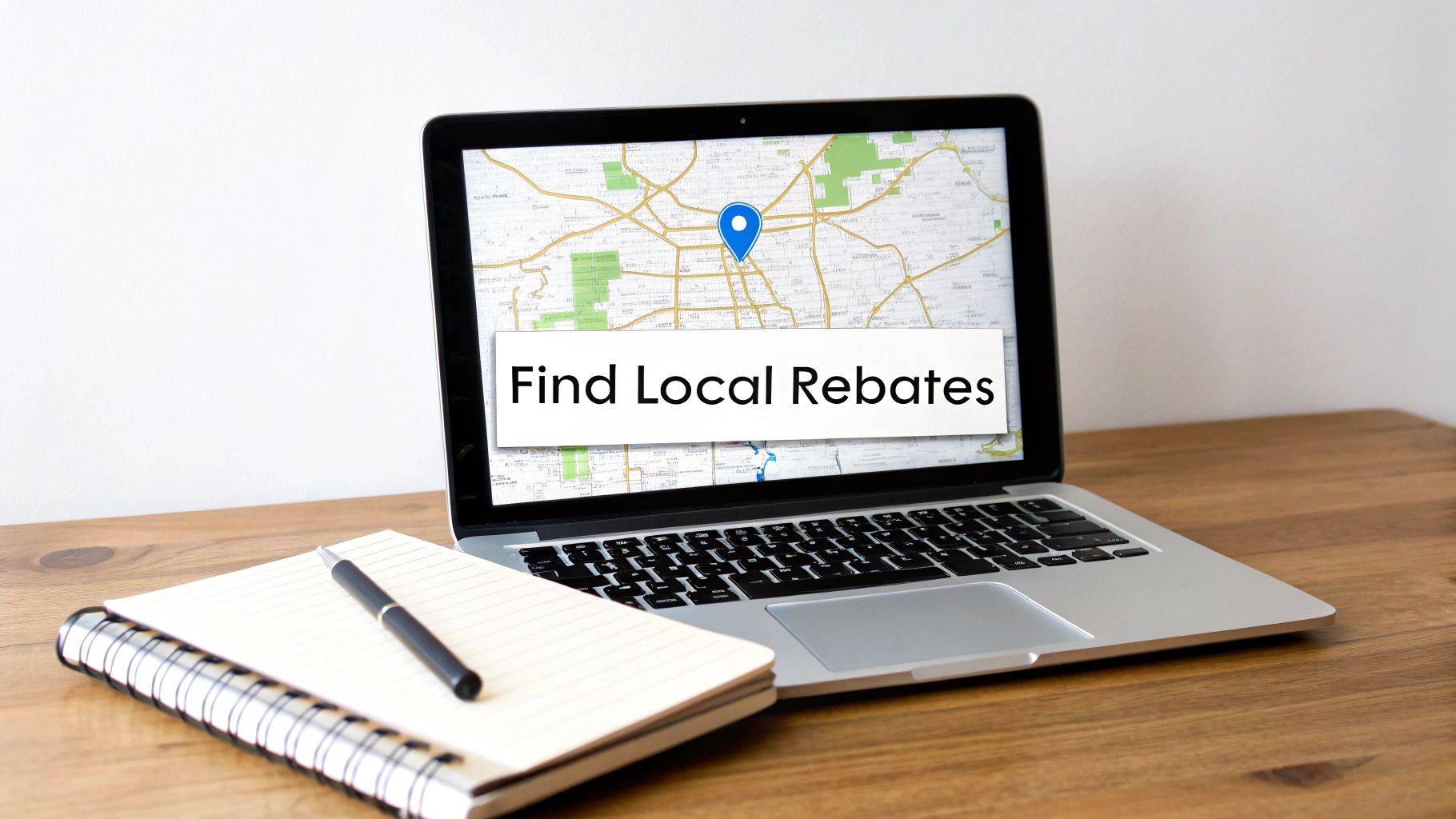
This simple search is your gateway to geographically targeted incentives that are often surprisingly generous.
Go Straight to the Source: State and Utility Programs
While the ENERGY STAR finder is a fantastic starting point, you always want to double-check directly with the source. Your local utility company is often the single biggest player in the rebate game. They have a vested interest in lowering overall energy demand, so they'll literally pay you to buy more efficient appliances.
Head over to your electric or gas provider's website and look for a section labeled "Rebates," "Energy Efficiency," or "Ways to Save." This is where you'll find the nitty-gritty details. For instance, a utility might be offering:
- $75 cash back on an ENERGY STAR certified clothes washer.
- $50 off the purchase of a qualifying high-efficiency refrigerator.
- Up to $750 for installing a new heat pump water heater.
These programs are hyper-local, meaning the offers available to your home can be completely different from those one town over. To really get the most out of these upgrades, it helps to know where your energy dollars are going first. A thorough home energy audit checklist can pinpoint the biggest energy hogs in your house, showing you where an upgrade will deliver the most savings.
Pro Tip: Don't forget to check the Database of State Incentives for Renewables & Efficiency (DSIRE). It’s a bit more technical, but it's a goldmine for uncovering state-level tax credits and other programs that broader search tools sometimes miss.
Rebates come from a few key places, and knowing what to expect from each one makes the search much easier. This table breaks down the main sources and the best tools to find them.
Where to Find Appliance Rebates A Quick Reference
| Rebate Source | Typical Format | Primary Search Tool/Location |
|---|---|---|
| Federal Government | Tax credits that reduce your tax liability at year-end. | ENERGY STAR Federal Tax Credits page or IRS.gov |
| State Governments | Direct cash rebates or state-level tax incentives. | DSIRE Database or your state's Department of Energy website |
| Local Utilities | Instant discounts at checkout or mail-in/online rebates. | ENERGY STAR Rebate Finder and your utility company’s website |
| Retailers & Brands | Instant discounts, mail-in rebates, or "bundle" deals. | Retailer websites (e.g., Lowe's, Best Buy) and manufacturer sites (e.g., LG, GE) |
Using this as a checklist ensures you cover all your bases before making a final purchase.
Look for Federal Tax Credits on Big-Ticket Upgrades
Beyond instant rebates, the federal government offers tax credits for certain high-efficiency home improvements. These aren't checks in the mail; instead, they directly reduce the amount of tax you owe at the end of the year, which is just as good as cash in your pocket.
These credits usually apply to major systems like heat pumps, central air conditioners, and water heaters. The Inflation Reduction Act of 2022 supercharged these incentives, offering credits worth 30% of the project cost up to specific annual limits. The rules and qualifying products can change from year to year, so always check the official ENERGY STAR site or IRS guidelines for the most current information.
Don't Forget About Retailer and Manufacturer Deals
The final layer in your savings strategy comes from the stores and brands themselves. These promotions are often tied to major holidays (think Memorial Day or Black Friday), so a little patience can really pay off.
- Retailer Rebates: Big-box stores like Home Depot, Lowe's, and Best Buy frequently run their own rebate programs. You can usually find these on their websites under a "Deals" or "Rebates Center" section.
- Manufacturer Incentives: Brands like LG, Bosch, or Whirlpool will offer their own cash-back deals, especially if you bundle multiple appliances from the same company. For example, buying a matching kitchen suite might unlock an extra $500 or $1,000 back from the manufacturer.
The best part? You can often "stack" these deals with your utility rebates for massive savings. A savvy shopper could combine a 4th of July sale price from a retailer with a separate mail-in rebate from the manufacturer, and then claim a final rebate from their local utility for the exact same energy-efficient appliance. This is how you turn a good deal into a truly incredible one.
Don’t Get Your Rebate Claim Denied: A Guide to the Fine Print
Seeing that blue ENERGY STAR logo is a great first step, but it’s definitely not a golden ticket for a rebate. I’ve seen too many homeowners get excited about a purchase only to find out their claim was denied. Why? Because incentive programs have very specific rules, and missing a single detail is the fastest way to get rejected.
The biggest mistake people make is assuming any ENERGY STAR model qualifies. The truth is, many utility and state programs save their best offers for appliances that hit the ENERGY STAR Most Efficient standard, which is a much higher bar for performance.
This distinction is everything. An appliance can be certified by ENERGY STAR but still not be eligible for a rebate if the program specifically requires that top-tier rating. Before you even think about buying, you have to cross-reference the exact model number of the appliance with your rebate program's "Qualified Products List."
Confirm These Details Before You Buy
Beyond the specific model, a few other things can trip you up. Program administrators are sticklers for the rules, so you need to get these right from the start.
- Program Dates: Rebates aren't a permanent fixture. You have to purchase and install your appliance within the program's official start and end dates. Buying a day too early or a day too late means you’re out of luck.
- Where You Live: Utility rebates are tied to your service address. Simple as that. You have to be a current customer of the utility offering the rebate and live within their service territory.
- Where You Shop: Some programs have partnerships with local or approved retailers. That amazing online deal you found might not be eligible if your utility requires you to buy from a specific brick-and-mortar store in your state.
Let’s say you’re getting a new heat pump water heater. First, pull up your utility’s qualified products list. Find a model you like, double-check that the program is currently active, and then see if there are any rules about where you have to buy it. This little bit of homework takes maybe 15 minutes but can save you a world of frustration. Keeping detailed records is crucial, and using one of the top receipt scanning apps can be a lifesaver for organizing your purchase documentation.
Why Perfect Paperwork is Non-Negotiable
Once you’ve confirmed the appliance is eligible, it's time to become a meticulous record-keeper. A successful rebate claim hinges entirely on providing perfect documentation. Without the right paperwork, your application is dead on arrival.
Key Takeaway: Treat your rebate application like you're applying for a loan. Every detail matters, and a single missing document can derail the whole thing. Save everything. No exceptions.
I always tell people to keep a dedicated folder for all the paperwork. This means the dated sales receipt, a clear photo of the model and serial number on the unit itself (do this before it's installed!), and the yellow EnergyGuide label. Forgetting to snap a picture of the serial number before your new dryer gets pushed against the wall is a classic, painful mistake.
These incentives genuinely work. Economic research shows that when states offered rebates, the market share of ENERGY STAR‑qualified models jumped by about 1–2 percentage points. Looking at the numbers, 613,561 refrigerator rebates led to $78.8 million in payouts, with the average buyer getting back $128.
Getting the rules right is about more than just the rebate check; it’s about locking in long-term savings. When you understand home appliances' electricity consumption, you see why choosing the most efficient model is such a smart financial move. That knowledge makes navigating the fine print well worth the effort.
Nailing the Rebate Application: Your Final Step to Savings
You’ve done your homework, picked the perfect ENERGY STAR appliance, and made the purchase. Now for the final—and most important—step in locking in your savings: submitting a flawless application. This is where a little bit of focus goes a long way. Honestly, a single missing detail can derail the whole thing, so it’s worth taking your time to get it right.
The best piece of advice I can give? Gather all your paperwork the moment you buy the appliance. Don't put it off. Just create a simple folder on your computer or grab a physical one and start stashing the essentials. This one small habit is often the difference between a quick payout and a frustrating denial.
Get Your Paperwork in Order
While every rebate program has its own quirks, they all tend to ask for the same handful of documents. Getting these ready from the get-go makes the whole submission process a breeze.
Here’s a look at what you’ll almost always need:
- The Dated Sales Receipt: This has to be the final, itemized receipt—not just an order confirmation email. Make sure it clearly shows the store's name, purchase date, the exact model number, and what you paid.
- Proof of Model & Serial Number: This is a classic trip-up. Before that new fridge gets pushed against the wall, snap a clear picture of the manufacturer's label on the unit itself. It has the all-important model and serial numbers you'll need for the form.
- The Yellow EnergyGuide Label: A lot of programs want a photo of this as proof of the appliance's efficiency. Carefully peel it off before it gets tossed and keep it with your other documents.
- A Recent Utility Bill: If you’re getting a rebate from your local utility company, you'll need to include a recent bill to prove you're a customer at that address.
This quick visual breaks down the core eligibility points you’ll need to confirm for a successful application.
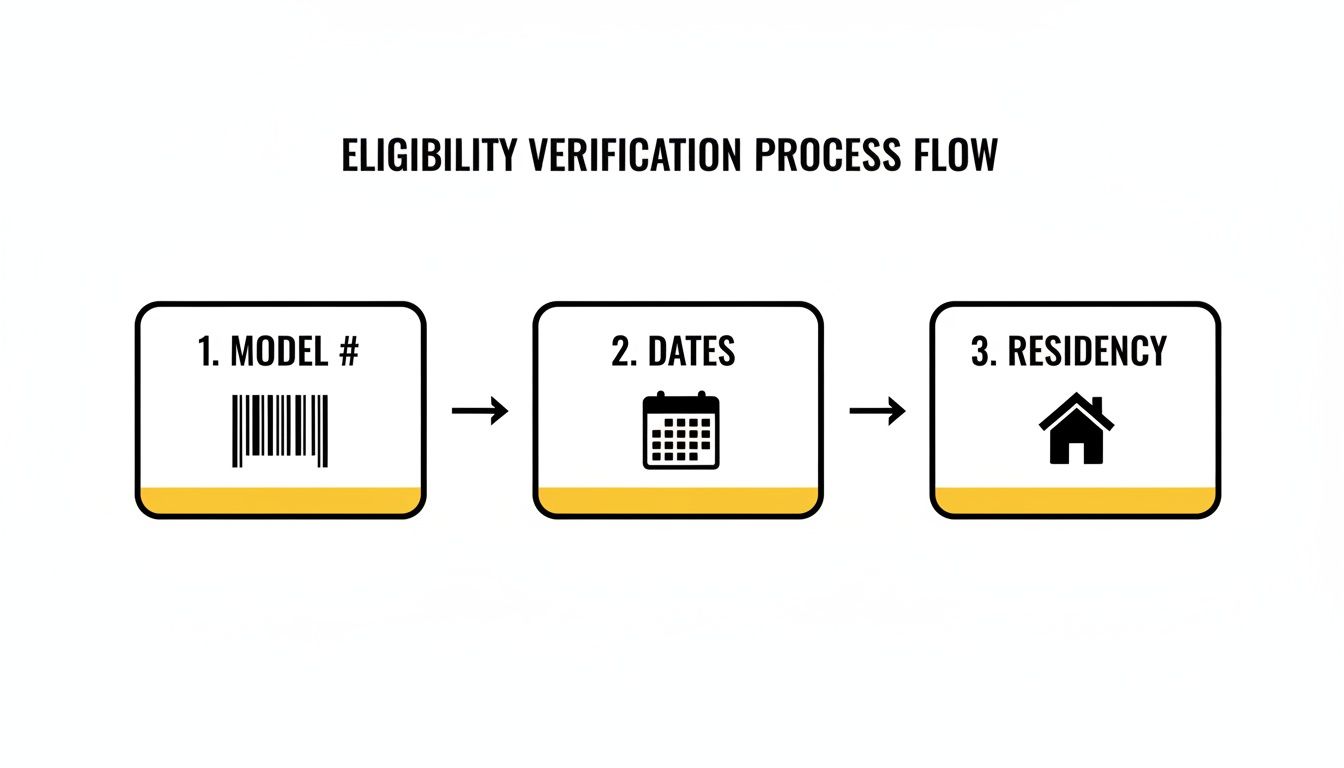
As you can see, it really boils down to three things: the right model number, a valid purchase date, and proof of residency.
Filling Out the Form Without a Hitch
With your documents ready, it’s time to tackle the application. Most programs have moved to online portals, which are usually faster and let you track your progress. But if you prefer, mail-in forms are typically still an option.
Whether you're typing or writing, precision is everything. Double-check every field before you submit. A simple typo in your address or the appliance's serial number can bring the process to a dead stop. Pay special attention to whether they're asking for the "purchase date" or the "installation date"—they aren't always the same.
My Pro Tip: Before hitting "submit," save a PDF or print a copy of your completed application. If you’re mailing it, make a photocopy. Having a record of exactly what you sent is a lifesaver if you ever need to follow up.
And don't forget the deadline. Most programs give you a 30 to 90 day window after your purchase to file the claim. Waiting until the last minute is just asking for trouble. I always tell people to set a calendar reminder the day they buy their appliance so it doesn't get forgotten.
What Happens Next? Tracking and Timelines
Once your application is in, it's time to play the waiting game. You won't see a check in your mailbox next week. The typical processing time for most energy star appliance rebates is anywhere from 6 to 12 weeks. This gives the administrators time to verify every last detail.
Most online portals have a status tracker. Keep an eye out for a confirmation email after you submit—it should have a reference number and a link to a tracking page. Use it! It’s the easiest way to know if your application has been received, is being reviewed, or is approved.
If you hit the 12-week mark and haven't heard anything, it's time to reach out. Use the contact info from the rebate form, have your reference number ready, and make a polite inquiry. Often, a quick call or email is all it takes to clear up a minor issue and get your rebate back on track.
The Pro Move: Stacking Rebates to Maximize Your Savings
Finding a single good rebate is a solid win. But the real game-changer is learning the art of “stacking”—the strategy of layering multiple discounts, sales, and rebates on top of each other for a single appliance purchase.
This is how savvy shoppers turn a good deal into an incredible one. We're not talking about a few dollars here and there; stacking can often cut the final cost of an appliance by hundreds. It simply means you don't stop after finding one incentive. You actively hunt for every possible saving from every source and confirm they can be combined.
Imagine finding the perfect fridge during a holiday sale, adding a manufacturer's mail-in rebate on top of that, and then claiming a final chunk of cash back from your local utility. This multi-layered approach is the key to unlocking the maximum possible savings from ENERGY STAR appliance rebates.
A Real-World Stacking Scenario
Let's walk through a practical example of how this works when buying a new, highly efficient heat pump dryer. These appliances are fantastic for saving energy but often come with a higher initial price tag. Stacking is what makes them truly affordable.
Here’s a realistic breakdown of how the savings could add up:
- Retailer Discount: You find the dryer you want during a 4th of July sale, getting an instant $200 off the sticker price right at the store.
- Manufacturer Rebate: The brand is running its own promotion, offering a $100 mail-in rebate for any purchases made that month.
- Utility Incentive: Your local electric company offers a generous $300 rebate for installing an ENERGY STAR certified heat pump dryer to help reduce strain on the grid.
In this scenario, you've combined three separate offers to slash a total of $600 off the appliance's cost. That is the power of stacking.
Pro Tip: Always read the fine print. Before you assume you can stack offers, check the terms and conditions for each one. Most utility and manufacturer rebates can be combined with store sales, but you'll occasionally find a promotion with an annoying "cannot be combined with other offers" clause.
The table below gives you a clear picture of how these individual savings accumulate into something significant.
Example of Stacking Rebates on a Heat Pump Dryer
| Incentive Type | Example Saving | Source |
|---|---|---|
| Retailer Promotion | $200 Off | In-Store Holiday Sale |
| Manufacturer Offer | $100 Cash Back | Mail-In Rebate from Brand |
| Utility Program | $300 Bill Credit | Local Electric Company Incentive |
| Total Stacked Savings | $600 | Combined from All Sources |
This kind of saving can easily bring a top-of-the-line, high-efficiency model into the same price range as a standard, less efficient one. It's a no-brainer.
Don't Forget the Extra Perks
Beyond direct financial incentives, keep an eye out for bonus rewards you can stack on top. One of the most common is a "bounty" program for recycling your old, inefficient appliance.
When your new refrigerator is delivered, the crew might haul away your old one. Your utility could offer an extra $25 to $75 just for letting them responsibly recycle that energy hog. This keeps outdated appliances out of circulation and puts a little more cash back in your pocket. It’s an easy extra win.
These programs are a core part of utility efficiency strategies and they're only getting better. For instance, the average incentive for ENERGY STAR refrigerators rose from $54.14 in 2019 to $65.61 in 2020—a 21% increase. During that same period, clothes washer incentives jumped 34%.
Heat pump clothes dryers, in particular, have attracted some of the highest rebates, with some areas offering up to $750. This makes them prime candidates for stacking. You can learn more about these appliance program trends and their growth.
Your Top Appliance Rebate Questions, Answered
Alright, so you've learned the ropes of finding and applying for ENERGY STAR appliance rebates. But even with the best plan, a few tricky questions always seem to pop up. It's those little "what if" scenarios that can trip people up right at the finish line.
Let's tackle the most common questions I hear from homeowners. Getting these details straight will help you navigate the process with confidence and make sure you don't miss out on any savings.
Can I Get a Rebate for an Appliance I Already Bought?
This is easily the question I get asked the most, and the answer, unfortunately, is almost always no. Think of it from the program's perspective: their goal is to nudge you into buying a high-efficiency model instead of a less efficient one. If you've already made the purchase, they can't influence your decision.
That's why these programs have strict purchase date windows. You have to buy the appliance while the offer is live. After that, you typically have a grace period of 30 to 90 days to get your paperwork submitted. The lesson here is simple but crucial: research rebates before you shop.
What's the Difference Between a Rebate and a Tax Credit?
People often use these terms interchangeably, but they're very different tools for saving money. Knowing how each one works is key to understanding your total savings.
-
Rebate: This is cold, hard cash (or close to it) that you get back after your purchase. It usually shows up as a check, a prepaid debit card, or sometimes a credit on your utility bill. It’s a direct refund that you'll have in hand within a few months.
-
Tax Credit: This directly reduces the amount of income tax you owe the government. You claim it on your annual tax return, so it lowers your overall tax bill for the year. It's just as valuable as cash, but you won't feel the financial benefit until tax season rolls around.
A rebate gives you a more immediate return, while a tax credit is a longer-term play. The great news is that for major upgrades like heat pumps, you can often stack a local utility rebate with a federal tax credit.
How Long Does It Take to Get the Rebate Money?
You've dotted your i's and crossed your t's on the application—now what? It's time to be patient. These things don't happen overnight.
A realistic timeline is anywhere from 6 to 12 weeks. This gives the program administrators time to review your submission, verify that your purchase qualifies, and cut the check.
Pro Tip: Many rebate programs offer an online tracking portal. When you submit your application, you'll often get a confirmation email with a tracking number. Use it! This lets you see if your application is received, processing, or approved, which can really give you peace of mind.
If it’s been more than 12 weeks and you're still waiting, that's a good time to politely follow up using the contact info on the application form.
Do Open-Box or Refurbished Appliances Qualify?
In my experience, the answer is a firm no. The entire point of these programs is to get new, super-efficient appliances into homes and take old energy hogs out of circulation.
Because of this, they almost always require the product to be brand new. Purchases that are usually excluded from energy star appliance rebates include:
- Open-box deals
- Floor models
- Refurbished or reconditioned units
- Anything second-hand or used
Always read the fine print, but it’s a very safe bet that you need to buy a factory-sealed product to qualify. Assuming an open-box special will work is one of the most common and costly mistakes I see people make.
At Automated Home Guide, we're committed to helping you make smarter, more efficient choices for your home. Explore our expert guides and reviews to find the perfect smart home solutions for your needs at https://automatedhomeguide.com.





Leave a Reply