The concept of a 'smart home' has evolved from a futuristic luxury to an accessible and practical solution for modern living. But what does it truly mean to have a smart home, and what tangible advantages does it offer? The benefits of smart homes extend far beyond simply asking a speaker to play a song or turning on a light with a voice command. They represent a fundamental shift in how we interact with our living spaces, creating environments that are safer, more efficient, comfortable, and highly responsive to our unique needs.
This technology is actively redefining home life, from automated security systems that provide 24/7 peace of mind to intelligent thermostats that significantly slash energy bills. The integration of connected devices offers a new level of control and insight into the daily functions of your house. By automating routine tasks and providing real-time data, smart technology empowers homeowners to manage their property with unprecedented precision and ease, whether they are at home or miles away.
In this comprehensive guide, we will move past the hype and dive into the practical applications that deliver real value. We will explore the top ten benefits that a connected home can bring, offering concrete examples, actionable implementation tips, and the data you need to make an informed decision about upgrading your own space. This article is your roadmap to understanding exactly how these innovations can enhance security, boost energy efficiency, and improve your overall quality of life. Get ready to discover how smart technology can transform your house into a truly intelligent home.
1. Enhanced Home Security and Safety
One of the most compelling benefits of smart homes is the significant upgrade they offer in home security and personal safety. Unlike traditional alarm systems that are often passive, smart security integrates multiple devices into a proactive, cohesive ecosystem you can monitor and control from anywhere in the world. This network typically includes video doorbells, smart locks, motion sensors, and high-definition security cameras, all connected to a central hub and accessible via your smartphone.
This integrated approach provides real-time situational awareness. You receive instant alerts for detected motion, see who is at your door before opening it, and can even remotely grant or deny access to visitors. This level of control not only deters potential intruders but also provides invaluable peace of mind, whether you're at work or on vacation.
Practical Implementation and Key Examples
Getting started is simpler than many people think. Companies like Ring, a subsidiary of Amazon, have made smart security accessible with products like their video doorbell, which users have reported helps reduce package theft. Similarly, the August Smart Lock allows homeowners to replace their traditional deadbolt with a keyless entry system, perfect for granting temporary access to dog walkers or service providers without sharing a physical key.
For a more comprehensive setup, brands such as SimpliSafe and ADT offer modular systems that can be customized to your property's specific needs, integrating everything from door sensors to professional 24/7 monitoring services.
Actionable Tips for a Secure Smart Home
To maximize your home's security, consider these practical steps:
- Strategic Placement: Position cameras to cover all primary entry points, like the front door, back door, and ground-floor windows.
- Digital Security: Always use strong, unique passwords for each device and enable two-factor authentication (2FA) on all associated apps to prevent unauthorized digital access.
- Power Backup: Ensure your system has a battery or cellular backup so it remains operational during a power outage or internet disruption.
- Start Small: If you're new to smart security, begin with a video doorbell and a smart lock. These two devices provide a significant security boost with minimal installation complexity.
To explore the best options for your home, you can find a complete overview of modern security solutions. Learn more about comprehensive smart home security systems.
2. Energy Efficiency and Cost Savings
Another of the core benefits of smart homes is their ability to significantly improve energy efficiency, leading to substantial cost savings on utility bills. Smart energy management systems move beyond manual adjustments and simple timers, creating a dynamic ecosystem that learns your household's patterns and optimizes consumption automatically. Key components like smart thermostats, lighting, and power outlets work in concert to eliminate waste.
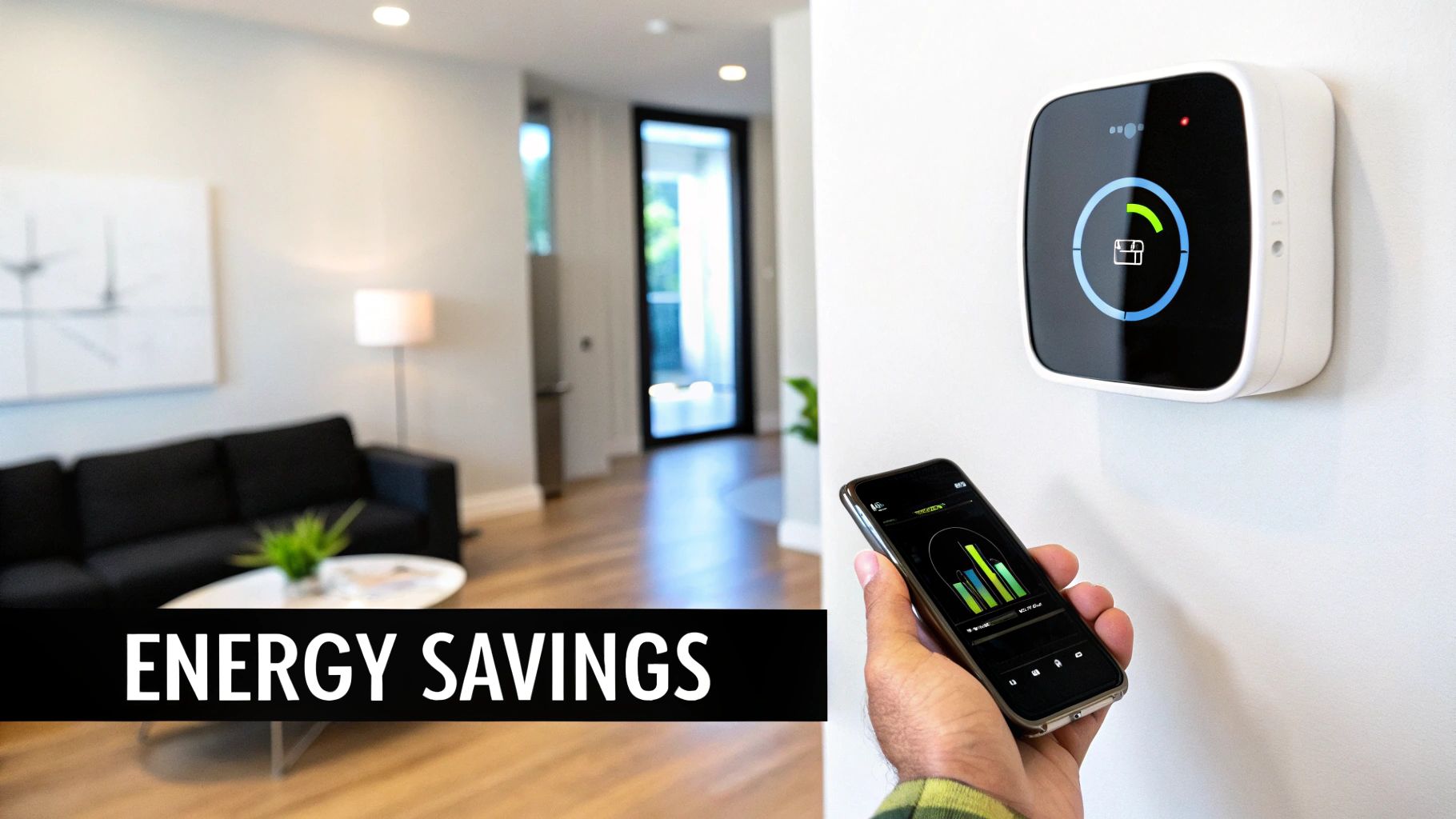
These devices intelligently adapt to occupancy, weather forecasts, and your personal preferences. By automatically lowering the heat when you're away or turning off lights in an empty room, a smart home can reduce your energy footprint without sacrificing comfort. Homeowners often see a 10-15% reduction in heating and cooling costs alone, which is amplified when combined with other smart technologies.
Practical Implementation and Key Examples
Integrating smart energy devices is straightforward and highly effective. For instance, the Google Nest Thermostat is a popular choice that learns your schedule within a week and programs itself, with users reporting average annual savings of 10-12% on heating. Similarly, Ecobee smart thermostats, now in over a million homes, use remote sensors to manage temperatures in specific rooms for greater efficiency.
Beyond climate control, smart lighting like Philips Hue can reduce lighting-related energy use by up to 80% compared to traditional incandescent bulbs. Smart plugs and power strips from brands like Kasa Smart tackle "phantom loads" by cutting power to electronics in standby mode, which is perfect for entertainment centers and home offices.
Actionable Tips for an Energy-Efficient Smart Home
To maximize your energy savings, implement these practical strategies:
- Geofencing: Use your smartphone's location to automatically trigger an "Away" mode on your thermostat and lights when everyone has left the house.
- Set Schedules: Program seasonal temperature schedules based on your family's daily routines to avoid unnecessary heating or cooling. To truly maximize savings, it's beneficial to get a clear picture of what your system costs to operate by understanding air conditioner running costs in Australia.
- Monitor Usage: Use smart plugs with energy monitoring to identify which appliances are the biggest "energy hogs" and adjust their usage accordingly.
- Check for Rebates: Many utility companies offer rebates and incentives for purchasing ENERGY STAR certified smart home devices, which can lower your initial investment.
To discover more ways to reduce your home's energy consumption, you can dive deeper into the available technologies. Learn more about creating an energy-efficient smart home.
3. Increased Convenience and Comfort
Perhaps the most immediately noticeable of the benefits of smart homes is the profound boost in daily convenience and overall living comfort. Smart home automation transforms your living space from a collection of manually operated devices into a responsive, integrated environment. It allows you to control lighting, climate, entertainment, and appliances with a simple voice command, a tap on your phone, or through pre-set automated routines.
This level of control streamlines daily tasks and eliminates repetitive manual adjustments. You can create custom "scenes" that trigger multiple actions at once, like a 'Goodnight' routine that turns off all lights, locks the doors, and adjusts the thermostat. This hands-free, centralized control system is designed to make your life simpler and your home a more relaxing and enjoyable place to be.
Practical Implementation and Key Examples
The widespread adoption of voice assistants has made this convenience more accessible than ever. Amazon Alexa is now integrated into over 100 million devices, turning smart speakers into central command hubs. Similarly, Google Assistant powers sophisticated routines in millions of households, while Apple HomeKit offers a privacy-focused ecosystem for seamless automation across Apple devices.
A prime example is using a smart speaker to control Philips Hue smart lights for a 'Movie Time' scene, which dims the main lights and turns on accent lighting. Another is linking your smart thermostat to your location, so the A/C cools down the house just before you arrive home from work, all without any manual input.
Actionable Tips for a Convenient Smart Home
To effectively harness smart home convenience, consider these steps:
- Choose a Primary Ecosystem: Select a core platform like Amazon Alexa, Google Home, or Apple HomeKit early on. This ensures better compatibility as you add more devices to your network.
- Start with High-Impact Devices: Begin with devices you interact with daily, such as smart plugs for lamps or a smart thermostat. This delivers an immediate and noticeable improvement in convenience.
- Create Personalized Routines: Use the associated app to build routines for recurring scenarios, such as a "Morning" routine that gradually brightens the lights, starts the coffee maker, and plays your favorite news podcast.
- Review Privacy Settings: Regularly review the privacy settings for your voice assistants and connected apps to manage how your data is used and stored.
4. Improved Home Maintenance and Monitoring
Another of the key benefits of smart homes is the ability to proactively manage home maintenance, preventing minor issues from escalating into catastrophic and expensive repairs. Smart sensors and monitoring systems act as a home's nervous system, providing early warnings for problems like water leaks, poor air quality, and appliance malfunctions. This shift from reactive repairs to proactive upkeep saves homeowners significant money and stress.
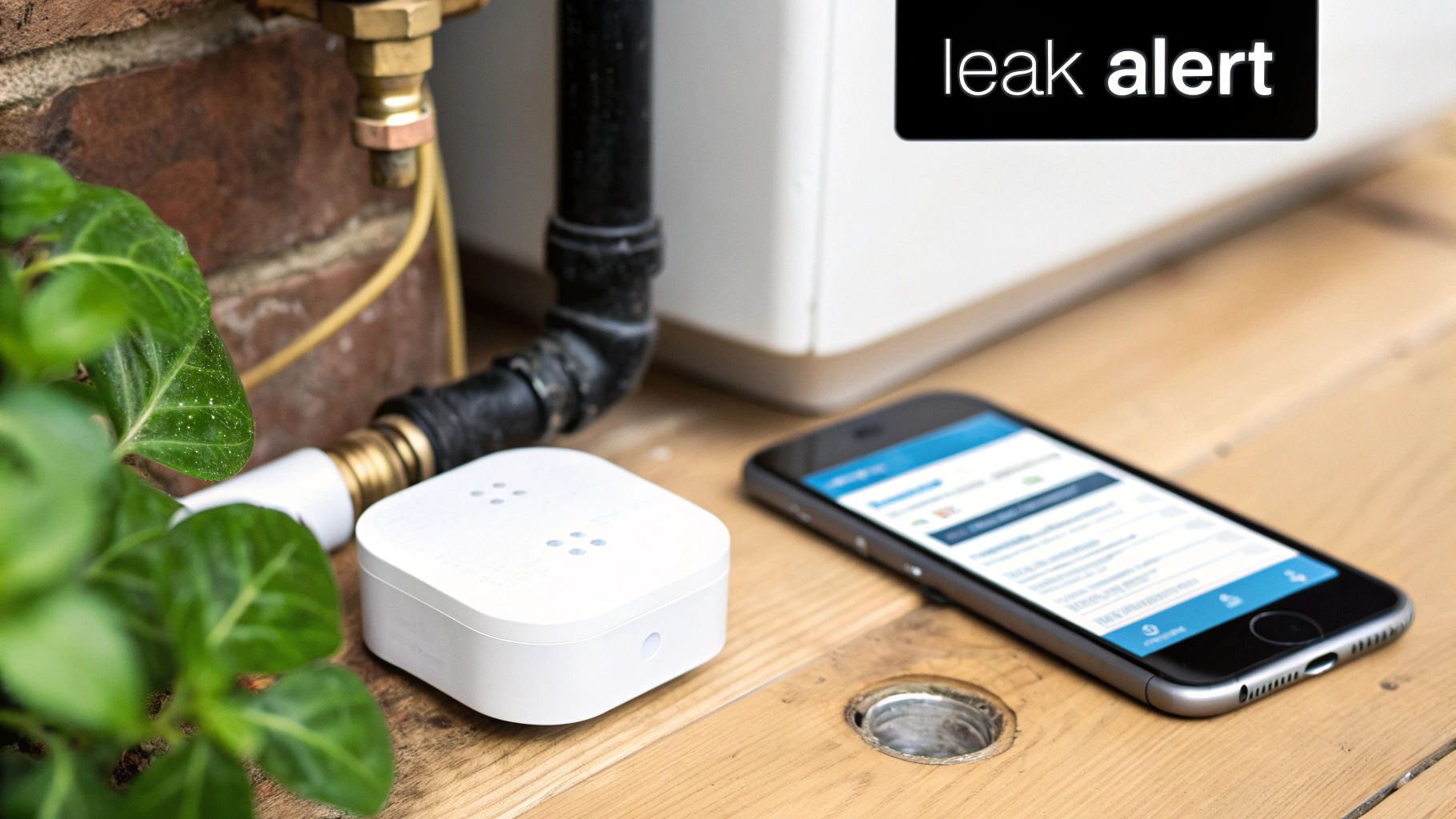
This intelligent monitoring network can detect subtle changes that would otherwise go unnoticed until visible damage occurs. You can receive an instant alert on your phone if a pipe starts a slow drip, if humidity levels create a risk for mold, or if your HVAC system is performing inefficiently. This real-time data not only preserves your property's condition but also extends the lifespan of your critical home systems and appliances.
Practical Implementation and Key Examples
Integrating these systems is straightforward and highly impactful. For instance, Flo by Moen offers smart water shutoff devices that can detect a leak as small as a drop per minute and automatically shut off the water supply, preventing an average of $6,000 in water damage. In a similar vein, the Eve Room sensor monitors indoor air quality, tracking volatile organic compounds (VOCs), temperature, and humidity to ensure a healthy living environment.
For appliance health, brands like Samsung embed diagnostic technology into their SmartThings-compatible refrigerators and washing machines, which provide performance alerts and maintenance reminders directly to your phone. Even outdoor maintenance is simplified with products like the Rachio smart sprinkler controller, which optimizes watering schedules based on weather forecasts to reduce water waste by up to 30%.
Actionable Tips for Proactive Home Monitoring
To leverage smart technology for better home maintenance, follow these practical steps:
- Strategic Sensor Placement: Install smart water leak detectors in high-risk areas like behind toilets, under sinks, and near water heaters and washing machines.
- Maintain Healthy Air: Monitor indoor humidity levels with a smart sensor, aiming to keep them between 30% and 50% to prevent mold growth.
- Automate Maintenance Schedules: Use data from smart appliances to create a proactive maintenance calendar for tasks like changing HVAC filters or cleaning refrigerator coils.
- Share Diagnostic Data: When a problem arises, share sensor readings and appliance diagnostic codes with your contractor for a faster and more accurate repair.
- Review Historical Trends: Check your monitoring apps quarterly to identify any unusual patterns in energy usage, temperature fluctuations, or water consumption that could indicate an underlying issue.
5. Enhanced Elderly Care and Accessibility
One of the most impactful benefits of smart homes is their ability to support aging in place, allowing seniors to live independently for longer while ensuring their safety and well-being. Smart home technology creates a supportive environment by automating daily routines and providing a crucial safety net. This ecosystem can include voice-controlled assistants, automated lighting, smart medication dispensers, and fall detection sensors, all connected to a network that family members and caregivers can monitor remotely.
This integrated system addresses many challenges associated with aging, from mobility issues to medication management. A senior can use voice commands to turn on lights, adjust the thermostat, or call a family member, reducing the risk of falls. Meanwhile, automated alerts can notify caregivers if medication hasn't been taken or if unusual inactivity is detected, providing peace of mind and enabling swift intervention when necessary.
Practical Implementation and Key Examples
The market for accessible smart technology is growing rapidly. Amazon's Alexa Care Hub is a prime example, allowing family members to check in on their elderly parents' activity feed and receive alerts if they ask for help, all while respecting their privacy. Another key player, Philips Lifeline, uses AutoAlert technology, which has successfully detected falls for thousands of seniors, automatically calling for help even if the user cannot.
In larger settings, senior living communities are integrating systems like the GreatCall Lively Smart Home Safety System to create safer environments for residents. Studies in these communities have shown that smart home implementations can significantly reduce the incidence of falls, demonstrating the technology's life-saving potential.
Actionable Tips for an Accessible Smart Home
To effectively leverage technology for elderly care, consider these practical steps:
- Prioritize Simple Interfaces: Choose devices with large, clear displays, intuitive controls, and robust voice command functionality.
- Strategic Sensor Placement: Install motion sensors in high-risk areas like hallways, bathrooms, and stairwells to automate lighting and detect potential falls.
- Establish Emergency Protocols: Configure devices to automatically contact a list of emergency contacts, including family, neighbors, and professional response services.
- Start with Voice Control: A smart speaker like an Amazon Echo or Google Nest Hub in the bedroom and main living area can serve as a powerful central command for controlling other devices and making hands-free calls.
To learn more about creating a safe and accessible environment for seniors, you can explore specialized guides and product reviews. Find out more about aging-in-place smart home solutions.
6. Remote Home Access and Control
Another of the key benefits of smart homes is the ability to manage your property from anywhere with an internet connection. Remote access technology liberates you from physical presence, allowing you to control lighting, thermostats, locks, and appliances directly from your smartphone or tablet. This constant connection offers unparalleled flexibility and peace of mind, transforming how you interact with your living space whether you're across town or on the other side of the globe.
This capability is particularly transformative for modern, dynamic lifestyles. You can let in a last-minute guest while you're still at the office, check that you turned off the oven after leaving for vacation, or adjust the climate controls on your way back from a trip. This level of command ensures your home remains secure, efficient, and comfortable, regardless of your location.
Practical Implementation and Key Examples
Platforms like SmartThings and Apple HomeKit act as central hubs, consolidating control of various devices into a single, user-friendly app. This makes remote management seamless. For instance, the August Smart Lock has become a staple for over two million Airbnb listings, enabling hosts to grant temporary, keyless access to guests without ever needing to meet in person, all managed remotely.
Similarly, property managers use these systems to oversee multiple buildings from one dashboard, while homeowners on extended travel can monitor security cameras and manage their home's environment to simulate occupancy. Even vehicle integrations, like those with Tesla, allow owners to open their garage and adjust home settings as they approach their driveway.
Actionable Tips for Secure Remote Access
To enjoy remote control without compromising security, implement these best practices:
- Secure Your Credentials: Always use strong, unique passwords for smart home apps and enable two-factor authentication (2FA) to add a crucial layer of protection.
- Keep Software Updated: Regularly update your device firmware and mobile applications. These updates often contain critical security patches that protect against new vulnerabilities.
- Grant Limited Permissions: When possible, create temporary access codes or guest accounts with restricted permissions for service providers or visitors instead of sharing your main account access.
- Test Your Connection: Before relying on remote access during a trip, test all functions to ensure they work correctly from an outside network, such as your cellular connection.
7. Customizable Lighting and Ambiance Control
One of the most transformative benefits of smart homes is gaining complete control over your home's lighting and ambiance. Smart lighting goes far beyond a simple on/off switch, allowing you to fine-tune brightness, color, and temperature to perfectly match any activity, mood, or time of day. This technology uses connected LED bulbs and fixtures that you can manage from a smartphone app, voice assistant, or automated schedules.

With customizable lighting, you can create a productive home office environment with cool, bright light and then transition to a relaxing, warm-toned living room for the evening. This level of control not only enhances your home's aesthetic appeal but also supports your well-being by improving mood, boosting productivity, and even promoting better sleep cycles.
Practical Implementation and Key Examples
Getting started with smart lighting is incredibly accessible. The market leader, Philips Hue, has sold over 20 million systems globally, offering everything from simple white bulbs to immersive light strips that sync with your TV. Brands like LIFX and Wyze provide vibrant, easy-to-install smart bulbs that don't require a central hub, making them perfect for beginners.
For those focused on aesthetics, Nanoleaf has enhanced over 5 million entertainment spaces with its modular light panels that turn walls into interactive art. These systems showcase how smart lighting can be both functional and a central design element, allowing you to paint your rooms with light.
Actionable Tips for a Well-Lit Smart Home
To get the most out of your smart lighting system, try these practical strategies:
- Support Circadian Rhythms: Set your lights to mimic natural daylight, with cool, energizing tones in the morning and warm, soft light (around 2700K) in the evening to prepare your body for sleep.
- Create 'Scenes': Program preset lighting configurations for different activities, such as a "Movie Night" scene that dims the lights and a "Focus" scene with bright, white light for working.
- Automate with Sensors: Pair lights in hallways, bathrooms, and closets with motion sensors so they turn on automatically when you enter and off when you leave, saving energy and adding convenience.
- Enhance Security: Use vacation mode or scheduling to have lights turn on and off at various times, creating the illusion that someone is home to deter potential intruders.
You can dive deeper into the possibilities of smart illumination and its benefits. Learn more about how to automate your house lights.
8. Environmental and Sustainability Impact
Beyond individual convenience and savings, another of the most significant benefits of smart homes is their positive contribution to environmental sustainability. Smart technology enables homeowners to drastically reduce their ecological footprint by optimizing resource consumption, from electricity and water to natural gas. By automating and intelligently managing home systems, you can achieve a more sustainable lifestyle without sacrificing modern comforts.
This eco-conscious approach works by creating a home that responds dynamically to both your needs and environmental conditions. Smart thermostats learn your schedule to avoid heating or cooling an empty house, smart irrigation systems adjust watering based on weather forecasts, and integrated energy management systems can prioritize the use of renewable power. This not only conserves precious resources but also reduces greenhouse gas emissions, aligning your home with a greener future.
Practical Implementation and Key Examples
The impact of these technologies is well-documented. Tesla Powerwall integration, for example, allows homes to store solar energy and use it during peak hours, which can reduce grid demand by up to 40%. In the realm of water conservation, Rachio smart sprinkler controllers have collectively saved homeowners over 1.3 trillion gallons of water by preventing unnecessary irrigation.
On a broader scale, studies show that a fully integrated smart home can reduce a household's carbon footprint by an average of four tons of CO2 per year. This demonstrates that widespread adoption of smart technology can lead to substantial environmental benefits.
Actionable Tips for a Sustainable Smart Home
To maximize your home's positive environmental impact, consider these practical steps:
- Prioritize High-Impact Areas: Start by upgrading the systems that consume the most energy, such as your HVAC with a smart thermostat and your water heater with a smart controller.
- Conduct an Energy Audit: Before investing in new tech, perform a home energy audit to identify the biggest sources of waste. This helps you target your smart home upgrades for maximum effect.
- Integrate Renewables: Combine smart home systems with renewable energy sources like solar panels. Look into local utility incentives and tax credits for installing solar and battery storage.
- Monitor and Set Goals: Use the dashboards in your smart home apps to monitor energy and water consumption. Set tangible reduction goals and track your progress to stay motivated.
To learn more about how technology can help you live a greener life, you can explore the EPA’s resources. Find out more about energy-saving smart home strategies.
9. Seamless Entertainment and Smart Home Theater
Another of the key benefits of smart homes is the ability to create a seamlessly integrated and immersive entertainment experience. Smart home theater systems go far beyond a universal remote by networking audio, video, lighting, and even climate controls into a single, intuitive interface. This allows you to transform your living room into a cinematic environment with a single voice command or tap on your smartphone.
This unified approach delivers unparalleled convenience and flexibility. Imagine dimming the lights, lowering the blinds, and starting your favorite movie simultaneously. You can stream high-fidelity audio throughout the entire house, ensuring your music follows you from room to room without interruption. This level of automation elevates everyday entertainment into a premium, personalized experience.
Practical Implementation and Key Examples
Creating a smart entertainment hub is more accessible than ever. The Sonos ecosystem, installed in over 10 million homes, is a prime example of user-friendly multi-room audio. It allows users to wirelessly connect speakers and stream music, podcasts, or audiobooks in perfect sync. For a true theater feel, Dolby Atmos smart systems, found in more than 500,000 homes, deliver object-based surround sound that puts you right in the middle of the action.
Brands like Lutron specialize in lighting automation, which can be programmed to match the on-screen ambiance, while gaming consoles like Xbox and PlayStation now integrate with smart assistants for voice-activated controls, making the entire experience more fluid and engaging.
Actionable Tips for an Immersive Smart Theater
To build the ultimate entertainment setup, consider these practical steps:
- Start with Quality Audio: Begin with a high-quality smart speaker or soundbar in your primary entertainment area. This can serve as the foundation of your system.
- Go Wireless: Use wireless speakers to reduce cable clutter and provide the flexibility to easily rearrange your setup or expand to other rooms.
- Sync Your Lighting: Integrate smart bulbs or lighting strips that can change color and intensity to match your movie or music, creating a deeply immersive environment.
- Plan Your Network: Ensure you have a robust Wi-Fi network to handle high-resolution streaming without buffering. For new constructions, consider hardwiring your main components with Ethernet for maximum stability.
10. Better Sleep Quality and Health Benefits
Beyond convenience and security, one of the most impactful benefits of smart homes is their ability to actively improve your physical and mental well-being by optimizing sleep. Smart technology transforms your bedroom into a personalized sleep sanctuary, using an integrated network of devices to control environmental factors like light, temperature, and sound that are critical for restorative rest. This proactive approach helps regulate your circadian rhythm for more consistent and higher-quality sleep.
This connected ecosystem can automate a wind-down routine, gradually dimming lights, adjusting the thermostat to the ideal sleep temperature, and even purifying the air. By monitoring sleep cycles, these systems can provide actionable data to help you understand and improve your sleep patterns, directly impacting your mood, productivity, and overall health.
Practical Implementation and Key Examples
Creating an automated sleep environment is increasingly accessible. For instance, Sleep Number smart beds, now used in over a million households, adjust firmness and can track sleep metrics to provide a personalized "SleepIQ" score. The Eight Sleep Pod Cover actively cools or warms the bed surface to maintain optimal temperature throughout the night, a feature that clinical studies suggest can significantly enhance sleep quality.
Wearable technology like the Oura Ring complements these systems by tracking detailed sleep stages, heart rate variability, and body temperature. This data can then be used to trigger other smart home automations, creating a truly responsive and health-focused environment. For those interested in the clinical accuracy of personal health monitoring, a comprehensive a cardiologist’s guide to smartwatch ECGs can provide valuable insights.
Actionable Tips for a Smarter Sleep Routine
To leverage technology for better rest, implement these practical strategies:
- Automate Your "Bedtime" Scene: Create a routine that activates one hour before sleep, dimming lights to a warm white (around 2700K) and lowering the thermostat to 65-68°F (18-20°C).
- Mask Disruptive Noise: Use a smart speaker to play white noise or calming nature sounds to block out external disturbances that can interrupt sleep cycles.
- Block Blue Light: Schedule smart lights to eliminate blue light exposure in the evening, which can suppress melatonin production and interfere with sleep.
- Review Your Data: Check your sleep tracking data weekly to identify patterns. Notice how late meals, exercise, or stress impact your sleep quality and make adjustments.
Top 10 Smart Home Benefits Comparison
| Benefit | 🔄 Implementation Complexity | ⚡ Resource Requirements | 📊 Expected Outcomes | 💡 Ideal Use Cases | ⭐ Key Advantages |
|---|---|---|---|---|---|
| Enhanced Home Security and Safety | Medium–High — multi-device setup & monitoring integration | High — cameras, sensors, smart locks, reliable internet, subscriptions | Fewer burglaries; instant alerts; possible 5–15% insurance savings | Homes in higher-risk areas; families; remote monitoring needs | Real-time monitoring; deterrence; remote access |
| Energy Efficiency and Cost Savings | Low–Medium — thermostat install and configuration | Low–Medium — smart thermostat, compatible HVAC, smart plugs | ~10–15% HVAC savings; ROI ~1–2 years; lower carbon footprint | Energy-conscious homes; retrofit HVAC systems | Automated efficiency; lower bills; consumption insights |
| Increased Convenience and Comfort | Medium — ecosystem choice and routine setup | Medium — voice assistants, hubs, compatible devices | Time saved; simplified routines; improved accessibility | Busy households; accessibility needs; routine automation | Voice control; unified app; custom scenes |
| Improved Home Maintenance and Monitoring | Low–Medium — place sensors and configure alerts | Low–Medium — leak/air/gas sensors, occasional pro setup | Early issue detection; prevents costly damage; extends appliance life | Older homes; vacation properties; preventive maintenance | Early warnings; reduced repair costs; historical data |
| Enhanced Elderly Care and Accessibility | Medium — specialized devices and caregiver links | Medium — fall detectors, health sensors, monitoring plans | Enables aging-in-place; faster emergency response; fewer hospitalizations | Seniors living independently; remote caregivers | Safety, independence, continuous monitoring |
| Remote Home Access and Control | Low–Medium — app and remote access configuration | Low — smart locks, apps, internet, account management | Greater flexibility; remote management; fewer on-site checks | Travelers, Airbnb/rental hosts, multi-property managers | Remote unlocking/access control; convenience |
| Customizable Lighting and Ambiance Control | Low–Medium — bulb/bridge install and scene programming | Low–Medium — smart bulbs/bridges, compatible fixtures | Significant energy savings (~80% vs incandescent); improved ambiance | Living rooms, bedrooms, entertainment spaces, circadian lighting | Mood control; energy-efficient; scene customization |
| Environmental and Sustainability Impact | Medium–High — integrates HVAC, solar, irrigation systems | High — solar/battery, smart irrigation, monitoring platforms | 20–30% energy reduction; major water savings; lower CO2 emissions | Eco-focused homeowners; solar adopters; large properties | Large environmental impact; long-term cost savings |
| Seamless Entertainment and Smart Home Theater | High — AV integration, networking, calibration required | High — speakers, receivers, lighting, bandwidth, subscriptions | Premium immersive experiences; higher property appeal | Home theaters, gamers, media-centric households | Immersive A/V; centralized control; synchronized lighting |
| Better Sleep Quality and Health Benefits | Medium — multiple devices and individualized tuning | Medium — smart lights, thermostats, trackers, air quality devices | Improved sleep metrics; ~1–2 extra quality hours/week; health gains | Poor sleepers, shift workers, health-conscious users | Optimized sleep environment; measurable health improvements |
Your Next Step Towards a Smarter Home
Throughout this guide, we've explored the multifaceted and compelling benefits of smart homes, moving far beyond simple novelties to reveal a technological revolution that reshapes our daily lives. We’ve seen how integrated systems create a powerful shield of security, how intelligent energy management slashes utility bills, and how automation introduces a new level of effortless convenience. The journey from a traditional house to a responsive, intelligent home is no longer a futuristic dream; it's an accessible and practical upgrade for modern living.
The true power of a smart home lies not in a single gadget, but in the cohesive ecosystem it creates. A smart doorbell isn't just a camera; it's the first line of defense that communicates with your locks and lights. A smart thermostat does more than regulate temperature; it learns your habits to optimize for both comfort and cost savings. Each component, from customizable lighting that improves your sleep to remote access that gives you control from anywhere in the world, contributes to a greater, more integrated whole.
Recapping the Core Advantages
To synthesize the wealth of information covered, let's revisit the cornerstone benefits that form the foundation of a truly smart home:
- Holistic Security: Combining smart locks, cameras, and sensors provides a proactive security network that offers unparalleled peace of mind, whether you're at home or thousands of miles away.
- Intelligent Efficiency: The ability to monitor and automate energy consumption leads to significant financial savings and a reduced environmental footprint, making it a wise investment for both your wallet and the planet.
- Unmatched Convenience: Automating routine tasks frees up your time and mental energy. Imagine your coffee brewing as you wake up, your lights adjusting to the time of day, and your home preparing for your arrival, all without a single command.
- Enhanced Accessibility and Wellness: For families with elderly members or individuals with mobility challenges, smart home technology provides critical support, fostering independence and ensuring safety through voice commands, automated alerts, and remote monitoring.
Crafting Your Smart Home Strategy
Embarking on this journey can feel overwhelming, but the key is to start with a clear purpose. Don't aim to automate everything at once. Instead, identify your primary pain points or desired outcomes.
Actionable Tip: Before making a purchase, conduct a "home audit." For one week, make a note of daily inconveniences. Do you often forget to turn off the lights? Are you concerned about package deliveries? Do you struggle to find the perfect temperature? Your answers will point directly to the smart devices that will offer you the most immediate and tangible value.
Consider these practical starting points based on common goals:
- For the Security-Focused: Begin with a video doorbell and a smart lock. This simple combination provides a powerful upgrade to your home's entry points and can be expanded later with additional cameras and sensors.
- For the Budget-Conscious: A smart thermostat is often the best first investment. Its ability to optimize your HVAC system can lead to savings that pay for the device itself within a year or two.
- For the Convenience Seeker: Start with a central hub like an Amazon Echo or Google Nest Hub and a few smart plugs. This allows you to control simple devices with your voice and begin building routines for lighting and small appliances.
The ultimate goal is to build a home that works for you, one that anticipates your needs, protects your family, and streamlines your life. The incredible benefits of smart homes are within your reach, and the path to achieving them is a series of small, intentional steps. Each device you add is another building block in creating a living space that is not just smart, but truly attuned to you.
Ready to turn these insights into reality but unsure where to start? The Automated Home Guide offers in-depth reviews, compatibility guides, and step-by-step tutorials to help you choose the right devices and build your smart home ecosystem with confidence. Visit Automated Home Guide to access expert advice and make your smart home vision a success.

Leave a Reply