Securing your garage door isn't a one-and-done task. It’s about creating layers of protection, combining everything from physical reinforcement and smart technology to simple, consistent maintenance. We'll start with quick DIY fixes you can do this weekend, like securing the emergency release, then move into reinforcing the door itself and adding smart devices for monitoring and control from anywhere.
Why Your Garage Is a Top Target for Intruders
Most people worry about the front door or a ground-floor window when they think about a break-in. But in my experience, the garage is often the path of least resistance for a burglar. It's a huge, frequently overlooked weak spot in your home's security. It's not just a place to park the car—it's often a direct, unlocked gateway into your house.
The statistics are pretty sobering. Would you believe that a staggering 50% of all residential burglaries in the US happen through an unsecured or open garage door? That's right. Half. It's a massive blind spot for homeowners. Burglars love garages because they offer cover from the street and, all too often, provide a quiet, easy entry into the main house without the noise of smashing glass or picking a lock.
Understanding the Layers of Defense
Thinking about garage security doesn't have to be complicated. The best approach is to build layers of defense that all work together. A single lock can be defeated, but a combination of tactics creates a much tougher barrier.
I like to break it down into three core areas. Here’s a quick look at the security layers we'll be diving into, from basic physical checks to smarter tech integrations.
Three Layers of Garage Security
| Security Layer | Key Action | Primary Goal |
|---|---|---|
| Physical Barriers | Reinforce the door, add better locks, and secure windows. | Make it physically difficult to force entry. |
| Technological Deterrents | Install cameras, sensors, and smart openers. | Actively monitor, alert you to threats, and deter intruders. |
| Procedural Habits | Perform regular maintenance and develop smart daily routines. | Eliminate simple mistakes that create vulnerabilities. |
By tackling each of these layers, you’ll build a robust defense that turns your garage from an easy target into a serious obstacle.
Key Takeaway: Moving from a passive to an active security stance is crucial. You want to make your garage look like too much trouble for any potential intruder.
Many of the principles for securing a weak point apply across the board. For a deeper dive into fortifying any entry point, this ultimate guide to shipping container security has some surprisingly relevant tips. Now, let’s get into the actionable steps you can take to fully prevent home break-ins.
Immediate DIY Fixes to Secure Your Garage Door
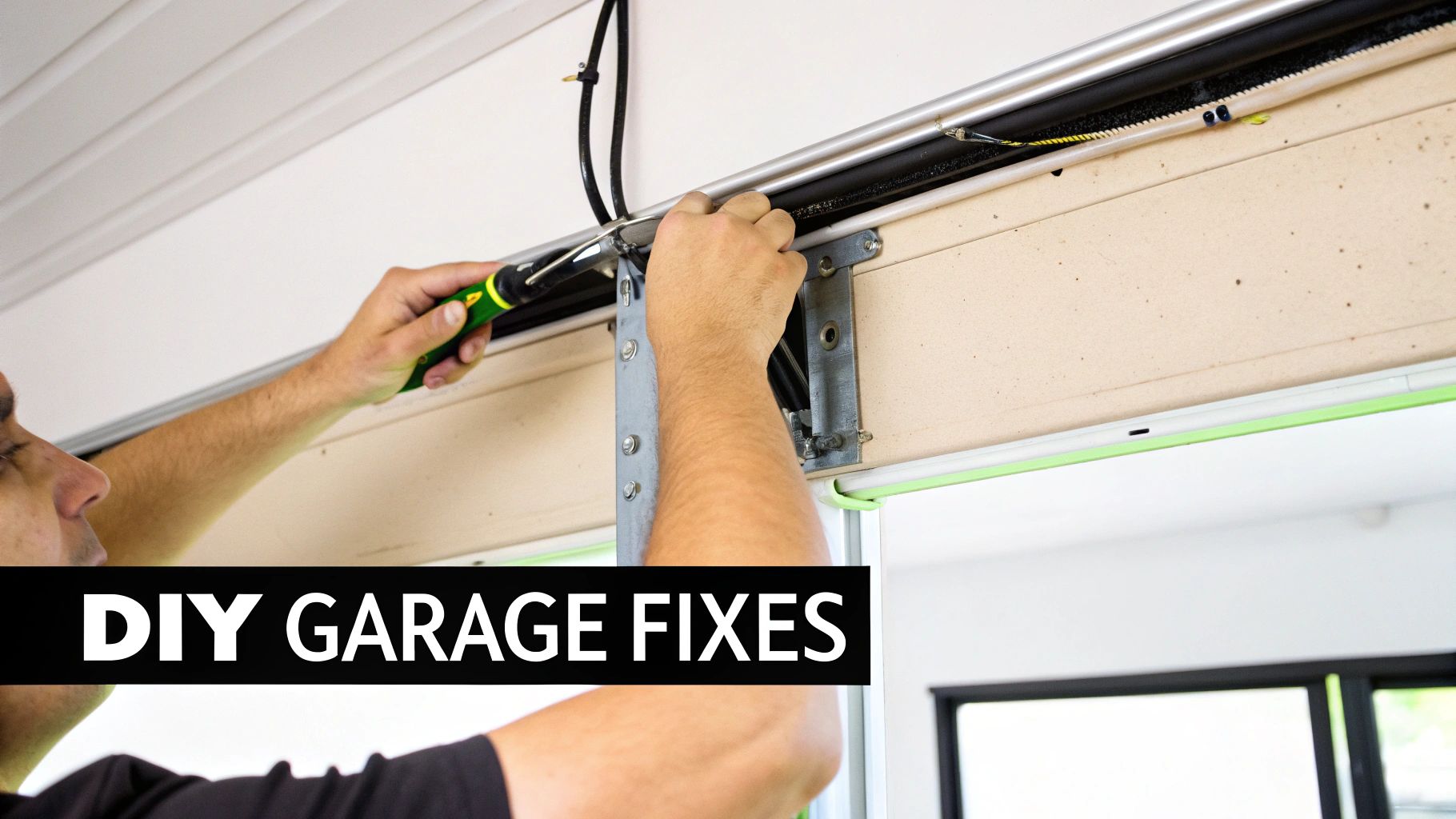
You don't need to be a security pro or spend a fortune to make a real difference in your garage's security. In fact, some of the most effective fixes are simple things you can knock out in an afternoon. These quick jobs tackle the most common weak spots that burglars love to exploit.
One of the oldest tricks in the book involves the emergency release lever. Intruders can snake a coat hanger through a small gap at the top of the door, hook that little red cord, and disengage the opener. They call it the "6-second break-in" because it’s shockingly fast.
The Zip Tie Trick and Release Cord Security
The easiest countermeasure is a humble zip tie. Loop it through the emergency release lever and around the trolley it's attached to. This simple act prevents a coat hanger from pulling the lever down. The key is to make it snug, but not so tight that you can't break it with a sharp tug from inside if you actually need to use it in an emergency.
For a more robust solution, look into a garage door shield. It's essentially a small metal plate you install over the mechanism, physically blocking any tool from ever reaching the release cord. It's a cheap, permanent fix that takes just a few minutes to screw into place.
Defending Overlooked Entry Points
Your garage's security is only as strong as its most vulnerable point, and that isn't always the big door itself. Burglars are opportunistic and will often check for easier targets like side doors and windows.
-
Secure Garage Windows: First off, don't give them a free look inside. Applying a frosted or privacy security film is a great move. It stops prying eyes and makes the glass more shatter-resistant, which can slow down a potential intruder.
-
Reinforce the Service Door: That door from your garage into your home? It needs to be as tough as your front door. It should be a solid-core door with a proper deadbolt and a reinforced strike plate. Too many of these are flimsy interior doors a single kick can defeat.
Key Insight: I see this all the time—homeowners focus entirely on the main garage door and leave the interior access door completely vulnerable. Treat that door like the critical entry point to your home that it is.
Bolstering the Main Door with Manual Locks
Your automatic opener does a decent job of keeping the door down, but adding a manual lock creates another physical barrier that buys you time and can stop a break-in cold. This is a must-do if you're going away on vacation.
Here are a couple of solid options:
- Garage Door Side Locks: These are simple slide bolts that you mount on the door and slide into a slot in the vertical tracks. They physically stop the door from being lifted. Just get in the habit of disengaging them before you hit the opener button—you can seriously damage your system if you forget.
- Heavy-Duty Padlocks: If your door has a basic throw latch, swap out the cheap lock it came with for a quality padlock made of hardened steel. It’s a small change that makes a big difference against bolt cutters.
By combining a few of these DIY fixes, you're creating layers of security. A burglar might get past one, but facing a secured release cord, a reinforced window, and a manual slide lock is usually enough to make them give up and move on. And if you want to add eyes to your setup, our guide on wireless security camera installation will show you how to add that next crucial layer of defense.
Strengthening the Garage Door Itself
A solid lock is a great start, but what if a burglar decides to just… go through the door? It happens more than you think. A determined intruder won't waste time picking a lock if they can just kick in a panel or bend the door open. This is why reinforcing the door's actual structure isn't just an extra step—it's essential.
Many garage doors, especially older ones, are surprisingly flimsy. They're often built with lightweight materials that can be forced open with a well-placed kick or a crowbar. Even with the best lock in the world, the panels themselves can buckle, creating a gap big enough for someone to squeeze through. A few smart reinforcements can make a world of difference.
Give Your Door a Backbone with a Brace
One of the single best upgrades for physical security is a garage door brace. These were first developed to help doors survive hurricanes, so you know they’re tough. They're basically a set of metal bars you install on the inside of your door, anchoring it directly to the sturdy frame, floor, and header of your garage.
Imagine someone trying to ram or kick the door. Without a brace, all that force hits one small spot. But with a brace installed, that impact gets spread across the entire door and frame, making the whole structure incredibly rigid. A single panel can no longer be the weak link.
Key Takeaway: Think of a garage door brace as an internal skeleton. It turns thin, flexible panels into a single, solid wall that can take a serious beating. It's easily one of the smartest investments you can make in physical garage security.
You can find different kinds of braces out there, from simple horizontal struts to full-on vertical systems. For stopping a break-in, you'll get the most bang for your buck from a system that includes those crucial vertical supports.
What's Your Door Made Of?
The material of your garage door is a huge factor in how secure it is. If you're working with a flimsy or damaged door, no lock or brace will ever make it completely safe. Knowing the pros and cons of different materials helps you either assess what you have or choose wisely for a future upgrade.
Here's a quick rundown of the most common options:
-
Steel Doors: There’s a reason steel is the top choice. It’s strong, it lasts, and it doesn't break the bank. When you're looking at steel, pay attention to the gauge—you want at least 24-gauge steel. Remember, a lower gauge number means the steel is thicker and stronger. An insulated, double-layer steel door is even better because the core adds rigidity, making it much harder to dent or puncture.
-
Wood and Wood Composite Doors: A classic wood door looks fantastic, but it can have its weak spots. Solid wood is naturally heavy and strong, but if it's not perfectly maintained, it can rot or warp, creating vulnerabilities. Wood composite doors hold up better against the weather but often don't have the same brute-force strength as a thick steel door.
-
Aluminum Doors: Your standard, basic aluminum door is usually the least secure option. They're light and cheap, but that also means they dent and bend easily. That said, you can find heavy-duty aluminum frame doors, often with tempered glass panels, that are quite secure—they just come with a much higher price tag.
The goal here is simple: make your garage door look like too much trouble. By adding a tough-as-nails brace and making sure your door's material is up to the job, you create a physical barrier that will make most opportunistic criminals move on to an easier target.
Upgrading to Smart Garage Security
Bolstering your garage door with physical locks and braces is a great start, but smart technology is what takes your security from passive to active. It's the difference between a strong wall and a watchful guard. By integrating smart devices, you gain real-time control and awareness, turning your garage from a forgotten entry point into a fully monitored part of your home.
This is all about knowing exactly what’s happening, 24/7, and having the power to act on it from anywhere.
Gaining Control with Smart Openers and Controllers
The heart of a smart garage is a Wi-Fi-enabled opener or an add-on controller. These devices connect your existing garage door to your home network, letting you manage everything from a simple smartphone app. You can let a delivery driver in while you're at the office or, more commonly, end that nagging "Did I remember to close the garage?" feeling with a quick tap.
More than just remote control, you get a detailed activity log. Every open and close is timestamped, so you know precisely when the kids got home from school or can confirm the pet sitter shut the door on their way out.
This level of control isn't just a niche gadget anymore. The global market for smart garage security is booming, showing a clear shift in how we protect our homes. If you want to dive into the data, you can find more on this trend in industry research on smart garage security.
Key Insight: A smart opener's greatest strength is eliminating doubt. You never have to wonder, "Did I close the garage?" again. A quick tap on your phone gives you an immediate, definitive answer and the power to fix it from anywhere.
Ready to make the jump? Our guide on smart garage door opener installation walks you through the entire process.
While smart tech monitors your door, its physical strength is still the first line of defense.
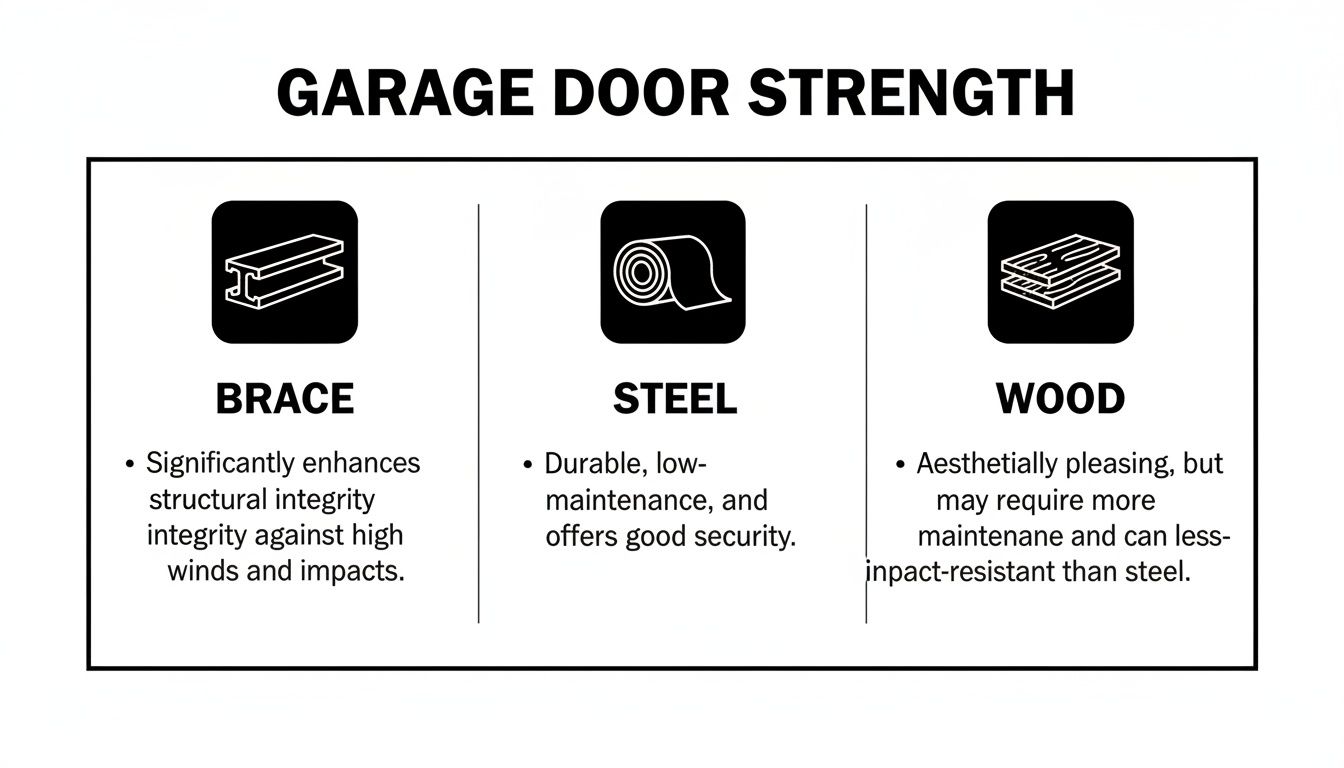
This visual breaks down how elements like a robust door brace, steel panels, and solid wood construction all contribute to resisting a break-in.
Strategic Placement of Cameras and Lights
A smart opener tells you what happened, but cameras and lights show you who is there. Placing them effectively is key. Don't just slap a camera on the wall; think like a burglar and cover their likely approach paths.
Here are a few placement strategies I’ve seen work best:
- Above the Garage Door: Mount a wide-angle camera high on the exterior wall, looking down at the driveway. This gives you a clear, unobstructed view of any person or vehicle approaching.
- Covering Side Entrances: Burglars love side doors and windows because they're often out of sight from the street. A dedicated camera covering this blind spot is non-negotiable.
- Inside the Garage: An interior camera is your final confirmation. If someone does manage to get the main door open, this camera captures them in the act, especially if it’s pointed toward the entry door into your house.
Motion-activated lights are a camera’s best friend. Nothing spooks a would-be intruder like a sudden blast of bright light. A powerful floodlight that illuminates your entire driveway will send most opportunists running. Even better, modern smart lights can ping your phone when they’re triggered, so you know to check your camera feed right away.
Smart Garage Tech Feature Comparison
Deciding which upgrades to invest in can be tough. This table breaks down the most popular smart devices to help you see where you'll get the most bang for your buck based on your security goals.
| Device | Primary Function | Key Benefit | Estimated Cost |
|---|---|---|---|
| Smart Opener/Controller | Remotely open, close, and monitor the garage door | Convenience and peace of mind with real-time status and alerts | $30 – $150 |
| Outdoor Security Camera | Visually monitor and record activity around the garage | Deters intruders and provides crucial video evidence of any event | $75 – $250 |
| Motion-Activated Floodlight | Illuminates the area when motion is detected | Startles potential threats and improves camera night vision | $50 – $150 |
| Smart Garage Lock | A physical deadbolt for the garage door, controlled remotely | Adds a heavy-duty physical barrier that's hard to bypass | $150 – $300 |
Ultimately, combining a smart controller with at least one camera and motion light creates a comprehensive and layered security setup.
Creating Powerful Smart Home Automations
The real power move is connecting these devices to your smart home ecosystem, whether that’s Amazon Alexa, Google Home, or Apple HomeKit. This lets you build automated "routines" that make your security systems work together. It's a classic case of the whole being greater than the sum of its parts.
For instance, you could create a "Goodnight" routine that, with a single voice command, checks that the garage is closed, locks your front door, and arms your alarm system.
Here are a few more practical automations to get you started:
- Late-Night Entry Alert: Set a rule that if the garage door opens between 11 PM and 5 AM, all your home’s smart lights flash and you get a priority alert on your phone.
- Geo-Fencing Convenience: Your phone's location can automatically trigger actions. As you drive into your neighborhood, the garage door opens. As you drive away, it closes behind you. No more fumbling for the remote.
- Camera-Light Team-Up: Link your driveway camera to your floodlights. When the camera detects motion after dark, the lights instantly turn on, guaranteeing a well-lit video clip of whatever (or whoever) is out there.
How Regular Maintenance Prevents Break-Ins
You can have the most high-tech, reinforced garage door on the market, but it's only secure if it actually works the way it's supposed to. Over time, parts wear out, sensors get bumped out of alignment, and what was once a fortress can become an open invitation for a break-in.
Think of routine maintenance less as a chore and more as an active security strategy. A door that groans and struggles to close, or leaves a gap at the bottom, isn't just an annoyance—it's a glaring vulnerability.
Burglars are masters at spotting signs of neglect. A garage door that sits slightly ajar or has a finicky safety sensor is a prime target because it signals an easy entry point. A few simple checks each season is one of the cheapest and most effective ways to keep your garage door a formidable barrier.
The Essential Security Maintenance Checklist
You don't need to be a pro to handle the most important security checks. Building these simple tasks into a seasonal routine will help you spot small problems before they turn into major security headaches. It's all about being proactive.
Here's a practical checklist to get you started:
-
Test the Safety Sensors: Those little electronic "eyes" near the floor are your first line of defense against accidents and some break-in attempts. Place something soft but solid, like a roll of paper towels, in the door's path. When you hit the close button, the door should immediately stop and reverse. If it doesn't, the sensors are misaligned or failing—a serious safety and security risk.
-
Lubricate the Moving Parts: Just listen to your door. Is it squeaking, grinding, or moving in a jerky way? Those are cries for help. Grab a can of dedicated garage door lubricant (steer clear of WD-40, which can gum things up) and hit the rollers, hinges, and springs. A door that operates smoothly and quietly puts less strain on the opener, preventing a malfunction that could leave it stuck wide open.
-
Check the Cables and Springs: Take a moment to visually inspect the heavy-duty springs and steel cables on both sides of the door. You’re looking for any signs of fraying, rust, or broken strands. These parts are under incredible tension, doing the heavy lifting. A snapped cable can cause the door to slam shut or leave it completely inoperable.
A Word of Caution: Never, ever try to adjust or replace garage door springs yourself. They store a massive amount of energy and can cause serious injury or even death if they release unexpectedly. If you see an issue here, it’s time to call a professional. No exceptions.
Recognizing When to Call for Help
While a little DIY maintenance goes a long way, knowing your limits is just as important. Some warning signs are clear indicators of a problem that needs an expert’s touch before it compromises your home's security.
Keep an eye out for these red flags:
- The Door is Off-Balance: Pull the emergency release cord to disconnect the opener, then try lifting the door by hand. It should feel manageable and stay put about halfway up. If it slams shut or feels incredibly heavy, the springs are unbalanced. This puts immense strain on your opener and creates a serious security weak point.
- Visible Damage to Panels or Tracks: Even a small dent in a door panel or a bent track can prevent the door from sealing properly. That's all the gap a burglar needs to get a crowbar in.
- The Opener is Straining: If the motor sounds like it's struggling to do its job, that's often a symptom of a bigger mechanical issue, like worn-out rollers or an unbalanced system.
One of the smartest ways to head off problems is to enroll in a planned garage door maintenance program. A professional technician will catch the subtle issues an untrained eye might miss, making sure every single component is working exactly as it should. A little proactive care is always cheaper and safer than dealing with repairs after a malfunction or, even worse, a break-in.
Got Questions? Let's Talk Garage Door Security
Even after you've reinforced the door, installed a few smart gadgets, and gotten into a good maintenance rhythm, questions are bound to pop up. Perfecting your home's security is a marathon, not a sprint. Let's dig into some of the most common questions and real-world concerns I hear from homeowners all the time.
Getting clear, straightforward answers is the key to making confident decisions about protecting your home.
How Can I Secure My Garage Door When the Power Is Out?
A power outage can feel like a huge security blind spot. Your high-tech opener is suddenly useless, and you're left with a very large, potentially vulnerable door. This is exactly why old-school physical locks still have a place. A simple manual lock, like a slide bolt on the inside or a heavy-duty padlock through the track, works with or without electricity.
For a more modern solution, look into a garage door opener that has a built-in battery backup. It's a fantastic feature. When the power cuts out, these units seamlessly switch over to their internal battery, giving you 10-20 more open-and-close cycles. This keeps your garage secure and, just as importantly, accessible until the lights come back on.
A Quick Word of Caution: Try to avoid using that red emergency release cord during a power outage unless you have absolutely no other way in or out. Once you pull it, the door is completely disconnected from the opener and is essentially unlocked. You'll have to manually re-engage the mechanism later, and until you do, your door is a sitting duck.
Are Smart Garage Door Openers Easy to Hack?
It's a fair question. We hear about everything being hacked these days. The good news is that reputable smart openers are much tougher targets than most people realize. The core of their defense is something called "rolling code" technology. Every single time you press the button on your remote or tap your app, the system generates a brand-new, one-time-use access code. This constant rotation makes it practically impossible for a thief to capture your signal and replay it to open your door.
Of course, for Wi-Fi-connected devices, you have to do your part. Think of it like digital housekeeping:
- Lock Down Your Wi-Fi: Make sure your home network is using, at a minimum, WPA2 encryption. WPA3 is even better if your router supports it.
- Keep Your Firmware Fresh: Always install firmware updates for your opener when they become available. These aren't just for new features; they often contain critical patches for security vulnerabilities.
- Turn On Two-Factor Authentication (2FA): If the app offers 2FA, enable it. No excuses. That extra step of sending a code to your phone before granting access is one of the most powerful security layers you can add.
- Never Use the Default Password: The very first thing you should do after setting up any smart device is change the factory-default password to something long, strong, and unique.
Stick with trusted brands and follow these basic rules, and you'll make your smart garage door a very unappealing target for hackers.
Is an Insulated Garage Door More Secure?
Absolutely, and this is a benefit that often gets overlooked. People buy insulated doors to save on heating and cooling bills, but they're also getting a massive security upgrade in the process.
Insulated doors are built like a sandwich, with a thick core of rigid foam insulation packed between two layers of steel or aluminum. This multi-layer construction makes the door incredibly rigid and far tougher than a standard, flimsy, single-layer door.
This added strength gives you a few key advantages:
- Brute-Force Resistance: That solid core makes the door much harder to kick in, pry open, or bend.
- Heavier Build: The extra weight makes it more difficult for someone to manually lift the door, even if they manage to disconnect it from the opener.
- Sound Dampening: The insulation also muffles sound. This makes it harder for a potential burglar to hear what’s happening inside, and harder for you to hear them trying to get in.
Choosing an insulated model is one of the smartest two-for-one investments you can make, boosting both your home's energy efficiency and its physical security.
What Is the Biggest Garage Security Mistake?
I see this one all the time. By far, the most common and dangerous mistake is leaving the garage door remote clipped to your car's sun visor. It feels so convenient, but it's a huge risk. If a thief breaks into your car—even if it's just parked in your own driveway—you've just handed them the keys to your house.
Start thinking of your garage remote just like your front door key. You wouldn't leave your house key sitting on the dashboard for everyone to see, would you?
The best habit is to simply take the remote with you when you get out of the car. If that’s not practical for you, at least lock it in the glove compartment. An even better move? Ditch the clunky remote entirely. Use the password-protected app on your smartphone that comes with any modern smart opener. This simple change costs you nothing but immediately eliminates one of the biggest and most preventable security risks.
At Automated Home Guide, we're committed to helping you create a safer, more efficient home through smart technology. Our in-depth guides and expert tips are designed to give you the confidence to protect what matters most. Explore more insights and solutions at https://automatedhomeguide.com.




Leave a Reply