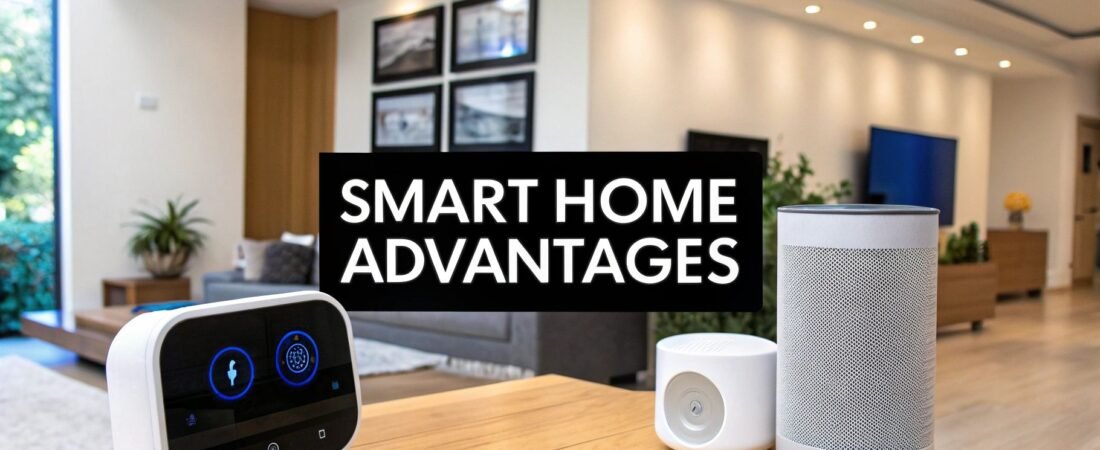
Imagine your home doing more than just providing shelter. Picture it as a proactive partner—one that simplifies your day, keeps your family safe, and even helps you save money. This is the real promise of a smart home, where convenience, security, and efficiency come together to create a living space that works for you.
What Are the True Advantages of a Smart Home
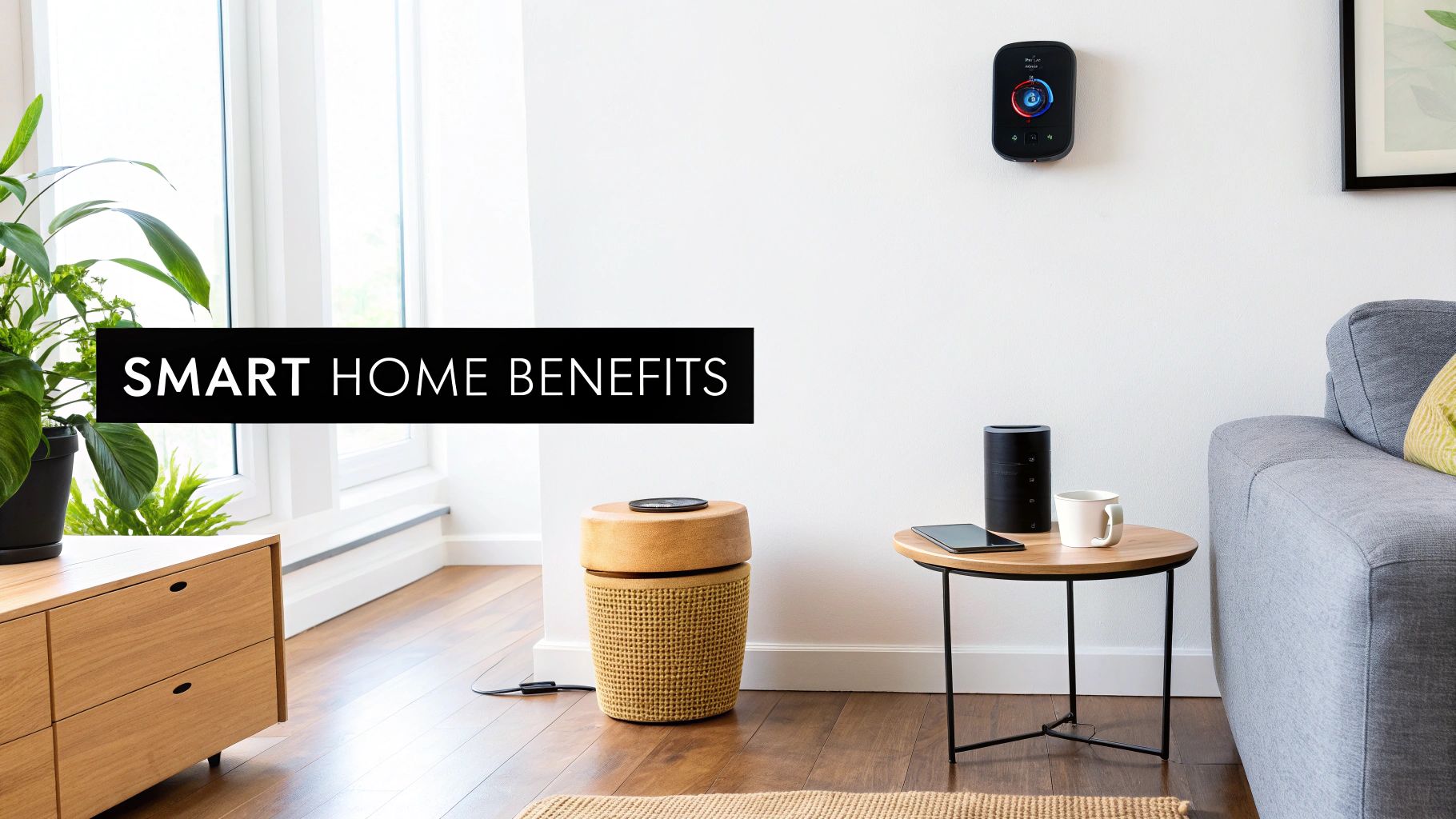
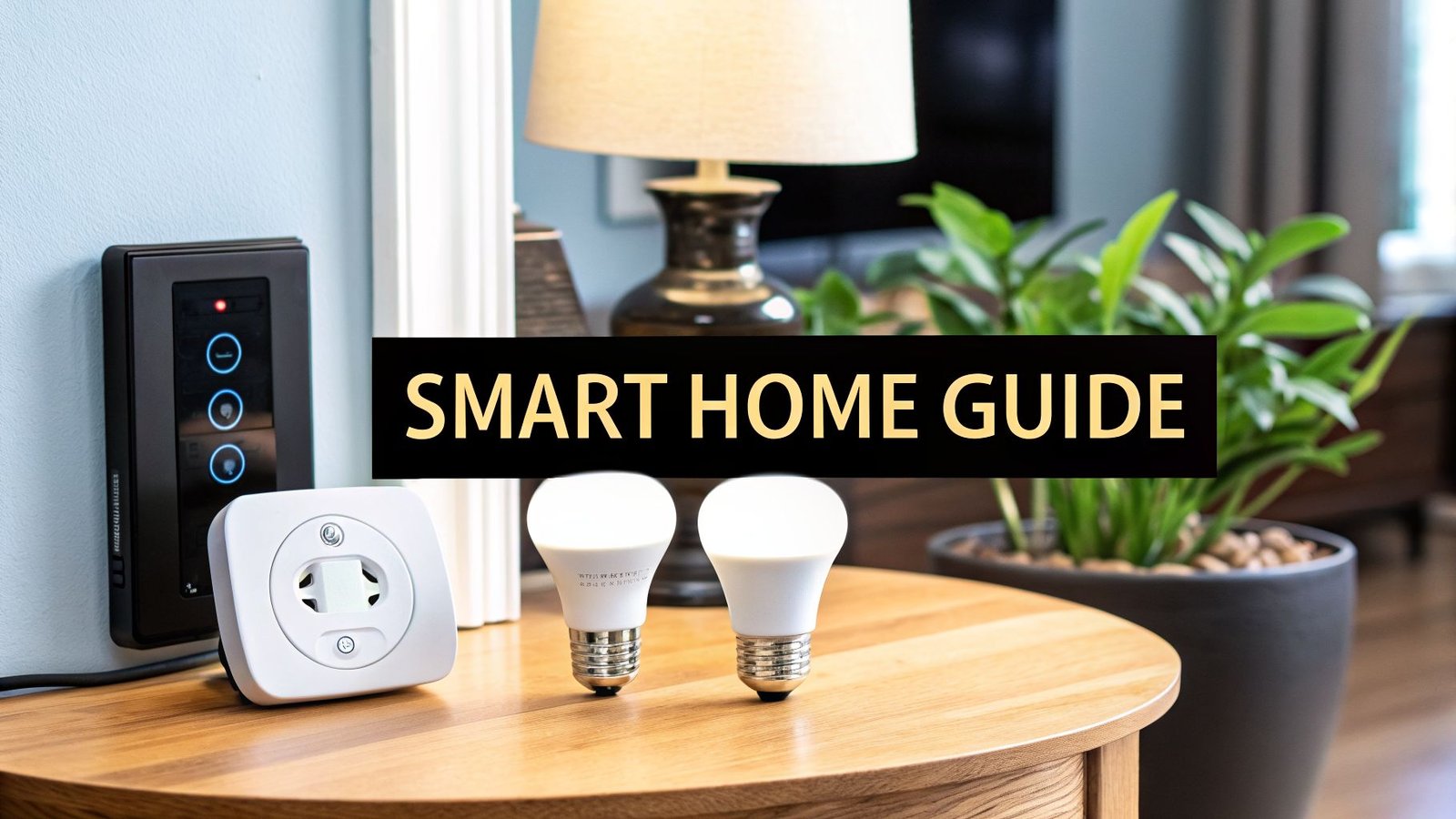
At its heart, a smart home is really just a network of connected devices that you can control from anywhere. Think of your lights, thermostat, door locks, and even your speakers all talking to each other and responding to your commands, whether you use a smartphone app or just your voice.
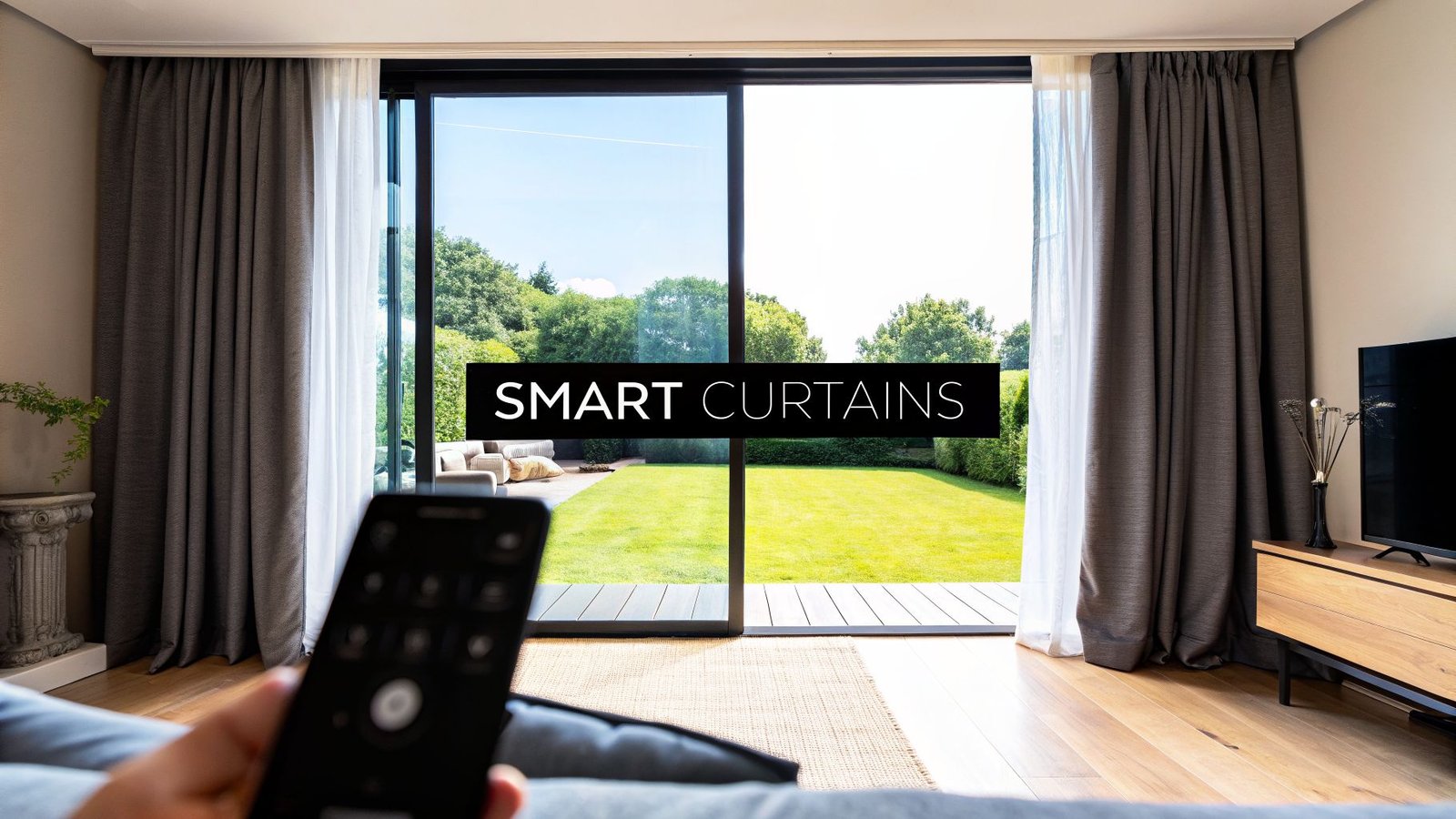
This isn't just about cool gadgets; it's about delivering real, practical benefits that improve how you live. For example, integrating intelligent lighting or automated window treatments can completely change a room's feel and function. If you're curious, you can discover the magic of Smartdrape to see how modern shades blend style with convenience.
The core idea is simple: let your home handle the little things. If you want to dive deeper into the basics, our guide on what a home automation system is is a great place to start.
The Main Pillars of a Smarter Home
The benefits you get from setting up this kind of environment generally fall into four key areas. Let's break down what each one really means for your daily life.
- Exceptional Convenience: Think of all the small tasks you do without thinking. Automating things like adjusting the thermostat, turning lights on and off, or brewing your morning coffee frees up your time and mental energy for more important things.
- Robust Security: Smart security gives you peace of mind. Get instant alerts on your phone, see who's at the door with a video doorbell, and control your locks from halfway around the world. It’s about being in control, no matter where you are.
- Significant Energy Savings: This is a big one. Smart thermostats learn your schedule, lights turn off automatically when you leave a room, and you can easily monitor your energy consumption. All of this adds up to smaller utility bills each month.
- Enhanced Accessibility: For anyone with mobility issues or older adults wanting to live independently, smart technology is a game-changer. Voice commands and simple automation can make a home safer and much easier to manage.
Ultimately, these advantages combine to create a home that’s more comfortable, secure, and perfectly in sync with the way you live.
Gain Peace of Mind with Advanced Home Security
For many people dipping their toes into smart home tech, security is the number one reason. It makes sense. A classic alarm system only tells you after a break-in has already happened. A smart security system, on the other hand, works to stop incidents before they even start.
It’s a fundamental shift in how we protect our homes. Your house goes from being a passive building to an active, intelligent guardian, giving you a real sense of control. Instead of just hoping everything’s okay back home, you can see for yourself, right from your phone.
Your Eyes and Ears, Wherever You Are
Think about this everyday scenario: you’re at the office, and the dog walker is due to arrive. The old way involved hiding a key under the mat or handing out copies. A smart lock changes the game entirely. You can give them a temporary digital code that only works during their scheduled window and get an alert the second they use it.
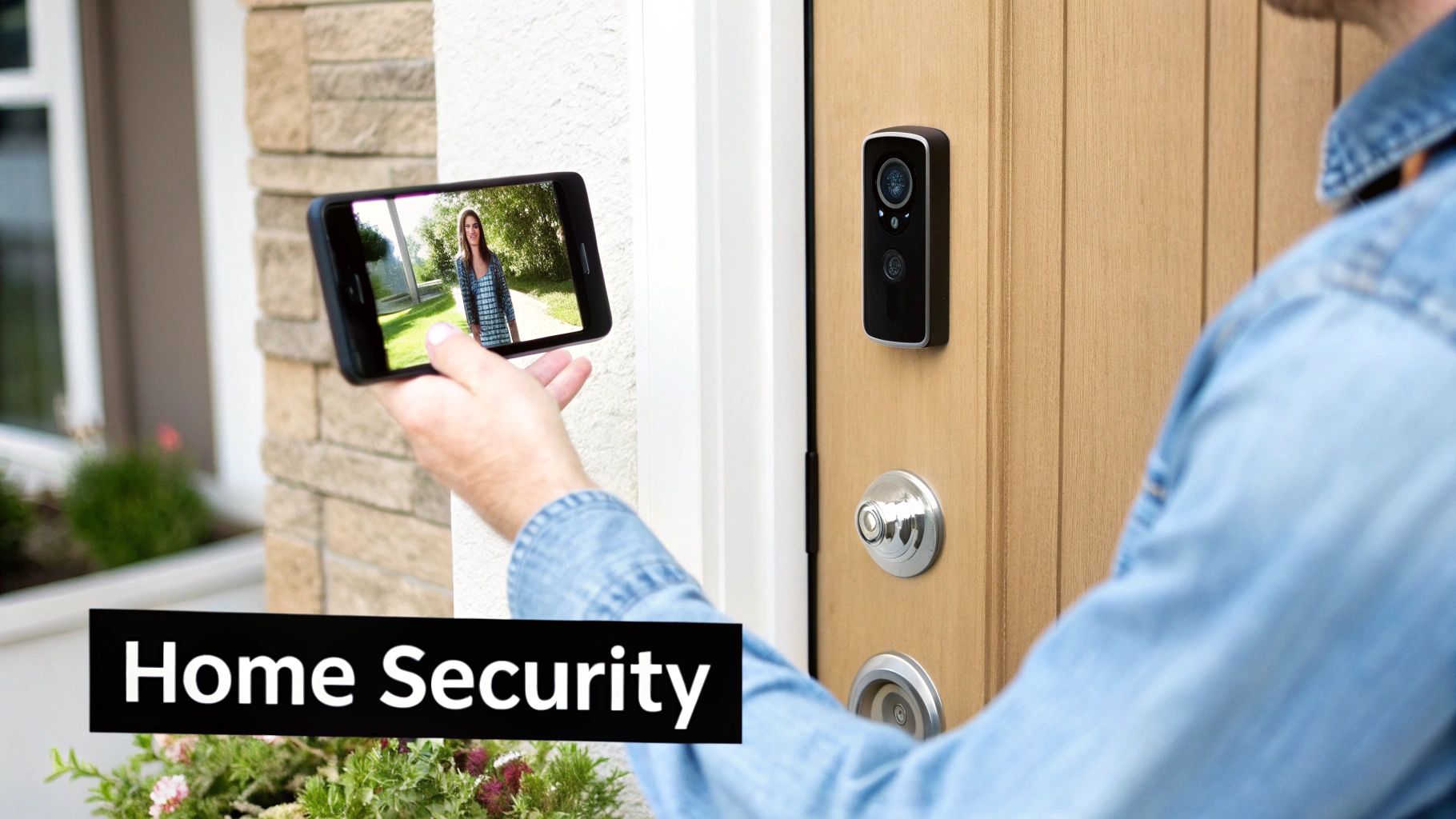
The same idea applies to your front door. A video doorbell lets you see and talk to anyone who shows up, whether you're in the living room or on a beach halfway across the world.
It’s the difference between being reactive and proactive. You can tell a delivery driver exactly where to hide a package or scare off a would-be thief with your voice. You're always present, even when you aren't physically there.
Smarter Alerts That Actually Matter
Let's be honest, one of the most annoying things about older security systems was the constant false alarms. A cat walking by, a car driving down the street, or a tree branch swaying in the wind could all trigger a notification. It was mostly just noise.
Today’s smart cameras are much more intelligent. They use AI to tell the difference between people, animals, and vehicles, so you only get alerts that are worth your time.
This makes for a far more reliable and less stressful system. You can even set up custom detection zones, telling your camera to only pay attention to your walkway and ignore the public sidewalk. For a deeper dive, check out our guide to the best smart home security systems on the market.
It's no surprise that this technology is catching on fast. The rate of smart security adoption is expected to climb to over 57% of U.S. households by 2026. Homes with visible deterrents like cameras and motion-activated lights simply aren't as appealing to intruders. The data backs this up, showing that neighborhoods with more smart security often see a real drop in residential crime.
Ultimately, it’s about creating layers of defense. A family on vacation can pull up live camera feeds, double-check that every door is locked, and even switch lights on and off to make the house look occupied. That’s a level of reassurance that just wasn't possible a decade ago.
Slash Your Utility Bills with Smart Energy Management
Beyond the cool factor and added convenience, one of the biggest wins with a smart home is the very real impact it can have on your wallet. Smart energy management isn't just a techy buzzword; it’s a practical way to stop paying for power you aren't even using. It helps your home shift from being a passive energy hog to an intelligent system that actively cuts down on waste.
Think of it as having a tiny, hyper-efficient building manager working for you around the clock. This system picks up on your daily routines, figures out when you need power, and makes dozens of small adjustments that add up to some serious savings. You no longer have to be the one obsessing over the thermostat or running around turning off lights—your home starts doing it for you.
How Smart Devices Cut Down on Energy Waste
The real magic behind smart energy management is how these devices learn and automate. They talk to each other to make sure you’re only using electricity or fuel right when you need it. This hands-off approach is brilliant at tackling the biggest energy vampires in any house.
- Intelligent Climate Control: A smart thermostat is the MVP of an energy-conscious smart home. It learns when your family comes and goes, automatically turning down the heat or AC when the house is empty and getting it comfortable just before you walk in the door. That means no more paying to heat an empty living room all day.
- Automated Lighting: With smart bulbs and switches, you can set lights to shut off automatically the moment a room is empty. Even better, they can dim themselves based on the time of day or how much sunlight is streaming through the windows, so you’re never using more electricity than you need.
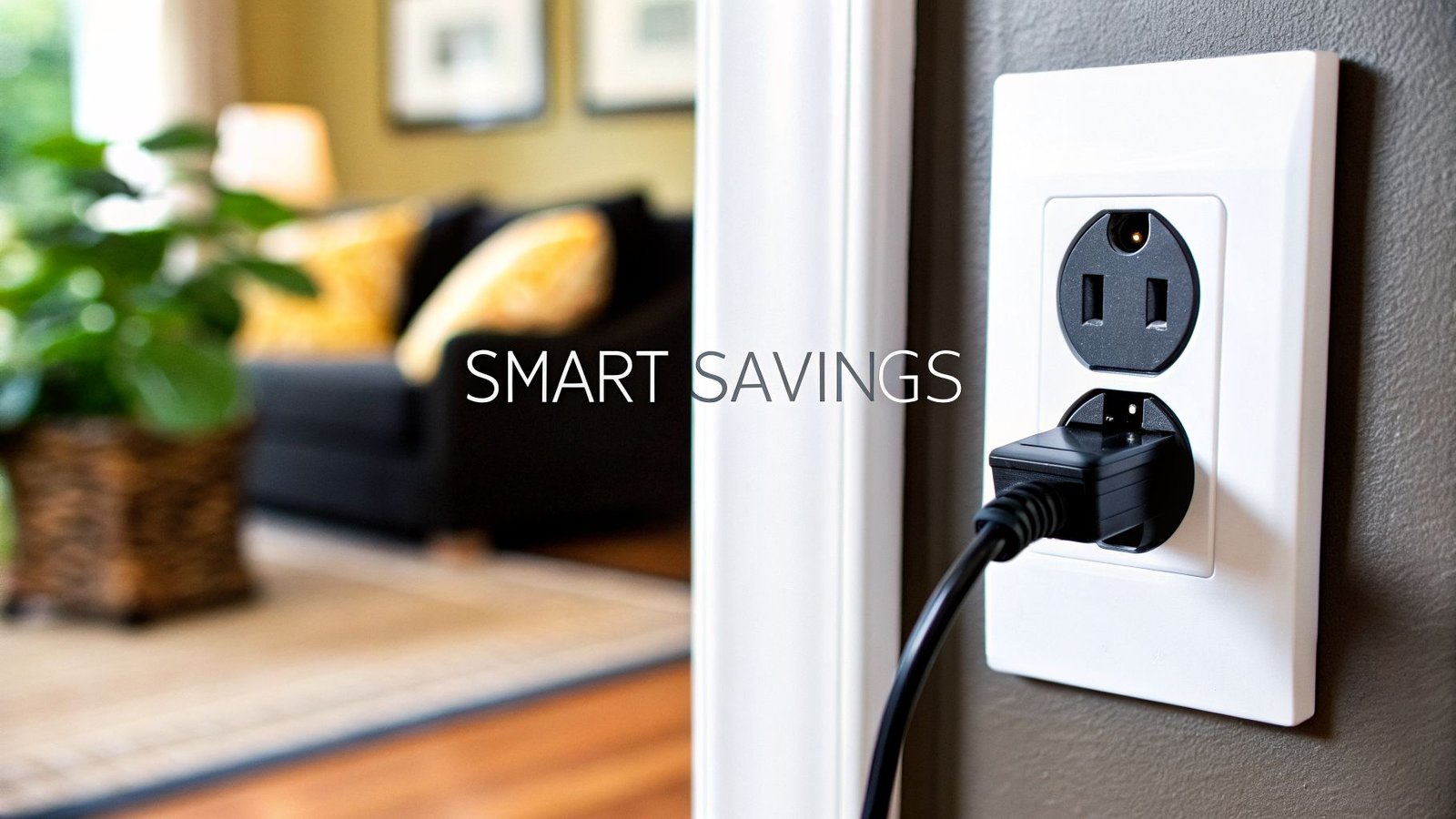
- Wiping Out "Phantom" Power: Did you know that many of your gadgets are still sipping power even when they're turned off? This sneaky "phantom drain" can be responsible for up to 10% of your electricity bill. Smart plugs are the perfect fix—they cut the power off completely, killing that silent energy leak for good.
All these little automated tweaks work together to create a home that’s not just more comfortable, but incredibly efficient. If you really want to dive deep, our complete guide on building an energy-efficient smart home has plenty more ideas. The best part? Once it's all set up, the savings just happen in the background.
The Payoff: For Your Wallet and the Planet
The financial upside here is real and easy to see. Imagine coming home to a house that not only greets you but also trims your energy bills by as much as 30% without you lifting a finger. Across North America, where smart homes are becoming more common, people are seeing a solid return. Research shows that a smart thermostat alone can chop heating costs by 10-15% a year, and smart lighting can cut its portion of the electricity bill by 20-30%.
By optimizing energy usage, you aren't just saving money. You are also actively reducing your household's carbon footprint, contributing to a more sustainable future one kilowatt-hour at a time.
To see what this looks like in actual dollars and cents, let’s look at the return you can expect from a few popular smart devices. The table below gives a clearer picture of how quickly these upgrades can start to pay for themselves.
Estimated Annual Savings from Smart Energy Devices
This table compares common smart home devices and their potential impact on annual household utility bills, based on average usage patterns.
| Smart Device | Average Annual Energy Savings (Percentage) | Estimated Annual Monetary Savings (USD) |
|---|---|---|
| Smart Thermostat | 10% – 15% | $130 – $180 |
| Smart Lighting | 20% – 30% | $50 – $150 |
| Smart Plugs | 5% – 10% | $40 – $100 |
As you can see, the financial benefits of a smart home are anything but theoretical. With just a few smart upgrades, you can lock in significant, ongoing savings that more than justify the initial cost.
2. A New Level of Everyday Convenience
While beefed-up security and lower energy bills are huge wins, the real magic of a smart home often shows up in the little things—the way it smooths out the rough edges of your daily routine. This is all about reclaiming your time and mental space by letting technology handle the small, repetitive tasks that pile up. Think of it as your home working for you, not the other way around.
Imagine a morning that practically starts itself. Instead of a blaring alarm clock, your bedroom lights gently fade up, mimicking a natural sunrise. By the time you’re out of bed, the smart plug on your coffee maker has already started brewing that first cup. This isn't science fiction; it’s a simple, practical way to remove a little bit of friction from the start of your day.
Ultimately, this kind of automation helps your home anticipate what you need, letting you spend less time managing the house and more time actually living in it.
Automating the Daily Grind
The convenience of a smart home really comes to life when you start linking devices together to create helpful routines. A single voice command like "Hey Google, goodnight" can set off a chain reaction: all the doors lock, the thermostat dials down to your preferred sleeping temperature, and every light in the house shuts off, except for the lamp on your nightstand.
Here are a few more real-world examples of how this plays out:
- Never Forget the Milk Again: When you use the last drop, just tell your smart speaker, "Add milk to the shopping list." It instantly syncs to your phone, ready for your next grocery run.
- A Helping Hand in the Kitchen: Smart appliances can seriously streamline meal prep. You can preheat your oven from your phone on the way home from work or get a notification when the laundry cycle is finished so clothes don't sit and wrinkle.
- The Perfect Vibe, Instantly: You can create "scenes" for any mood or occasion. A "Movie Night" scene, for example, could dim the lights, lower the smart blinds, and fire up your TV and sound system with one tap.
The big idea here is bundling a bunch of small tasks into a single, easy trigger. This turns your home from a passive space full of gadgets into a responsive environment that actively helps you.
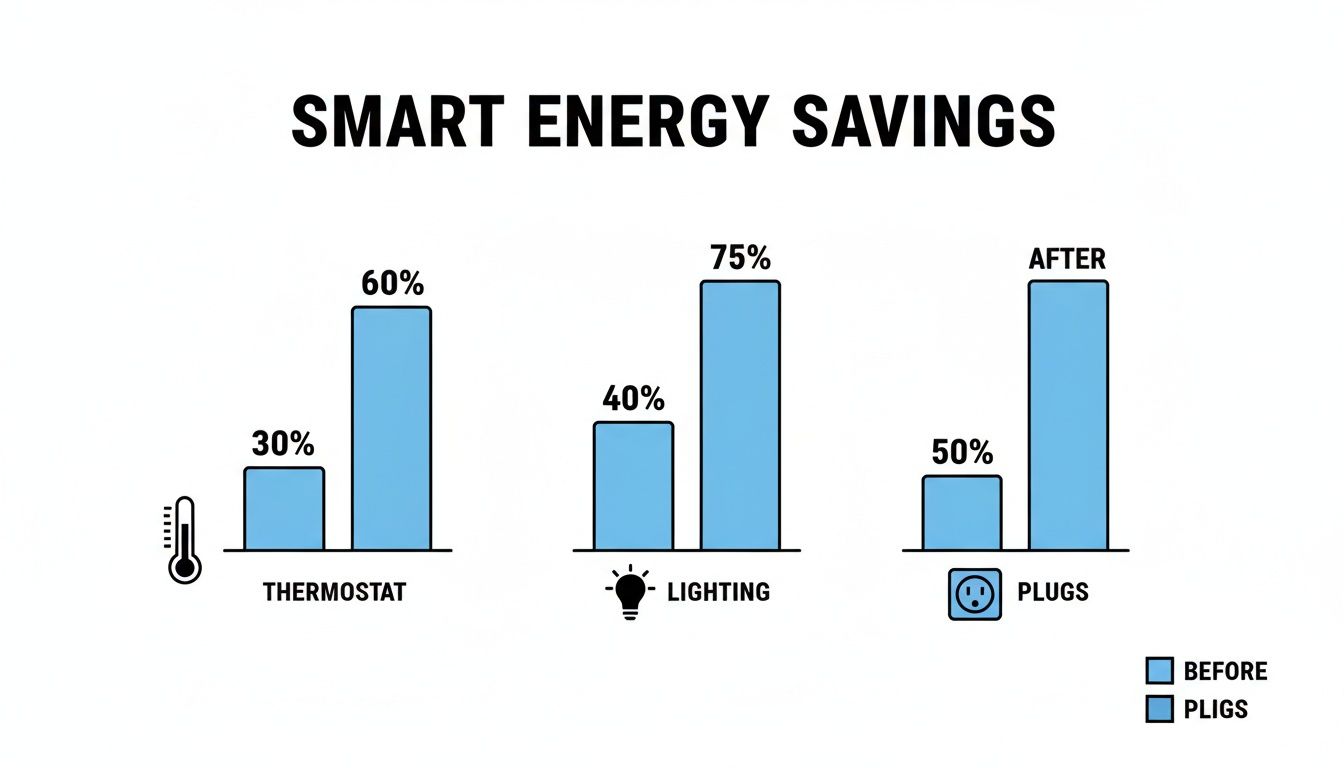
While we're talking about convenience, it's worth noting how it overlaps with savings. As you can see, smart thermostats and lighting don't just make life easier—they also offer some of the biggest opportunities to cut down on energy use.
A Day in the Life: Putting It All Together
Think about how these small conveniences add up throughout a typical day.
When you leave for work, your home senses you're gone and kicks into an "Away" mode. The thermostat eases up, any forgotten lights turn off, and the security system arms itself. A bit later, your video doorbell pings your phone—a package has arrived. You can quickly use the two-way audio to ask the delivery driver to tuck it behind a planter.
As you pull into the driveway that evening, the garage door opens automatically. The lights in the entryway turn on to welcome you, and your favorite "after work" playlist starts playing softly. Each of these actions is minor on its own, but together, they create a living experience that feels completely seamless and in sync with your life. That’s the true promise of smart home convenience.
Enhance Accessibility and Independent Living
While most of us think of smart homes in terms of convenience, one of their most profound benefits is the ability to foster genuine independence. For older adults or anyone with mobility challenges, this isn't just a neat trick—it’s a life-changing tool.
Think about it. When someone with limited mobility can control the lights, adjust the thermostat, or see who’s at the door using only their voice, it removes countless daily frustrations. Actions that were once difficult, or even impossible, become simple again. The home stops being an obstacle course and starts being a supportive partner.
Supporting a Safer, More Independent Lifestyle
Smart home tech is a game-changer for anyone who wants to live on their own terms, especially as they get older. It provides a subtle yet powerful safety net, offering peace of mind to both the person living there and their family, all without feeling intrusive. This is a core part of what makes Aging in Place and staying independent a real possibility for so many.
A few key features really stand out:
- Automated Reminders: Smart speakers can announce when it’s time to take medication, making sure a critical dose is never missed.
- Fall Detection Sensors: Small, discreet sensors can detect a sudden fall and immediately send an alert to family members or emergency services.
- Remote Wellness Checks: Loved ones can get peace of mind by checking a smart camera feed or simply seeing that motion sensors are detecting normal daily activity.
This technology empowers people to maintain their dignity and autonomy for much longer. The home adapts to their needs, not the other way around.
These aren't just gadgets; they are tools of empowerment. By automating essential tasks and providing a reliable way to monitor for problems, smart homes offer a new level of freedom. A simple voice command to lock the doors at night or turn off all the lights from bed can make a world of difference. It’s a perfect example of how technology, when thoughtfully applied, can help create a more inclusive and supportive world.
Got Questions About Smart Homes? We've Got Answers.
Jumping into the world of smart homes can feel a little overwhelming. You're probably wondering about the cost, whether all this stuff will actually work together, and if it's secure. These are all perfectly valid questions, and getting them answered is the first step toward building a home that genuinely makes your life easier.
Let's cut through the noise and tackle some of the most common concerns head-on. My goal here is to give you the clarity you need to move forward with confidence and start enjoying all the benefits we've been talking about.
Is This Going to Cost a Fortune?
One of the biggest myths I hear is that you need to be rich to have a smart home. That couldn't be further from the truth. You can get your feet wet for less than the price of a couple of movie tickets. Seriously. A single smart plug or a smart speaker often costs under $50, giving you an instant win.
The real beauty of today's smart tech is that it's not an all-or-nothing deal. You can build it out piece by piece, as your budget allows and your needs change.
- Start small. Don't try to automate everything at once. Pick one or two devices that will make a real difference, like a smart thermostat to save on your energy bill or a few smart bulbs for a single room.
- Grow at your own pace. Maybe next month you add a video doorbell. A few months after that, a smart lock. There’s no rush.
- Keep an eye out for bundles. Brands often package a few of their most popular devices into a starter kit, which usually saves you a good bit of money compared to buying them separately.
Sure, you can spend a lot on a fully integrated, professionally installed system. But for most of us, a DIY approach lets you build the perfect smart home over time, without breaking the bank.
Will All These Different Gadgets Actually Work Together?
This used to be a legitimate nightmare. You'd buy a smart light from one brand and a smart switch from another, only to find out they couldn't talk to each other. Thankfully, things have improved dramatically. Most devices are now designed to play nicely within one of the big smart home ecosystems. Think of these as the central hub for all your different gadgets.
When you're shopping, just look for one of these three logos on the box:
- Amazon Alexa
- Google Assistant
- Apple HomeKit
If a device is compatible with one of these, you can control it using that system’s app or with your voice, right alongside all your other gear. Even better, a new industry standard called Matter is rolling out. Its entire purpose is to make sure any certified device works with any other, no matter who made it. So, before you buy, just double-check the product description for those compatibility logos.
How Secure Is My Data with All These Connected Devices?
This is a big one, and it's something you should absolutely be thinking about. Reputable manufacturers take your privacy seriously. They use encryption to protect your information, both when it’s sitting on the device and when it's flying across the internet. But they can only do so much—you play a huge part in keeping your digital home secure.
Think of it like the locks on your front door. The manufacturer provides a strong deadbolt, but it's on you to actually lock it and not leave a spare key under the welcome mat.
Keeping your smart home secure comes down to a few simple, but crucial, habits. Always use a strong, unique password for each smart home app or account. And if two-factor authentication (2FA) is an option, turn it on. It’s one of the single most effective things you can do to protect your accounts.
Finally, don't ignore those update notifications! When a manufacturer pushes out a firmware update, it often includes critical patches for security holes. Installing them right away keeps you protected from new threats. By sticking with trusted brands and practicing good digital hygiene, you can enjoy all the perks of a smart home without the worry.
At Automated Home Guide, we're dedicated to helping you make sense of the exciting world of home automation. For more in-depth reviews, practical tips, and easy-to-follow setup guides, come visit us at https://automatedhomeguide.com.



Leave a Reply