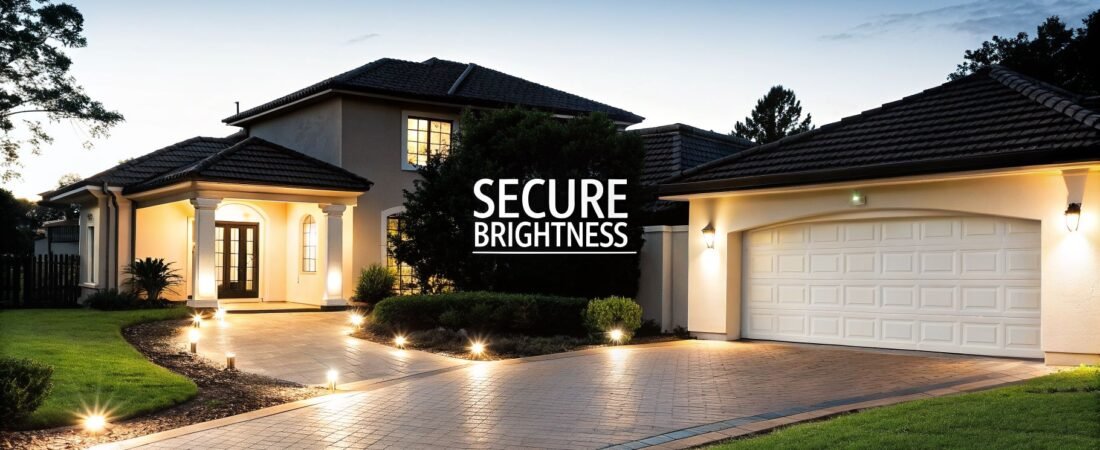
Effective security is more than just deterring threats; it's about creating a well-lit, safe, and welcoming environment. The right outdoor lighting does more than push back the darkness. It integrates with your smart home, improves your property's aesthetics, and provides invaluable peace of mind. Antiquated, always-on floodlights are a thing of the past. Today's solutions are smarter, more efficient, and highly customizable to fit your exact needs. From motion-activated systems that respond instantly to solar-powered lights that cut your energy bills, the options are plentiful.
To truly reimagine your home's first line of defense, consider how outdoor security lighting integrates with more comprehensive home security systems. A layered approach combining intelligent lighting with other security measures creates a formidable barrier. This guide will explore 10 distinct outdoor security lighting ideas, moving beyond generic advice to provide you with actionable strategies for a safer property.
We'll dive into specific technologies, practical installation tips, and real-world examples to help you design a lighting scheme that is both protective and functional. You will learn about everything from smart perimeter lighting to integrated camera floodlights, each with its own benefits and ideal use cases. Let's illuminate the path to a safer, smarter home.
1. Motion-Activated LED Floodlights
Motion-activated LED floodlights represent a fundamental and highly effective layer of home security. These fixtures use a passive infrared (PIR) sensor to detect the heat and movement of a person or vehicle, instantly flooding the area with bright light. This sudden illumination is a powerful deterrent, startling potential intruders and drawing attention to your property. Beyond security, they offer practical convenience, lighting your path as you arrive home after dark or navigate your yard.

This technology combines two key benefits: potent security and remarkable energy efficiency. Since the lights only turn on when triggered, they consume significantly less power than dusk-to-dawn lighting, making them an eco-friendly and cost-effective choice. Many modern systems, like the Ring Floodlight Cam or Philips Hue outdoor sensors, integrate with smart home platforms, allowing you to receive mobile alerts, view live video, and customize settings directly from an app.
Implementation and Setup
Proper placement is essential for maximizing effectiveness and minimizing false alarms.
- Optimal Height: Install floodlights and their sensors between 6 and 10 feet above the ground. This height provides a broad detection angle and helps prevent tampering.
- Sensitivity Tuning: Adjust the PIR sensor's sensitivity to avoid triggers from passing cars, swaying tree branches, or neighborhood pets. Many models offer sensitivity dials or in-app controls for fine-tuning.
- Zone Coverage: To secure the entire perimeter, position multiple units to eliminate blind spots, especially around corners, side gates, and detached garages.
- Duration Settings: Set the "on" time for the light, typically from one to ten minutes. A shorter duration saves energy, while a longer one provides more time to investigate a trigger.
Pro Tip: Test your motion sensor's detection range at different times of day, including dusk and dawn. Ambient light changes can affect PIR performance, so confirming its accuracy during these periods ensures reliable operation.
For those interested in a more integrated approach, you can learn more about how motion-sensing light bulbs can be used in smaller, covered outdoor fixtures like porch lights to complement a floodlight system.
- Difficulty: DIY-Friendly to Moderate
- Estimated Cost: $40 – $250+ per unit, depending on smart features and camera integration.
2. Solar-Powered Security Lights
Solar-powered security lights offer an excellent, eco-friendly solution by converting sunlight into electricity. These fixtures use integrated photovoltaic (PV) panels to charge an internal battery during the day, providing power to illuminate your property after dark. As completely wireless systems, they eliminate the need for complex electrical work and reduce ongoing energy costs to zero, making them one of the most cost-effective outdoor security lighting ideas for long-term use.
This wire-free design provides unmatched versatility, allowing installation in remote or hard-to-reach areas like detached sheds, long driveways, or fence lines where running conventional wiring would be impractical or expensive. Many models from brands like Sunforce and Westinghouse also include built-in motion sensors, combining the energy independence of solar with the efficiency of on-demand lighting. This makes them a smart choice for both security-conscious and environmentally aware homeowners.
Implementation and Setup
Success with solar lighting depends almost entirely on panel placement and battery management.
- Panel Placement: Install the unit or its detached solar panel in a location that receives at least 6-8 hours of direct, unobstructed sunlight daily. A south-facing position is ideal in the Northern Hemisphere.
- Battery Capacity: For reliable performance through cloudy days or long winter nights, choose models with a battery capacity of 2000mAh or higher. This ensures the light has enough stored power to function when needed.
- Regular Maintenance: Clean the solar panels with a soft cloth and water every quarter. Dust, pollen, and debris can accumulate and significantly reduce charging efficiency.
- Strategic Positioning: Mount lights on fence posts, poles, or the sides of outbuildings to maximize both sun exposure for the panel and light coverage for the target area.
Pro Tip: Before final installation, test the light in your chosen spot for a few days. This will confirm that the panel receives adequate sunlight to fully charge the battery and power the light through an entire night.
For those looking for an even simpler setup for smaller areas, there are a variety of solar garden lights that can add ambient light to pathways, complementing your main security fixtures.
- Difficulty: DIY-Friendly
- Estimated Cost: $30 – $150 per unit, depending on brightness, battery capacity, and features.
3. Smart Hub-Connected Security Lighting Systems
Smart hub-connected lighting systems represent a significant step up in outdoor security, transforming isolated fixtures into a coordinated, intelligent network. These systems integrate with central home automation platforms like Apple HomeKit or Amazon Alexa, allowing you to control and automate all your outdoor lights from a single app, voice command, or preset schedule. This unified control provides a more robust and responsive approach to securing your property.
The primary advantage is the ability to create sophisticated security routines. For instance, you can link your Philips Hue outdoor lights to your Ring security camera, so if motion is detected on the driveway, the porch, backyard, and side-gate lights can all turn on simultaneously. This creates the illusion that someone is home and actively responding to a disturbance. Brands like LIFX and Wyze offer a wide range of products that work together to provide this level of deep integration, making your lighting a proactive security tool rather than a passive one.
Implementation and Setup
A strong foundation is key to a reliable smart lighting network.
- Stable Wi-Fi: Most smart lights rely on a 2.4GHz Wi-Fi signal. Before installing, test your signal strength in all desired outdoor locations. You may need a Wi-Fi extender or a mesh network for complete coverage.
- Grouping and Scenes: Organize lights into logical groups within your app, such as "Front Yard" or "Back Patio." This allows for efficient batch control and the creation of "scenes" like "Away" or "Welcome Home" that trigger multiple lights at once.
- Geofencing: Enable location services in your smart home app to set up geofencing. This can automatically turn on your entryway lights as you pull into the driveway and turn them off when you leave.
- Automation Routines: Create "if this, then that" automations. For example, "if the front door smart lock is unlocked after 10 PM, then turn on the porch and walkway lights to 100% brightness."
Pro Tip: Secure your smart home account with two-factor authentication (2FA). Since your lighting is connected to the cloud, protecting your account is as important as protecting your physical property.
To explore different ecosystems and find what fits your needs, you can research some of the best smart lighting systems currently available for a deeper comparison.
- Difficulty: Moderate
- Estimated Cost: $50 – $400+ for starter kits and hubs, plus $30 – $150 per additional light fixture.
4. Integrated Security Camera Floodlights
Integrated security camera floodlights are a powerful two-in-one solution, combining high-intensity LED illumination with a built-in surveillance camera. This design provides both a strong visual deterrent and the ability to capture clear video evidence. When motion is detected, the lights activate to startle intruders while the camera begins recording, sending an alert directly to your smartphone for real-time monitoring.

These all-in-one units eliminate the need to install and wire separate lighting and camera systems, creating a cleaner aesthetic and more efficient installation. Popular models from Ring, Arlo, and Wyze often include features like two-way audio, color night vision, and customizable motion zones. This technology represents an essential evolution in creating a proactive and comprehensive security perimeter for any home.
Implementation and Setup
Effective setup is key to leveraging both the lighting and surveillance capabilities of these devices.
- Optimal Placement: Position the unit to capture clear facial features and vehicle details like license plates. Mounting it above a driveway or main entrance is ideal.
- Motion Zone Configuration: Use the device's app to create specific motion detection zones. This focuses alerts on critical areas like walkways while ignoring public sidewalks or streets to reduce false alarms.
- Light Intensity: Adjust the floodlight's brightness settings. Excessively bright light can cause glare on the camera lens, washing out important details in the video feed.
- Video Storage: Enable cloud storage or a local SD card backup. This ensures your footage is safe and accessible even if the device is tampered with or stolen.
Pro Tip: After installation, test the video quality during both daytime and nighttime. This will confirm the camera's night vision is functioning correctly and that the floodlight provides sufficient illumination without creating blind spots or harsh glare.
For a deeper dive into camera options, you can explore some of the best Wi-Fi security cameras for outdoor use to see how they compare and integrate into a broader security system.
- Difficulty: Moderate (Requires electrical wiring)
- Estimated Cost: $100 – $350+ per unit, plus potential cloud subscription fees.
5. Wall-Mounted Pathway and Step Lighting
Wall-mounted pathway and step lighting provides subtle yet critical illumination for walkways, stairs, and transitions around your property. These low-profile fixtures are designed to guide movement safely in the dark, significantly reducing the risk of trips and falls. While their primary function is safety, they also contribute to security by establishing clear property boundaries and eliminating shadowy hiding spots along less-visible routes.

This form of lighting blends security with sophisticated design. Unlike the stark brightness of a floodlight, pathway lights create a gentle, ambient glow that enhances your home’s architectural features and landscaping. By illuminating key access points like deck stairs, patio edges, and garden paths, you discreetly discourage intruders from attempting to approach your home undetected. Modern options range from recessed LED step lights for a clean look to solar-powered units that offer an easy-to-install, wire-free solution.
Implementation and Setup
Proper installation ensures both safety and an elegant aesthetic, making it a key part of your outdoor security lighting ideas.
- Optimal Height: Install fixtures between 12 and 18 inches above the ground or step surface. This height effectively illuminates the walking area without creating harsh glare.
- Consistent Spacing: Place lights approximately 3 to 4 feet apart along walkways. For added visual interest and balanced light distribution, consider staggering them on alternating sides of the path.
- Cohesive Design: Choose a consistent color temperature (e.g., warm white at 2700K) for all fixtures to create a unified and professional look across your property.
- Fixture Selection: In high-traffic areas, opt for recessed or flush-mount designs to prevent them from becoming a tripping hazard.
Pro Tip: Before final installation of a low-voltage system, lay out your lights and wiring above ground and test the circuit at night. This allows you to adjust spacing and positioning for the best effect without having to re-bury wires.
For homeowners looking for integrated solutions, many of these systems can be tied into a central low-voltage transformer controlled by a timer or smart plug, allowing you to automate their operation from dusk until dawn.
- Difficulty: DIY-Friendly to Moderate
- Estimated Cost: $20 – $100+ per light, plus costs for wiring and a transformer if not solar-powered.
6. Smart Perimeter Rope and String Lights
Smart perimeter rope and string lights merge decorative ambiance with functional security, creating an illuminated boundary around your property. These networked light strings, often controlled via a mobile app, can define fences, decks, and pergolas with customizable colors, brightness, and dynamic scenes. This approach provides a subtle yet effective layer of security by making the property appear consistently occupied and well-maintained, which can discourage trespassers.
Brands like Govee, Nanoleaf, and Twinkly offer products that go beyond simple illumination. They can be scheduled to turn on at dusk, integrated with other smart home devices, and even set to specific "modes" for different scenarios. For example, you could have a warm, welcoming scene for entertaining guests and a brighter, cool-white setting for when you're away, creating the illusion of activity. This dual-purpose functionality makes them one of the more versatile outdoor security lighting ideas for modern homes.
Implementation and Setup
Proper installation ensures both aesthetic appeal and reliable security performance.
- Boundary Definition: Install lights along key perimeters like fence tops, deck railings, or garden borders to clearly mark your property lines. This eliminates dark zones where intruders could hide.
- Weatherproofing: Ensure all connections, power supplies, and extension cords are rated for outdoor use (IP65 or higher is ideal) to withstand rain, snow, and extreme temperatures.
- Automation Schedules: Use the companion app to set an automated schedule. Having the lights turn on automatically at sunset and off at sunrise creates a consistent and reliable "lived-in" appearance.
- Color and Brightness: While colored lights are great for parties, use a bright, cool white light for security purposes. This color temperature more closely mimics traditional security lighting and improves visibility on cameras.
Pro Tip: Create an "Away" scene in your smart home app that periodically changes the lights' patterns or brightness. This subtle variation is more convincing than static lighting and makes it harder for observers to tell if you are actually home.
Many of these systems can be linked with other smart devices. For instance, you could configure your string lights to flash or turn bright white if a separate motion sensor or security camera detects activity, adding an active alert to their passive deterrent capabilities.
- Difficulty: DIY-Friendly
- Estimated Cost: $70 – $200+ per kit, depending on length and smart features.
7. Corner-Mounted Spotlight Systems
Corner-mounted spotlight systems are designed to eliminate the most vulnerable areas of a property: the dark zones and blind spots at the edges. These fixtures use powerful, focused beams to cast high-intensity light on critical areas like garage doors, side gates, or the far corners of a yard. By concentrating bright light exactly where it's needed, they act as a formidable deterrent, leaving no shadowy places for potential intruders to hide.
This approach combines the pinpoint accuracy of spotlights with strategic placement to create overlapping fields of light, ensuring complete perimeter coverage. Modern LED versions offer this intense illumination with surprising energy efficiency, and many can be integrated with motion sensors or smart home systems. This makes them a key component of a layered security lighting plan, ideal for properties with irregular shapes or multiple entry points.
Implementation and Setup
Effective spotlighting is all about precision and thoughtful placement to maximize security while respecting your neighbors.
- Strategic Aiming: Point beams toward potential entry points, such as gates or ground-floor windows, rather than across your open yard. This focuses light where a threat is most likely to appear.
- Angle Adjustment: Fine-tune the beam angle of each spotlight to fully cover its intended zone. Ensure the light spreads enough to wash out the entire corner or entryway without leaving dark edges.
- Layered Coverage: Install multiple units at different corners of your home or property. Aim them so their light patterns slightly overlap, creating a seamless and impenetrable light barrier around your home.
- Color Temperature: Choose a cool white light (4000K-5000K) for maximum brightness and a stark, security-focused appearance. If aesthetics are a concern, a warm white (2700K-3000K) can be less harsh but still effective.
Pro Tip: Be mindful of light trespass. Angle your spotlights downward and use fixtures with built-in shields or cowls to prevent light from shining into your neighbors' windows or creating glare for passing traffic.
For those looking to add this targeted security feature, many modern spotlights are compatible with systems that offer app-based control. This allows you to adjust brightness and scheduling remotely, adding a layer of convenience to your outdoor security lighting ideas.
- Difficulty: Moderate
- Estimated Cost: $50 – $300+ per unit, depending on brightness, durability, and smart features.
8. Adjustable Smart Outdoor Wall Sconces
Adjustable smart outdoor wall sconces offer a perfect blend of elegant architectural lighting and intelligent, adaptive security. These stylish mounted fixtures are ideal for entryways, porches, and patios where aesthetic appeal is as important as functionality. They can be scheduled, dimmed, and integrated into home automation routines, providing a sophisticated layer of lighting that enhances both the look and safety of your home. Unlike purely utilitarian floodlights, sconces contribute to your home’s curb appeal while still serving a security purpose.
The primary advantage of smart sconces is their versatility. You can program them to operate on a dusk-to-dawn schedule at a low, welcoming brightness, then instantly increase to full intensity when an entry sensor or smart doorbell detects motion. This dual-functionality provides ambient lighting for navigation and a sudden, bright deterrent when needed. Brands like Philips Hue and LIFX offer a range of styles, from traditional lanterns to sleek, modern designs, ensuring a match for any architectural style.
Implementation and Setup
Proper installation and configuration are key to balancing aesthetics with security.
- Symmetrical Placement: For entryways, install sconces at a consistent height on both sides of the door, typically at or slightly above eye level, to create a balanced and inviting look.
- Color Temperature: Use a warm white light (2700K-3000K) for a welcoming atmosphere. You can program scenes to switch to a cooler, brighter white (4000K+) when a security event is triggered.
- Smart Integration: Link your sconces with your smart doorbell or outdoor cameras. Set up a routine where the lights brighten to 100% when the camera detects a person, drawing immediate attention to the area.
- Graduated Brightness: Create schedules that gradually brighten the lights as evening approaches and dim them in the morning. This subtle transition is more pleasant than an abrupt on/off switch.
Pro Tip: Choose sconces with a "downlight" design to minimize light pollution. This directs light toward the ground where it's needed for safety and security, preventing glare for you and your neighbors while meeting Dark Sky-friendly principles.
These fixtures represent one of the most stylish outdoor security lighting ideas, proving that you don't have to sacrifice design for safety.
- Difficulty: DIY-Friendly
- Estimated Cost: $80 – $300+ per fixture, depending on brand, style, and smart capabilities.
9. Underground and Deck Post-Mount LED Systems
Underground and deck post-mount LED systems offer a subtle yet powerful approach to outdoor security lighting ideas. Instead of casting light from above, these fixtures illuminate from ground level or are integrated directly into structural elements like deck posts and retaining walls. This method establishes clear property boundaries and guides movement without creating harsh glare, contributing to a layered and sophisticated security lighting plan. The low-profile illumination is particularly effective for modern homes where a minimalist aesthetic is desired.
These systems excel at defining spaces and deterring trespassers by eliminating dark zones along perimeters and pathways. By lighting up the edges of a property, fence lines, or walkways, they make it difficult for anyone to approach undetected. The consistent, low-level light provides just enough visibility to reveal movement while adding significant architectural appeal, proving that effective security can also be beautiful.
Implementation and Setup
Proper spacing and placement are key to creating a cohesive and effective lighting scheme.
- Consistent Spacing: Install ground or post lights between 3 and 5 feet apart to create a continuous line of light along pathways, driveways, or property boundaries.
- Layered Security: Combine these low-level fixtures with higher-level lighting, like wall-mounted sconces or soffit lights, to create depth and eliminate shadows cast by ground-level obstructions.
- Regular Maintenance: Routinely clean the lenses and fixtures to prevent dirt, leaves, and debris from building up and diminishing light output.
- Solar Options: For areas far from electrical access, such as a back fence line or garden path, solar-powered ground lights offer a simple, wire-free installation solution.
Pro Tip: Before committing to a final installation, perform a "dry run" at night. Place the lights in their intended spots and power them on to test their brightness, color temperature, and spacing. This allows you to adjust the layout for the best visual and security effect.
For homeowners looking to apply this concept to their front entrance, learning about the best outdoor sconces can provide complementary ideas for a layered lighting design.
- Difficulty: DIY-Friendly to Moderate
- Estimated Cost: $20 – $150+ per fixture, depending on materials and whether it's solar or hardwired.
10. Smart Dusk-to-Dawn Exterior Lights with Occupancy Simulation
Smart dusk-to-dawn lights with occupancy simulation offer a clever evolution of traditional automated lighting. Instead of simply turning on at sunset and off at sunrise, these systems create the illusion of an occupied home by implementing randomized on-off patterns and varying brightness levels. This dynamic activity is far more convincing to a potential intruder than a static, continuously lit house, making it a superior security measure when you're away on vacation or just out for the evening.
This technology introduces a psychological deterrent that static lighting lacks. By mimicking the unpredictable nature of human behavior, it makes your home appear active and attended. Smart home platforms like Philips Hue, Wyze, and LIFX excel at this, offering "Away" or "Vacation" modes that automatically vary the timing of your exterior lights. This feature turns a simple convenience into an active component of your security strategy, giving you peace of mind during extended absences.
Implementation and Setup
Effective simulation relies on creating a believable, non-repetitive pattern of activity.
- Zone Variation: Apply different randomization schedules to different areas of your property. For example, the front porch light might follow a different pattern than the backyard patio lights, mimicking movement throughout a home.
- Brightness Modulation: Don't just turn lights on and off. Use dimming capabilities to vary the brightness levels, which adds another layer of realism to the simulation.
- Enable "Away" Mode: Activate the specific vacation or away mode in your smart light's app before you leave. This feature is designed to generate the most natural-looking random patterns.
- Periodic Updates: If you're away for an extended period, consider logging into your app to slightly alter the schedule or pattern. This prevents any potential for observant burglars to detect a looping sequence.
Pro Tip: Before a trip, run the occupancy simulation for a night while you are home. Observe the patterns from the street to ensure they appear natural and not too robotic or obviously automated.
For a deeper dive into smart home ecosystems that support these features, exploring options from brands like Lutron can provide a more integrated lighting control system for your entire property.
- Difficulty: DIY-Friendly
- Estimated Cost: $25 – $90+ per bulb or fixture, plus the cost of a smart hub if required.
Outdoor Security Lighting: 10-Point Comparison
| Item | Implementation Complexity 🔄 | Resource Requirements ⚡ | Expected Outcomes 📊 | Ideal Use Cases 💡 | Key Advantages ⭐ |
|---|---|---|---|---|---|
| Motion-Activated LED Floodlights | Moderate — mounting and sensor alignment; occasional positioning tweaks | Low power (LED); minimal maintenance; may need wiring | Immediate illumination on motion; strong deterrent; energy savings ⭐⭐⭐⭐ | Driveways, entry points, patios | Energy-efficient, low-maintenance, instant security lighting |
| Solar-Powered Security Lights | Low — tool-free or simple mount; no wiring required | Solar exposure required; batteries (replace every 2–3 yrs) | Nighttime perimeter lighting; eco-friendly but lower brightness ⭐⭐⭐ | Remote areas, eco-conscious homes, off-grid locations | Wireless install, zero grid cost, sustainable |
| Smart Hub-Connected Security Lighting Systems | High — hub setup, integrations, and network configuration | Reliable Wi‑Fi/hub; ongoing power; possible subscriptions | Advanced automation, remote control, robust monitoring ⭐⭐⭐⭐ | Smart homes, automation enthusiasts, multi-zone properties | Centralized control, complex routines, wide integrations |
| Integrated Security Camera Floodlights | High — sturdy mounting, wiring, camera alignment | Power-hungry LEDs + camera; bandwidth/storage needs | Combined illumination + video evidence; strong deterrent ⭐⭐⭐⭐⭐ | Driveways, high-risk properties needing recording | Video + light in one unit, two-way audio, superior night visibility |
| Wall-Mounted Pathway & Step Lighting | Moderate — multiple fixtures; possible low-voltage wiring | Low wattage per unit; multiple units for coverage | Improved safety and wayfinding; aesthetic enhancement ⭐⭐⭐ | Steps, walkways, decks, landscape borders | Prevents trips, low energy, attractive boundary definition |
| Smart Perimeter Rope & String Lights | Low — DIY hanging and app pairing; simple setup | Outlet/USB or low-voltage supply; Wi‑Fi for full features | Customizable ambiance; conveys occupancy but limited hard security ⭐⭐⭐ | Patios, pergolas, property perimeters, entertaining areas | Highly customizable, decorative + deterrent, easy install |
| Corner-Mounted Spotlight Systems | Moderate–High — secure mounting and precise aiming | High-lumen fixtures; robust mounting hardware; higher power draw | Eliminates dark zones; strong visual deterrent; potential glare ⭐⭐⭐⭐ | Property corners, garages, steep driveways, large lots | Focused long-range illumination, powerful deterrent |
| Adjustable Smart Outdoor Wall Sconces | Moderate — electrical install + smart integration | Mains power; Wi‑Fi for smart features; moderate energy use | Aesthetic lighting with adaptable schedules; balanced security ⭐⭐⭐ | Entryways, porches, architectural facades | Elegant appearance, dimming/scheduling, integrates with smart routines |
| Underground & Deck Post-Mount LED Systems | Moderate — integrated mounting or recessed installs | Many low-power fixtures; possible low-voltage wiring or solar | Subtle layered lighting; boundary definition; low deterrent ⭐⭐⭐ | Decks, modern landscaping, pathways, fence lines | Minimal visual clutter, modern aesthetic, safety-focused |
| Smart Dusk-to-Dawn Lights with Occupancy Simulation | Moderate–High — programming patterns and integrations | Mains power; hub/Wi‑Fi; smart platform (may use cloud) | Realistic “someone home” simulation; effective away deterrent ⭐⭐⭐⭐ | Vacations, away-mode security, whole-home automation | Randomized patterns, energy-smart away protection, automated schedules |
Crafting Your Custom Security Lighting Strategy
Choosing the right outdoor security lighting ideas is the first step toward a safer home. The true power, however, lies in combining these solutions into a cohesive, layered system tailored to your property's unique layout and your family's lifestyle. We've explored everything from powerful motion-activated LED floodlights to discreet smart perimeter rope lights, and the key takeaway is that no single solution fits all scenarios. A truly effective security plan is a mosaic of different technologies and placements, each serving a specific purpose.
From Individual Lights to a Unified System
Thinking of your property in zones is the most effective approach. Your front yard, driveway, backyard, and side passages all have different security needs and require different types of illumination.
- Zone 1: Entry Points & High Traffic: Your front door, garage, and back patio doors are primary targets. This is where integrated security camera floodlights and adjustable smart wall sconces excel, providing both visibility for you and a strong deterrent for intruders.
- Zone 2: Perimeters & Boundaries: Defining your property line is crucial. Solar-powered security lights and smart dusk-to-dawn fixtures can create a consistent, low-level glow that makes your home appear occupied and eliminates deep shadows where someone might hide.
- Zone 3: Dark Corridors & Blind Spots: The narrow space between your house and a fence, or a poorly lit corner of the yard, needs direct attention. Corner-mounted spotlight systems are designed specifically to address these vulnerabilities, leaving no area in total darkness.
- Zone 4: Navigation & Ambiance: Security doesn't have to be harsh. Wall-mounted pathway lights and underground deck post-mount LEDs ensure safe movement after dark while adding to your home's curb appeal. They subtly contribute to security by illuminating otherwise dark walking areas.
A robust strategy might use corner-mounted spotlights to eliminate major blind spots, motion-activated floodlights over the driveway, subtle pathway lights for safe navigation, and smart sconces by the front door for a welcoming, secure entrance. The key is to think in layers of light, from ambient to task-specific to threat-activated.
Your Action Plan for a More Secure Home
As you move forward, consider starting with the most vulnerable areas first and expanding your system over time. A great first step is to conduct a "night audit" of your property. Walk around your home after dark and take note of any deep shadows or areas where you feel visibility is poor. This simple exercise will reveal the immediate priorities for your outdoor security lighting ideas.
Once you have a plan, the installation process becomes the final critical step. While many of the smart lighting solutions we've covered are designed for DIY installation, more complex setups involving hardwiring or extensive landscape integration can be challenging. For those looking to implement their customized plans, understanding professional landscape lighting installation services can ensure your security lighting system is set up correctly and efficiently for maximum performance and longevity.
Technology is constantly evolving, but the principles of good security lighting remain constant: deterrence, detection, and identification. By implementing a thoughtful mix of the ideas presented here, you can transform your property from a potential target into a beacon of security and smart living, giving you and your family invaluable peace of mind.
Ready to take control of your home's automation and security? At Automated Home Guide, we provide in-depth guides, product reviews, and expert advice to help you build a smarter, safer home. Explore more resources and get personalized recommendations at Automated Home Guide today.


Leave a Reply