
If you’re on the hunt for the best Zigbee devices, you've probably figured out a key secret to a truly reliable smart home: it's not all about Wi-Fi. While Wi-Fi is essential for streaming and browsing, Zigbee creates a dedicated, low-power network just for your smart gadgets. The result is lightning-fast responses and incredible battery life.
What Is Zigbee and Why It Powers the Best Smart Homes
Have you ever noticed your Wi-Fi network starting to lag as you add more and more devices? Your speakers, TVs, laptops, and phones are all fighting for the same digital real estate. Throwing dozens of smart lights, sensors, and plugs into that mix is like adding a bunch of extra cars to an already congested freeway—it just creates a traffic jam.
This is exactly where Zigbee comes in.
Think of your home network as a transportation system. Wi-Fi is the main highway, built for heavy, fast-moving traffic like 4K movie streams and video calls. Zigbee, however, is like a private, dedicated set of service roads built just for your smart devices. It operates on its own frequency, so it doesn’t interfere with your Wi-Fi, allowing both to run at peak performance.
The Power of the Mesh Network
Unlike a Wi-Fi router that acts like a single radio tower trying to cover your whole house, Zigbee devices work together to form a mesh network. The best way to picture this is as a bucket brigade.
When you tell a light in the back bedroom to turn on, the command doesn't have to make a long, direct journey from your central hub. Instead, the message is passed from one powered Zigbee device (like a smart plug or light bulb) to the next, hopping along until it reaches its destination. Every mains-powered device you add becomes another link in the chain, making the whole network stronger and more resilient.
This clever, self-healing system delivers two massive advantages:
- Superior Reliability: If one device in the chain goes offline, the message just takes a different path. This built-in redundancy makes the network incredibly stable and gets rid of the frustrating dead spots you often find with Wi-Fi.
- Whole-Home Coverage: The more powered devices you plug in, the bigger and stronger your network gets. A single Wi-Fi router can struggle with a large house, but a Zigbee mesh can easily cover every corner.
Why Low Power Is a Game Changer
One of Zigbee’s most brilliant features is its incredibly low power consumption. This efficiency is the reason it’s the backbone for so many of the best smart devices, especially the ones that rely on batteries.
Because it sips power so gently, devices like door sensors, motion detectors, and water leak sensors can run for years on a single coin-cell battery. This "set it and forget it" nature is why Zigbee is a top choice for home security and monitoring.
What this means in practice is that you aren't constantly swapping out batteries in critical devices. Your window sensors will stay on guard and your motion detectors will be ready to respond, all without needing constant attention from you. To really appreciate how this fits into the bigger picture, it helps to start with a good home automation overview.
The Real-World Benefits You Will Notice
The technical details are neat, but what really matters is how Zigbee improves your day-to-day life. Once you have a solid Zigbee system in place, you’ll see tangible benefits that separate a truly "smart" home from a merely connected one. To get a better handle on the different technologies that make this possible, you can dive deeper with our guide on smart home protocols.
Here’s what you’ll actually experience:
- Instantaneous Response: When you flip a switch or ask your voice assistant to turn on the lights, it happens now. No awkward pause, no frustrating lag.
- Unwavering Dependability: Security alerts from door and motion sensors are rock-solid because they aren’t competing with your Netflix stream. With the right hub, they'll even work when your internet is down.
- A Clutter-Free Wi-Fi Network: By shifting dozens of tiny-data devices over to their own network, you free up your Wi-Fi to do what it does best: deliver high-speed data for streaming, gaming, and working from home.
Choosing the Brain of Your Network: Zigbee Hubs Explained
Every solid smart home has a command center, and in a Zigbee network, that role belongs to the hub, also known as a "coordinator." This device is the brain of your entire operation. It translates your commands into action and allows all your different Zigbee devices to talk to each other—and back to you. Picking the right hub is easily the most important decision you'll make when setting up your system.
Think of it like an orchestra conductor. Your smart lights, sensors, and locks are the musicians, each ready to play their part. The hub is the conductor who interprets the sheet music (your automations and commands) and directs each musician, making sure they all play in perfect harmony. Without this central brain, you just have a room full of instruments making noise.
The flowchart below gives you a simple way to think about when you should stick with Wi-Fi versus when it's time to upgrade to a more robust Zigbee network, which is where a dedicated hub becomes non-negotiable.

As you can see, the more devices you add, the more sense a dedicated network like Zigbee makes. It keeps your smart home traffic from bogging down your Wi-Fi, and the hub is your ticket into this more powerful and reliable world.
Dedicated Hubs vs. Multi-Protocol Hubs
When you start looking at hubs, you’ll see they generally fall into two camps. Knowing the difference will help you find the right fit for your home.
- Dedicated Hubs: These are the specialists. Think of devices from brands like Hubitat or Aqara. They are built from the ground up to give you deep, local control over your Zigbee network. People who use them swear by their reliability and advanced automation power.
- Multi-Protocol Hubs: These are the generalists. Many Amazon Echo and Samsung SmartThings models fall into this category. They pack a Zigbee radio alongside other protocols like Wi-Fi and Bluetooth, offering the convenience of an all-in-one device, often with a voice assistant built right in.
The choice often comes down to what you value more: raw power or streamlined simplicity. Dedicated hubs give you fine-grained control, whereas multi-protocol hubs are all about an easy, integrated user experience.
Local vs. Cloud Processing: The Reliability Factor
One of the most critical differences between hubs is where they process your commands—on the device itself (locally) or over the internet (in the cloud). This is a huge deal.
The most resilient and private smart homes are built on hubs that prioritize local processing. This means your automations—like a motion sensor turning on a light—will continue to work flawlessly even if your internet connection goes down.
With a hub like Hubitat that runs everything locally, your home’s core functions are completely independent of an internet connection. For security devices like smart locks and sensors that you need to count on 100% of the time, this is a massive advantage.
On the flip side, many of the most user-friendly hubs rely heavily on the cloud. When you ask Alexa to turn on a Zigbee light, that command often travels from your Echo up to Amazon's servers and then back down to your home. It’s usually lightning-fast, but if your internet goes out, your smart home can suddenly feel pretty dumb. If you're weighing the pros and cons, our in-depth smart home hub comparison breaks down the top models.
DIY Hubs: The Ultimate Customization
For the tech-savvy crowd who loves to tinker and wants total control, there's a third path: building your own hub. This is where you get maximum flexibility.
This approach usually means running open-source software like Home Assistant on a small computer (a Raspberry Pi is a classic choice) and plugging in a Zigbee USB adapter. These adapters, like the Home Assistant Connect ZBT-2 or a Sonoff Zigbee 3.0 Dongle, become the Zigbee radio for your custom-built coordinator.
The payoffs are huge:
- Complete Control: You aren't tied to any manufacturer's rules. You decide exactly how everything works.
- Ultimate Privacy: All your smart home data stays inside your own network.
- Unmatched Compatibility: You can get devices from virtually any brand to work together.
This route definitely requires more time and a willingness to learn upfront, but the reward is a smart home system that is truly yours and perfectly tailored to your needs. Choosing a hub is really about matching the brain of your network to your personal smart home philosophy—whether you're after convenience, rock-solid reliability, or total control.
The Best Zigbee Lights and Plugs for Instant Automation

If you're just dipping your toes into the smart home world, chances are you'll start with either a light bulb or a plug. It makes perfect sense—they’re the easiest way to see an instant payoff. You screw in a bulb or plug in a gadget, and suddenly you can control it from your phone or with your voice.
But here’s a pro-tip that matters right from the start: the technology they run on. For lights and plugs, you really can’t beat Zigbee. Its lightning-fast response times and rock-solid reliability mean that when you tap a button, things happen now. No frustrating lag, just a smooth, seamless experience.
Illuminate Your World with Zigbee Lights
Smart lighting is so much more than just turning a bulb on and off from the couch. With Zigbee, you can completely transform the look and feel of a room, whether you're creating a cozy vibe for a quiet evening or setting the scene for movie night.
The market is full of different options, but they generally fall into a few key categories:
- Dimmable White Bulbs: These are the workhorses. They let you dial the brightness up or down, which is perfect for slowly waking up in the morning or winding down before bed.
- Tunable White Bulbs: Taking it a step further, these bulbs let you adjust the color temperature. You can shift from a cool, focus-enhancing white light during the day to a warm, relaxing amber glow in the evening. It’s fantastic for matching your home’s lighting to your body's natural clock.
- Full RGB Color Bulbs: This is where the real fun begins. With millions of color combinations, you can paint with light—creating dynamic scenes for parties, holidays, or even syncing them with your TV for an immersive experience.
As you shop for the best Zigbee devices for your lighting setup, pay attention to two numbers. Brightness, measured in lumens, tells you how powerful the light is; a typical 60-watt replacement bulb puts out around 800 lumens. Also, look for the Color Rendering Index (CRI). A score of 90+ means colors will look true-to-life under the light. For a deeper dive, check out our guide on the best smart lighting systems.
Smart Bulbs vs Smart Switches
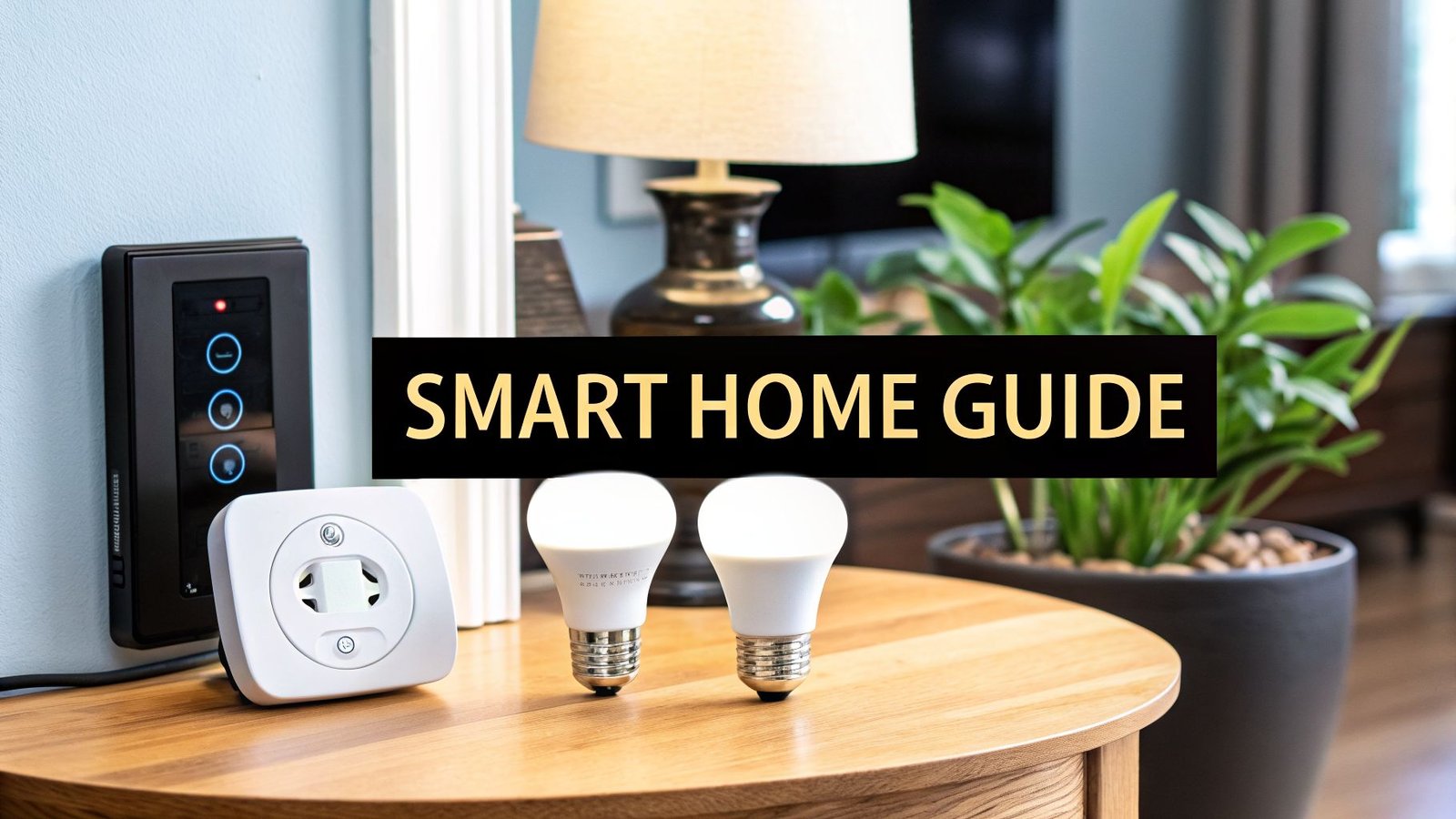
One of the first questions people ask is whether they should get smart bulbs or a smart in-wall switch. They each solve a different problem. Smart bulbs are brilliant for table lamps and other fixtures where you want individual control over color and brightness.
For a room's main overhead lights, though—like a set of recessed cans or a chandelier—a Zigbee smart switch is usually the smarter bet. It keeps the intelligence at the wall, so the light fixture works just like it always has, even when someone instinctively flips the switch. This avoids that classic smart home frustration when a bulb stops responding because someone turned it off at the wall.
Upgrade Anything with a Zigbee Smart Plug
Smart plugs are the secret weapon of home automation. They act as a translator, giving any "dumb" appliance a voice in your smart home. All you need is a device with a physical power switch, and a Zigbee plug can bring it online.
The real magic of a smart plug is its simplicity. It can make a decades-old fan, a basic coffee pot, or your holiday decorations instantly smart, adding them to schedules and routines without any fuss.
Think about it: plug your coffee maker into a Zigbee smart plug, and you can have it start brewing at 6:30 AM every morning before you even roll out of bed. Or connect a simple fan and turn it on from your phone to start cooling a room down before you get home. Some of the best Zigbee devices even offer energy monitoring, showing you exactly how much juice an appliance is pulling. It’s a game-changer for anyone wanting to keep an eye on their electricity bill.
How to Secure Your Home with Zigbee Sensors and Locks

While smart lights and plugs are a fun way to dip your toes into home automation, the real power of a smart home is the security and peace of mind it can offer. This is where Zigbee truly comes into its own, helping you build a responsive, interconnected safety net around your home with devices you can actually count on.
Zigbee’s low-power, high-reliability design is practically tailor-made for security gadgets. These aren't just novelties; they're your first line of defense, ready to send instant alerts and trigger automated actions the moment something is out of place.
Creating an Invisible Web of Sensors
Think of Zigbee sensors as the silent guardians of your home. They’re small, they’re discreet, and thanks to Zigbee's incredible battery efficiency, they can run for years on a single coin cell battery. This “set it and forget it” nature is precisely what makes them some of the best Zigbee devices you can buy for home security.
You can create a powerful, layered system with just a few core types:
- Door and Window Sensors: These simple, two-part magnetic sensors are the bedrock of any smart security setup. When a door or window opens, the connection breaks, and your hub gets an instant signal. You can use that to trigger a siren, flash all the lights, or just get a quiet notification on your phone.
- Motion Sensors: These do so much more than just spot movement. A well-placed Zigbee motion sensor can turn on hallway lights for you at night, but it can also be the critical trigger that sends an alert if it detects motion in your living room while you’re on vacation.
- Water Leak Sensors: These are the unsung heroes of the smart home. Tucked away under a sink, behind a washing machine, or near a hot water tank, these little pucks can save you from thousands in water damage by alerting you at the very first sign of moisture.
The Unfailing Reliability of Local Control
When it comes to security, you need a system that works 100% of the time—not just when your internet connection feels like cooperating. This is why choosing a Zigbee hub that processes commands locally is absolutely non-negotiable for security.
Because a locally-controlled Zigbee network runs independently of the internet, your door sensors, motion detectors, and alarm sirens will keep working perfectly even if your internet goes down. Your home stays protected, no matter what.
This local reliability is the core reason Zigbee is so trusted for security. The signal from a window sensor to your hub doesn't need to travel to a server farm across the country and back again. It all happens instantly, right inside your house. For those wanting to pair this local setup with professional oversight, exploring options for security systems monitoring can add another powerful layer of protection.
Smart Locks: The Final Piece of the Puzzle
A Zigbee smart lock is the capstone of a truly automated and secure front door. Since it's on the same reliable network as your sensors, you can integrate it into powerful automations that go far beyond just unlocking the door with your phone.
Imagine a "Goodbye" routine you trigger with one tap as you leave. This single command could tell your Zigbee smart lock to bolt the door, arm your motion sensors, and shut off all your lights and plugs. It’s simple, effective, and gives you instant confidence that your home is secure.
You can do the same for your return with a "Welcome Home" scene. As you pull into the driveway, your phone's location can trigger the front door to unlock, the entryway lights to turn on, and the security system to disarm. This is the kind of seamless experience that turns a pile of gadgets into a genuinely smart home, with Zigbee providing the fast, dependable communication that makes it all possible.
Future-Proofing Your Setup with Zigbee 3.0 and Matter
The world of smart home tech can feel like alphabet soup. You finally get a handle on Zigbee, and then a new standard called Matter pops up, making you wonder if you’re about to buy into yesterday's technology.
Don't worry. The future is actually much simpler than it seems. By getting to know two key players—Zigbee 3.0 and Matter—you can build a smart home that's not just powerful today, but ready for whatever comes next. They aren't rivals; they're partners working to make everything just work.
Why Zigbee 3.0 Is Your Foundation
Remember the old days of cell phone chargers? Every single phone brand had its own unique, frustratingly proprietary plug. It was a complete mess. Then USB-C came along and cleaned it all up, giving us one cable for almost everything.
That's exactly what Zigbee 3.0 did for the Zigbee world.
Before Zigbee 3.0, different manufacturers used slightly different "dialects" of the Zigbee language. This meant a light bulb from one brand might not play nicely with a motion sensor from another. Zigbee 3.0 solved this by establishing one universal standard that all certified devices have to follow.
When you're shopping for new gear, make it a habit to look for the Zigbee 3.0 certification on the box. It’s your guarantee that the device will speak the exact same language as your other 3.0 devices, saving you a world of compatibility headaches.
Choosing Zigbee 3.0 devices is the single best thing you can do to future-proof your network from the inside out. It ensures that as you mix and match brands, everything just works together as one solid, reliable system.
Understanding Matter: The Universal Translator
Okay, so if Zigbee 3.0 gets all your Zigbee devices on the same page, where does Matter come in? The biggest misconception is that Matter is here to kill off Zigbee. It’s not.
Think of your smart home as a United Nations meeting. You've got devices speaking Zigbee, some speaking Wi-Fi, and others speaking a protocol called Thread. Matter isn't another language—it's the universal translator sitting in the middle of the room, making sure everyone can understand each other.
Matter is an application layer, a software standard that rides on top of these different network types. Its whole job is to let a Wi-Fi light switch seamlessly control a Thread-based smart blind, which can also be triggered by your Zigbee motion sensor. It doesn't replace Zigbee; it works with it.
How Your Zigbee Devices Join the Matter Ecosystem
This is where investing in a quality Zigbee hub really pays off. Hubs from major brands like Amazon, Samsung SmartThings, and Aqara are getting software updates that turn them into "Matter bridges."
Here’s what that looks like in practice:
- Your hub continues to do its primary job: running your fast, dedicated Zigbee network.
- The Matter bridge update gives the hub a new skill—translating between your Zigbee devices and the wider Matter world.
- Suddenly, your trusty Zigbee door sensor can trigger a brand-new Matter-over-Wi-Fi security camera, with no complicated workarounds required.
This bridge functionality means the fantastic Zigbee devices you buy today have a clear path forward. Your collection of reliable, low-power sensors and lights gets pulled into the Matter ecosystem, ready to communicate with a whole new generation of smart gear. It ensures your smart home isn’t a walled garden but a connected, evolving, and truly future-proof environment.
Answering Your Top Questions About Zigbee
As you start diving into the world of smart homes, you're bound to have questions. Zigbee can seem complicated at first, but once you get the hang of a few key concepts, it all starts to click. Let's tackle some of the most common questions people ask when building out their system.
Think of this as a practical FAQ, designed to clear up confusion and help you make better decisions. We'll cover everything from mixing different brands to what happens when your Wi-Fi goes down, giving you the confidence to build a smart home that just works.
Do I Need A Different Hub For Each Device Brand?
Thankfully, the answer is almost always no. This is one of the biggest wins for using the Zigbee 3.0 standard. It was created specifically to solve this problem, letting you mix and match devices from different companies so they can all talk to each other.
This means you can absolutely use an Aqara door sensor with a Samsung SmartThings hub. Or pair a Philips Hue light bulb with a Home Assistant setup using a simple USB coordinator. The whole point is to free you from being trapped in one company's product lineup.
There is one small thing to keep in mind, though. While the basic functions will work perfectly, a manufacturer might keep some of its more advanced or unique features locked to its own hub. For instance, a special motion sensor might have adjustable sensitivity, but you can only get to that setting through the brand's native app. For all the core stuff, feel free to mix and match with confidence.
Will My Zigbee Devices Stop Working If My Internet Goes Down?
This is a fantastic question, and the answer comes down entirely to the hub you choose. It's the single biggest difference between a cloud-based system and one that runs locally in your home.
A huge reason people choose Zigbee is for its ability to run completely offline. If you use a hub that processes everything locally—like a Hubitat Elevation or a DIY Home Assistant system—your smart home keeps running perfectly even when the internet is out.
All your automations, like a motion sensor turning on a light or a door sensor triggering an alarm, happen instantly. The commands never have to travel out to a server and back. For anything related to security, this is a must-have feature.
On the flip side, if your hub relies on the cloud (like many setups using Amazon Echo or Google Home as the primary controller), you'll lose most of your functionality without an internet connection. Some basic controls might work, but your automated routines will fail. This is why so many enthusiasts gravitate toward hubs that put local control first.
Is Zigbee Secure Enough For Smart Locks?
Yes, absolutely. Security is baked right into the Zigbee protocol. Every command sent across your network is protected with 128-bit AES encryption. That's the same security standard your bank uses to protect your financial information online.
This level of encryption makes it incredibly difficult for someone to "sniff" the wireless signals between your hub and your smart lock. As long as you set up your network properly, Zigbee provides a rock-solid and secure foundation for every device in your home, especially the ones protecting your front door.
In fact, a properly configured Zigbee lock is often seen as more secure than a Wi-Fi-based lock, which can be exposed to a wider range of network attacks. The closed, private nature of your Zigbee mesh network adds its own powerful layer of security.
How Far Can A Zigbee Signal Reach?
A single Zigbee device, on its own, has a fairly modest range—typically about 30 to 60 feet (10 to 20 meters) indoors. But that number is a bit deceptive because it doesn't account for Zigbee's most powerful feature: the mesh network.
- Individual Range: A device-to-hub connection is relatively short.
- Mesh Power: Every device that’s plugged into the wall (like a smart plug or light bulb) acts as a signal repeater.
- Network Growth: The more powered devices you add, the stronger and more expansive your network becomes.
Think of it like a relay race. The first runner doesn't have to sprint the entire length of the track; they just need to get the baton to the next person. Every smart plug, light switch, or bulb you add to your network is another runner, extending the signal's reach.
This "self-healing" mesh allows you to cover a large home with a far more reliable signal than a single Wi-Fi router ever could. If one device goes offline, the network automatically finds a new path for the signal to travel, making sure your commands always get through.
Ready to take control of your home's automation? At Automated Home Guide, we provide the expert insights and practical guides you need to build a smarter, safer, and more efficient living space. Start exploring and build the smart home of your dreams with us today!


Leave a Reply