Ever had that nagging feeling you left the garage door open or the thermostat cranked up after you’d already left for vacation? Imagine a home that handles those things for you—one that learns your routines, anticipates your needs, and basically runs itself. That’s the real promise behind home automation.
It's about more than just a few neat gadgets; it's about creating a living space that genuinely improves your life by making it safer, more efficient, and a whole lot more comfortable.
Why Bother With a Smart Home?
Let's be honest, setting up a smart home can seem daunting. But think of it less like a tech project and more like giving your house a brain. It’s about building an interconnected system where your lights, locks, climate control, and security all work together in harmony.
The real magic happens when these devices team up to handle the little things, freeing you up to focus on what matters. We're going to skip the complex tech-speak and dive straight into the practical, day-to-day wins you can expect.
Throughout this guide, we’ll explore the tangible advantages of upgrading your home, focusing on how a few smart changes can make a massive difference.
The Big Four: What You Really Gain
You can boil down the primary benefits into four key areas that impact almost every homeowner.
-
Rock-Solid Security: We’re talking about more than a simple alarm. Smart locks, intelligent cameras, and discreet sensors can create a powerful security net that gives you true peace of mind, whether you're at home or thousands of miles away.
-
Real Cost Savings: This isn't just a fantasy. Smart thermostats, automated lighting, and other efficiency-focused devices can make a serious dent in your monthly utility bills. We'll show you the numbers and how you can get a real return on your investment.
-
Next-Level Convenience: Imagine automating your morning routine so the coffee starts brewing the moment your alarm goes off. Or setting an "evening" scene that dims the lights and locks the doors with a single command. It's about getting time back in your day.
-
Enhanced Accessibility: For older adults or individuals with mobility issues, home automation is a game-changer. Voice commands and automated systems can make a home safer and easier to navigate, fostering greater independence.
Stick with us, and we'll break down exactly how a smart home isn't just a cool upgrade—it's a smart investment in your quality of life.
Bolster Your Home Security and Peace of Mind
For a lot of us, the single biggest draw of home automation is the sense of security it brings. It's a feeling that goes deep. A traditional alarm system is purely reactive—it only screams for help after someone has already broken in. A modern smart security system is something entirely different. It’s a proactive, digital guardian for your home, one you can check on from literally anywhere in the world.
Think about what happens when your security devices actually talk to each other. Your smart camera, armed with AI, doesn't just see movement; it recognizes a person loitering near your garage. Instantly, it tells your floodlights to snap on. If a window sensor is tripped, your system doesn't just sound an alarm—it can automatically bolt every smart lock in the house while simultaneously sending a video clip of the event straight to your phone. Your home stops being a passive building and becomes an active partner in its own protection.
Proactive Monitoring and Remote Control
The real magic is that you're always connected, whether you're at the office or on vacation halfway across the globe. Getting a simple notification that the kids are home safe from school or being able to peek in on a pet provides a level of reassurance that's hard to put a price on. But this goes way beyond just watching a video feed.
- Grant Temporary Access: Need to let a contractor or dog walker in? You can create a temporary digital key for them that only works on Tuesday between 1 PM and 3 PM. No more handing out physical keys and wondering where they end up.
- Respond in Real-Time: When a delivery driver rings your smart doorbell, you can see and speak with them from your desk. You can ask them to tuck the package behind a planter, preventing it from being swiped off your porch.
- Verify Alerts Instantly: If a motion sensor goes off in the middle of the night, you can pull up the live camera feed in seconds to see if it was just a raccoon or something more serious.
A well-integrated system creates layers of protection that work together. It’s not just about having a camera; it’s about that camera telling your lights what to do, which in turn notifies your locks to secure the premises, giving you a complete and automated response.
This remote oversight is a huge reason why so many people are adopting this tech. Industry reports show that over 60% of smart home users point to security as their main reason for buying in. The proof is in the pudding: homes with these systems can see up to 30% fewer break-ins, showing just how effective they are as a deterrent.
A Unified Defense System
The best smart home security systems bring all your devices together under one roof. Instead of fumbling with separate apps for your cameras, locks, and sensors, everything is controlled from a single, intuitive dashboard on your phone.
This integrated approach to safety is also incredibly valuable for aging in place. Combining smart tech with essential home safety tips for seniors creates a powerful support network. Features like automated wellness checks or emergency alerts can provide an extra layer of protection for older family members, giving everyone involved some much-needed peace of mind. At the end of the day, a smart security setup is about feeling safe, connected, and confidently in control of your home.
Achieve Real Energy Efficiency and Cost Savings
Beyond the peace of mind that comes with better security, one of the most tangible benefits of home automation is its power to shrink your monthly utility bills. Think about your home's energy consumption like a leaky bucket—every forgotten light, drafty window, and inefficient appliance is a slow drip. Smart home devices act like automatic plugs, finding and sealing those leaks so you're only using the energy you actually need.
This isn't just about saving a few bucks here and there. It's about taking strategic control over your home's biggest energy hogs: heating, cooling, and lighting. A truly smart home doesn't just wait for you to flip a switch; it learns your patterns and proactively makes adjustments to cut out the waste.
Smart Climate Control That Learns Your Routine
Your biggest opportunity for savings usually starts with a smart thermostat. These devices are miles ahead of the old programmable models. They actually learn your family's daily rhythm, sensing when everyone's left for work and school and automatically dialing back the temperature into an energy-saving mode.
Seriously, why pay to heat an empty house all day? A smart thermostat makes sure you don't. Research has shown that these devices can cut heating and cooling costs by up to 15% annually. Depending on your climate, that can easily translate into hundreds of dollars back in your pocket every single year. For a deeper dive, check out our guide on building an energy-efficient smart home.
A smart home works tirelessly behind the scenes to optimize energy consumption. It’s like having an efficiency expert who never sleeps, constantly finding small ways to reduce waste that add up to significant savings over time.
While we're talking about savings, it's interesting to see what motivates people to adopt this tech in the first place.
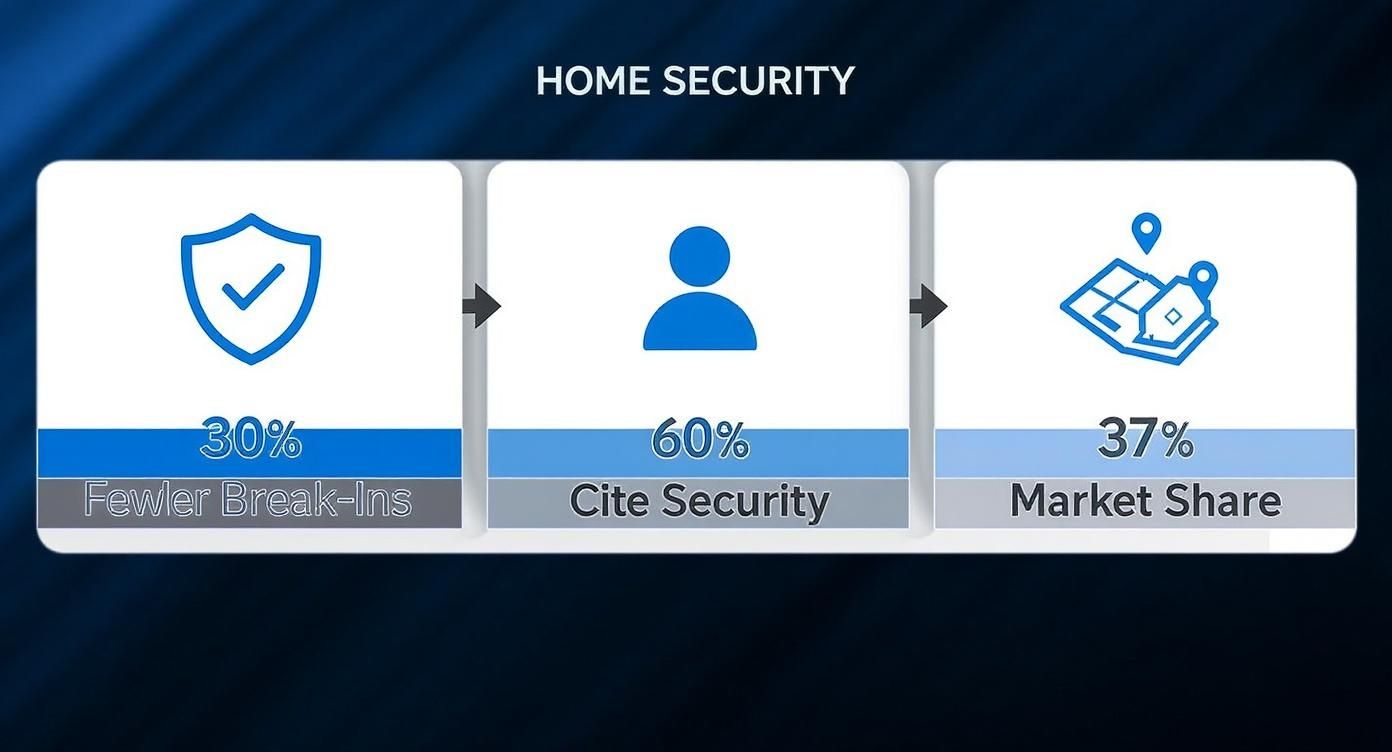
The data makes it clear that security is a huge driver for many homeowners. The great thing is that the same system that provides that security can also deliver the efficiency and control we're discussing here.
Strategic Lighting and Window Management
Your lights and windows are the next frontier for saving energy, and automation makes a massive difference.
- Smart Lighting: Forget nagging the kids to turn off the lights. These systems use motion sensors to handle it automatically when a room is empty. They can also dim themselves based on how much natural daylight is streaming in, which alone can reduce your lighting-related electricity use by up to 30%.
- Automated Blinds: This is where it gets really clever. Smart blinds can sync up with your thermostat to work as a team. In the summer, they'll close during the hottest parts of the day to block out the sun's heat. Come winter, they'll do the opposite—opening up to let in sunlight and passively warm your home, giving your furnace a much-needed break.
If you're curious about how window treatments can become an active part of your home's efficiency plan, this smart home guide to energy-efficient window coverings is a fantastic resource. When all these devices start working together, the benefits multiply, creating a home that’s not just convenient, but genuinely cost-effective.
Make Your Daily Life Incredibly Convenient and Comfortable
Let's be honest, beyond the serious stuff like security and saving money, this is the part of home automation that’s just plain fun. This is where your house stops feeling like four walls and a roof and starts acting like a helpful assistant, smoothing out the rough edges of your daily grind.
It’s all about getting back your time and headspace by offloading dozens of tiny, repetitive tasks you do every single day without even thinking about it.
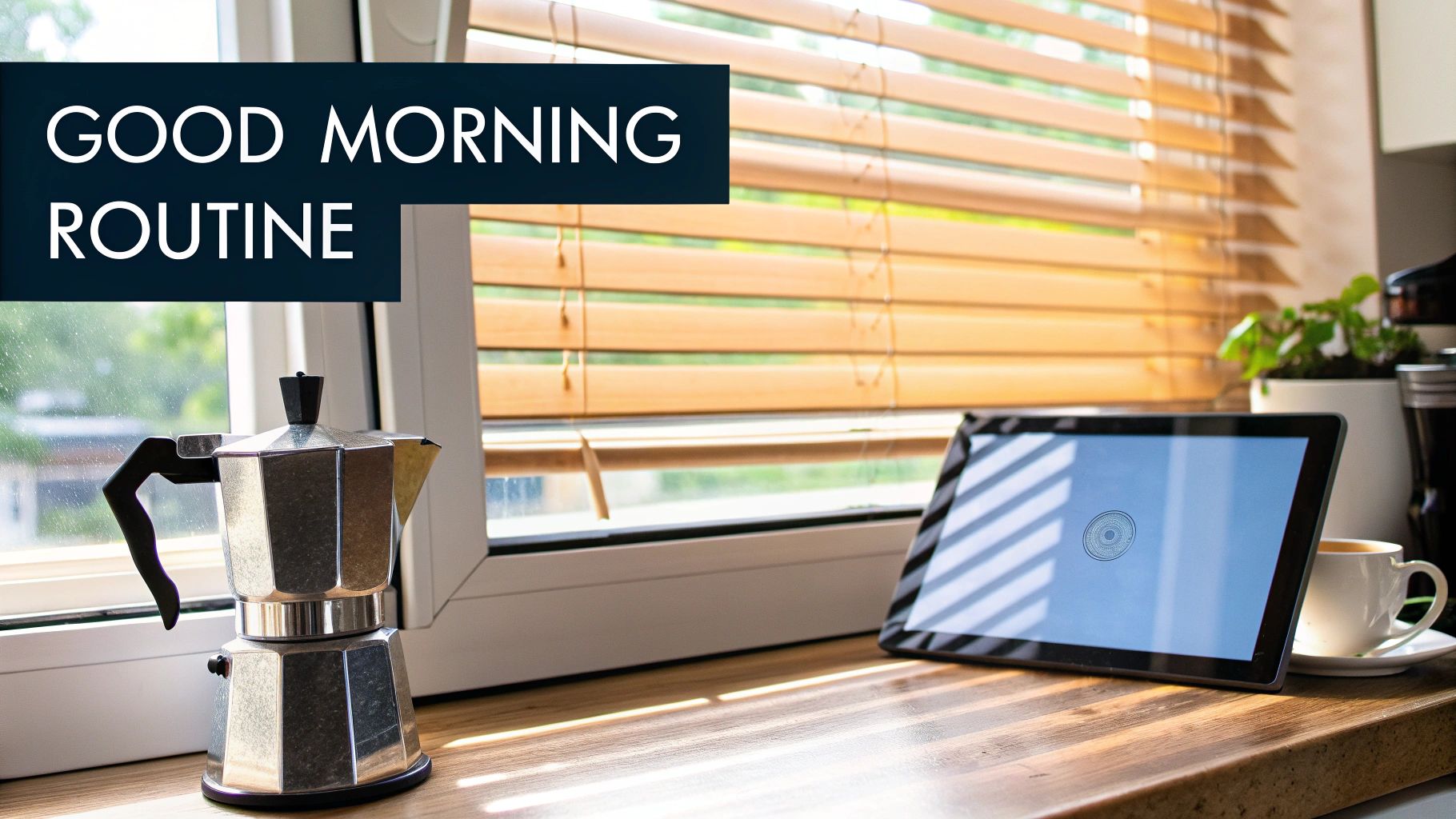
Picture this: your alarm is set for 7:00 AM. At 6:50, your smart blinds slowly open, letting in the natural morning light to gently wake you. The coffee pot in the kitchen kicks on. By the time your alarm actually sounds, your smart speaker is already playing your favorite morning playlist at a low volume. This isn’t science fiction; it’s a simple “Good Morning” routine that gets your day started on the right foot, all before you’ve even gotten out of bed.
Get Your Time Back with Smart Routines
The real magic of smart home convenience is creating automated "scenes" or "routines." These are simply pre-set bundles of actions that happen all at once with a single trigger—a voice command, a button press, a certain time of day, or even you arriving home.
For a busy family, this is a lifesaver. A quick, "Hey Siri, it's dinnertime," could instantly dim the living room lights, shut off the TV, and announce to the smart speakers in your kids' rooms that it's time to eat.
Think about how these little things could simplify your day:
- Hands-Off Cleaning: Schedule your robot vacuum to clean the main floor at 10 AM every weekday, right after everyone has left. You’ll come home to spotless floors without ever pushing a vacuum.
- Perfectly Timed Cooking: Leaving the office? Tell your smart oven to start preheating. It’ll be hot and ready the second you walk through the door with your groceries.
- One-Touch Entertainment: A "Movie Night" routine can do it all. One command dims the lights, lowers the smart blinds, turns on your TV and soundbar, and bumps the thermostat up a degree for a cozy night in.
The real power here isn't just one device doing one thing. It's the orchestra of multiple devices working in perfect harmony to create an experience that feels like it was designed just for you. It's about saving those little pockets of time that add up to a much more relaxed life.
These routines are built on an ecosystem of devices that can all talk to each other. If you're ready to start building a home that works for you, checking out a guide to the best smart home devices is the perfect place to find the building blocks for your own custom automations. The end goal is a home that frees you up to enjoy the moments that matter.
Improve Accessibility for Independent Living
Of all the reasons to bring automation into your home, perhaps the most meaningful is the independence it can restore. For older adults who want to age in place or anyone with mobility challenges, smart technology goes far beyond simple convenience. It becomes a genuine lifeline, fostering dignity and safety.
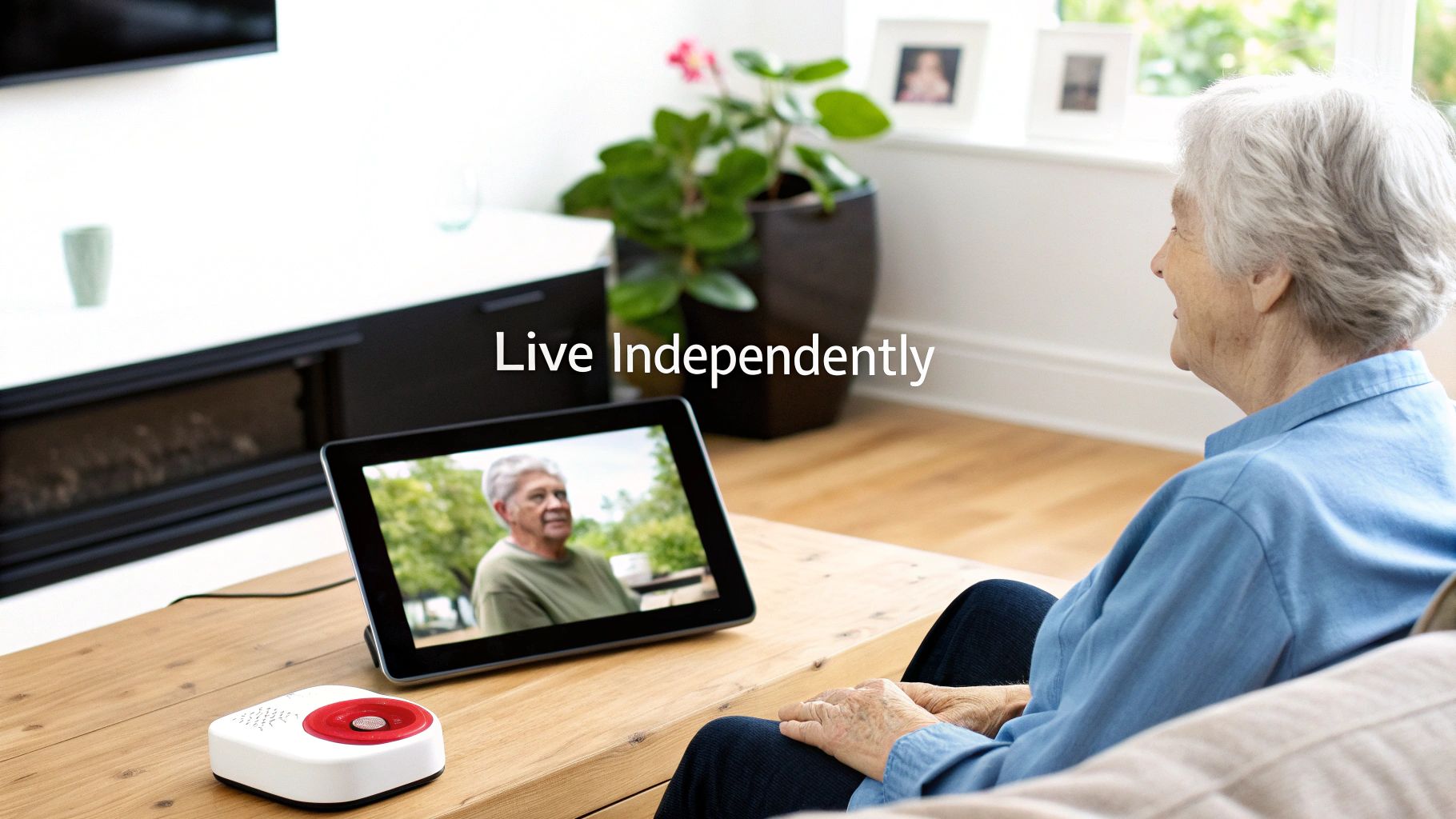
Think about the daily physical hurdles that many people face. Being able to adjust the thermostat, switch off the lights, or lock the front door with just a voice command is a game-changer. This kind of tech bridges the gap between what someone wants to do and what they can physically manage, making their home feel like a true sanctuary again.
The impact on aging populations has been huge. We're seeing a real shift, with studies showing that over 40% of seniors in developed countries are now using smart devices to handle daily tasks and stay in touch. Voice assistants and other connected devices have made it so much easier for those with limited mobility to manage their environment. For a deeper dive, you can explore more data on smart home adoption trends and see just how fast this is growing.
Practical Tools for Safety and Reassurance
Smart home systems offer practical, life-changing tools that give peace of mind to both users and their families. These aren't just futuristic ideas; they are accessible devices making a real difference today.
- Smart Medication Dispensers: These can be set up to release the right pills at the right time, and they can even send a text to a family member if a dose is missed.
- Wearable Emergency Buttons: A simple button worn on a pendant or wristband can instantly call for help, alerting family or emergency services when it matters most.
- Automated Wellness Checks: Discreet sensors can learn daily activity patterns. If something seems off—like a lack of movement for too long—they can send a quiet alert to a caregiver.
For family members, the ability to remotely check that doors are locked at night or that the temperature is comfortable provides invaluable peace of mind. It transforms worry into confidence, knowing their loved ones are safe and empowered in their own homes.
Ultimately, this side of home automation is about so much more than making things easier. It’s about creating a powerful way for people to maintain their independence and live safely and comfortably, regardless of their age or physical ability.
Your Practical Guide to Getting Started
Jumping into home automation can feel like a massive undertaking, but it’s less about becoming a tech wizard and more about making your life a little easier. The secret is to start with a clear, simple goal. Forget trying to build a futuristic smart palace overnight. Instead, focus on solving one or two real problems that bug you daily.
Is your energy bill creeping up? Do you constantly worry if you locked the back door after leaving? Start right there. This method transforms a vague, intimidating project into a series of small, satisfying wins. Your first goal isn't to automate your entire house; it's to experience one of the core home automation benefits for yourself. That small taste of success is what builds momentum for everything else.
Define Your "Why" and Start Small
Before you even think about buying a gadget, pause and ask yourself what you really want to achieve. Are you chasing lower energy bills? Better peace of mind with tighter security? Or just want to smooth out the rough edges of your daily routine? Pinpointing your main motivation is crucial because it guides you to the right first purchase—one that will make an immediate, noticeable difference.
Once you know your goal, pick one or two simple devices to get your feet wet. It’s the easiest way to learn the ropes without a huge upfront investment.
- For Energy Savings: A smart thermostat is the classic entry point for a reason. It's a single, powerful device that delivers a clear return on investment by learning your schedule and cutting down on wasted heating and cooling.
- For Convenience: You can't go wrong with smart plugs. They're cheap, incredibly versatile, and give you an instant feel for what automation can do. Plug one into your coffee maker to have a fresh pot ready when you wake up, or use one to schedule a lamp to turn on at dusk.
Think of your smart home as a living ecosystem. You don't build the entire forest at once. You start by planting one strong tree—a single, high-impact device—and then you let it grow from there, adding more when it makes sense.
Taking it one step at a time keeps you from getting overwhelmed and lets your system evolve naturally as your needs and budget allow.
Understand the "Languages" Smart Homes Speak
As you start adding more devices, you'll run into terms like Zigbee and Z-Wave. Don't let the jargon scare you off. Think of them as different wireless languages that smart devices use to communicate, just like people speak English or Spanish.
A central "hub" or "bridge" acts as a universal translator, letting devices that speak different languages work together as a single, coordinated team. The good news is you don't need to be an expert on these protocols to get started. Many of today's most popular systems, like those from Amazon or Google, have hubs built right into their smart speakers, which simplifies things immensely.
By starting with a major, well-supported ecosystem, you can be pretty confident that most devices you buy down the road will play nicely together. The journey begins with one smart decision, and from there, building a home that truly works for you becomes an exciting and rewarding process.
Answering Your Home Automation Questions
Jumping into the world of smart homes naturally brings up a few questions. Once you see all the potential benefits, it's normal to start wondering about the practical side of things—like cost, complexity, and what happens when the tech doesn't cooperate.
Let's clear up some of the most common questions homeowners have before they get started. Getting these details straight will help you move forward with confidence, making sure you pick the right path for your home and lifestyle.
Is Home Automation Expensive to Install?
Honestly, it costs what you want it to cost. You don't have to automate your entire house overnight. Think of it as a scalable investment that can grow with your budget and needs.
You can dip your toes in the water for under $50 with a single smart plug or a basic smart speaker. This is a great, low-commitment way to get a feel for the convenience. From there, you can add new devices whenever you're ready. Maybe a smart thermostat is next on the list, followed by smart lighting a few months down the road.
While a fully decked-out, professionally installed system can run into the thousands, many of today's best devices are designed for easy DIY setup, which means you can sidestep labor costs entirely.
Do I Need to Be Tech-Savvy to Use a Smart Home?
Not at all. The whole point of modern smart home gear is to make life simpler, not more complicated. Most devices are managed through really intuitive smartphone apps that walk you through the setup process step-by-step.
Plus, the rise of voice assistants like Amazon Alexa and Google Assistant has made controlling your home ridiculously easy. Just saying, "Alexa, lock the front door," is often all it takes. While the tech hobbyists can definitely dive deep and create complex custom routines, the core features are built for everyone, no matter your comfort level with technology.
The goal of a smart home is to simplify your life, not complicate it. The best systems are the ones you can set up easily and then practically forget about as they work seamlessly in the background.
What Happens if My Internet Goes Down?
This is a fantastic question, and the answer really depends on the gear you choose. Some devices absolutely rely on a cloud connection and will stop working if your internet cuts out.
However, many of the most robust systems are built around a local hub that uses communication protocols like Zigbee or Z-Wave. This clever setup means that even if your internet is down, the devices inside your house can still talk to each other. Your automated lighting schedules will keep running, and your security sensors can still trigger a local alarm.
When you're shopping for devices, keep an eye out for products that mention "local control." Prioritizing this for your most essential functions ensures your home stays smart, even when your Wi-Fi doesn't.
At Automated Home Guide, we're committed to demystifying smart technology. Explore our expert reviews and practical guides to build a smarter, safer home with confidence.

Leave a Reply