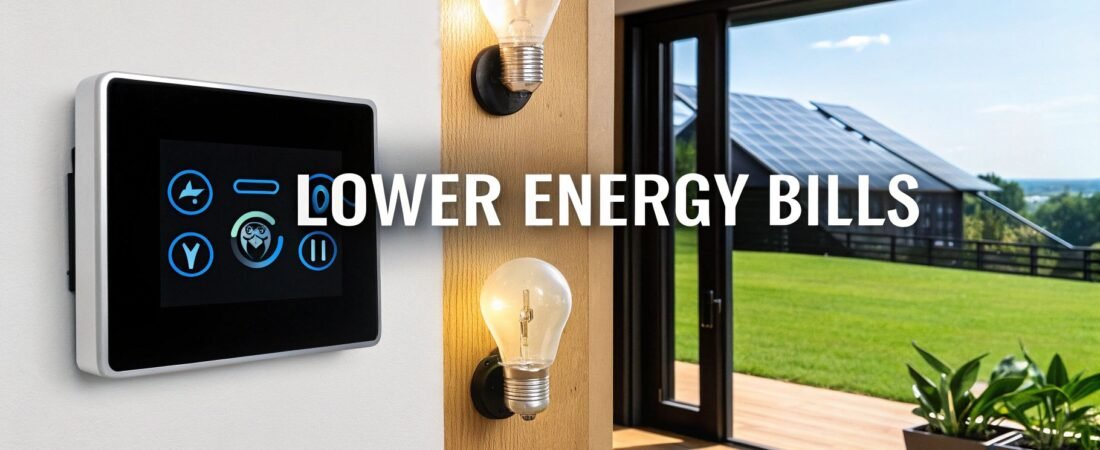
Cutting your energy bill doesn't always mean a massive, expensive overhaul. The truth is, some of the most effective ways to save money start with small, simple changes you can make today. Things like tweaking your thermostat, unplugging devices, and being smarter with your appliances are the low-hanging fruit of energy efficiency. These are the kinds of adjustments that can start putting money back in your wallet right away, no contractor required.
Quick Wins for Immediate Energy Savings
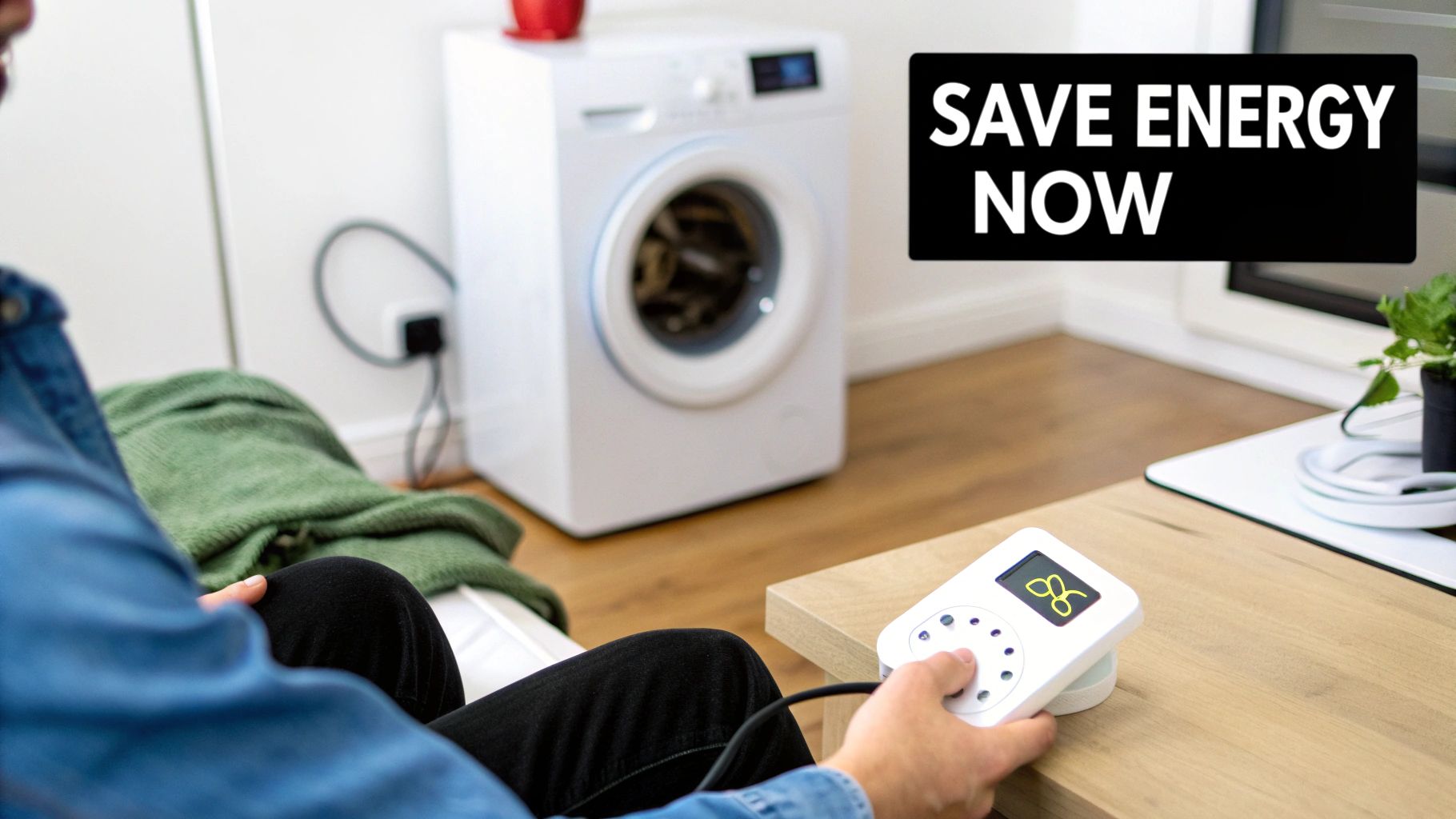
If you're looking to see a difference on your next utility bill, not just sometime next year, focusing on small habits is the way to go. These tweaks often cost you nothing but can deliver some surprisingly big results.
Master Your Thermostat
Your HVAC system is almost certainly the biggest energy hog in your home, so even a tiny change here pays off. Simply lowering your thermostat a few degrees in the winter or nudging it up in the summer means your system doesn't have to work nearly as hard.
Get into the habit of setting it back 7-10 degrees Fahrenheit for the eight hours you're at work or asleep. That one move alone can shave as much as 10% off your heating and cooling costs for the entire year. If you want to go deeper on this, there are a lot of great strategies for how to reduce heating costs that build on this simple principle.
Hunt Down Phantom Loads
Here’s something that catches a lot of people by surprise: many of your electronics are still using power even when they're turned "off." This sneaky energy drain is often called a "phantom load" or "vampire power," and it can be responsible for up to 10% of your total electricity bill.
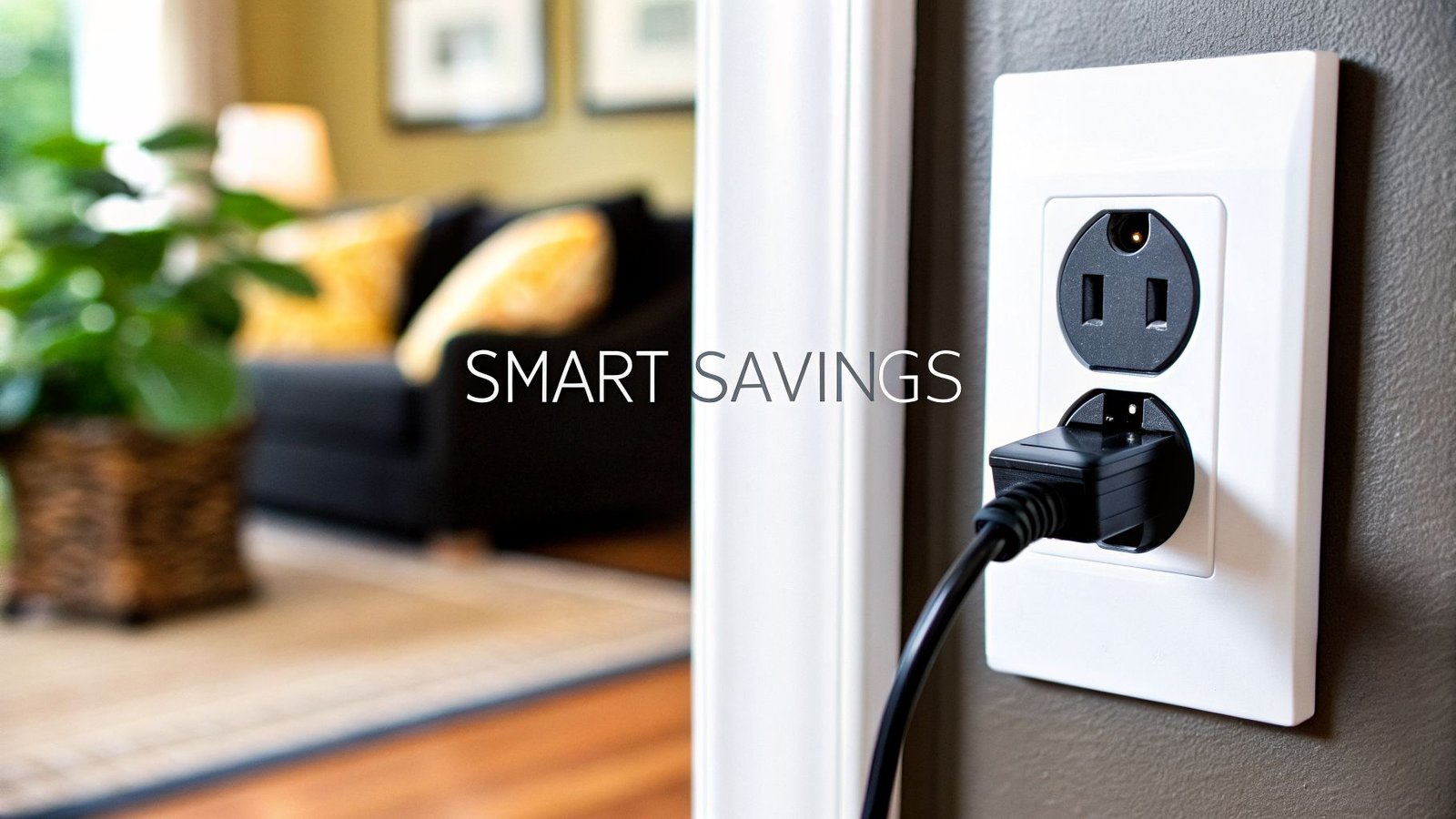
Just look around your home at all the little standby lights—your TV, coffee maker, gaming console, and computer monitors. The easiest fix is to unplug them or, even better, plug them into a smart power strip that you can shut off completely with one switch. We have a full guide that shows you how to reduce electricity consumption with more tips for fighting this hidden energy drain.
Here's a quick look at some easy changes you can make right now and what you can expect in return.
Low-Cost Energy Savings Quick Wins
| Action Item | Estimated Annual Savings | Effort Level |
|---|---|---|
| Adjust Thermostat by 7-10°F | Up to 10% on HVAC costs | Low |
| Unplug Idle Electronics | $100 – $200 | Low |
| Switch to Cold Water for Laundry | Over $200 | Low |
| Clean Dryer Lint Filter | Improves efficiency by 30% | Low |
| Use Windows for Passive Climate Control | Varies | Low |
As you can see, a little bit of effort goes a long way. These aren't big projects, just small, consistent habits that add up to real savings.
Optimize Your Laundry Routine
Your laundry room is another goldmine for easy energy savings. Two simple adjustments here can make a world of difference:
- Wash with cold water: Did you know that about 90% of the energy your washing machine uses goes toward heating the water? Switching to cold water can save the average household over $200 per year, and modern detergents are designed to work just as well in cold temperatures.
- Clean the lint filter: A clogged lint screen in your dryer is an efficiency killer. It restricts airflow, making the machine run longer and work harder. Just taking a few seconds to clean it after every single load can boost its efficiency by up to 30%.
Key Takeaway: You don't need a big budget to make a big impact. Small behavioral changes—like adjusting your thermostat, unplugging devices, and being smart about laundry—can easily cut your household energy bills by 5-15% annually.
Use Your Windows Strategically
Think of your windows as free tools for climate control. On a sunny winter day, open up those curtains and blinds to let the sunlight stream in. It's a fantastic way to passively heat your home without touching the thermostat.
The opposite is true in the summer. Keep the blinds closed on your south- and west-facing windows during the hottest part of the day to block the sun's heat. This simple trick reduces the workload on your air conditioner, which in turn lowers your bill. It’s these small, consistent habits that lay the groundwork for a truly energy-efficient home.
Getting the Most Out of Your Appliances and HVAC System
Let's talk about the real energy hogs in your home: your HVAC system and major appliances. Together, they're often the biggest culprits behind a surprisingly high utility bill. The good news is you don't need a complete overhaul to see a difference. Often, the biggest wins come from optimizing the equipment you already have.
It really boils down to making sure your home's hardest-working gear isn't fighting an uphill battle against dirt, neglect, or inefficient settings. A little attention here goes a very long way.
Maintenance Is Your First Line of Defense
Think of regular maintenance as a tune-up for your home. It’s the single most effective way to keep things running smoothly and prevent small issues from snowballing into expensive repairs. A dirty, poorly maintained appliance simply has to work harder, and that extra effort shows up directly on your energy bill.
Take your HVAC system, for instance. A clogged air filter is one of the most common—and easily fixed—problems. It chokes the airflow, forcing the fan motor to work overtime just to circulate air. This puts a massive strain on the whole system. Just by swapping out your filter every 1-3 months, you can slash your HVAC's energy use by 5-15%.
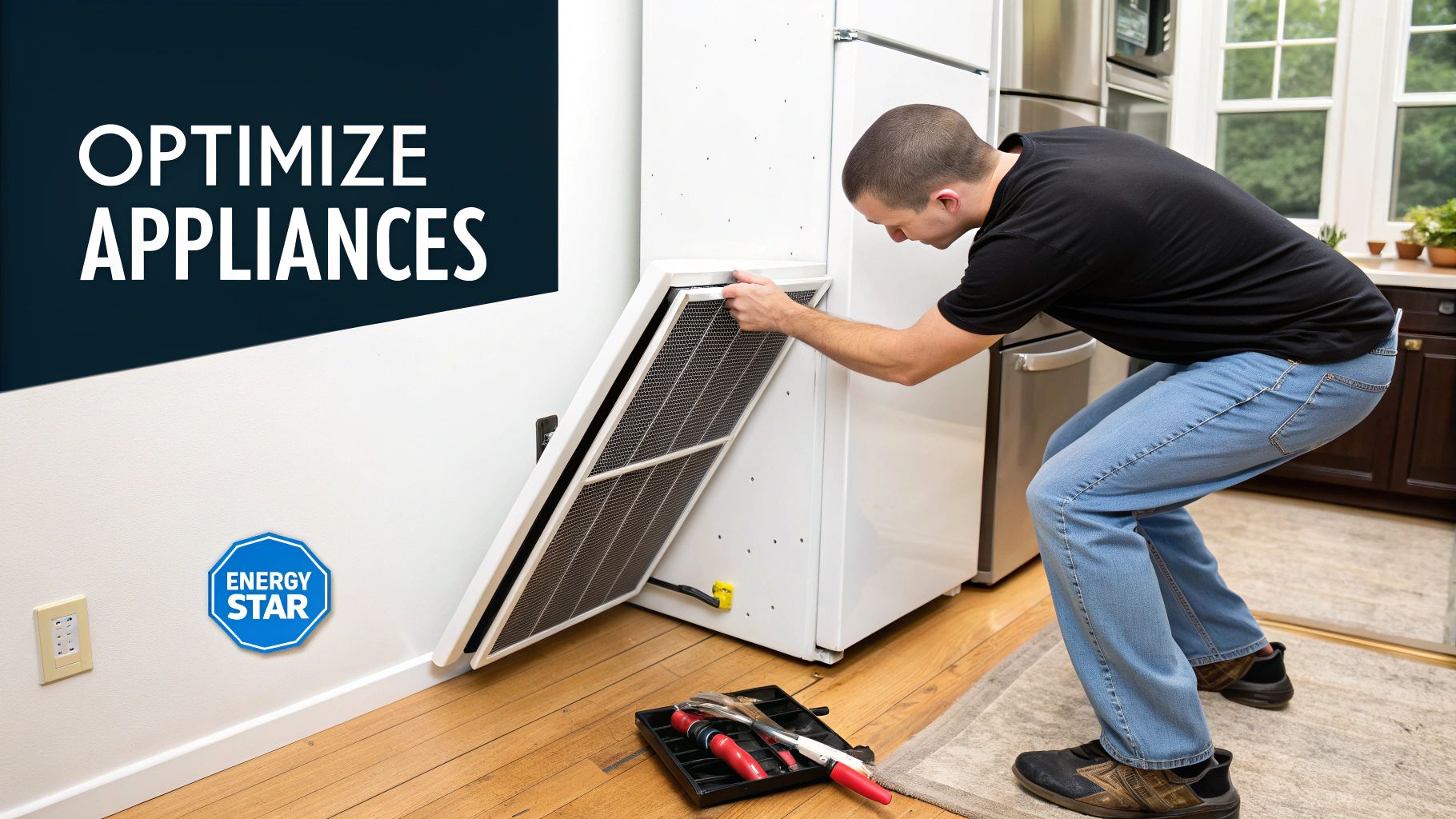
The same logic applies to your refrigerator. Those coils on the back or bottom are designed to release heat. But when they get caked in dust and pet hair, they can't do their job. The compressor has to run longer and more often, burning extra power just to keep your milk from spoiling. A quick vacuum once or twice a year can make a noticeable difference.
Smarter Ways to Use Your Appliances
Beyond basic upkeep, how you use your appliances can unlock some serious savings. Most modern machines have eco-friendly settings that are genuinely effective at cutting down on energy and water use, often without you even noticing a difference in performance.
Here are a few high-impact habits to get into:
- Dishwasher: Always wait until it's full. Get familiar with the "eco" or "light wash" settings for everyday loads. And the biggest one? Skip the heated dry. Popping the door open and letting your dishes air-dry uses zero extra energy.
- Refrigerator & Freezer: A full fridge is a happy fridge. The cold items inside act like thermal batteries, helping the unit maintain its temperature when you open the door. Just don't cram it so full that air can't circulate. Also, check that the rubber door seals are clean and tight—a loose seal is a constant energy leak.
- Oven: For reheating leftovers or cooking a small meal, reach for the toaster oven or microwave. They use a fraction of the energy of a full-sized oven. When you do fire up the big oven, resist the urge to peek! Every time you open that door, the temperature can plummet by 25 degrees, forcing it to burn more energy to get back up to temp.
Don't discount these small adjustments. When you add them all up, optimizing how you use your appliances is one of the most powerful ways to lower energy bills without spending a penny.
Knowing When It’s Time for an Upgrade
Maintenance is key, but there's a point of diminishing returns. An old, inefficient appliance can easily cost you more in wasted energy over a year than a brand-new one would. This is especially true for anything over a decade old, as efficiency standards have improved dramatically.
So, how do you know when to pull the trigger? A simple payback calculation can help.
First, estimate the annual running cost of your old clunker. Then, find a new ENERGY STAR certified replacement and look for its yellow EnergyGuide label, which shows the estimated yearly energy cost.
The difference between the two is your potential annual savings. Now, just divide the purchase price of the new appliance by those savings. This tells you exactly how many years it will take for the new machine to pay for itself. Getting a clear picture of home appliances' electricity consumption can really help you pinpoint which upgrades will give you the best bang for your buck.
Fortifying Your Home for Long-Term Efficiency
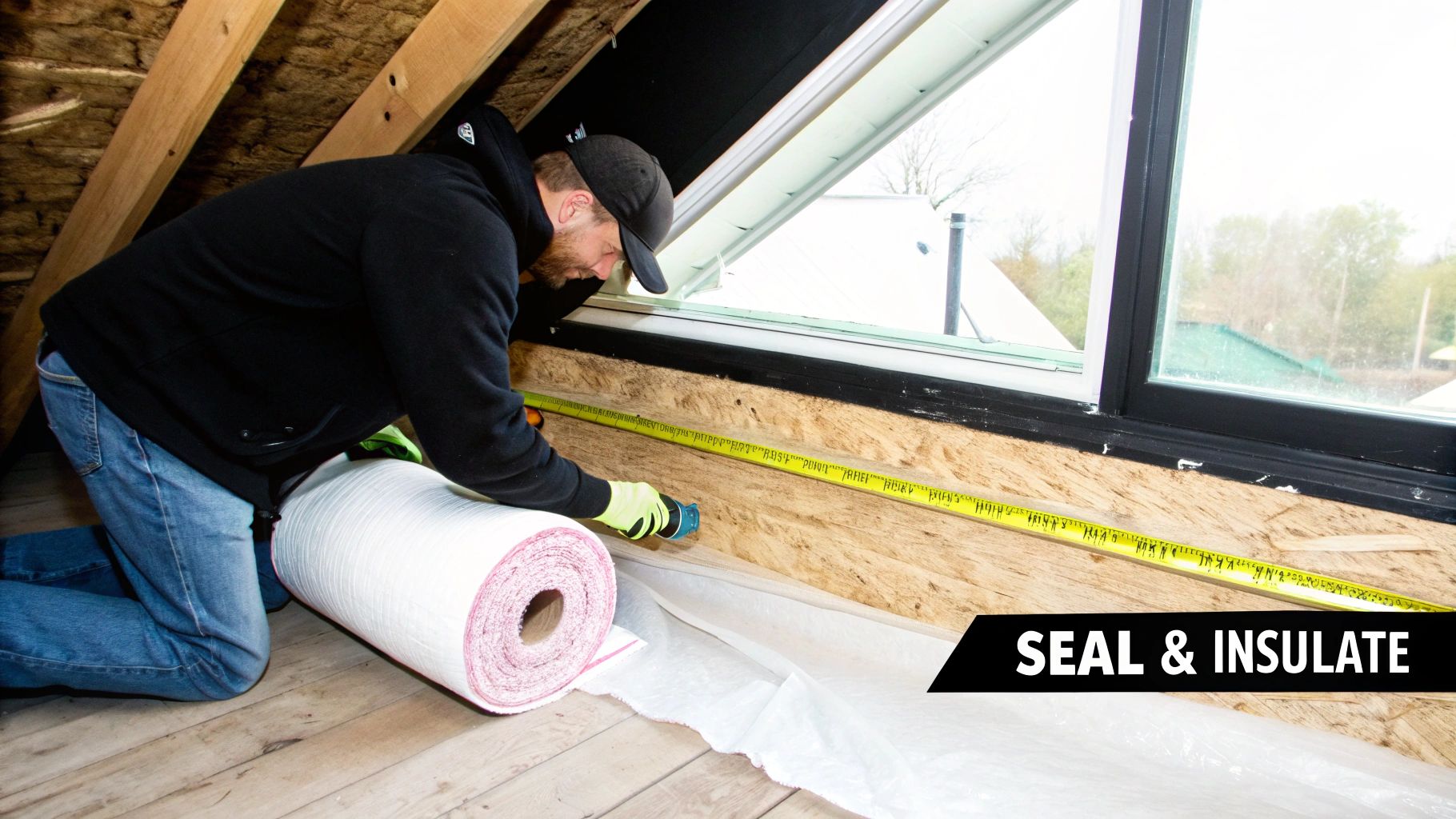
While changing habits and tuning up appliances are great, the biggest, most permanent energy savings come from improving your home's physical structure. This is where you make smart, one-time investments in your "building envelope" that keep paying you back for years.
Think of it this way: instead of just treating the symptoms of a high energy bill, you're fixing the root cause. The goal is to keep the air you've paid to heat or cool inside your house and the outside weather out. This single shift dramatically reduces the workload on your HVAC system, leading to some serious long-term savings.
Start With a DIY Energy Audit
Before you can plug the leaks, you have to find them. A simple do-it-yourself energy audit is the best way to pinpoint exactly where your expensive conditioned air is sneaking out. You're looking for all the hidden gaps and cracks that, when added up, are like leaving a window open 24/7.
Start by just walking around and looking. Pay close attention to the usual suspects—anywhere different building materials meet.
- Windows and Doors: Can you see daylight around the frame? Is the weatherstripping cracked or compressed?
- Electrical Outlets and Switches: On a cold day, put your hand over outlets and light switches on exterior walls. You'd be surprised how many are drafty.
- Plumbing and Ductwork: Check under sinks and in the attic for gaps where pipes and ducts enter your home. These are often poorly sealed.
For a more thorough check, try the "incense test" on a windy day. Shut all your windows and doors, turn off any fans or your furnace, and light an incense stick. Hold it near the potential leak spots. If the smoke gets pulled out or blown into the room, you’ve found a draft. Sealing these up with caulk and weatherstripping is one of the cheapest, most effective things you can do.
Bolster Your Home's Insulation
Proper insulation is your home's thermal armor. It works like a blanket, slowing down heat transfer to keep you warmer in the winter and cooler in the summer. The reality is that many homes, especially older ones, are seriously under-insulated, which is a huge source of energy waste.
If you check only one place, make it the attic. Heat rises, so a poorly insulated attic is like an open chimney for your heating budget in the winter. In the summer, the sun bakes your roof, turning the attic into a giant radiator that pushes heat down into your living space. The Department of Energy estimates that a properly insulated attic can slash your heating bill by 10% to 50%.
Pro Tip: Here's a quick check. Go up into your attic and look at the insulation. If you can clearly see the tops of the wooden ceiling joists, you almost certainly need to add more.
Understanding how your roof and insulation work together as a system is key. Digging into R-Value Roofing: The Complete Guide to Saving Energy with Smart Insulation can offer some great insights on creating a powerful thermal barrier for your entire home.
Upgrade to Energy-Efficient Windows
Windows are another major player in your home's energy performance. Old, single-pane windows are basically thermal holes in your walls, offering almost no resistance to heat transfer. Upgrading to modern, energy-efficient windows is a bigger investment, but the payoff in comfort and lower bills is substantial.
When you're shopping for new windows, the labels have a few key terms you need to know.
| Performance Metric | What It Means | What to Look For |
|---|---|---|
| U-Factor | How well a window prevents heat from escaping. | The lower the number, the better it insulates. |
| Solar Heat Gain Coefficient (SHGC) | How well a window blocks the sun's heat. | In hot climates, look for a low SHGC. In cold climates, a higher number can help warm your home. |
| Visible Transmittance (VT) | How much natural light gets through. | A higher number means more daylight and less need for artificial lighting. |
Choosing the right windows for your climate is crucial. Someone in Arizona will want a very low SHGC to fight the sun's heat and lower AC costs. But a homeowner in Minnesota might prefer a higher SHGC to capture free solar heat during the long winters. These kinds of upgrades fundamentally change your home's relationship with the outdoors, making it a more stable, comfortable, and efficient place to live.
Using Smart Home Tech to Cut Energy Waste
Smart home technology has evolved far beyond just convenience. Today, it offers some of the most effective tools for actively managing—and seriously reducing—your home's energy consumption. When you connect these devices, you create an intelligent ecosystem that works behind the scenes to trim waste, automate savings, and give you pinpoint control over your power usage.
The real magic isn't in a single gadget; it's how they all talk to each other. By creating routines that respond to your family's actual lifestyle, you ensure you're never paying for energy you aren't using. Your home goes from being a passive energy consumer to an active partner in efficiency.
Go Beyond the Smart Thermostat
The smart thermostat is the undisputed MVP of home energy savings, and for good reason. These devices learn your schedule, sense when you're home or away, and make constant micro-adjustments to your HVAC system. That alone can translate to 10-15% on heating and cooling costs. We dive deep into the numbers in our guide to smart thermostat energy savings.
But if you stop at the thermostat, you're leaving a lot of savings on the table. A truly energy-efficient smart home uses it as a starting point to tackle waste from every angle.
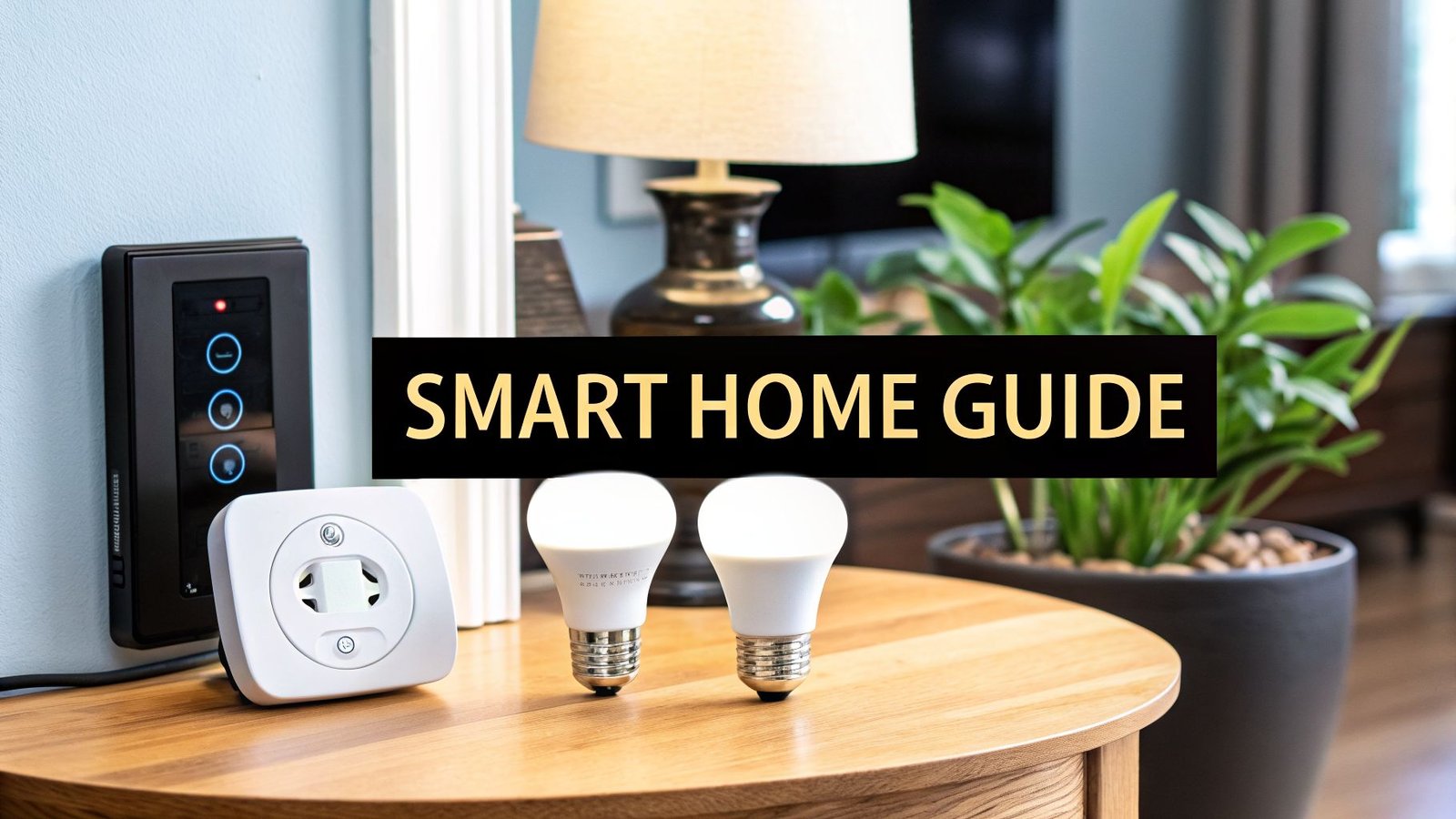
Automate Savings with Smart Plugs and Lighting
One of the sneakiest energy drains is "phantom power"—the electricity your devices pull even when they're turned off. That entertainment center, coffee maker, and army of phone chargers are all culprits, often adding up to $100 or more to your annual bill.
Smart plugs are the perfect weapon against this silent drain. I have my entire home office setup—monitors, chargers, the works—on a single smart plug. It’s scheduled to power down completely at 10 p.m. and turn back on just before my workday starts. No more phantom load, zero effort.
Real-World Scenario: Imagine creating an "Away" mode. The moment your phone leaves the house, your smart home system automatically sets the thermostat to an energy-saving temperature, confirms all smart lights are off, and cuts power to non-essential electronics. You never again have to wonder, "Did I leave the TV on?"
Smart lighting offers similar, incremental wins. Pair smart bulbs with motion sensors in hallways, closets, or the garage, and you'll guarantee those lights are only on when someone is actually there. I also have my outdoor lights programmed to dim to 30% after midnight, saving a little more every single night. These small, automated actions really do add up.
The Bigger Picture of Energy Efficiency
Integrating these technologies isn't just about your personal utility bill; it's a step toward a more efficient global energy system. Ambitious climate scenarios from organizations like Resources for the Future show that accelerating energy efficiency is just as critical as expanding renewable energy sources. This approach allows the entire system to deliver more useful energy with less raw input, which helps everyone through lower costs and supports broader decarbonization efforts. You can discover more insights about these global energy trends on rff.org.
By adopting smart technology in your home, you’re playing a direct role in this efficiency movement.
Choosing the Right Tech for Your Home
You don't need to overhaul your entire house overnight. A strategic approach will give you the best return on your investment, fast.
Here's my advice on where to start:
- Tackle the biggest energy hogs first. Your HVAC system is almost always #1, so a smart thermostat is the logical first purchase.
- Hunt down phantom loads. Identify clusters of electronics, like your entertainment center or home office, and put them on smart plugs.
- Target high-traffic areas. Install smart lighting or motion sensors in rooms where lights are constantly left on by mistake—think kids' rooms, basements, and hallways.
By starting with these high-impact areas, you can build a smart, energy-saving ecosystem that fits your budget and delivers tangible results you'll see on your very next utility bill.
Making Your Energy Plan and Power Source Work for You
https://www.youtube.com/embed/AuSfQCNMuDA
Saving on your energy bill isn't just about turning off lights and using less hot water—though that certainly helps. The real magic happens when you get strategic about how and when you use power, and even where that power comes from.
Once you’ve tackled the quick wins, it’s time to look at the fine print on your utility bill and explore bigger-picture solutions. This is where you can unlock some of the most significant long-term savings.
Decode Your Utility Bill and Rate Plan
Think of your utility bill as more than just a demand for payment; it's a data sheet telling you exactly how you’re being charged. For a lot of people, the biggest money drain is a time-of-use (TOU) rate plan they don't even know they're on.
With a TOU plan, electricity costs more during "peak" hours—usually late afternoon and early evening when everyone gets home and turns on their appliances. The price drops significantly during "off-peak" hours, like the middle of the night. If you’re running the dishwasher, clothes dryer, and AC at 5 p.m., you're paying top dollar for that convenience.
Check your latest bill or log into your utility's website. If you're on a TOU plan, you can save a surprising amount of money with one simple shift: schedule your big-ticket appliances to run overnight or first thing in the morning. It's a behavioral change that costs you nothing but can shave a nice chunk off your bill.
The Rise of Residential Solar Power
Want to take real control of your energy costs? Generating your own electricity with solar panels is the most direct way to do it. The upfront investment can seem intimidating, but the complete financial picture, including incentives and long-term value, often tells a very different story.
Going solar is one of the most powerful moves a homeowner can make. Depending on where you live and what incentives are available, a residential solar system—especially one paired with a battery—can slash annual electricity costs by 30% to over 50%. It's a proven strategy for building long-term financial resilience against unpredictable energy prices. To see how this trend is evolving, you can learn more about the 2025 energy transition outlook.
The chart below shows how smart home devices, which are often part of a modern energy strategy, stack up in potential savings.
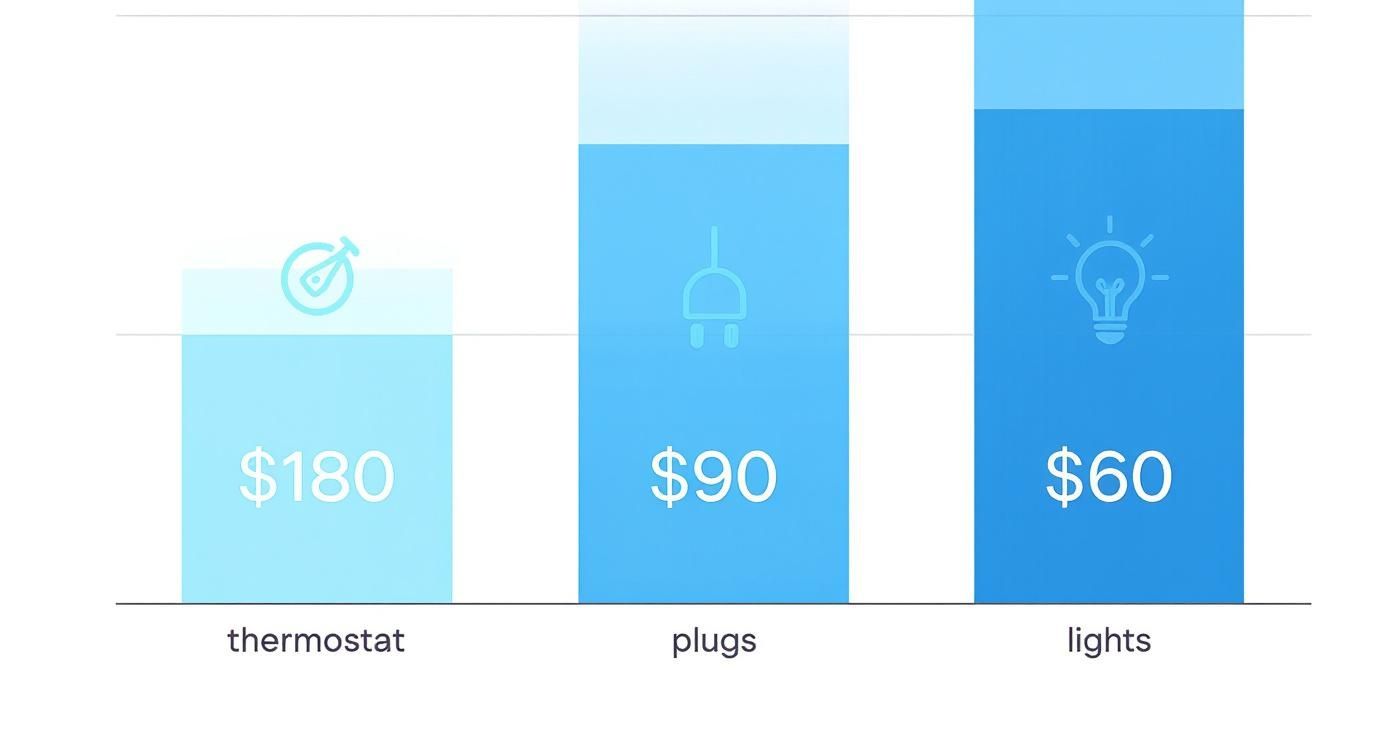
As you can see, while smart lights and plugs offer decent savings, a smart thermostat provides the biggest bang for your buck, making it a fantastic starting point.
Calculating Your Solar Return on Investment
Figuring out if solar is a smart move for you is all about running the numbers. The initial quote is just one part of the equation; your real cost is what's left after you subtract all the financial incentives.
Here’s what you need to look into:
- Federal Tax Credits: The federal government provides a substantial tax credit that can wipe out a significant portion of your system's cost.
- State and Local Rebates: Many states, counties, and even utility companies offer their own cash rebates or incentives.
- Net Metering: This is a huge one. Net metering policies let you sell the extra power your panels generate back to the utility company, earning credits that lower your bill.
To get a rough idea of your payback period, take the total installation cost and subtract all the credits and rebates you qualify for. Then, divide that net cost by what you expect to save on electricity each year. The result is the number of years it will take for the system to pay for itself.
ROI Comparison of Major Energy-Saving Investments
To put these bigger projects into perspective, here's a look at how common home energy investments compare in terms of cost, savings, and how quickly you can expect to see a return.
| Investment Type | Average Upfront Cost | Typical Annual Savings | Estimated Payback Period |
|---|---|---|---|
| Attic Insulation Upgrade | $1,500 – $3,500 | $200 – $600 | 3 – 6 years |
| High-Efficiency HVAC System | $7,000 – $15,000 | $400 – $800 | 10 – 20 years |
| Energy-Efficient Windows | $8,000 – $24,000 | $150 – $500 | 15 – 30+ years |
| Rooftop Solar Panel System | $15,000 – $25,000 (after credits) | $1,000 – $2,500 | 6 – 10 years |
As the table shows, while some projects like new windows have very long payback periods, others like attic insulation and solar panels can offer a much faster financial return, making them compelling choices for savvy homeowners.
The Role of Battery Storage
Adding a home battery to your solar panel system is the next frontier of energy independence. It adds to the initial cost, but the benefits are game-changing.
First, you get true energy security. When a storm knocks out the power grid, your battery can keep the essentials running for hours or even days. Second, it lets you master a TOU plan. Instead of selling your excess solar energy to the grid for a small credit, you can store it in your battery and use it to power your home during those expensive peak evening hours. You'll be using your own free, clean energy when your neighbors are paying the highest rates.
Common Questions About Lowering Energy Bills
Once you start digging into saving energy, a few common questions always seem to surface. It's one thing to have a plan, but another to know how to handle these specific, real-world debates. Let's clear up some of the most frequent ones I hear.
Is It Cheaper to Leave the AC Running or Turn It Off?
This is the big one, isn't it? The best answer really depends on how long you'll be gone.
If you're just popping out to the store or running an errand for an hour or two, don't turn the system off completely. Instead, just nudge the thermostat up by 5-7 degrees. This keeps your AC from having to work overtime to cool a sweltering house from scratch when you get back, which is a massive energy drain.
But if you’re heading out for the whole day or leaving for the weekend, then yes, turning it off is the smarter move. A programmable thermostat is your best friend here—you can set it to kick back on about 30 minutes before you walk in the door, so you get the savings without ever feeling the heat.
How Much Do Smart Plugs Actually Save?
Smart plugs can be great little money-savers, but only if you use them strategically. Their main purpose is to slay "phantom loads"—that sneaky trickle of electricity that devices pull even when they're supposedly "off."
Key Insight: Don't expect one smart plug to make a dent in your bill. The magic happens when you use them to control a whole cluster of electronics. Think about your entertainment center: the TV, soundbar, gaming console, and streaming box are all sipping power 24/7. Putting them all on one smart power strip can easily save you $50-$100 a year by truly shutting them down when not in use.
What Is the Single Best Investment for an Older Home?
Hands down, for an older, draftier home, the first place you should put your money is into attic insulation and air sealing.
It's tempting to jump straight to fancy new windows or a super-efficient HVAC unit, but that’s putting the cart before the horse. If you don't plug the leaks first, you're just paying to heat or cool the outdoors.
Heat rises, making a poorly insulated attic a huge energy liability all year round. Sealing up the gaps and topping off the insulation is the foundation of an efficient home. It often pays for itself in just a few years and makes every other upgrade you do far more effective.
At Automated Home Guide, we believe a smarter home is a more efficient home. We provide the expert insights and practical guides you need to make informed decisions about the technology that can improve your life and lower your bills. Explore our resources to build a safer, more convenient, and energy-conscious home today at https://automatedhomeguide.com.




Leave a Reply