Upgrading a sliding door's security really comes down to three key things: swapping out the flimsy factory latch for a real lock, adding a security bar to brace it shut, and reinforcing the glass itself. If you tackle these three areas, you'll shut down the most common ways burglars get through these doors—weak locks, shattered glass, and lifting the door right off its track.
Why Sliding Doors Are a Burglar's Best Friend
Everyone loves sliding glass doors. They open up a room, pour in natural light, and give you that great indoor-outdoor feeling. But for all their benefits, they often come with a major security blind spot. To an intruder, that big beautiful door can look like an open invitation, not because they’re impossible to secure, but because the hardware they come with is usually a joke.
The biggest problem is almost always the factory-installed latch. Most of them are simple little hooks that offer more of a suggestion of security than actual protection. A little jiggling, a pry bar, or just a solid shove is often all it takes to defeat them. Burglars know this and count on it.
The Achilles' Heel: Common Vulnerabilities
Beyond that pathetic little latch, sliding doors have a few other built-in design flaws that make them a prime target. Once you know what they are, you can start to fix them.
- Lifting the Door Off Its Track: This is a classic trick, especially with older doors. A burglar can use a pry bar to lift the door panel up and pop it right out of the bottom track. It’s quiet, fast, and they never even have to touch the lock.
- A Giant Pane of Glass: It’s pretty obvious, but that huge sheet of glass is a weak point. Even tempered glass, which is designed to be safer when it breaks, shatters without much of a fight. A rock wrapped in a towel can be enough to get the job done with surprisingly little noise.
- Hidden from View: Most sliding doors are on the back of the house, shielded from the street and neighbors. This privacy is great for you, but it’s also a gift to an intruder, giving them all the time and cover they need to work on the door without being seen.
The real issue is that we tend to think of sliding doors as giant windows, not as actual entry points. That mindset leads us to overlook their weaknesses until it's too late. Taking them seriously is a massive step in building a solid home defense plan.
As more homes feature these doors—the global market is expected to jump from USD 1.7 billion in 2025 to USD 2.5 billion by 2035—manufacturers are finally starting to catch on. They're now marketing "enhanced security locking systems" as a selling point. The problem is, millions of us still have the old, vulnerable models installed.
In the end, your sliding door doesn't have to be the weak link in your security chain. Just understanding where it's vulnerable is half the battle, and it's a critical piece of the puzzle when you're working to prevent home break-ins.
Physical Barriers and Hardware Upgrades That Work
Before you even think about fancy alarms or sensors, let's talk about what really stops a break-in: solid, physical security. The flimsy latch that came standard with your sliding glass door? It's more of a suggestion than a lock. The first and most critical step is to upgrade that hardware to turn a well-known weak spot into a hardened entry point.
This means getting serious about how your door is physically held in place. We're talking about real locks designed to withstand force—things like dual-bolt locks, mortise locks, or even incredibly effective foot-operated locks. Each one offers a different level of protection and requires a different amount of effort to install, so you can find the perfect fit for your home and your comfort level with a drill.
Reinforcing the Lock and Frame
The whole idea here is to firmly anchor the moving door panel to the stationary frame, making it impossible for someone to simply lift, pry, or jiggle it open. That factory latch barely gets the job done, but a proper lock creates a connection that can take a beating.
- Dual-Bolt Locks: These are a fantastic and popular upgrade. You install them on the vertical edge of the door, and they shoot two separate bolts into the frame. This doubles the points of contact, making it exponentially harder to force the door open.
- Mortise Locks: If you want a seamless and powerful solution, a mortise lock is recessed directly into the door's frame (the stile). This type of lock is incredibly strong because the mechanism is protected within the door itself, providing a robust anchor that resists prying. Be warned, though—installation is a much bigger job and often best left to a professional.
- Foot-Operated Locks: Sometimes called step-on locks, these are mounted at the bottom of the door. Just step on the pedal, and a hardened steel bolt shoots up into the overhead frame or down into the track. It's a fantastic secondary lock that’s dead simple to use.
Homeowners are demanding better security, and the market is responding. The global sliding door hardware market was valued at around USD 16.8 billion in 2023 and is expected to climb to USD 23.9 billion by 2031. This boom is fueled by innovations in security, giving us access to heavy-duty tracks and multi-point locking kits that were once hard to find. You can dig deeper into these market trends and their impact on home security.
The Undeniable Power of a Good Old-Fashioned Security Bar
Sometimes the oldest tricks are the best. A security bar, often called a "charley bar," is a simple, brute-force solution that just works. But let's be clear: not all bars are created equal.
Many people just lay a cut-down wooden dowel or an adjustable tension rod in the bottom track. While that's better than nothing, a determined burglar can often defeat it by lifting the door up and out of its track.
A far better choice is a frame-mounted security bar. This bar is hinged to the door frame itself and swings down to brace against the middle of the sliding panel. It uses the structural integrity of your home's framing to resist an incredible amount of force. It also acts as a powerful visual deterrent—a clear sign that your home is not an easy target.
This flowchart gives you a quick visual guide for checking your door's security, starting with the most common failure points.
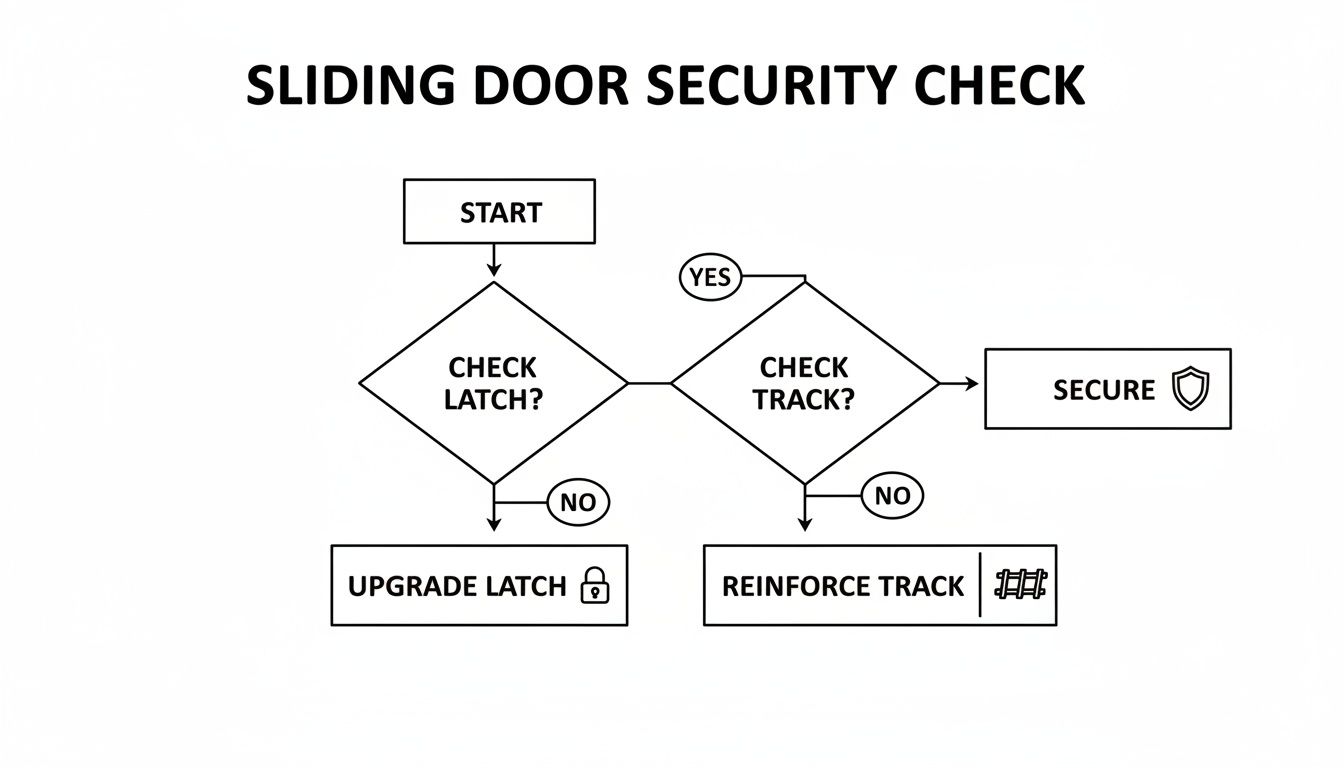
As you can see, the process is logical: check the primary lock first, then move on to reinforcing the track itself. These two steps address the most common ways burglars try to get through these doors.
Comparing Top Sliding Door Security Upgrades
So, what's the right choice for you? It really comes down to your budget, how much security you're aiming for, and whether you enjoy a good weekend project. Here's a head-to-head look at the most popular hardware upgrades.
| Hardware Type | Security Level | Average Cost | DIY Installation Difficulty |
|---|---|---|---|
| Frame-Mounted Security Bar | High | $25 – $75 | Easy |
| Dual-Bolt Lock | High | $30 – $80 | Moderate |
| Foot-Operated Lock | Medium | $15 – $40 | Easy |
| Mortise Lock | Very High | $100 – $300+ | Difficult (Pro Recommended) |
| Security Pins | Medium | $10 – $20 | Easy |
Choosing the best option from this list will immediately make your door more secure. Just remember that even the best lock in the world won't work correctly if your door is out of alignment.
Pro Tip From Experience: Before you install any new lock, check your door's alignment. If it doesn't slide smoothly or sits crooked in the frame, even a top-of-the-line lock won't engage properly. That creates a hidden vulnerability you might not notice until it's too late.
Don't Overlook Security Pins
For a cheap and surprisingly effective security boost, look no further than security pins. This is a classic, low-tech solution that works wonders.
The process is simple: you drill a hole through the interior frame of the sliding panel and partway into the stationary frame behind it. Then, you just slide a hardened steel pin into the hole. That's it.
This technique physically binds the two panels together, making it impossible for the door to slide open. For a little extra utility, you can drill a second hole a few inches from the fully closed position. This lets you leave the door cracked for ventilation while still keeping it securely pinned. It’s a 20-minute DIY project that adds a serious layer of protection for less than the cost of a pizza.
How to Reinforce Your Sliding Door Glass
Let's be honest—all the locks and bars in the world won't matter if an intruder decides to just smash their way through that big, beautiful pane of glass. It’s the most obvious weak spot on any sliding door. The good news is you can turn that fragile sheet into a serious barrier without having to replace the entire door unit.
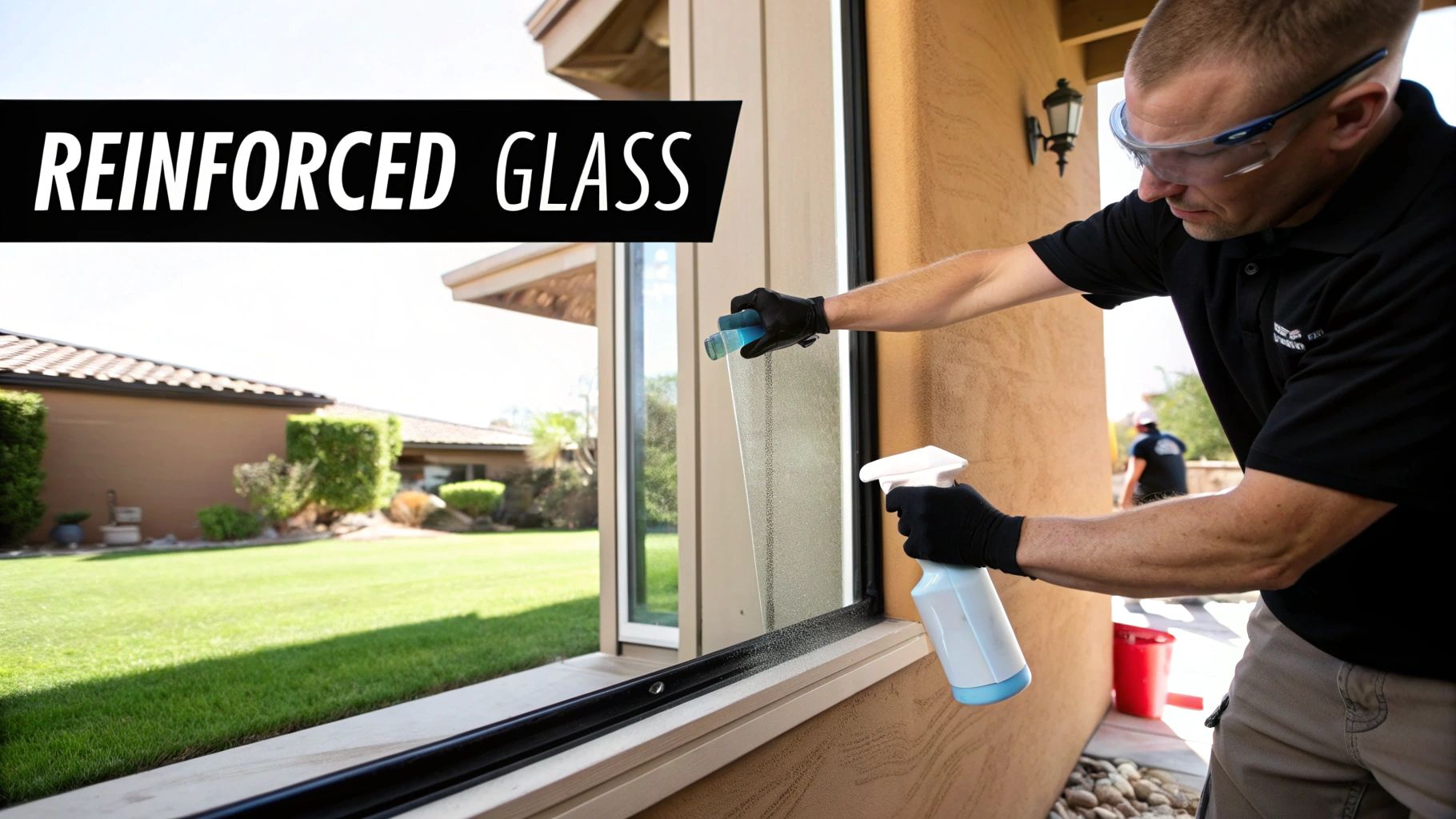
The simplest and most effective way to do this is with security window film. This isn't your average decorative tint. We're talking about a thick, clear polyester sheet that you apply directly to the inside of the glass. Its main job isn't to stop the glass from breaking, but to hold it all together when it does.
Think about it: a thief hits the glass, and instead of it crashing to the floor, it just spiderwebs. The powerful adhesive on the film keeps all the dangerous shards locked in place. That messy, surprisingly strong web is incredibly difficult and loud to get through, which is usually more than enough to send them running.
Choosing and Applying Security Film
When you're shopping for security film, thickness is everything. It’s measured in mils (one-thousandth of an inch), with options typically ranging from 4 to 15 mils. For home security, don't go with anything less than 8 mils thick. That's the sweet spot for a significant boost in shatter resistance.
You can definitely apply this film yourself, but you'll need patience and a very clean workspace. If you rush this job, you’ll end up with ugly air bubbles and a weak bond.
- Prep the Glass Meticulously: The glass has to be perfectly clean. A spray bottle with water and a few drops of baby shampoo works great. Go over the surface with a razor blade to scrape off any tiny specks of grit.
- Don't Be Shy with the Solution: As you apply the film, generously spray both the glass and the sticky side of the film. This "slip solution" is the secret sauce that lets you slide the film into position before committing.
- Squeegee from the Center: Once the film is where you want it, use a firm squeegee to push the water and air out from the center to the edges. This is the make-or-break step for a smooth, professional finish.
These same principles apply to any vulnerable glass in your home. If you're looking to create a complete security perimeter, you'll find similar strategies in our guide on how to secure windows from burglars.
Beyond Film: Upgrading to Stronger Glass
While security film is a fantastic retrofit, you might consider upgrading the glass itself if you're installing a new door or live in a higher-risk area. This is a bigger investment, for sure, but it builds a superior level of protection right into the door.
You have two main options for high-security glass:
- Laminated Glass: Think of this as a glass sandwich. It's two panes of glass bonded to a tough, clear layer of polyvinyl butyral (PVB). When it gets hit, the glass cracks, but that inner layer holds it all together, just like a car's windshield.
- Polycarbonate Panels: While not technically glass, clear polycarbonate is a beast. This is the same stuff used in bullet-resistant barriers, and it’s practically unbreakable with common tools. Swapping your standard glass for a polycarbonate panel is the ultimate security upgrade.
When considering these more robust materials, understanding the differences between laminated and toughened glass is crucial for making an informed decision. Laminated glass excels at security by staying intact, whereas toughened (or tempered) glass is designed to shatter into safer, smaller pieces.
Deciding What's Right for Your Home
So, which path should you take? It all comes down to balancing your security goals with your budget and how much work you want to do yourself.
| Glass Solution | Security Level | Average Cost | DIY Friendly? |
|---|---|---|---|
| Security Film (8-14 mil) | Good | $ | Yes |
| Laminated Glass | Excellent | $$$ | No (Pro install) |
| Polycarbonate Panel | Maximum | $$$$ | No (Pro install) |
For the vast majority of homeowners, a quality security film is a smart, cost-effective way to get a huge boost in protection. It directly tackles the glass’s biggest weakness, turning an easy target into a frustrating and noisy obstacle for any intruder.
Using Smart Sensors for Active Door Monitoring
Better locks and reinforced glass are your first line of defense—the physical muscle that keeps intruders out. But what if your sliding door could do more than just stand there? What if it could become a vigilant sentry, actively telling you the second something is wrong? This is where a little bit of smart technology can completely change your security game.
By adding a couple of simple, inexpensive sensors, you give your door a voice. You connect it to a network that can react instantly to a threat, moving you from passive prevention to active, real-time defense.
The Two Must-Have Smart Sensors
To make your sliding door truly "smart," it needs senses. For home security, that means giving it the ability to detect when it's opened or when its glass is broken. Two specific sensors are perfect for this job.
-
Contact Sensors: This is the most fundamental sensor for any door or window. It’s a simple two-piece device: a magnet and a sensor. You stick one piece on the door and the other on the frame. When the door is shut, they're aligned. The moment it slides open, that connection breaks, and the sensor instantly sends an alert.
-
Glass Break Sensors: A contact sensor is great, but it won’t know if an intruder smashes the glass to get in. That's where a glass break sensor comes in. It has a tiny microphone specifically tuned to listen for the unique, high-frequency sound of shattering glass. If it hears that sound, it triggers an immediate alarm.
Think of these devices as the eyes and ears of your smart security setup. They provide the raw data needed to unleash a powerful, automated response.
Turning Alerts into Action with Automation
Getting a ping on your phone that a door opened is helpful. But the real power comes from setting up automated routines—or "recipes"—that spring into action the second a sensor is tripped. This is where you can get creative and build a system that doesn't just inform you of a problem, but actively works to scare an intruder away.
Picture this: It's 2 AM, and someone forces your sliding door. The contact sensor breaks its connection.
Instantly, your home roars to life. The smart lights in your living room and on the patio flash to full brightness. Your smart speaker starts blaring a piercing siren or the sound of a large dog barking, and a critical alert hits your phone.
This isn't some futuristic fantasy; it's a simple automation you can build in minutes using common smart home platforms like Amazon Alexa, Google Home, or Apple HomeKit. The goal is to create chaos and confusion, making it immediately clear to the intruder that they've been caught.
This kind of tech has been standard in the commercial world for years. The global automatic door market, valued at USD 13.7 billion in 2024, is expected to hit USD 23.6 billion by 2034. Sliding doors are the biggest piece of that pie, making up over 41% of the market. The technologies that secure these commercial doors—like presence detection and remote management—are now affordable and widely available for our homes. You can read more about the growth of automated door technologies to see how commercial trends are shaping home security.
Building Your Own Security Automations
Creating these automations is way easier than it sounds. Most smart home apps use a simple "If This, Then That" logic. Here are a couple of powerful recipes you can set up for your sliding door.
Automation Recipe 1: The "Intruder Alert"
- Trigger (The "If"): The Sliding Door Contact Sensor detects "Open" between 11 PM and 6 AM.
- Actions (The "Then"):
- Turn Living Room Lights and Patio Lights to 100% brightness.
- Set the Kitchen Smart Speaker volume to max and play a siren sound.
- Send a Critical Notification to your phone: "Sliding Door Breach Detected."
Automation Recipe 2: The "Glass Smash" Deterrent
- Trigger (The "If"): The Living Room Glass Break Sensor detects "Glass Break."
- Actions (The "Then"):
- Turn all indoor smart lights red.
- Trigger your security camera to start recording immediately.
- If you have a monitored service, this can also trigger a direct call to your security provider.
These automated responses do so much more than just alert you. They transform your home into an active participant in its own defense. An intruder expecting a dark, quiet house is suddenly hit with blinding lights, loud noise, and the undeniable signal that they’ve been discovered. This kind of integrated defense is a core principle of modern smart home security systems, where individual gadgets work together to create a stronger, more responsive network.
Ultimately, by investing a small amount in a couple of sensors, you're not just buying gadgets. You're buying a proactive security system that can react faster than any human could, creating a formidable defense that works around the clock to keep your home safe.
Simple Maintenance for Lasting Security
So, you've installed new locks, maybe some security film, and even a smart sensor. That’s fantastic. But security isn't a "set it and forget it" kind of deal. Think of it like a car—you need to do a little routine maintenance to keep it running smoothly and reliably. Daily use and the weather will inevitably cause some wear and tear, and what was secure yesterday might develop a small weakness tomorrow.
Don't worry, this isn't a huge time commitment. We're talking about a few simple habits that can make a world of difference. These quick checks are your best defense against small problems turning into major security gaps.
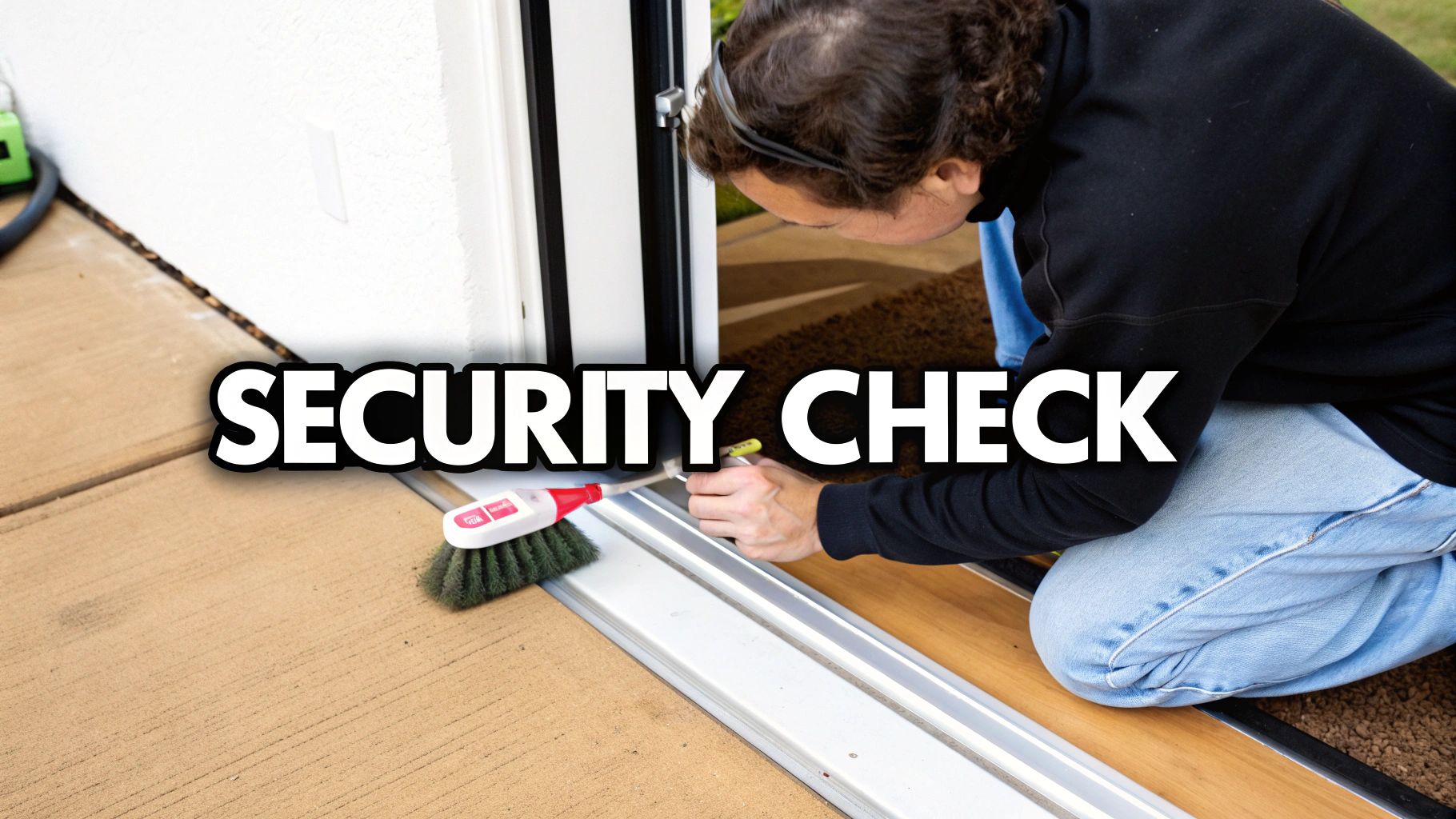
Your Quarterly Security Checklist
Set a reminder on your phone to do this quick 15-minute walkthrough every three months or so. Trust me, catching issues early is the secret to making your security upgrades last.
-
Keep the Tracks Clean and Clear: A gritty, gunked-up track isn't just annoying; it’s a genuine security risk. Debris can stop the door from closing all the way, leaving just enough of a gap for a pry bar. Even worse, enough build-up can actually lift the door panel slightly, making it that much easier for a burglar to force it right off the track. A quick pass with a vacuum and a wipe-down is all it takes.
-
Test Your Smart Sensor Batteries: Your smart sensors are your first line of digital defense, but they’re completely useless if the batteries are dead. Most apps send a low-battery warning, but it's smart to be proactive. Just open the door and check that your app registers it immediately.
-
Inspect Lock Alignment and Hardware: Take a close look at all your physical hardware. Does your security bar still sit tight and snug? Do the pins on your double-bolt lock engage smoothly and fully? Houses settle and doors get slammed, which can throw things out of alignment. A lock that doesn't fully engage offers a false sense of security.
If you're looking for more advice on keeping doors in top shape, check out these general door maintenance tips.
A sliding door that sticks, grinds, or feels wobbly is a door with a potential weakness. Smooth operation isn't just about convenience; it's a direct indicator of a secure and properly seated door.
Lubrication and Weather Stripping
It’s often the little details that add up to create a solid defense. A quick spray of a silicone-based lubricant on the rollers and in the track will keep the door gliding smoothly, reducing stress on the locks and frame.
Finally, take a look at the weather stripping. Its main job is insulation, but intact stripping also creates a tighter seal. This cuts down on rattling and gives a potential intruder less play to work with a pry bar. These small maintenance tasks work together to protect your door from both brute force and clever manipulation, ensuring your peace of mind.
Answering Your Sliding Door Security Questions
Even with the best hardware and smart tech in place, you probably still have some questions floating around. That's perfectly normal. Let's dig into some of the most common ones we hear from homeowners getting serious about securing their sliding doors.
What’s the single best way to secure a sliding glass door?
This is the question I get asked all the time, but the honest answer is there's no magic bullet. A truly secure sliding door isn't about finding one perfect product; it's about creating a layered defense where multiple solutions work together to cover every weak point.
If I had to build the ideal setup from scratch, it would always involve these three things:
- A Rock-Solid Physical Lock: This is your first line of defense. Something like a frame-mounted security bar or a dual-bolt lock provides the raw, brute-force resistance you need to stop someone from just muscling the door open.
- Reinforced Glass: If a burglar can't jimmy the lock, their next move is often to just break the glass. Applying a good quality 8-mil or thicker security film is the key here. It won't make the glass unbreakable, but it will hold it together, making it an incredibly frustrating and noisy mess to get through.
- An Instant Electronic Alert: This is your 24/7 watchdog. A simple contact sensor combined with a glass break sensor will scream for help the second a break-in is attempted, instantly notifying you and triggering sirens or lights.
By layering your security this way, you’ve fortified the lock, reinforced the glass, and set up a digital tripwire. There’s no easy way in. That’s how you get real peace of mind.
Can burglars actually lift a sliding door off its tracks?
Yes, and it’s a terrifyingly common and quiet way for them to get in, especially with older doors. It sounds crazy, but all it takes is a pry bar to create just enough leverage to pop the entire door panel up and out of the bottom track. Your fancy lock becomes completely useless.
The good news is that preventing this is both cheap and easy. All you need to do is eliminate that upward wiggle room.
You can buy anti-lift devices designed for this exact purpose, or you can go the DIY route and simply drive a few screws into the upper track. Just leave the heads sticking out enough to physically block the door from being lifted too high. A snug-fitting security bar or even a simple wooden dowel in the bottom track also pulls double duty, stopping the door from both sliding and being lifted.
Here’s a quick test: Go to your door and try to lift it straight up. If you feel a lot of play and it moves up more than a fraction of an inch, you’ve got a vulnerability that needs fixing, and fast.
Are security bars an outdated solution?
Not at all. I know they seem low-tech next to smart locks, but security bars are still one of the most effective and visually intimidating deterrents you can have. Their strength is in their simplicity.
A good bar that mounts to the door frame doesn't rely on a flimsy latch; it uses the structural integrity of your wall studs to brace the door shut. It can withstand an incredible amount of force—way more than the lock that came with your door.
Plus, you can't discount the psychological effect. A would-be intruder sees that bar and immediately knows your home isn't an easy target. For the low cost, a security bar offers a massive return on investment for your security plan.
Should I hire a professional for these upgrades?
This really comes down to the job at hand and how comfortable you are with a toolkit. A lot of the most effective upgrades are surprisingly DIY-friendly.
- Easy DIY Projects: You can definitely install security bars, add-on locks (like foot locks or Charley bars), and stick-on smart sensors yourself. Even applying security film is manageable if you're patient, clean the glass obsessively, and take your time.
- When to Call a Pro: I always recommend calling a professional for anything that involves cutting into your door or frame. Installing a mortise lock, for example, requires very precise drilling and routing. One slip-up and you could permanently damage the door itself, not just the lock.
At the end of the day, the most important thing is that the installation is done right. A top-of-the-line lock that’s installed incorrectly gives you a false sense of security, which is the most dangerous thing of all. If you have any doubt, making the call to a trusted locksmith is always the smart move.
At Automated Home Guide, our mission is to empower you with the knowledge to create a safer, smarter home. Explore our expert guides and reviews to find the best solutions for your security needs at https://automatedhomeguide.com.



Leave a Reply