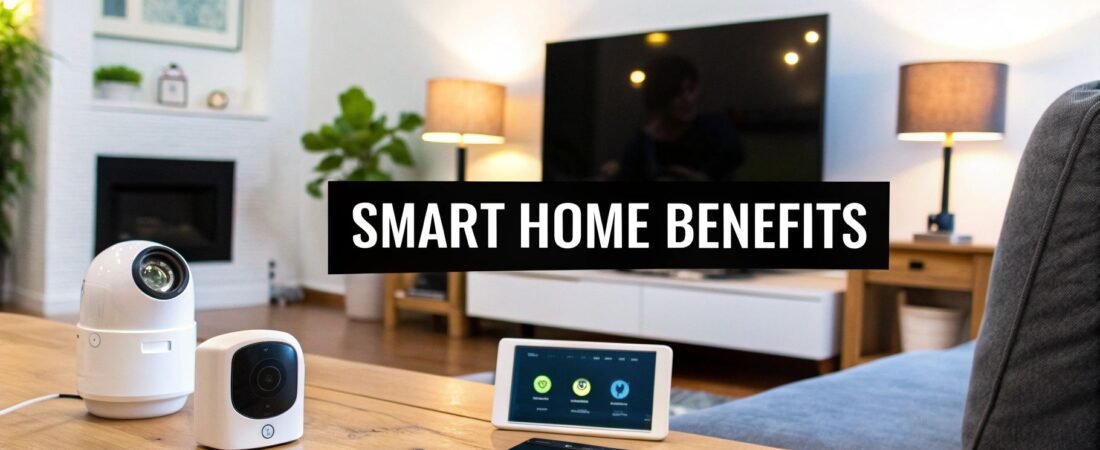
The big three benefits of a smart home really boil down to convenience, better security, and real energy savings. When set up right, a smart home system takes the friction out of your daily life, gives you peace of mind when you're away, and actively works to trim down those monthly utility bills.
What a Smart Home Really Does for You
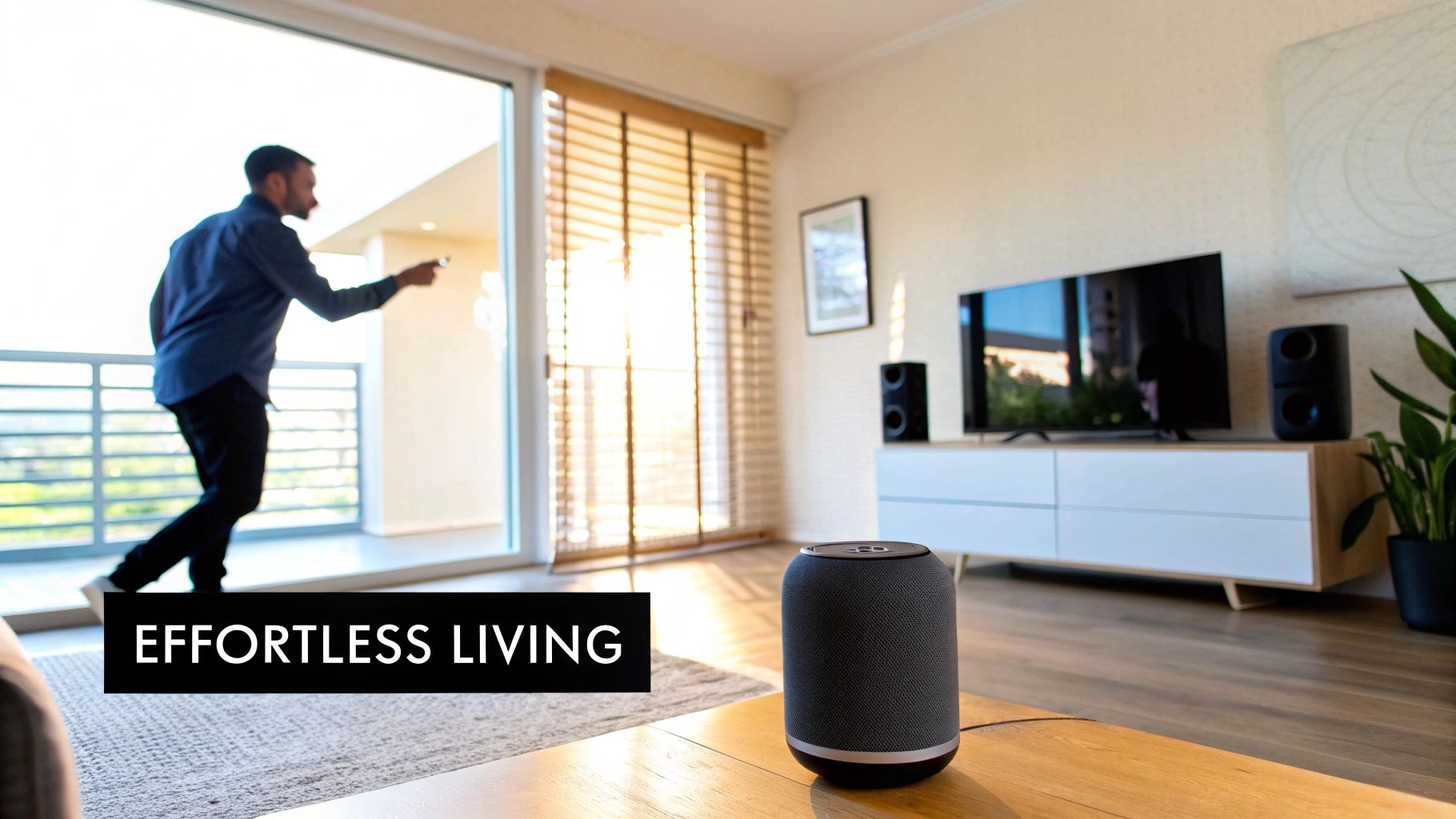
Let's ditch the sci-fi movie image of a cold, complicated house. A smart home, at its core, is just a home where key devices are connected to your Wi-Fi and can talk to each other. This connection is what allows them to handle tasks for you, automatically.
It's helpful to think of it less as a pile of gadgets and more as a helpful assistant that gets to know your routines. It's a home that can anticipate what you need, keep an eye on things for you, and manage its own energy use without you lifting a finger. The real win isn't the tech itself—it's what the tech does for you.
Beyond the Hype: What’s in It for You?
We’re here to answer one simple question: "How does this make my life better?" Forget getting bogged down in technical specs. A smart home isn't about the novelty of a voice-controlled lightbulb; it's about the security of having your lights turn on automatically when you're on vacation to make it look like someone's home.
This guide is built around the three pillars of smart home living:
- Convenience and Comfort: Getting back time and mental energy by automating the little things you do every single day.
- Security and Safety: Gaining real peace of mind with smart alerts and monitoring that protect your property and family.
- Savings and Efficiency: Cutting down on waste and lowering your bills with devices that manage resources intelligently.
A smart home works for you, not the other way around. It’s about creating an environment that is responsive, protective, and efficient, seamlessly integrating into your daily rhythm to handle the small things so you can focus on what matters most.
See How a Typical Day Changes
Picture this: you wake up not to a jarring alarm, but to your smart blinds slowly opening to let in the morning light. The thermostat has already warmed the house to your perfect temperature, and downstairs, the coffee maker has just started brewing.
When you leave for work, one tap on your phone (or a pre-set schedule) locks all the doors, arms the security system, and shuts down any lights or appliances you left on. Simple.
While you're at the office, a notification from your video doorbell lets you know a package has arrived. You can even talk to the delivery driver through your phone to give instructions. On your way back, you can tell your oven to start preheating. This is the kind of control that defines a truly helpful, automated home. If you want to dig deeper into how this works, you can learn more about what an automated home is and the systems behind it.
It's this smooth coordination of daily tasks where the magic really lies. Each small convenience adds up to a living experience that is fundamentally more comfortable, secure, and even more affordable. We’ll break down each of these benefits in detail to show you exactly how they can change your day-to-day life.
Lowering Your Bills with Smart Energy Management
One of the most practical and rewarding perks of a smart home is watching your utility bills shrink. This isn't about sitting in the dark or bundling up in the winter; it’s about plugging the leaks of wasted energy that silently drain your bank account every single day. A smart home stops being a passive power consumer and becomes an active, intelligent system that trims the fat for you.
Think of it as having a super-efficient building manager on duty 24/7. This manager knows your daily rhythms—when you leave for work, when you get home, and even checks the local forecast. Based on all that, it makes dozens of tiny, imperceptible adjustments to your heating, cooling, and lighting, making sure you’re only using the exact amount of energy you need, right when you need it.
The Power Trio of Energy Savings
When it comes to cutting energy costs, most of the heavy lifting is done by a team of three core devices. Each one tackles a different area of energy waste, but when they work together, the results really start to add up on your monthly statement.
These are the foundational pieces of a smart energy strategy:
- Smart Thermostats: These are so much more than a simple scheduler. They actually learn your household's patterns, use sensors to know when no one's home, and can even pre-cool or pre-heat your space more efficiently based on the weather outside.
- Smart Lighting: Whether it’s individual bulbs or entire switches, this technology is the ultimate fix for lights left on in empty rooms. You can set up schedules, create automated dimming scenes for movie night, and turn everything off from your phone after you've already gotten into bed.
- Smart Plugs: These are your secret weapon against "vampire power"—that sneaky energy draw from electronics that are turned off but still plugged in. A smart plug can completely cut the power to your entertainment center or home office setup overnight, stopping the drain completely.
When these three work in concert, you get a truly energy-efficient smart home. The thermostat manages the big energy hogs (HVAC), the lights handle moment-to-moment electricity use, and the plugs eliminate the silent waste, creating a powerful, automated savings plan.
Real Savings and Return on Investment
It's easy to look at the upfront cost of these gadgets and hesitate, but it’s far more accurate to see them as an investment that pays you back. For instance, studies consistently show that a smart thermostat can save the average homeowner 10-12% on heating and 15% on cooling costs. For many people, that means the device pays for itself in less than two years.
A smart home doesn’t just cost you money; it actively works to save you money. By automating energy efficiency, these devices provide a tangible return on investment that you can see on your utility bills month after month.
The table below breaks down what you might expect to save by adding these devices to your home.
Estimated Annual Savings with Smart Energy Devices
This table illustrates the potential annual cost savings and energy reduction for a typical household implementing various smart energy solutions.
| Smart Device | Potential Annual Savings | Average Energy Reduction |
|---|---|---|
| Smart Thermostat | $130 – $145 | 10% – 15% on HVAC |
| Smart Lighting (LED) | $50 – $225 | Up to 90% per bulb |
| Smart Plugs | $100 – $200 | 5% – 10% of total bill |
These numbers show a clear path to a quick return on your investment, making the initial purchase much more palatable.
This potential for real, tangible savings is a huge reason the smart home market is booming. The global market is projected to skyrocket from $147.52 billion in 2025 to an incredible $633.20 billion by 2032, and energy management tools are a massive part of that growth. You can discover more insights about these market trends on Fortune Business Insights. This incredible forecast shows just how much people value these cost-cutting benefits.
Beyond Smart Devices
A truly holistic approach to home energy savings looks at the bigger picture. If you have solar panels, for example, making sure they're running at peak performance is just as important as having a smart thermostat. Simple maintenance and a better understanding of improving solar panel efficiency can dramatically increase the power you generate, further slashing your reliance on the grid.
In the end, smart energy management is about making your home work smarter, not forcing you to work harder. It turns the tedious chore of saving energy into an invisible, automated benefit that’s always running in the background.
Gaining Peace of Mind with Smart Home Security
Beyond the cool gadgets and energy savings, one of the biggest reasons people invest in a smart home is for something much more fundamental: peace of mind. Smart technology wraps a dynamic, responsive layer of security around your home, and it’s a world away from the old-school, blaring alarm systems we grew up with. This isn't just about reacting to a break-in; it’s about proactively keeping an eye on things, deterring trouble before it starts, and feeling connected to your home no matter where you are.
Think of it this way: a traditional alarm screams for help after a window is already broken. A smart security system, on the other hand, can ping you the second someone walks onto your porch, show you a live video, and let you talk to them right through your phone. More often than not, that’s enough to prevent an incident from ever happening in the first place.
An Ecosystem Built for Protection
The real magic of smart security is how all the different devices talk to each other. They work as a team. You’re not just buying a camera or a lock; you’re building an intelligent system where the whole is far more powerful than its individual parts.
Here are the key players in this security ecosystem:
- Video Doorbells: These are your digital gatekeepers. They’re your first line of defense, sending instant alerts with video when anyone approaches, so you can see and speak to visitors whether you’re in the living room or on vacation.
- Smart Locks: No more fumbling for keys or that nagging feeling you forgot to lock the door. Smart locks let you give a temporary code to the dog walker, get a notification when the kids are home from school, and double-check that everything is secure with a quick tap on your phone.
- Smart Cameras: Placed inside and out, these are your eyes on the property. Modern cameras give you crystal-clear video, see in the dark with night vision, and use AI to tell the difference between a person and a raccoon, which means far fewer pointless alerts at 2 AM.
- Motion and Entry Sensors: These small, discreet devices are the nervous system of your home’s security. Stick them on doors and windows, and they can trigger alerts, switch on lights, or start a camera recording the moment something unexpected happens.
When these gadgets are linked, they can create some seriously powerful automated routines. For instance, if a sensor on your back door is tripped after 10 PM, the system could be set to automatically lock all doors, blast every light on, and send a video clip from the nearest camera straight to your phone. For a deeper dive, check out our guide on choosing the best smart home security systems for your needs.
Beyond Burglary Prevention
A truly smart home doesn’t stop at keeping intruders out. It also watches for threats and dangers inside the house, giving you a complete safety net that’s working for you 24/7.
A smart home doesn’t just guard the perimeter; it protects the people inside. By integrating safety devices like smart smoke and CO detectors, it creates a responsive shield that alerts you to danger, whether you're home or away.
Smart smoke and carbon monoxide detectors are a perfect example. A normal alarm just makes a loud noise in the house. But a smart one sends an immediate alert right to your smartphone. If a fire starts while you’re at work, you'll know instantly and can call 911. That early warning could be the difference that saves your home and your pets.
The Data-Backed Impact of Smart Security
This isn't just a passing trend; the numbers show that smart security genuinely works. Homes with smart security solutions can see their risk of burglary plummet, with some studies suggesting a drop of up to 300%. In fact, just the sight of a camera is often enough to deter 60% of potential thieves. It’s easy to see why security and access control are the biggest pieces of the U.S. smart home market, a sector projected to explode from $36.38 billion in 2024 to over $403.09 billion by 2034.
Of course, all this great tech works best when it's built on a solid foundation. Smart locks are fantastic, but they can't do much if the door frame is weak. That's why top-notch physical security is still critical. Pairing your smart system with the expertise of professional residential locksmith services ensures your first line of defense is as strong as your digital one. In the end, it’s this blend of physical and smart security that lets you truly relax, knowing your home is always being looked after.
Automating Your Life for Ultimate Convenience
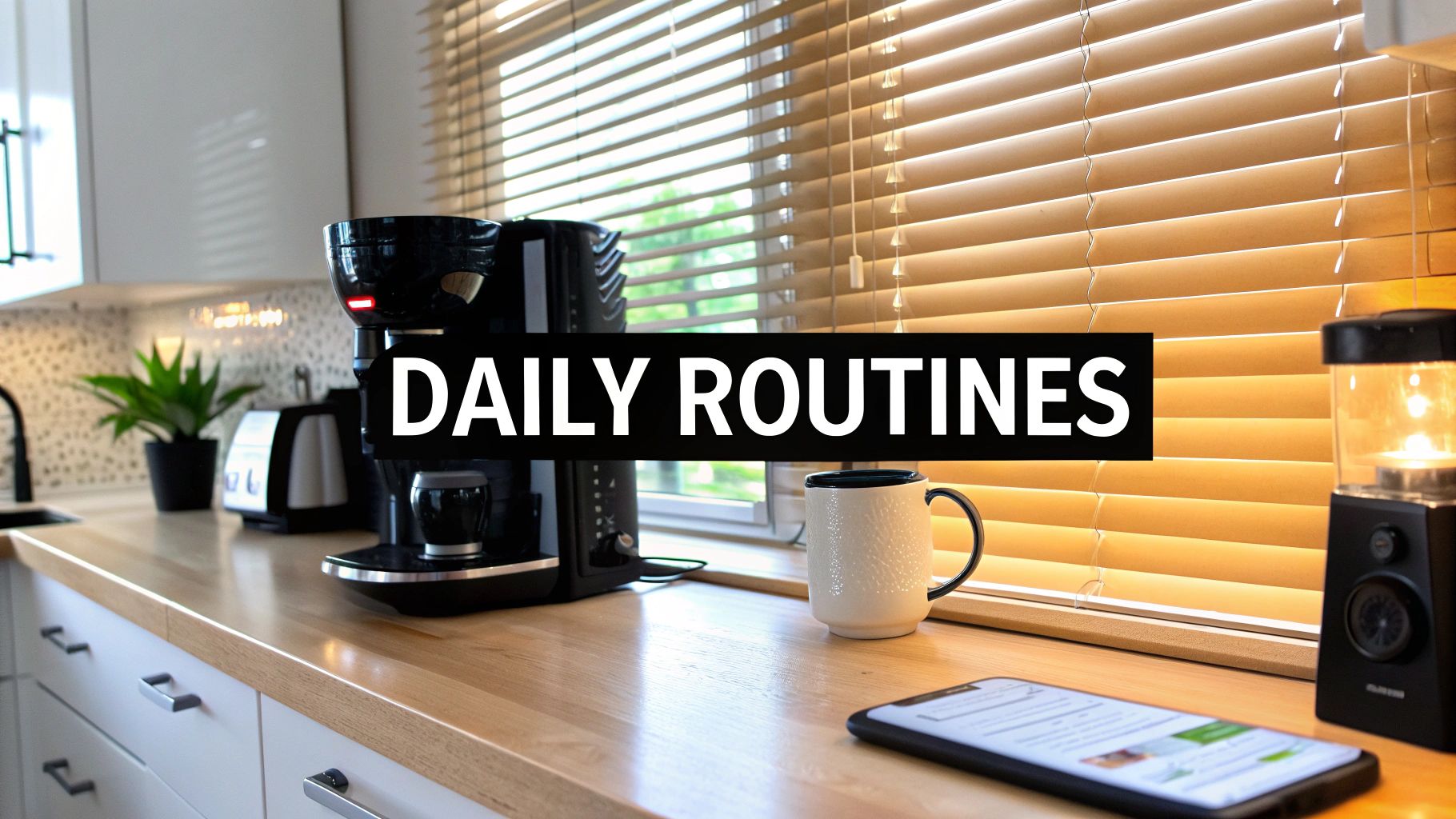
While saving money and boosting security are huge wins, the most profound change a smart home brings is giving you back your time. This is where the technology stops being a novelty and starts genuinely improving your quality of life through powerful, multi-step automations called routines or scenes.
Instead of telling one device to do one thing, you’re creating a domino effect where multiple devices work in harmony from a single prompt. Think of it as a digital butler who learns your habits and takes care of all those little, repetitive tasks that eat up your day. It’s about reducing your mental load and creating a home that just works for you.
Beyond One-Off Commands to Effortless Routines
The real magic isn't just asking a speaker for the weather. It's having a "Good Morning" routine that kicks in the moment your alarm sounds. Imagine your smart blinds gently opening to let the sun in, your favorite chill playlist starting softly in the bedroom, and the coffee maker downstairs starting to brew. That’s all happening automatically before your feet even hit the floor.
This is the heart of smart home convenience: bundling a bunch of actions into one simple trigger. You're not just controlling your home anymore; you're orchestrating it.
Here’s the simple formula behind these routines:
- Trigger: The event that starts the show. This could be a voice command ("Hey Google, I'm home"), a set time (7:00 AM on weekdays), a sensor picking up motion, or even your phone's GPS showing you've left the house.
- Actions: The series of tasks that your devices perform. Lights turn on, the thermostat adjusts, doors lock, music starts playing—you name it.
A truly smart home doesn't just wait for your commands; it anticipates your needs. By setting up routines, you're eliminating dozens of tiny decisions and actions every day, letting your environment adapt to you, not the other way around.
The impact here is bigger than you might think. Many users find that well-planned routines can easily save them 20-30 minutes every single day. This drive for convenience is a huge reason the market is growing so fast, with the number of U.S. households with at least one smart device jumping by 30% in just the last two years. You can explore detailed smart home market trends on Technavio.
Practical Automation for Every Lifestyle
The best part about smart routines is that they aren't one-size-fits-all. They're incredibly flexible, allowing you to build automations that fit your life perfectly, whether you're a busy professional, a parent juggling a million things, or just someone who loves a little extra comfort.
To really bring this to life, let’s look at how different people can use the same technology to solve their unique daily challenges.
Smart Home Automation Ideas for Different Lifestyles
| User Type | Morning Routine Example | Evening Routine Example | Key Benefit |
|---|---|---|---|
| Busy Professional | "Focus Mode": One command dims office lights, plays a concentration playlist, and turns off the TV to eliminate distractions. | "End of Day": At 6 PM, lights slowly brighten, and a smart speaker announces it's time to wrap up. | Productivity |
| Family with Kids | "School Morning": At 7 AM, lights in kids' rooms turn on, a wake-up playlist starts, and the TV is disabled until 8 AM. | "Bedtime Story": Dims kids' room lights, plays a 30-minute audiobook, and sends a notification when it's over. | Structure |
| Eco-Conscious | "Leaving Home": Geofencing automatically sets the thermostat to an eco-mode, turns off all lights, and lowers blinds. | "Eco-Evening": At sunset, outdoor lights turn on but dim to 50% after 11 PM to conserve energy. | Efficiency |
| Tech Enthusiast | "Movie Night": A single command dims living room lights to 10%, activates TV backlighting, and turns on the sound system. | "Welcome Home": Geofencing detects arrival, turns on entry lights, sets the thermostat, and plays a favorite "unwind" playlist. | Experience |
These examples show how automation goes far beyond just turning a light on with your voice. By crafting routines that handle the little things, you create a home that’s genuinely helpful, freeing you up to focus on what actually matters.
Addressing the Big Questions: Smart Home Privacy and Cost
Look, I get it. The idea of a fully "smart" home is exciting, but two big questions always come up: "Is it safe?" and "Can I even afford it?" These are completely valid concerns. Handing over parts of your home's control to technology and facing what looks like a hefty price tag can be intimidating.
Let's cut through the noise and talk about this stuff practically. You can absolutely build a smart, secure, and affordable home. It just takes a little know-how.
Think of your smart home's data like a private conversation—you decide who gets to hear it. Sticking with well-known brands like Google, Amazon, Apple, or Ring is a great first step. These companies have a lot on the line when it comes to security and have built entire reputations on protecting user trust.
But that's just the starting point. The real power is in your hands. You're the one in control of your digital front door.
Keeping Your Digital Home on Lockdown
Securing your smart home isn't nearly as complicated as it sounds. You don't need to be a cybersecurity guru; you just need to adopt a few smart habits. It’s no different than locking your physical doors and windows. The foundation of it all is your Wi-Fi network—the central hub connecting everything.
Here's a quick, no-nonsense checklist to lock things down:
- Use Strong, Unique Passwords: This is non-negotiable. Stop using "Password123" or your dog's name. A solid mix of letters (upper and lower case), numbers, and symbols is your best defense for your Wi–Fi and every single device account.
- Turn On Two-Factor Authentication (2FA): If you do one thing on this list, make it this one. 2FA adds a second check, usually a code sent to your phone, before anyone can log in. Even if someone steals your password, they can't get in without your phone.
- Be Stingy with Permissions: When you install a new gadget, it's going to ask for access to things. Pause and think. Does your smart lightbulb really need access to your contacts? Probably not. Only grant the permissions that are essential for it to do its job.
- Always Keep Your Firmware Updated: Those update notifications aren't just annoying pop-ups. Manufacturers constantly release patches to fix security holes. Set your devices to update automatically, and you'll be protected from the latest threats without even thinking about it.
Following these simple steps builds a strong digital fence around your home, so you can be confident that your smart tech is working for you, and only you.
How to Start Smart Without Breaking the Bank
Many people get scared off by the perceived cost, but here's the secret: you don't have to automate your entire house overnight. The trick is to start small and solve a real problem.
Think about your biggest daily annoyance or where you want to see an immediate impact. Is your energy bill making you cringe? A $50-100 smart thermostat is a fantastic place to start. Are you constantly worried about packages getting swiped from your porch? A video doorbell gives you instant peace of mind for about the same price.
A smart home is not an all-or-nothing purchase; it’s a journey. Begin with one or two high-impact devices that solve a specific problem, and you'll experience the benefits immediately without emptying your wallet.
This "one piece at a time" approach is brilliant because your smart home can grow with your budget and your needs. You can add a few smart plugs this month, maybe some smart lighting next, and slowly build an ecosystem that actually fits your life.
The New Standards Making Everything Easier
Not too long ago, getting a smart light from one brand to work with a smart lock from another was a massive headache. It was a mess of competing standards and confusing apps. Thankfully, those days are mostly behind us.
The game-changer here is a new universal standard called Matter.
Think of Matter as a universal translator for your smart devices. It’s backed by all the big names—Apple, Google, Amazon, you name it—and it guarantees that any device with the Matter logo will play nicely with your other gear, no matter who made it. This completely takes the guesswork out of buying new tech. Just look for the logo, and you can be sure it will connect to your system without any technical drama. It’s making it easier than ever to build a powerful, cohesive smart home that just works.
How to Start Your Smart Home Journey
So, you're ready to bring your home into the 21st century? The good news is, getting started is far less complicated than it seems. The biggest mistake people make is trying to do everything at once. Don't.
Instead, think about what matters most to you. Are you trying to trim your energy bills? Do you want to feel safer when you're away? Or are you just tired of fumbling for the light switch in the dark? Zero in on one pain point.
Solving a single, specific problem first is the secret to a successful smart home. It gives you an immediate, satisfying win and makes the whole process feel worthwhile from day one.
Choose Your Starting Point
Your first smart device should be a direct answer to that one problem you identified. This isn't about buying the flashiest new gadget; it's about making a practical improvement to your daily life. Building a smart home is a marathon, not a sprint.
Here’s a simple way to think about it, based on your main goal:
-
For Security: The video doorbell is a fantastic first step. It’s a single, powerful device that acts as a visible deterrent and lets you see who's at your door from anywhere on the planet. The peace of mind is instant.
-
For Savings: Look no further than a smart thermostat. This is one of the few smart devices that truly pays for itself, often within the first year. It learns your routine and stops wasting energy heating or cooling an empty house.
-
For Convenience: Grab a multi-pack of smart plugs. These little wonders are the gateway to home automation. Suddenly, that "dumb" lamp, coffee maker, or fan can be controlled with your voice or set to a schedule. It's an easy, low-cost way to get a taste of what's possible.
The best way to begin is by choosing one device that solves your biggest daily annoyance. This strategy provides an instant return on your investment, whether that's in peace of mind, cost savings, or reclaimed time.
Build Momentum and Confidence
Once you've installed that first device and seen how it works, everything clicks. You'll start to see new possibilities. You might realize your new video doorbell would be even better if it could unlock the door for a trusted visitor with a smart lock. Or maybe those smart plugs could turn on the lights automatically when you pull into the driveway.
This is how a great smart home comes together—organically, one piece at a time, driven by your actual needs. It's not about chasing technology for technology's sake. It’s about thoughtfully adding components that make your home a safer, more efficient, and more enjoyable place to live.
Your journey starts with a single step. Pick your goal, and dive in.
Got Questions About Smart Homes? Let's Get Them Answered.
Even after seeing all the upsides, it’s completely normal to have a few questions about how this all works in the real world. Stepping into new tech can feel like a leap, but you might be surprised to find that common worries about cost, complexity, and compatibility aren't the roadblocks they used to be.
Let's clear the air and talk through some of the most frequent questions people have. The goal here is to give you straightforward answers so you can move past the doubts and start thinking about the fun stuff.
How Much Does It Really Cost to Get Started?
Honestly, you can dip your toes into the smart home world for less than the cost of a nice dinner out. You don't need to rip out your walls or spend a fortune. A fantastic starting point is a single, problem-solving device, which usually runs between $50 and $250.
Think about it: a smart thermostat can pay for itself in energy savings in just a year or two. A video doorbell or a couple of smart plugs can give you instant peace of mind and convenience for well under $100. The best strategy is to identify one thing that annoys you at home and fix it with a smart device. From there, you can expand whenever it feels right for you and your budget.
Will All These Different Gadgets Actually Work Together?
This used to be a huge headache, but things have gotten so much better. The industry is finally rallying around a universal standard called Matter. With giants like Google, Apple, and Amazon all on board, Matter is designed to make sure certified devices play nicely together, no matter who made them.
Pro Tip: When you're shopping, just look for the "Works with Matter" logo on the box. It’s your ticket to a hassle-free setup and guarantees all your new gear will communicate without any extra work from you.
And what about older devices? You can still get them to cooperate. The easiest way is to stick with one main ecosystem (like Google Home or Amazon Alexa) or use a hub that acts as a translator between different brands.
Is This Stuff Too Complicated for Someone Who Isn't Tech-Savvy?
Not anymore. Modern smart home gear is built for everyone, not just tech enthusiasts. Setting up a new device is almost always done through a simple smartphone app that walks you through the process one small step at a time.
Once it's up and running, you'll manage everything by talking to a voice assistant or tapping a button in an app. The whole point of a smart home is to make life simpler, not to give you another technical thing to manage. For most people, the initial five-minute setup is the most "technical" it ever gets. After that, your home just starts working for you.
At Automated Home Guide, our whole mission is to make smart home technology easy to understand and use. Dive into our expert guides and honest reviews to start building a smarter, safer, and more efficient home today at https://automatedhomeguide.com.


Leave a Reply