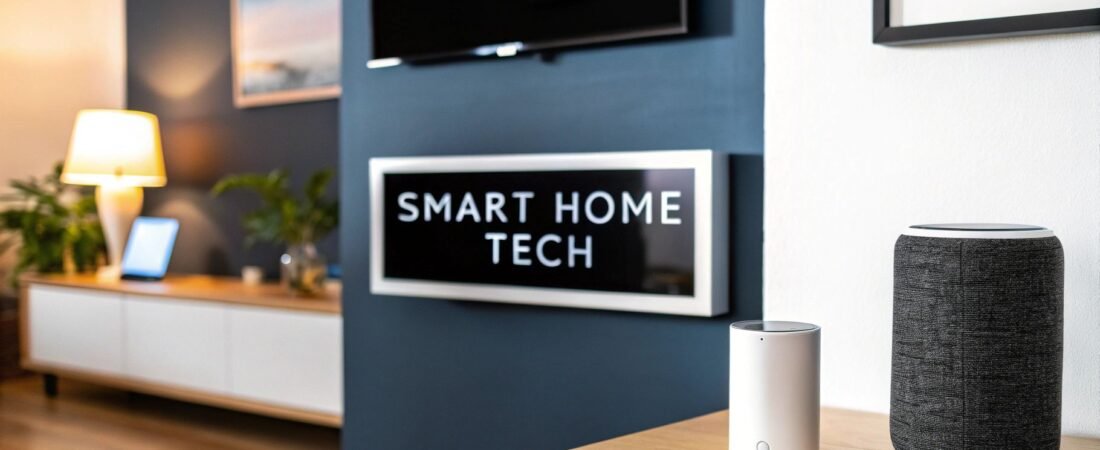
So, what exactly is "smart home technology"? At its core, it’s about a network of devices in your home that are connected to the internet, all talking to each other—and to you. This connection gives you the power to automate and remotely control pretty much everything, from your lights and thermostat to your coffee maker and door locks.
Think of it as giving your house a central nervous system. It allows different parts of your home to work together to make your life easier, safer, and more efficient.
Your Home, But Smarter: An Introduction
Let’s try an analogy. In a regular house, you’re like the conductor of an orchestra, constantly running around to tell each instrument what to do. You manually flip the light switches, adjust the thermostat, and lock the doors. It works, but it takes a lot of direct effort.
Now, imagine a smart home. Here, the house is the conductor. It learns your rhythms, anticipates what you need, and orchestrates a seamless harmony of comfort and security. This is the real magic of a smart home—it doesn't just wait for your commands; it proactively manages your living space for you.
More Than Just Gadgets
It’s easy to think of smart homes as just a collection of cool, futuristic gadgets. But it’s really about creating a home that responds to you and your lifestyle. It's the difference between fumbling for a light switch in the dark versus having the lights turn on automatically as you walk into a room.
It’s also about the peace of mind you get from a quick glance at your phone, confirming you remembered to lock the front door after leaving in a rush.
This interconnected web of devices is built on one simple idea: making your daily life simpler and more streamlined. The impact is felt most in a few key areas:
- Enhanced Convenience: Think about automating all those small, repetitive tasks. Your thermostat adjusts itself when you leave, the lights turn off automatically at bedtime, and your coffee starts brewing the moment your morning alarm goes off.
- Increased Security: With smart cameras, video doorbells, and automated locks, you can keep an eye on your home from anywhere. You get alerts for unexpected activity and can even grant temporary access to a visitor remotely.
- Improved Energy Efficiency: Smart thermostats and lighting are brilliant at cutting down on waste. By learning your habits and adjusting accordingly, these systems can help you use an estimated 30-40% less energy, which is great for both the planet and your wallet.
- Greater Accessibility: For people with limited mobility or disabilities, smart home tech can be a game-changer. Using simple voice commands to control lights, temperature, and entertainment systems provides a huge boost in independence.
A truly smart home doesn't just follow orders; it learns and adapts to your life. The ultimate goal is an environment that supports your daily routines so seamlessly you barely even notice the technology making it all happen.
In this guide, we'll pull back the curtain on how these systems work. We’ll look at the key components, the benefits they offer in the real world, and how to get started. From the basic setup to more advanced integrations, we're here to make this powerful technology feel a lot less complicated. Let's get started.
The Core Components of a Smart Home
To really get what smart home technology is all about, you need to understand its building blocks. Think of it like a team working together. You have the players on the field (smart devices), the coach calling the shots (a central hub), and the playbook everyone follows (communication protocols). Each piece has its own job, but they only create that seamless, almost magical experience when they're all in sync.
Let's break down these components. It’s not about getting bogged down in technical jargon; it's about seeing the simple, logical system that turns a bunch of gadgets into a responsive, intuitive home.
The Players: Smart Devices
The most obvious parts of any smart home are the devices themselves. These are the "things" in the "Internet of Things" (IoT)—everyday objects now built with a bit of computer brain and a way to connect to your network. They're the hands and feet of your system, doing the actual work that makes your life a little easier.
For instance, some of the best smart locks for home are fantastic upgrades for both security and convenience, quickly becoming a cornerstone of modern connected living. Other popular players on the team include:
- Smart Lighting: Light bulbs and switches you can dim, change color, or turn on and off with your voice or a tap on your phone.
- Smart Thermostats: These gadgets learn your daily routines and adjust the heat or AC automatically, saving you money without you having to think about it.
- Smart Speakers: Think Amazon Echo or Google Nest. They're your voice-activated assistants ready to play music, answer random questions, and control your other smart devices.
- Security Cameras and Doorbells: These give you peace of mind by letting you check in on your home from anywhere and see who’s knocking at your door.
This infographic neatly ties these devices to the main promises of a smart home: making life more convenient, secure, and efficient.
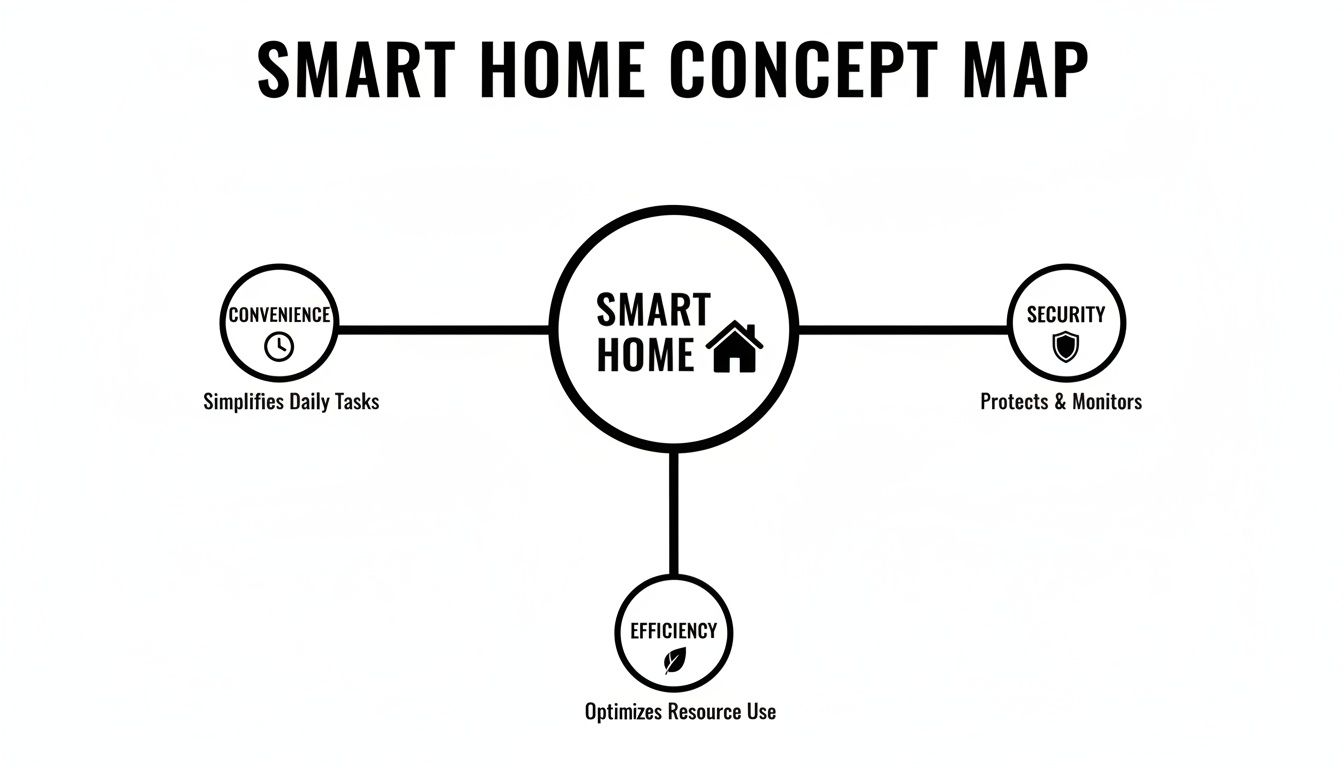
As you can see, it's how these individual gadgets work together that truly delivers on the idea of a smarter, automated home.
The Coach: A Central Hub or Controller
While some smart devices can function on their own, a truly connected home needs a coach—a central hub or controller. This device is the brain of the whole operation. It translates your commands and gets all your different devices, often from totally different brands, to talk to each other.
Imagine you want a single "Goodnight" command to turn off every light, lock the doors, and dial down the thermostat. Without a hub, you’d be tapping away in three different apps. A hub makes it happen all at once, orchestrating the whole sequence. This is where devices like the Amazon Echo, Google Nest Hub, and Apple HomePod really shine.
Voice assistants and the IoT devices they command are the heart of a smart home. In 2023, there were over 15.14 billion connected IoT devices across the globe, and more than 20% of them were for consumer smart homes. This is big business; the market for these platforms is projected to jump from USD 27.31 billion in 2026 to a whopping USD 59.14 billion by 2031, which shows just how central they've become.
The Playbook: Communication Protocols
Finally, for any of this to work, all the components need a shared language—a playbook they can all follow. These are the communication protocols, the invisible wireless signals that let your devices talk to the hub and to each other.
Think of protocols like the different languages spoken in your home. Your hub is the universal translator, making sure a device that speaks "Zigbee" can still understand a command sent over "Wi-Fi."
There are four main "languages" you'll run into:
- Wi-Fi: You already know this one. It’s fast and has great range, making it perfect for data-hungry devices like security cameras. The trade-off? It can use a lot of power.
- Bluetooth: This one’s for close-range connections, like your phone unlocking your smart lock as you approach the door. It sips power, which is great for battery-operated gadgets.
- Zigbee: This protocol creates a cool "mesh network" where devices can pass signals along to each other, extending the network's reach way beyond the hub. It's low-power and super reliable for things like sensors and light bulbs.
- Z-Wave: Very similar to Zigbee, Z-Wave also uses a mesh network but operates on a different radio frequency. This helps it avoid interference from all the other Wi-Fi devices in your house.
To help you sort through them, here’s a quick comparison of the main wireless protocols you'll find in smart home gear.
Comparing Smart Home Communication Protocols
| Protocol | Best For | Typical Range | Power Consumption |
|---|---|---|---|
| Wi-Fi | High-bandwidth devices (cameras, smart speakers) | Up to 300 feet (92m) | High |
| Bluetooth | Short-range, direct device-to-phone control | Up to 30 feet (10m) | Very Low |
| Zigbee | Large networks of small, low-power devices | Up to 300 feet (92m) with mesh | Low |
| Z-Wave | Reliable home automation with less interference | Up to 100 feet (30m) with mesh | Low |
Each protocol has its strengths, which is why most smart homes end up using a mix of them to get the job done right.
Understanding how these three core components—devices, hubs, and protocols—fit together is the real key to demystifying smart home technology. To dive deeper into how these languages work, check out our guide on https://automatedhomeguide.com/smart-home-protocol/.
How Smart Technology Works in Real Life
All the theory and technical talk is great, but what's it really like to live in a smart home day in and day out? Let's move past the jargon and walk through a typical day to see how all these gadgets work together to make life a little smoother, safer, and more efficient.
Imagine waking up not to a blaring alarm, but to a gentle, simulated sunrise. Your smart lights gradually brighten over a few minutes, easing you out of sleep far more naturally. Just as they hit full brightness, your smart speaker fades in a chill morning playlist. And that smell? That's your smart coffee maker, which kicked on the moment you dismissed your alarm.
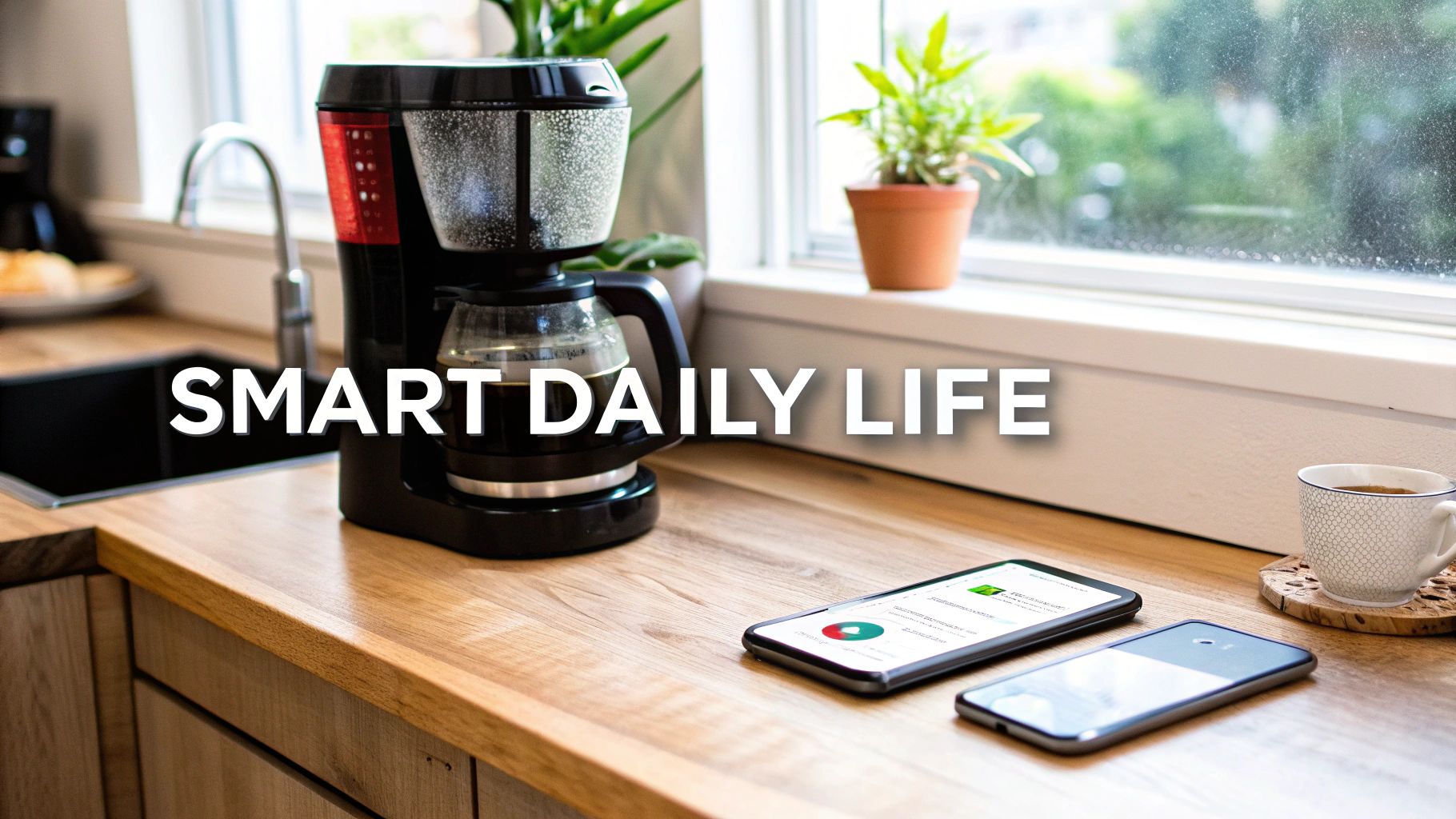
This whole experience isn't the result of some complex programming. It’s just a simple automated scene, set off by one trigger. This is a perfect example of how interconnected devices can create a genuinely pleasant and personal start to your day.
Automating for Security and Peace of Mind
As you get ready to head out, your home is already preparing for your departure. A quick "Hey Google, I'm leaving" is all it takes. Or you can set it to trigger automatically when your phone leaves the area.
Instantly, your "Leaving Home" routine jumps into action, ticking off a checklist in seconds:
- Locking Up: Every smart lock on your doors engages. You get a confirmation they're secure.
- Arming Security: The entire security system, from motion sensors to cameras, activates.
- Adjusting Climate: The smart thermostat dials itself down to an energy-saving "Away" mode.
- Powering Down: Any lights or smart plugs you’ve designated turn off, so you're not wasting a dime on electricity.
Later, you get a notification on your phone—motion detected at the front door. It’s the delivery driver. You can pull up a live feed from your video doorbell, watch them drop off the package, and even use the two-way speaker to say thanks. It’s a simple interaction, but it gives you total peace of mind that your delivery is safe and your home is secure, no matter where you are.
Creating the Perfect Environment for Comfort
On your way back from work, your smart thermostat uses your phone's location (a feature called geofencing) to see you're getting close. It automatically starts bringing the temperature back up to your favorite setting, so the house feels just right the second you walk through the door.
As the sun sets, your outdoor lights flick on, and a few indoor lamps illuminate to create a warm, welcoming vibe. You didn't have to do a thing.
The real magic of smart home comfort isn't just about remote control; it's proactive automation. A truly smart system learns your habits and handles all those little tweaks for you, creating an environment that always feels perfectly tailored to the moment.
Come evening, it’s time to relax. A single voice command like, "Movie night," can dim the lights, lower the smart blinds, power on the TV and soundbar, and launch your go-to streaming app. It turns a clunky, multi-remote process into one fluid, seamless action.
Managing Energy and Enhancing Accessibility
Beyond the cool factor, smart tech delivers real, tangible benefits. Smart plugs, for instance, can cut power to appliances that drain "phantom" energy when not in use. Some studies show that homes using these devices can slash their energy use by 30-40% on average.
Even more importantly, for people with disabilities or limited mobility, this technology can be genuinely life-changing. Controlling lights, climate, and security with voice commands provides a profound level of independence.
Think about these specific applications:
- Smart Medication Dispensers: These can give reminders and even notify a family member if a dose is missed.
- Voice-Activated Controls: The ability to turn on lights, adjust the heat, or answer the door can all be done without getting up.
- Automated Safety Features: In an emergency, a smart smoke detector can automatically turn on all the lights and unlock the doors, helping to clear a safe path for escape.
Ultimately, the best way to understand smart home technology is to see it in action. It's a network of individual tools that, when working in concert, create a home that’s truly responsive and helpful. If you want to dive deeper into the nuts and bolts, check out our guide on how a smart home works to learn more.
The Benefits and Risks of a Connected Home
Jumping into the world of smart home tech is exciting, but it’s best to go in with your eyes wide open. A connected home can make life easier and more efficient in some truly amazing ways. At the same time, it introduces new things to think about when it comes to your digital security and privacy.
The upside is usually what grabs you first—the immediate, tangible improvements to your daily life. We're talking about everything from better security to real cost savings, completely changing how you live in and manage your space.
Unlocking the True Advantages
Sure, convenience is the most obvious perk. But the real magic happens when you realize smart technology gives you an incredible amount of control over your home, your time, and even your budget. It’s about building a home that works for you, not the other way around.
One of the biggest wins is the potential for serious energy savings. A smart thermostat learns your family's routine to optimize heating and cooling, so you're not paying to warm an empty house. Smart lights can turn themselves off when a room is empty. Many people find that smart systems can cut their utility bills by 30-60% just by plugging these energy leaks.
This kind of value is why the industry is booming. The smart home automation market, valued at USD 132.65 billion in 2025, is expected to explode to USD 1,359.21 billion by 2035. You can dig deeper into these numbers with this detailed smart home automation market report.
And you can't put a price on peace of mind. Smart security lets you check in on your house from anywhere, get an alert if a door opens unexpectedly, and see who’s ringing your doorbell, even when you’re on vacation.
A smart home isn't just about remote control; it's about gaining proactive oversight. It provides a feeling of security, knowing your home is safe whether you are on the couch or across the country.
This technology can also be life-changing for people with disabilities or limited mobility. Using your voice to control lights, adjust the thermostat, or turn on the TV can provide a powerful sense of independence.
Navigating the Potential Risks
Of course, all this connectivity comes with responsibility. The biggest concerns for most people are privacy and data security. Every device you connect to the internet is a potential doorway into your home network, and those doors need to be locked.
Smart devices collect data to work properly—your speaker listens for commands, and your thermostat tracks your temperature settings. It's on you to understand what data is being collected and how the manufacturer protects it. Stick with reputable brands that are upfront about their data policies.
The good news? You're in the driver's seat. Securing your smart home is totally manageable, and you don’t need to be a tech genius to do it.
Actionable Tips for a Secure Smart Home
Think of it like securing your physical home. You lock the doors and windows, and you can do the digital equivalent for your smart devices.
Here are the most important steps to take:
- Create Strong, Unique Passwords: Don't use "password123." Create a complex password for your Wi-Fi network and unique ones for each of your smart home accounts. A password manager can make this easy.
- Enable Two-Factor Authentication (2FA): This is non-negotiable. 2FA adds a second layer of security, usually a code sent to your phone, so even if someone steals your password, they can't get into your account.
- Keep Your Firmware Updated: Device makers constantly release software updates to patch security holes. Turn on automatic updates for your router and devices so you’re always protected from the latest threats.
- Secure Your Wi-Fi Network: Your router is the gateway to your entire network. Change the default admin login and password immediately and use the strongest encryption available (like WPA3).
By taking these simple, proactive steps, you can build a strong defense for your digital life and enjoy all the cool things a smart home can do with total confidence.
Your First Steps into Home Automation
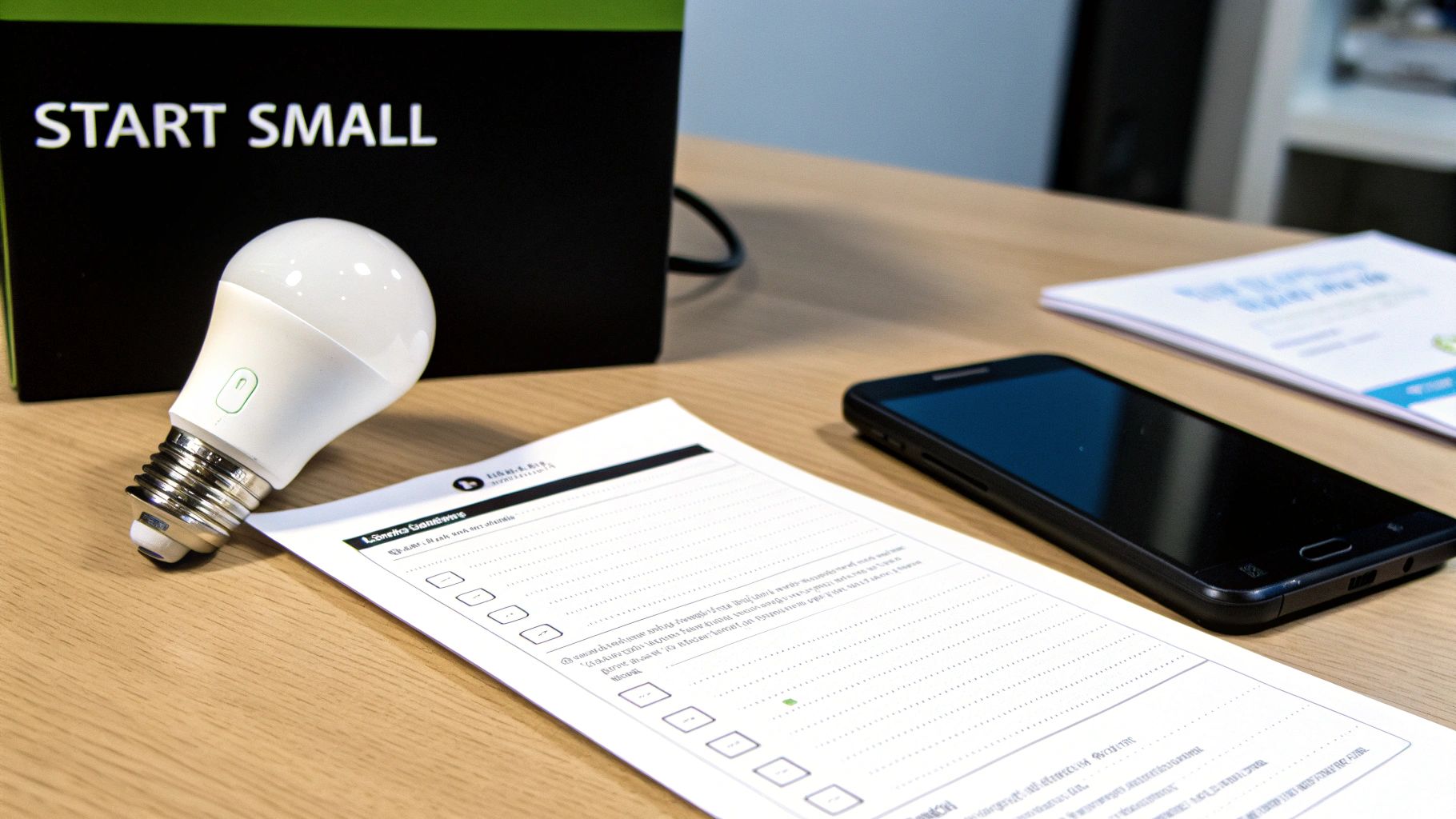
Jumping into smart home tech can seem overwhelming, but it really doesn't have to be. The best way to get started without the stress is to follow one simple rule: think small and solve one problem at a time. Forget about a complete high-tech overhaul of your house. Instead, pick a single, nagging annoyance you'd love to eliminate.
This approach makes the entire process feel more manageable and gives you an immediate win. For example, if you’re constantly fumbling for keys in the dark, a smart lock is a perfect first project. If you want to stop wasting money on heating an empty house, a smart thermostat offers a clear, tangible return on your investment.
By starting with just one goal, you get to learn the ropes, see the real-world benefits for yourself, and build confidence before you even think about expanding.
Choosing Your Core Ecosystem
Before you buy a single gadget, you need to pick your team captain—your smart home ecosystem. This is the central platform that lets all your different devices talk to each other and work together. Think of it like choosing an operating system for your home, similar to picking iOS or Android for your phone.
The big three players in this field are:
- Amazon Alexa: Incredibly popular and works with a massive number of other companies' devices, making it super versatile. The Echo speakers are fantastic voice-controlled hubs.
- Google Home (Google Assistant): Leverages Google's powerful search AI for incredibly natural and intuitive voice commands. The Google Nest Hub devices are a great command center for your home.
- Apple HomeKit: Known for its tight security and focus on user privacy. As you'd expect, it integrates beautifully if you're already in the Apple ecosystem.
Making this decision early saves you the future headache of owning a bunch of smart devices that refuse to work together. It sets the foundation for every purchase you make from here on out.
Your Pre-Purchase Planning Checklist
A little bit of planning now will save you a lot of frustration later. Before you hit that "buy" button on your first device, take a few minutes to run through this checklist. It’s a crucial part of setting up a smart home that you’ll actually enjoy using.
Your first smart device shouldn’t just be a cool gadget; it should be a practical solution to a daily annoyance. The most successful smart homes are built one solution at a time, addressing real needs with the right technology.
Here’s a simple game plan:
- Identify Your Primary Goal: What’s the number one thing you want to accomplish? Better security? More convenient lighting? Lower energy bills? Get specific.
- Set a Realistic Budget: You don't need to spend a fortune. You can get started with a single smart plug for under $20 or a video doorbell for around $100. Decide what you're comfortable spending on this first step.
- Check Your Wi-Fi Signal: Most smart devices need a solid Wi-Fi connection to work reliably. Walk around with your phone and check the signal strength right where you plan to install your new gear. If it's weak, you might need a simple Wi-Fi extender.
- Research Product Compatibility: Once you've picked your ecosystem (Alexa, Google, or Apple), double-check that any device you're considering is compatible. Look for the "Works with Alexa" or similar logos on the box or in the online description.
Following these simple steps turns the big, abstract concept of a "smart home" into a fun, rewarding, and totally achievable project.
What's Next for Smart Home Technology?
If you think smart speakers and video doorbells are the final word on smart homes, think again. We're moving past the era of individual gadgets and into a future where our homes become truly intuitive living spaces. The next wave isn't about giving commands; it's about building intelligent systems that anticipate our needs, sometimes before we even realize them ourselves.
This isn't just a niche hobby anymore. The market is booming, projected to hit USD 147.52 billion in 2025 and an astonishing USD 848.47 billion by 2034. That's a compound annual growth rate of 21.40%, fueled by giants like Alphabet and Samsung who are pouring resources into AI and IoT to solve real-world problems for homeowners. A detailed market analysis shows just how fast this space is growing.
The Dawn of Hyper-Personalization
One of the most exciting shifts on the horizon is hyper-personalization. This is where AI graduates from simple "if this, then that" rules and starts learning the actual rhythm of your household—your habits, your preferences, your quirks.
Imagine your home just knows you sleep poorly when the bedroom is a degree too warm. Instead of you fumbling with a thermostat app at 3 a.m., it learns from your restless nights and proactively nudges the temperature down. That's the promise: a home that subtly adapts to you, crafting the perfect environment without you having to lift a finger.
Making Technology Invisible with Ambient Computing
Another major trend is ambient computing. The goal here is simple but profound: to make technology so seamlessly woven into our environment that it effectively disappears. You stop thinking about interacting with a "device" because the intelligence is just there—in the walls, the furniture, and the very structure of the home.
The ultimate smart home is one you don't have to think about. Technology becomes a quiet, helpful partner that works in the background, making life smoother without demanding your attention.
Think of a kitchen countertop that can display a recipe right where you're prepping, or a living room wall that subtly changes its color temperature to help you wind down in the evening. This is where we're headed—an environment where help is always available but never in your face.
Finally, the home of the future will become a center for personal health and wellness. We're already seeing the first steps with devices that track air quality or monitor sleep cycles. Soon, integrated, non-intrusive sensors could keep an eye on vitals, offering priceless health insights for you and providing peace of mind for your loved ones. The home is evolving from a place of simple convenience to a proactive partner in keeping us healthy.
Got Questions? We've Got Answers
Diving into the world of smart homes can bring up a few questions. It's totally normal. Let's tackle some of the most common ones so you can get started with confidence.
Do I Need to Be a Tech Guru to Set Up a Smart Home?
Not at all. If you can use a smartphone, you can set up a smart home. These days, most devices are designed with simplicity in mind. They come with easy-to-follow mobile apps that walk you through every step, usually getting you up and running in just a few minutes.
A great way to dip your toes in is with a starter kit from a big player like Amazon Alexa or Google Home. These bundles typically include a smart speaker and a couple of other gadgets, like smart plugs or light bulbs, that are guaranteed to work together flawlessly right from the start.
Is This Going to Cost a Fortune?
That’s a myth we need to bust right now. You absolutely could spend a fortune on a high-end, professionally installed system, but you definitely don't have to. You can get your first smart device for the price of a few coffees—a single smart plug can be had for as little as $10, and a pack of smart bulbs often costs less than $30.
The trick is to start small. Pick one thing you want to improve—maybe automating a lamp or controlling your thermostat from bed. Once you see how useful it is, you can add more devices as your budget allows. It’s a project that can grow with you.
How Safe Is My Data with All These Connected Devices?
Security is a big deal, and it's a valid concern. The good news is that keeping your smart home secure is well within your control. Reputable manufacturers build in encryption to protect your data, but the most important security features are the habits you build. It’s just like locking the front door of your house.
Here are a few simple but powerful things you can do to lock down your system:
- Use strong, unique passwords for your Wi-Fi network and for every smart home app. No repeats!
- Turn on two-factor authentication (2FA) everywhere it's available. It’s one of the best defenses you have.
- Always install firmware updates for your devices as soon as they’re released. These often contain critical security patches.
Think of smart home security less like a complex technical challenge and more like basic digital hygiene. A few good habits, like using strong passwords and keeping things updated, go a long way in protecting your privacy so you can enjoy the convenience without the worry.
Can I Use Devices from Different Brands Together?
You sure can, but it pays to have a plan. This is where a central hub or ecosystem—like Alexa, Google Home, or Apple HomeKit—really shines. The hub acts as the "team captain," telling devices from different brands how to talk to each other and work together.
Even better, keep an eye out for devices that support Matter. It’s a newer industry standard designed to solve this exact problem, making it much easier for all your smart gadgets to play nicely together, regardless of who made them.
At Automated Home Guide, our goal is to cut through the jargon and help you create a home that’s smarter, safer, and more in tune with your life. For more in-depth advice, check out our expert guides and product reviews at https://automatedhomeguide.com.
Leave a Reply