So, what exactly is a "smart home device"? In simple terms, it's any gadget in your house that can connect to the internet and be controlled remotely. Think of the everyday things you already own—like your light bulbs, thermostat, or door locks—but with a digital upgrade that lets you manage them from your phone or with a simple voice command.
This isn't just tech for tech's sake; it’s about making your home more convenient, secure, and even a bit more energy-efficient.
Your Home Is Ready for a Smart Upgrade
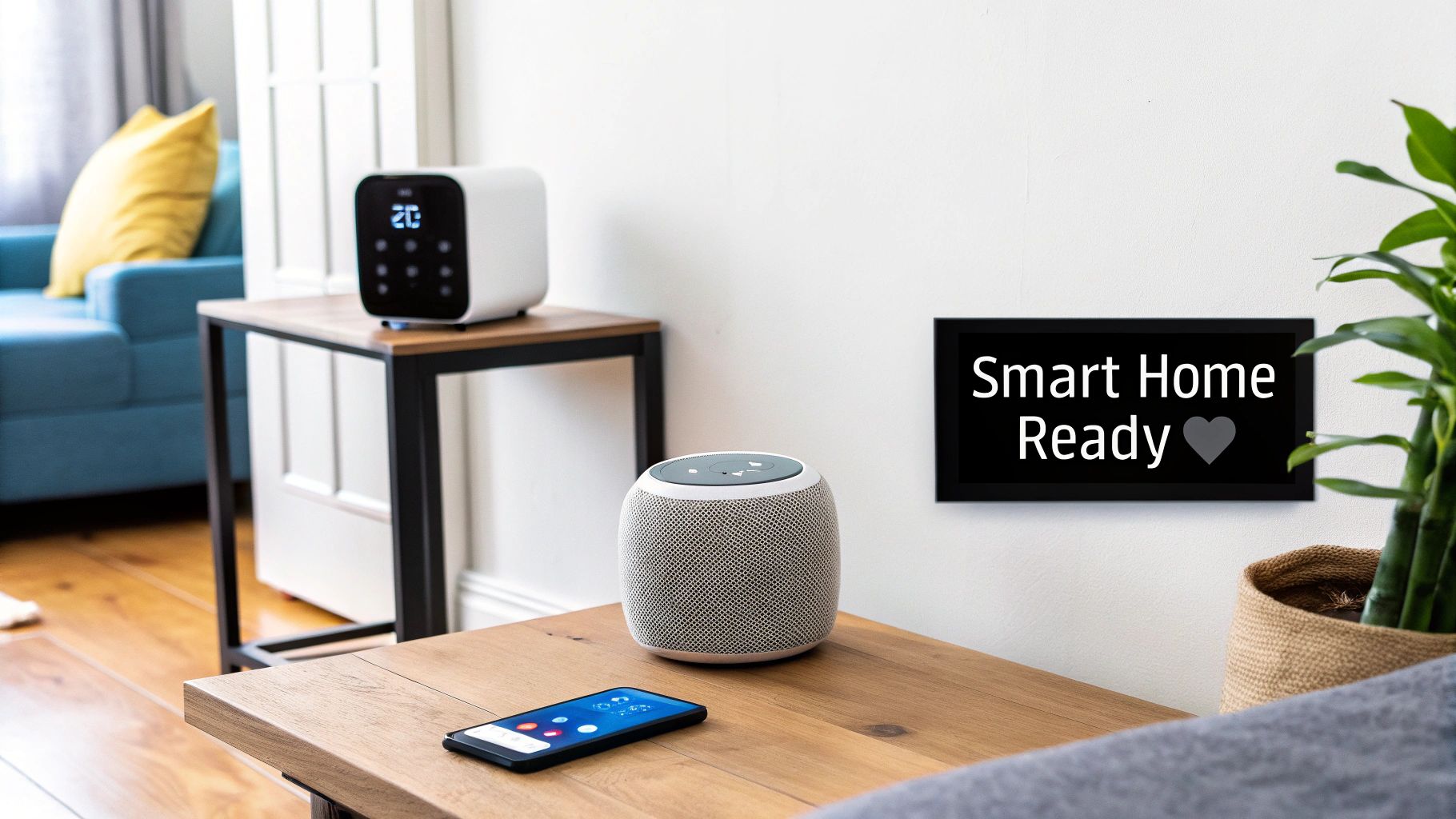
Picture your home as more than just a physical structure. Imagine it as a responsive environment that adapts to your daily rhythms. A traditional house is a bit like a classic car—it does its job reliably, but every function requires you to manually flip a switch or turn a key. A smart home, on the other hand, is like a modern car with cruise control and climate control; it handles the little things for you, making the entire experience smoother.
This is the real magic behind smart home technology. It's not some far-off concept from a sci-fi movie anymore; it's a practical and accessible upgrade for any home. By linking different devices together, you can create routines that simplify your life in ways that just weren't possible before.
What Makes a Home "Smart"?
At its core, a smart home relies on a few fundamental ideas that allow all your devices to work in harmony. Getting a handle on these concepts makes it much easier to understand how everything fits together.
- Interconnectivity: This is the big one. It simply means your devices can talk to each other and a central point, like an app on your phone or a smart speaker.
- Automation: Here's where the fun begins. You can create simple rules or "recipes" that trigger actions automatically. For instance, when your smart lock registers you've arrived home, it can tell your lights to turn on and your thermostat to adjust to your favorite temperature.
- Remote Control: This gives you the power to check in and manage your home from anywhere with an internet connection. Forget to turn off the coffee pot? Just open an app and take care of it from the office.
Thinking about bringing these modern comforts into an older space? There are plenty of clever ways of incorporating smart home technology into renovations without losing the character of the home.
To make these ideas even clearer, here's a quick breakdown of the essential terms.
Key Smart Home Concepts at a Glance
This table breaks down the essential components that make a smart home work, defining each term in simple language.
| Concept | Simple Explanation |
|---|---|
| Smart Device | A regular household item (like a plug or bulb) with internet connectivity. |
| Hub / Controller | The "brain" of your system. It's a central device that connects and manages all your other smart gadgets. |
| Protocol | The "language" devices use to talk to each other, like Wi-Fi, Zigbee, or Z-Wave. |
| App | Your command center. It's the software on your phone or tablet that lets you control everything. |
| Scene / Routine | A pre-set combination of actions. For example, a "Movie Night" scene might dim the lights and turn on the TV. |
| Voice Assistant | A hands-free way to control your home using commands, like Amazon Alexa or Google Assistant. |
Understanding these building blocks shows you how a collection of individual gadgets comes together to form a truly connected and helpful home environment.
A truly helpful home is one where all devices work together, no matter who made them. This principle is driving the industry toward creating more unified and user-friendly systems for everyone.
This interconnected ecosystem is what really separates a smart home from just a house with a few cool gadgets. It’s about creating a cohesive system that works for you, simplifies daily tasks, and offers genuine peace of mind.
How Your Smart Devices Talk to Each Other
Ever wondered how your smart speaker knows to turn on a lamp across the room the second you ask? It’s not magic—it's a carefully choreographed conversation happening behind the scenes. For your collection of smart gadgets to work as a single, cohesive system, they all need to speak a common language or have a really good translator.
This digital chatter is all part of the Internet of Things (IoT). The best way to think of the IoT is as the nervous system for your smart home. It's the sprawling network connecting everyday objects, from your thermostat to your doorbell, to the internet so they can send and receive data. This constant back-and-forth is what makes remote control and automation possible.
The Languages of Smart Devices
Just like people from different countries speak different languages, smart devices communicate using various methods called protocols. These are the rules of the road for sending and receiving signals, and they impact everything from a device's range and speed to how much power it drains.
You'll most often run into these three protocols:
- Wi-Fi: You already know this one—it’s what connects your phone and laptop to the internet. Wi-Fi is fast and powerful, which is perfect for devices that handle a lot of data, like a video doorbell or a smart TV. The trade-off? It can be a bit of a power hog.
- Zigbee: This protocol creates a clever "mesh network" where devices can pass signals along to each other. If a sensor is too far from the main hub, the signal can just hop through a closer device to get where it needs to go. It sips power, making it a fantastic choice for small, battery-operated sensors.
- Z-Wave: Z-Wave works a lot like Zigbee, using a low-energy mesh network. Its main advantage is that it operates on a completely different radio frequency from Wi-Fi, so there’s less chance of it getting bogged down by interference from all your other wireless gadgets.
Each of these has its own place in a smart home. To dive deeper into how they stack up, check out our guide on the different types of smart home protocol.
The Role of the Smart Hub
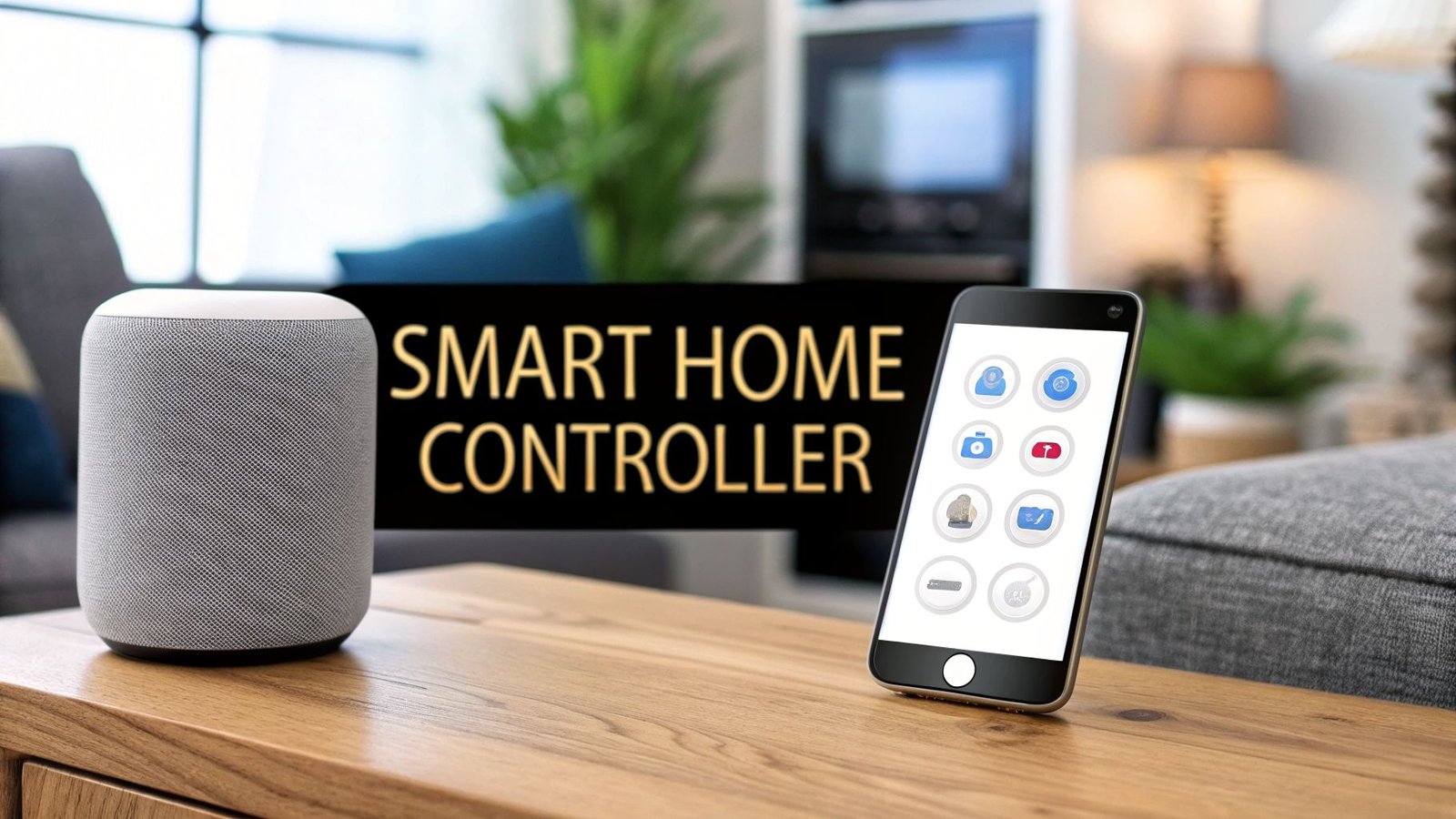
So if all these devices are speaking different languages, how do you get them to understand each other? That's where a smart hub enters the picture. Think of your hub—whether it's an Amazon Echo, Google Nest Hub, or Apple HomePod—as the central translator and conductor for your entire smart home orchestra.
A smart hub is the brain of your connected home. It takes a command from you, translates it into the right language for the specific device, and makes sure your request is executed perfectly.
Let's say you tell your voice assistant, "Turn on the living room lamp." Your speaker (the hub) hears that command. It then shoots a signal out using the correct protocol—maybe Zigbee in this case—to the smart plug your lamp is connected to, telling it to power on. Without that central coordinator, your command would just go out into thin air, never reaching the lamp. This is what turns a pile of cool gadgets into a truly seamless, integrated smart home.
Exploring Popular Smart Home Device Categories
The smart home universe is huge, and it's about a lot more than just telling your lights to turn on. The best way to get a handle on it all is to think about these gadgets in terms of what they actually do for you.
Think of it like this: your home has different jobs to do—keeping you safe, comfortable, and entertained. Smart devices are just the specialized tools for those jobs. From watching over your front porch to creating the perfect vibe for movie night, there’s a smart gadget for almost anything you can think of.
Let's dive into the main areas where these devices are making life easier.
Security and Access
For most people, this is the first step into building a smart home. It’s all about peace of mind and knowing you can check in on your house from anywhere.
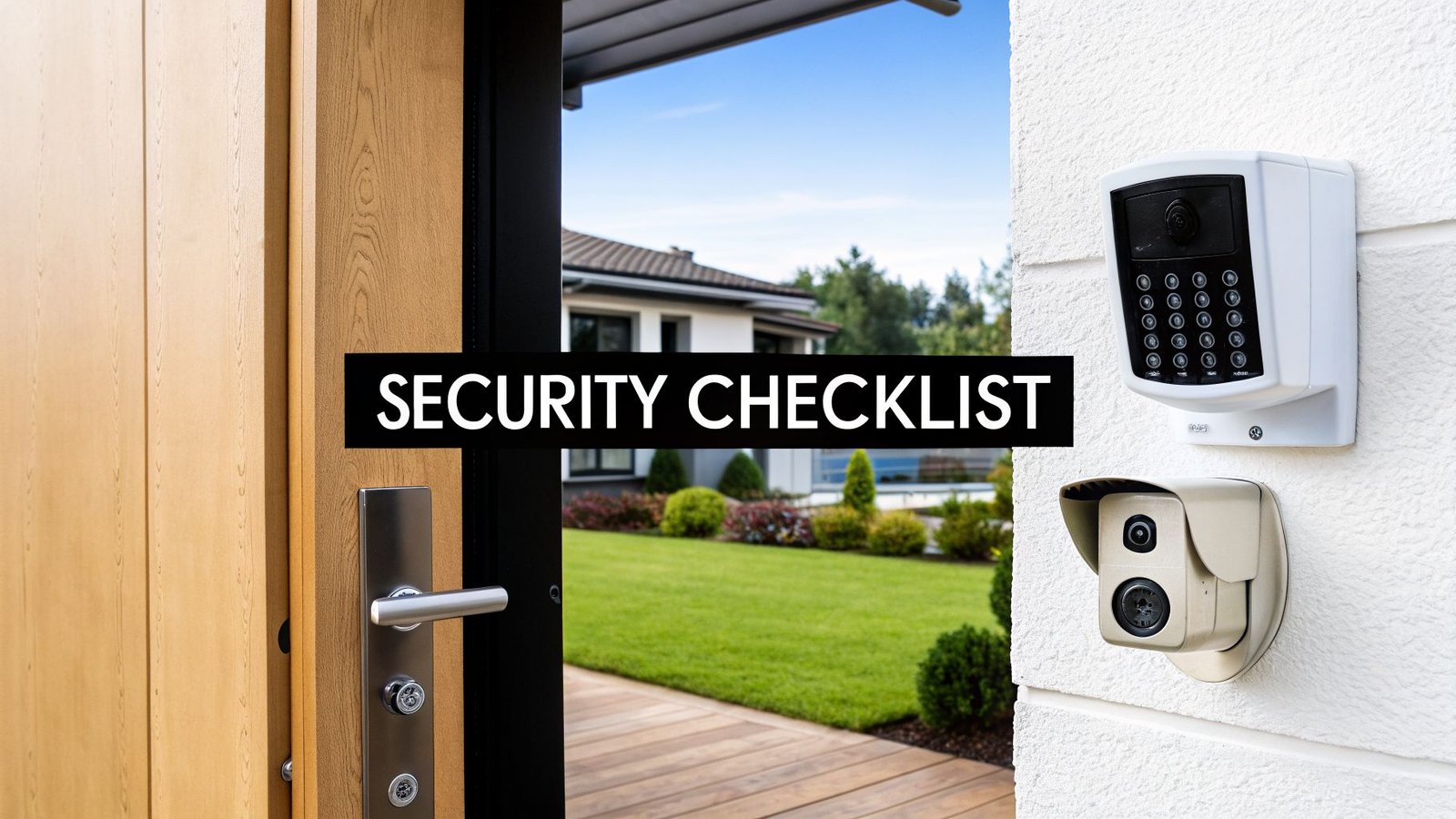
- Smart Doorbells and Cameras: These let you see who’s at the door, get an alert when a package is dropped off, and even talk to a visitor through your phone—whether you're upstairs or on vacation.
- Smart Locks: Forget to lock the door on your way out? No problem. You can lock it from your phone. You can also give a temporary code to a friend or dog walker and get a notification when they arrive and leave.
These devices are basically your home's digital gatekeepers. They give you a level of awareness that a simple deadbolt and peephole could never offer.
The infographic below shows how these devices (and others) talk to each other behind the scenes.
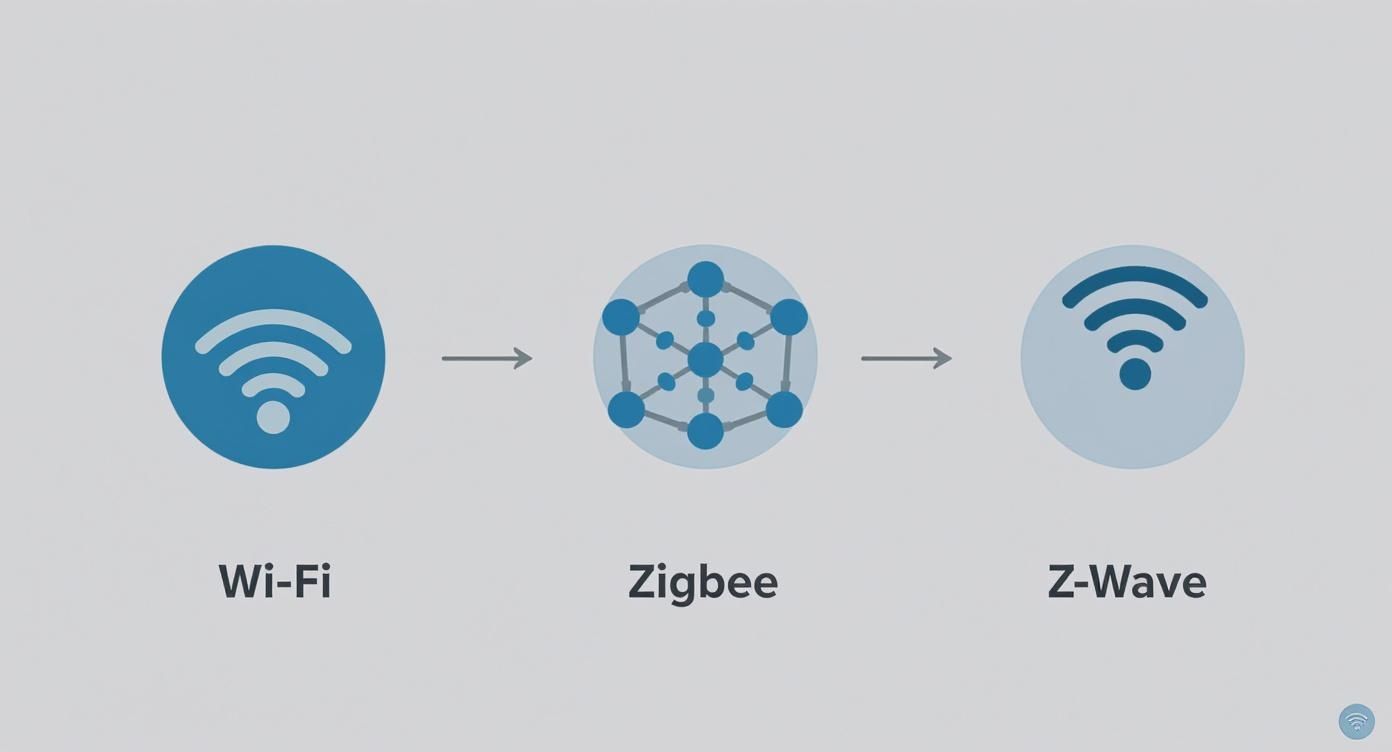
This gives you a peek at the invisible network—protocols like Wi-Fi, Zigbee, and Z-Wave—that your smart home runs on.
Climate Control and Lighting
This is where smart tech really shines, offering a one-two punch of comfort and energy savings.
A smart thermostat quickly learns your daily routine and adjusts the temperature on its own, so you stop wasting money heating or cooling an empty house. Smart lights let you schedule when they turn on, dim them down for a movie, or even change their color to match the mood.
People are clearly catching on. Smart lighting has already found its way into 38% of American homes, with smart thermostats not far behind at 28%. These aren't just gadgets; they're becoming the new standard for an efficient, automated home.
Entertainment and Lifestyle
Beyond the purely practical, smart devices are here to make life more enjoyable. Just look at smart speakers—they're now a staple in 72 million US households, acting as a command center for playing music, getting quick answers, and controlling everything else.
This category is a fun one. It includes everything from smart TVs that make streaming a breeze to robot vacuums that do the dirty work for you. It even extends to personal wellness; for example, smart alarm clocks like the Hatch use a combination of light and sound to help you wake up more naturally.
With so much out there, it can be tough to know where to start. If you're looking for recommendations, check out our guide on the best smart home devices to find the perfect fit for your home and lifestyle.
The Real-World Payoffs of a Smarter Home
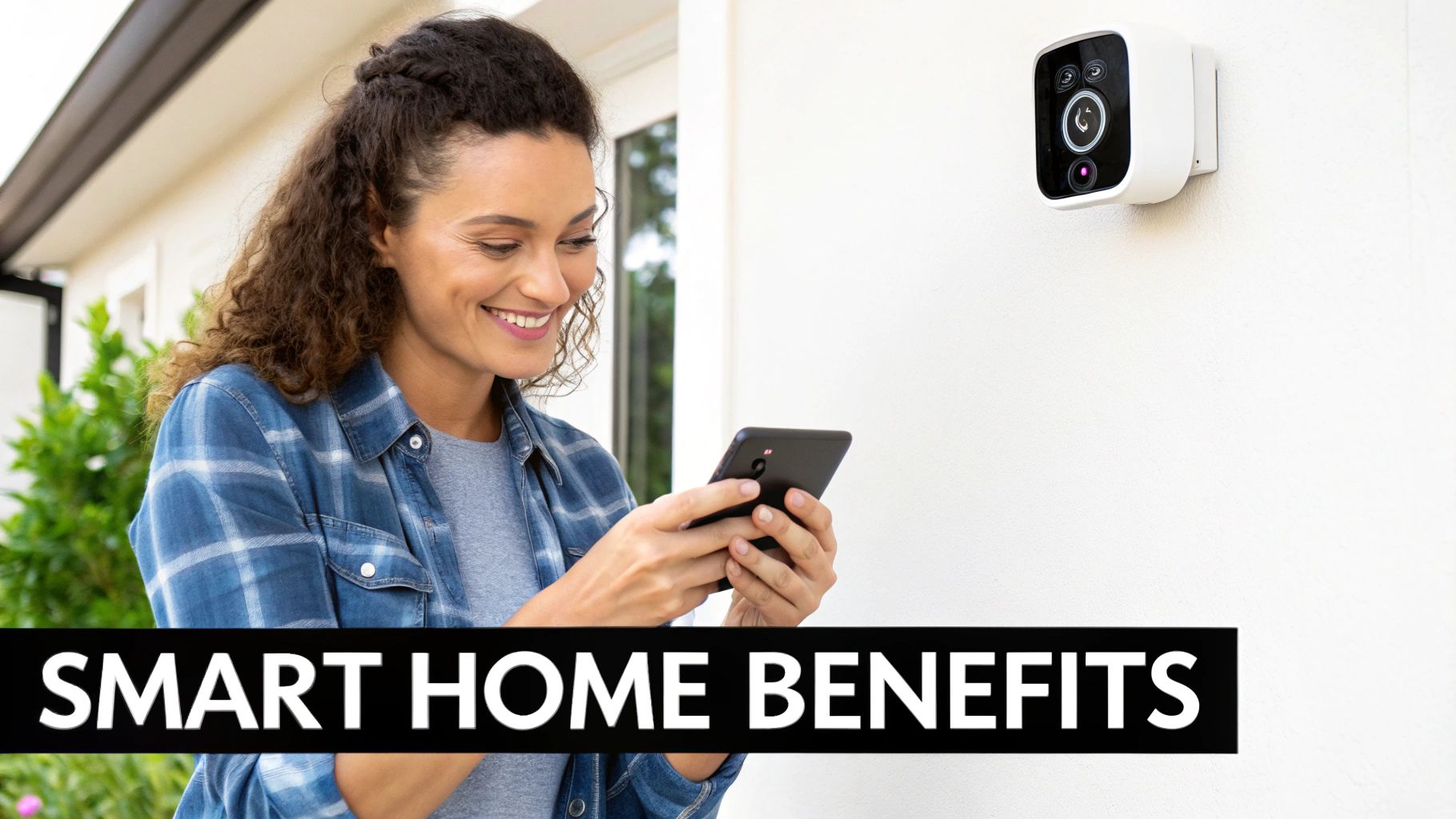
It’s easy to get caught up in the cool factor of turning on your lights with a voice command, but what do smart home devices really do for you? When you get down to it, they’re designed to solve real, everyday problems, making your home a more convenient, secure, and efficient place to live.
Think about your morning routine. What if it just… happened? Your lights could gently fade on to wake you, the thermostat could warm the house to the perfect temperature, and the coffee maker could start brewing—all before your alarm even thinks about going off. That’s the kind of seamless automation we’re talking about. It’s all about removing those tiny bits of friction from your day so you can focus on what actually matters.
This isn't just a niche hobby anymore, either. The demand for this kind of convenience is driving a massive market. The global smart home industry was valued at USD 127.80 billion in 2024 and is projected to explode to over USD 537 billion by 2030. A huge part of that growth comes from people adding smart tech to their existing houses, proving that you don’t need a new build to get in on the action. You can dig into more of these smart home market trends to see just how fast things are moving.
Total Convenience and Control
At its core, a smart home puts you firmly in control. It's the simple power to unlock the front door for a family member while you’re still stuck at the office, or the ability to double-check that you did turn off the kitchen lights without having to get out of bed.
These little moments of remote control add up. They simplify daily chores and clear out some of that mental clutter we all carry around. It’s less about having flashy gadgets and more about making your home work for you.
Better Security and Real Peace of Mind
For many people, the biggest draw of smart technology is the incredible peace of mind it offers. With a few key security devices, you can wrap a digital safety net around your home.
A smart home security system isn't just about blaring alarms; it's about awareness. It gives you a live window into your home, letting you see and respond to what's happening in real-time, no matter where you are.
A video doorbell, for instance, doesn't just show you who’s there—it lets you talk to the delivery person and make sure your package is left in a safe spot. Indoor cameras can let you check in on your pets while you're at work. This constant connection provides a feeling of security that old-school alarm systems just can't touch.
Real Savings on Your Energy Bills
Smart thermostats and lighting aren't just for show—they're incredibly efficient. A good smart thermostat quickly learns your daily routine and adjusts the temperature automatically when you leave, so you're not burning money heating or cooling an empty house. Likewise, smart plugs can kill power to "vampire" electronics that suck up energy even when turned off.
These small, automated tweaks can lead to some serious savings over time. It’s not uncommon for people to cut their heating and cooling costs by 10-15%, turning these smart devices into an investment that eventually pays for itself.
How to Start Your Smart Home Journey
Jumping into the world of smart home tech can feel overwhelming, but it really doesn't have to be. The secret to getting it right is to start small and expand over time. Trying to automate your entire home in one go is a surefire way to get frustrated and empty your wallet fast.
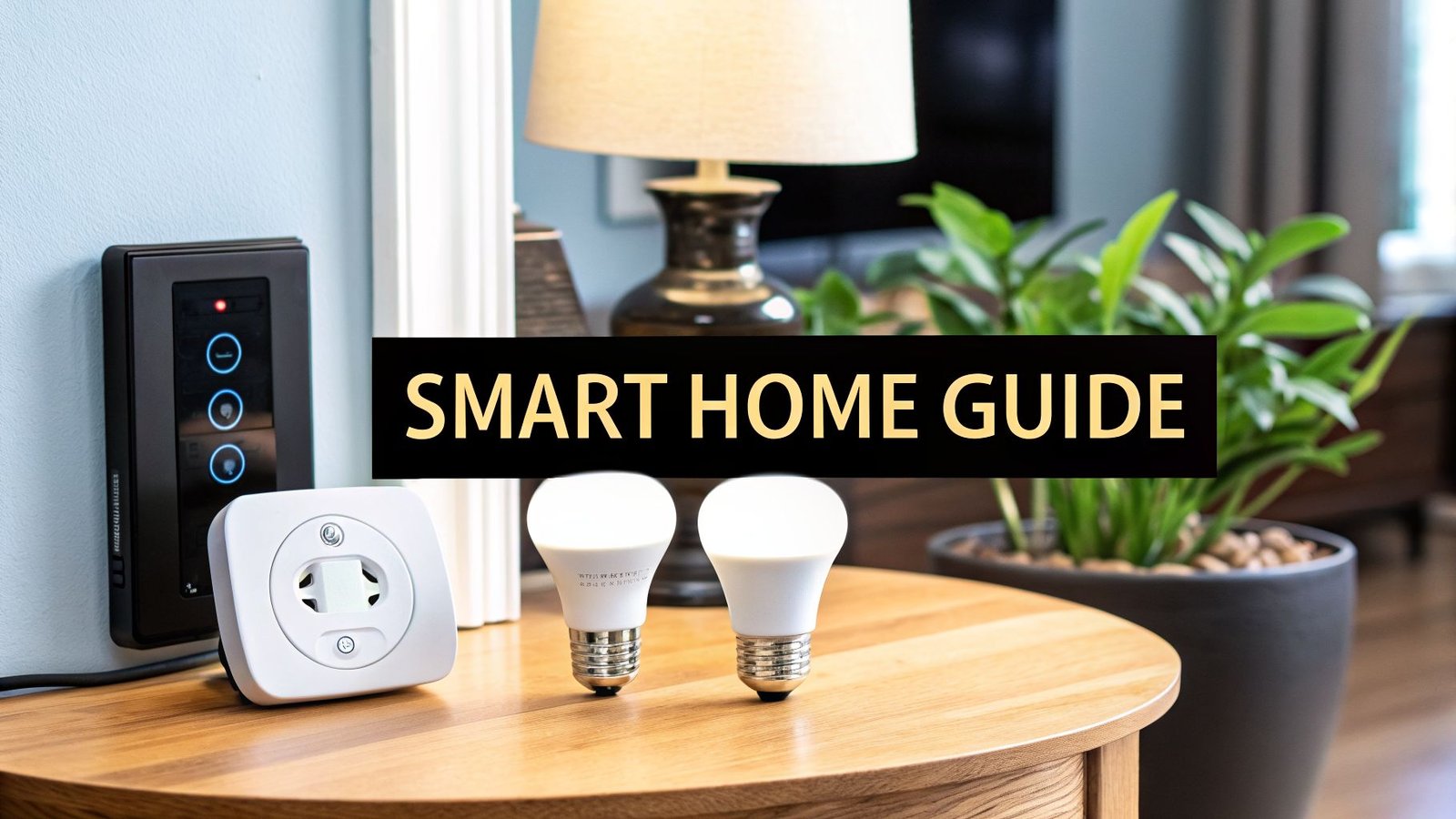
Instead, treat it like a simple, one-room project. Pick one small annoyance you want to fix. Tired of stumbling around in the dark looking for a light switch? A couple of smart bulbs are a great first buy. Wish you could get the coffee maker going while you’re still in bed? A smart plug is your new best friend. This method lets you get comfortable with the technology with a low-stakes, high-reward gadget.
Choosing Your Core Ecosystem
Before you buy a single thing, you need to decide which "team" you're on. Think of a smart home ecosystem as the operating system for your house, much like your phone uses iOS or Android. The three major players are Amazon Alexa, Google Assistant, and Apple HomeKit. Each one acts as the central brain, letting you manage different devices from a single app.
Your best move is to choose the ecosystem you already know and use. If you're an iPhone and Apple Watch user, HomeKit will feel like a natural extension. If you're already asking a Google Nest speaker to play music and set timers, sticking with Google Assistant is a no-brainer. This is the most important decision you'll make early on, as it will shape all your future device purchases.
The Golden Rule of Compatibility
Once you’ve settled on an ecosystem, the next step is absolutely critical: always check for compatibility before you buy anything. That cool smart lock that only works with Apple HomeKit is useless if your home runs on Amazon Alexa. Keep an eye out for logos and labels that say "Works with Alexa," "Works with Google Home," or "Works with Apple Home" on the box or in the online product description.
Compatibility is the glue that holds a smart home together. Without it, you’ll just end up with a pile of disconnected gadgets instead of a truly helpful, automated system.
To simplify things, it's worth checking out a detailed smart home hub comparison that shows which devices play nicely with each major platform. A little research now will save you a ton of headaches down the road.
DIY or Professional Installation
Finally, think about how you'll get it all set up. The good news is that most smart home devices—like plugs, bulbs, and speakers—are designed for incredibly easy DIY installation. You can usually get them up and running in a few minutes with just your smartphone.
However, for more involved tasks like installing a smart thermostat or hardwiring a smart light switch, you might be more comfortable calling in a pro. There’s no wrong answer here; it all boils down to your comfort level with basic wiring and your budget. By following these simple steps, you can turn the concept of a "smart home" into a fun and achievable reality.
Got Questions About Smart Homes? Let's Clear Things Up.
Jumping into the world of smart home tech is exciting, but it's totally normal to have a few questions pop up. It's smart to think through the practical stuff, like security or what happens when your Wi-Fi inevitably decides to take a break. Getting straight answers to these common worries is the best way to build a connected home you can actually trust and enjoy.
And it seems like more and more people are asking these same questions. The U.S. smart home market was valued at around USD 36.38 billion in 2024 and is predicted to explode to nearly USD 403.09 billion by 2034. That kind of growth tells you just how much this technology is becoming a part of our daily lives. You can get a closer look at this expansion and see what’s driving the smart home market.
So, let's tackle some of the most common questions head-on.
Are Smart Home Devices Actually Secure?
This is usually the first thing people ask, and it's a big one. Giving a device control over your locks, lights, and cameras requires a ton of trust. The good news? Reputable brands take this stuff very seriously and build in features like data encryption to keep your information safe.
But security is a two-way street—you have a role to play, too. Here are a few simple habits that make a huge difference:
- Use Strong, Unique Passwords: Don't reuse your dog's name for everything. Create a complex, unique password for your Wi-Fi and smart home apps.
- Turn On Two-Factor Authentication (2FA): It's a game-changer. This adds a second layer of security, usually a code sent to your phone, to stop unwanted logins.
- Keep Your Devices Updated: Those firmware updates aren't just for new features; they often contain crucial security patches. If you can, set them to update automatically.
Taking these small steps goes a long way in beefing up your home's digital defenses.
Do All These Gadgets Work Together?
I wish I could say yes, but honestly, not always. Compatibility can be one of the biggest headaches when you're just starting out. For devices to communicate, they need to speak the same language (a protocol) or be part of the same team (an ecosystem).
Think of it like trying to use an American plug in a European socket—it just won't fit without an adapter. In the smart home world, your "adapter" is a central hub or ecosystem, like Amazon Alexa, Google Home, or Apple HomeKit.
Before you buy anything, look for a "Works with…" logo on the box. This simple check can save you from a major headache by ensuring the new gadget will play nice with the gear you already own.
There's also a new standard on the horizon called Matter, which aims to fix this problem for good. The goal is to make all smart devices work together seamlessly, no matter who made them.
What Happens If My Internet Dies?
A power outage or a spotty internet connection can feel like a major problem for a smart home, but it’s not always a disaster. What happens next really depends on the device.
Many gadgets, especially ones that lean heavily on voice commands or remote app control, will lose their "smart" features. Your smart speaker won't be able to tell you the weather, and you won't be able to pull up your camera feed on your phone.
But the essentials are usually designed with a backup plan. You can still flip a smart light switch on and off by hand, and most smart locks have a good old-fashioned keyhole. Some higher-end security systems even have cellular or battery backups, so they can keep doing their basic job until your connection comes back online.
At Automated Home Guide, our mission is to provide you with the clear, practical information you need to build a smarter, safer, and more convenient home. Discover expert reviews, in-depth guides, and the latest insights at https://automatedhomeguide.com.

Leave a Reply