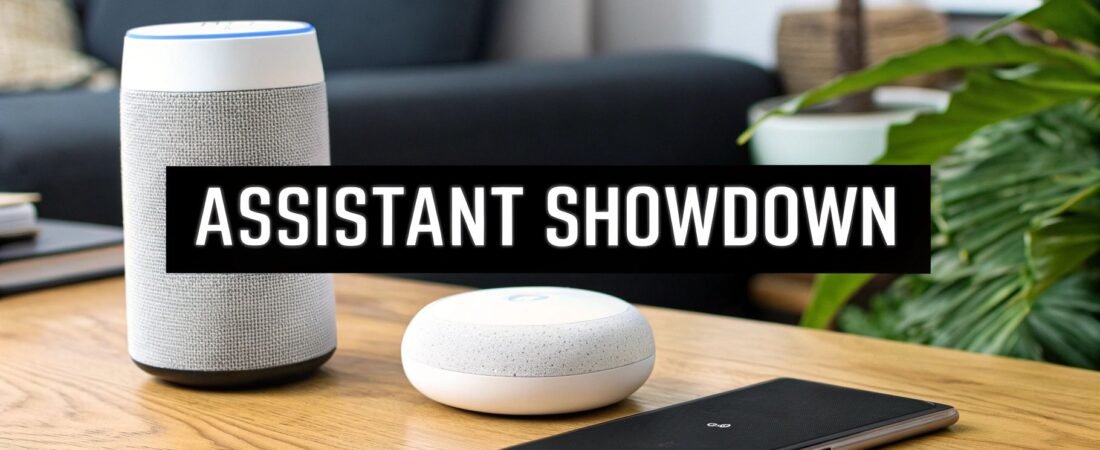
When you get down to it, the big three smart assistants are built on completely different philosophies. Google Assistant is all about intelligence, leaning on Google's search empire to be the smartest in the room. Amazon Alexa is the ultimate connector, focusing on a massive ecosystem of third-party devices. And Apple Siri? It’s all about privacy, operating securely within Apple's walled garden.
Your best choice really hinges on what you value most: raw knowledge, endless compatibility, or tight security.
The Smart Assistant Showdown: A Quick Comparison
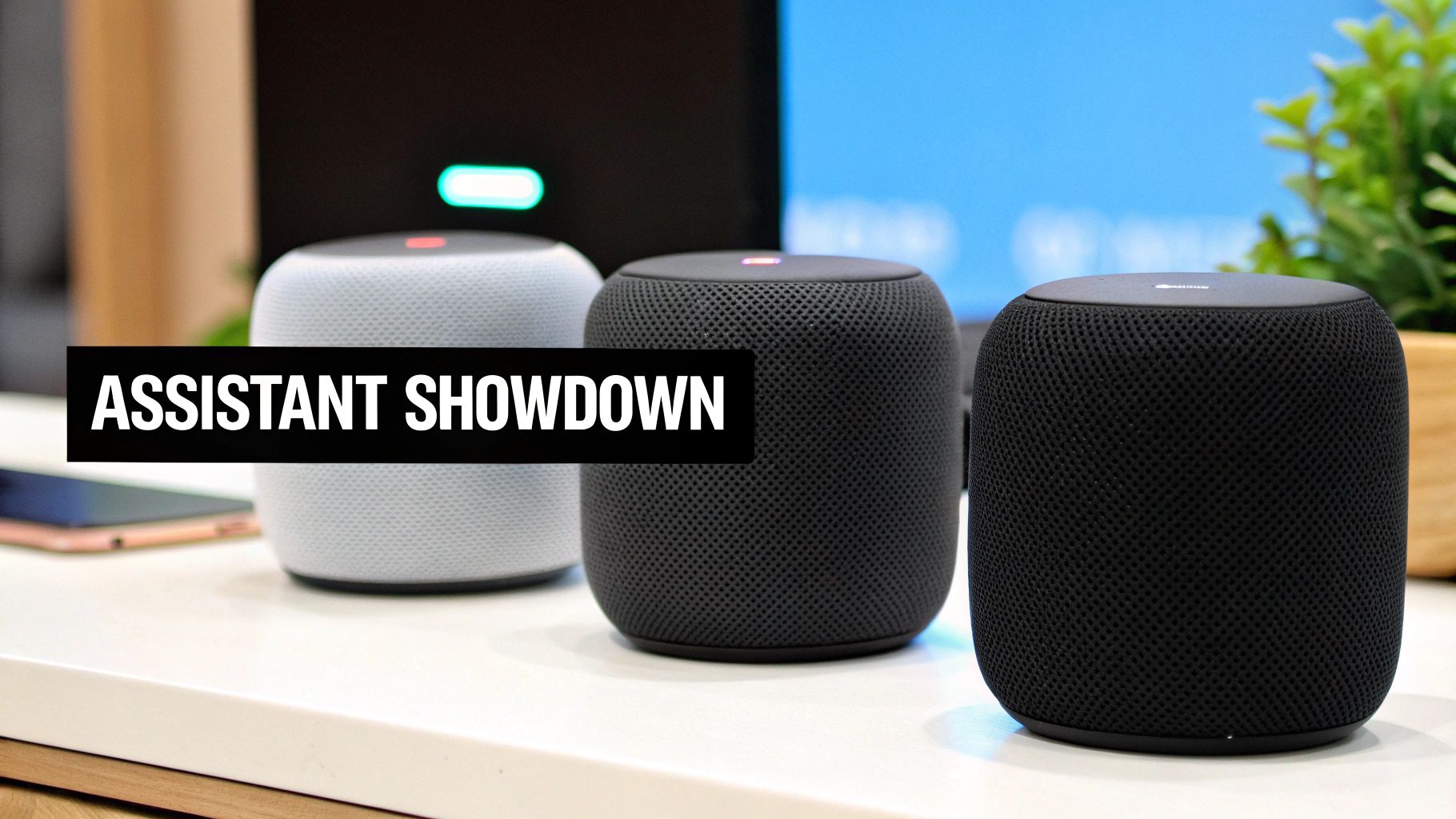
Picking a digital assistant isn't just about buying a new speaker. You're choosing the central command hub for your smart home, and the "Google vs. Alexa vs. Siri" debate goes way beyond who can tell a better joke. It's about which one fits your life, your tech, and your priorities.
Each assistant clearly inherited its parent company's DNA. Google Assistant is the brainy conversationalist, tapping into the planet's biggest library of information to handle complex, multi-part questions like a champ. If you're someone who constantly asks "why" and "how," Google is your guy.
Then there's Amazon's Alexa, the ultimate project manager for your home. Its real power isn't in deep conversation but in getting things done. Thanks to tens of thousands of "Skills" and the widest support for smart home gadgets on the market, Alexa is the go-to for anyone wanting to build a truly connected home.
Finally, Apple's Siri is the privacy guardian. It’s woven deeply into the fabric of the Apple ecosystem—your iPhone, Mac, and Apple Watch—creating a seamless and secure experience for those already all-in on Apple. It might not work with as many third-party gadgets, but its focus on privacy and on-device processing is a huge plus for many.
Understanding the Core Philosophies
To really get a feel for them, just look at their core missions. It tells you everything you need to know.
- Google Assistant: Wants to be your personal Google, organizing information and making it available through natural conversation.
- Amazon Alexa: Aims for an "ambient computing" world where technology just works in the background, powered by a huge marketplace of skills and devices.
- Apple Siri: Built to be a private assistant that works flawlessly and securely across all your Apple hardware.
These different approaches shape everything, from how they handle your data to the routines you can build. Before we dive deep, here’s a quick look at who comes out on top in the most critical areas.
Quick Verdict: Who Wins in Key Categories?
This table sums up which assistant leads the pack in the categories that matter most for smart home users.
| Category | Winner | Reasoning |
|---|---|---|
| Conversational Intelligence | Google Assistant | It’s just better at understanding context and follow-up questions, pulling detailed and accurate answers directly from its search knowledge. |
| Smart Home Compatibility | Amazon Alexa | The undisputed champion. Alexa boasts the largest ecosystem of compatible third-party devices and thousands of developer-created Skills. |
| Privacy and Security | Apple Siri | Apple’s business model doesn’t rely on ad data, and its heavy focus on on-device processing gives it a clear edge in privacy. |
| Routine Automation | Amazon Alexa | The Alexa app offers a more powerful and intuitive way to build complex, multi-step routines with more device triggers to choose from. |
While each has its strengths, this gives you a starting point for figuring out which assistant aligns best with your smart home vision.
Device Compatibility: Who Plays Nicest With Your Gear?
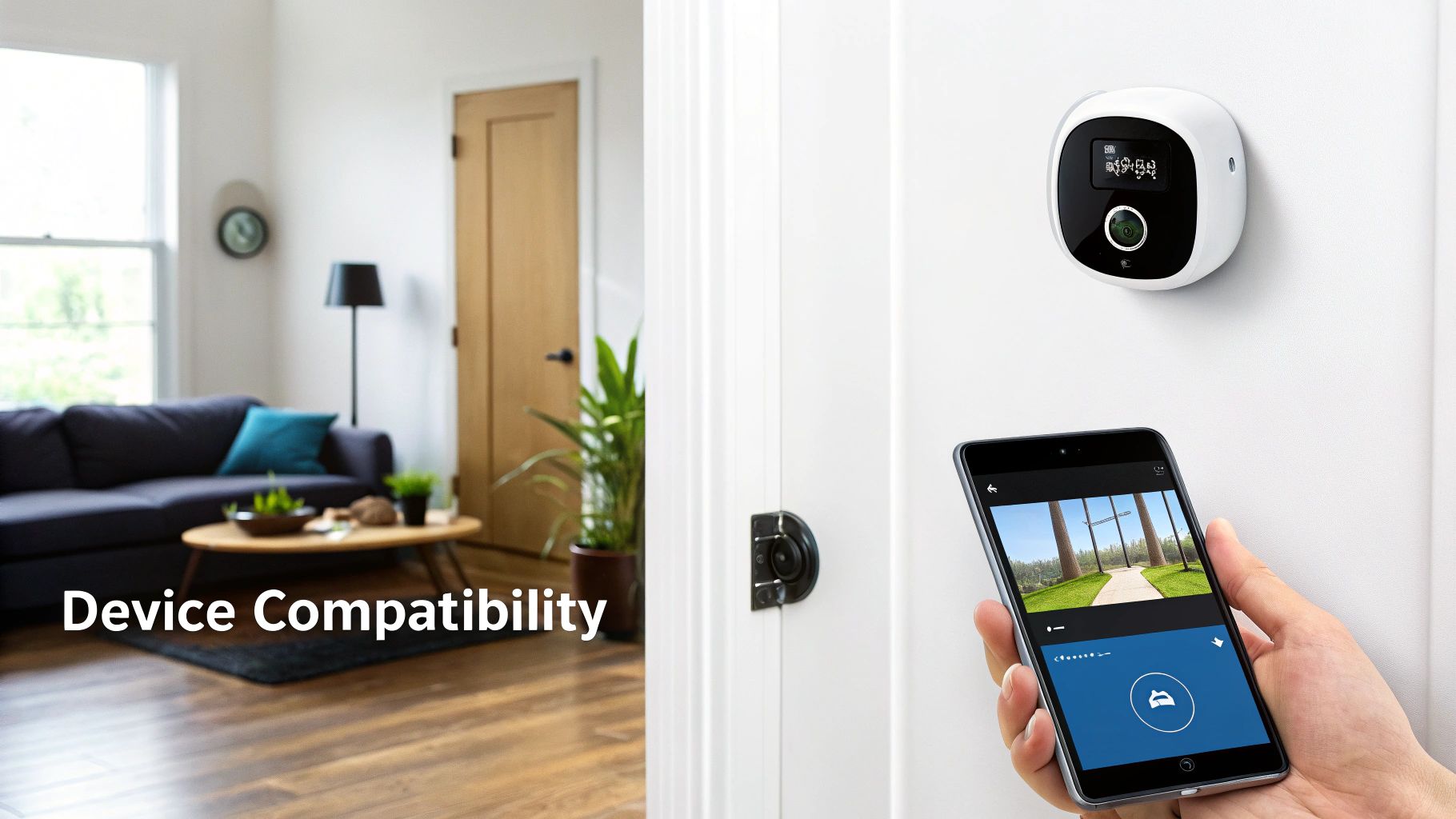
A voice assistant is only as good as the devices it can control. When you're picking a side in the Google vs. Alexa vs. Siri debate, this might be the single most important factor. Does it work with the gear you already own? Will it support the gadgets you want to buy next?
The answer to that question can mean the difference between a truly connected smart home and a frustrating pile of incompatible tech.
Alexa: The King of Compatibility
If you want the absolute broadest range of options, Amazon Alexa is your champion. Hands down. For years, Amazon’s open "Works with Alexa" certification made it incredibly easy for manufacturers to get on board.
The result is a staggering number of compatible devices—from the biggest names in tech to obscure brands you've never heard of. If a new smart gadget hits the market, chances are it works with Alexa first. This is all powered by Alexa Skills, which act like apps for your assistant, letting you connect to just about anything. For the tinkerer who loves options, Alexa is the obvious choice.
Google Assistant: A Curated Powerhouse
Google Assistant might not have the sheer numbers that Alexa boasts, but don't count it out. Its ecosystem is massive and growing fast, with a focus on high-quality, deep integrations with major brands like Philips Hue, TP-Link Kasa, and Arlo.
Where Google really shines is in the setup and user experience. Connecting new devices through the Google Home app is usually a breeze. Plus, Google’s control over the Android OS creates a powerful, fluid connection between your phone and home, especially if you’re already using Nest products. For more details, see our guide on smart home hub comparisons.
The Matter Standard: The Great Unifier?
The arrival of the Matter smart home standard is shaking things up. Backed by Apple, Google, and Amazon, Matter is designed to be a universal language for smart devices. A "Works with Matter" sticker means a product should work seamlessly with any of these three ecosystems, which could finally put an end to our compatibility headaches.
Siri and HomeKit: The Secure Walled Garden
Apple plays a completely different game with Siri and HomeKit. The focus here is on privacy and security above all else. Before a product can earn the "Works with Apple HomeKit" badge, it has to pass a rigorous certification process that includes a hardware security check.
This creates an ecosystem that is exceptionally secure and reliable. The downside? Far fewer device options, and they often come with a higher price tag. But for anyone living deep in the Apple world—with an iPhone, Apple Watch, and Apple TV—HomeKit offers a polished, cohesive experience that’s tough to beat.
Here’s the bottom line:
- For maximum choice and flexibility, go with Amazon Alexa.
- For a balanced system with a great user experience, Google Assistant is a fantastic pick.
- For a secure, private, and seamless Apple experience, choose Siri and HomeKit.
Comparing Conversational AI and Query Intelligence
How well a voice assistant actually understands you is the bedrock of a good smart home. It's one thing to get a simple command right, but the real test in the Google vs. Alexa vs. Siri debate is how each one handles the nuances of natural, everyday language. This all comes down to a blend of voice recognition, contextual awareness, and the sheer amount of information they can tap into.
The "smarts" behind each assistant are a direct reflection of their parent companies. Google Assistant was born from the world's biggest search engine, Alexa was built from the ground up for e-commerce and getting things done, and Siri was designed to be a personal, on-device helper. Those different starting points create very real differences in how they think and respond.
Google Assistant: The Knowledge Champion
When you need an answer to a complex or just plain obscure question, Google Assistant is simply in a league of its own. It pulls directly from Google Search's massive Knowledge Graph, which lets it grasp context, understand follow-up questions, and connect the dots with uncanny accuracy.
For example, you can throw a multi-layered question at it like, "Who directed The Godfather, and what other movies did he direct that won Best Picture?" Google Assistant doesn't skip a beat. It parses both parts of that question and gives you a single, coherent answer. This ability to follow a conversational thread makes talking to it feel less like issuing commands to a robot.
Key Insight: Google Assistant's real magic isn't just having the answers; it's understanding the intent behind your question. It consistently delivers more detailed, context-aware responses than its rivals, making it the hands-down winner for anyone who loves diving deep into topics and asking follow-up questions.
Alexa: The Action-Oriented Specialist
Amazon Alexa's intelligence is laser-focused on action over information. Sure, it can tell you the weather or answer a basic trivia question, but its true strength lies in its skill-based DNA. Alexa is brilliant at understanding direct, actionable commands tied to its vast library of third-party Skills.
You can say, "Alexa, ask Starbucks to start my usual order," and it just works, firing off the command through the right Skill. Where it stumbles is in conversation. Ask a follow-up question that strays even slightly, and Alexa often loses the plot, forcing you to start over. Its voice recognition is top-notch for commands, but its natural language processing just isn't as flexible as Google's.
To get a better handle on the tech that makes this possible, it helps to understand what conversational AI is and how it allows these platforms to turn your voice into action. It's the engine under the hood for all of them.
Siri: The Private and Personal Assistant
Siri's intelligence is all about your personal world, living securely within the Apple ecosystem. It truly shines with on-device tasks—sending a text, setting a reminder, making a call, or controlling your HomeKit gadgets. The integration with your iPhone, Apple Watch, and Mac is incredibly smooth and deeply integrated.
While Siri has gotten better at holding a conversation, it still often gets tripped up by the kind of complex general knowledge questions that Google handles with ease. All too often, its solution is to just show you a list of web results on your iPhone instead of giving you a direct answer. The upside, however, is its emphasis on privacy and speed. Since many requests are processed right on your device, they don't always have to be sent to the cloud.
The trade-off is crystal clear: you get an exceptionally secure assistant that's fantastic at managing your life across Apple devices, but it's just not built to be a universal brain.
Real-World Intelligence Benchmarks
Let's put them to the test with a few common scenarios. This is where you can really see their core strengths and weaknesses pop up in daily use.
| Scenario / Query | Google Assistant | Amazon Alexa | Apple Siri |
|---|---|---|---|
| Follow-up Question | Excellent: Almost never loses the context. You can ask "Who is the president?" then "How old is he?" and it knows who "he" is. | Fair: Frequently drops the context, forcing you to repeat the subject of the first question. | Good: Hangs onto context better than Alexa but can still get confused by more complex follow-ups. |
| Complex Knowledge | Excellent: Directly answers layered questions by tapping into its Knowledge Graph. | Fair: Often struggles with multi-part queries. It might only answer the first part or just give up and perform a web search. | Poor: This is its weakest area. It almost always defaults to showing web results on your iPhone. |
| Controlling Devices | Very Good: Its natural language skills make device control feel intuitive. "Turn the living room lights blue" works perfectly. | Excellent: The undisputed king of direct commands and Skill-based actions. "Tell Roomba to start cleaning" is where it shines. | Very Good: Rock-solid and reliable for controlling HomeKit devices with precise commands. |
So, which one is right? It really boils down to what you need most. If you want a brainiac that can answer literally anything, Google is the obvious choice. If you're building a smart home and need a reliable taskmaster, Alexa is the most capable. And if you live and breathe Apple, Siri is the perfect private assistant to tie it all together.
To see how these assistants come to life in different hardware, take a look at our guide to the best smart speakers for your home.
Mastering Routines and Home Automation Features

The real magic of a smart home isn’t just asking for the weather—it's having your home anticipate what you need before you even ask. This is the world of routines and automation, where your collection of smart devices starts working together like a well-oiled machine. When you're deciding between Google, Alexa, and Siri, how well each one handles automation is a massive piece of the puzzle.
Each assistant has its own way of doing things. They all let you create sequences of actions that kick off with a voice command, at a certain time, or when a sensor is tripped. But the depth, ease of use, and sheer complexity of what you can build varies wildly between them.
Amazon Alexa Routines: The Power User's Playground
If you want to build complex, powerful automations, Amazon Alexa is in a league of its own. Its Routines are incredibly flexible, giving you a massive list of triggers that go way beyond simple voice commands. This is where Alexa’s enormous ecosystem of compatible devices truly shines.
You can start a Routine with all sorts of triggers:
- Sensor Triggers: A motion sensor in the hall can fire up the lights, but only after sunset.
- Device State: The moment your smart lock clicks open, Alexa can announce "Welcome home" and turn on the entryway lights.
- Sound Detection: Got a baby? Alexa can listen for crying and send you a phone notification. It can do the same for a dog barking or a smoke alarm.
- Location-Based (Geofencing): Create an "I'm Home" routine that starts automatically as your car pulls into the driveway, firing up the lights and A/C.
This fine-tuned control is what lets you create automations that feel truly personal. For anyone with a mix of different smart gadgets, figuring out how to connect devices to Alexa is your first step into this powerful system.
Real-World Scenario: Alexa's "Movie Night"
Say one simple phrase, "Alexa, it's movie night," and watch it all happen. Your smart blinds roll down, the Philips Hue lights dim to 20% and turn a cool blue, the TV powers on and switches to the right input, and the soundbar volume adjusts perfectly. It's a perfect example of how Alexa can conduct an orchestra of different brands and device types without a hitch.
Google Assistant Routines: Simple and Straightforward
Google Assistant takes a more streamlined approach to automation. It's incredibly user-friendly but doesn't quite have the raw power of Alexa. The Google Home app makes it easy with pre-built "Household Routines" like "Good Morning" or "Bedtime" that you can customize in seconds, making it a fantastic entry point for beginners.
While its list of triggers isn't as long as Alexa's, Google is constantly adding more capability, especially with its new script editor for power users. Its real ace is how well it integrates its own services. You can easily bake things like a calendar update or your daily commute time right into your morning routine.
Siri and HomeKit Automations: Secure and Rock-Solid
Apple's entire smart home philosophy, HomeKit, is built on a foundation of security and reliability. Its Automations live inside the Home app and are famous for being incredibly stable. Everything about the setup is clean and logical, which is exactly what you'd expect from Apple.
HomeKit's strength is its deep integration with Apple hardware. To run automations when you're not at home, you’ll need a home hub—an Apple TV or a HomePod. This isn't just an extra cost; it's a security feature. It ensures commands are processed locally on your network whenever possible, keeping them private.
While fewer devices work with HomeKit, the ones that earn the "Work with Apple HomeKit" badge are guaranteed to perform flawlessly within its ecosystem.
To put it all into perspective, here's how the automation features stack up against each other.
Smart Home Automation Feature Comparison
This table breaks down the core automation capabilities for each assistant, giving you a side-by-side look at where they excel.
| Feature | Google Assistant (Home) | Amazon Alexa (Routines) | Apple Siri (HomeKit) |
|---|---|---|---|
| Trigger Complexity | Good (expanding options) | Excellent (widest variety) | Good (focus on device state) |
| Ease of Use | Excellent (very intuitive) | Very Good (powerful but can be complex) | Excellent (clean and simple) |
| Device Integration | Very Good (strong with major brands) | Excellent (unmatched compatibility) | Good (fewer but highly reliable) |
| Advanced Customization | Fair (script editor for pros) | Excellent (many conditional actions) | Good (Shortcuts integration adds power) |
Ultimately, the choice comes down to what you value most. If you want the most powerful, customizable automation engine that works with just about every gadget under the sun, Alexa is your winner. If you're looking for simplicity and a great user experience, Google Assistant is a fantastic choice. And for anyone deep in the Apple ecosystem who puts security and stability above all else, Siri and HomeKit deliver a polished and dependable smart home experience.
Understanding Your Privacy and Security Options
When you bring a smart speaker into your home, you’re not just getting a gadget—you’re inviting a company to listen. The way Google, Amazon, and Apple handle your personal data is fundamentally tied to their business models, and knowing the difference is key to making a choice you're comfortable with.
The big question almost always comes down to voice recordings. By default, both Amazon and Google hang onto recordings of your commands to help "improve" their services. While they say the data is anonymized and encrypted, the very idea that it's stored on a server somewhere is a major sticking point for many.
Apple charts a completely different course here. Siri was built from the ground up with a privacy-first mindset, meaning it tries to process as much as it can right on your device. Many simple requests, like setting an alarm, never even leave your iPhone or HomePod.
How Your Data Is Handled
All three give you a dashboard to see and delete your voice history, but their philosophies and default settings couldn't be more different.
Google Assistant: You get some seriously granular controls in the Google "My Activity" portal. You can have your history automatically wiped after 3, 18, or 36 months. Plus, Google is making a real push to move more processing on-device for faster, more private interactions.
Amazon Alexa: The Alexa Privacy Hub offers similar tools to review and delete recordings one by one or on a schedule. The key thing to remember is that Alexa is deeply woven into Amazon's retail empire, so its data collection is naturally more focused on your consumer habits.
Apple Siri: Apple is the clear leader if you want to minimize data collection. Voice queries are tied to a random identifier, not your personal Apple ID. When data does get sent to Apple’s servers for complex requests, it's analyzed without a direct link back to you.
Of course, these assistants are just one piece of the puzzle. A truly secure smart home depends on securing IoT devices across the board, from your light bulbs to your thermostat.
On-Device Processing: The New Privacy Benchmark
The shift toward on-device processing is a huge win for privacy. When your voice command is handled locally on the speaker or your phone, that sensitive data never has to travel across the internet to a corporate server. This dramatically cuts down the risk of it being exposed in a breach or used in ways you didn't expect.
Key Differentiator: Apple baked on-device processing into Siri's DNA from the beginning. Google is catching up fast with its newer Tensor-powered devices, but Siri still has the edge for anyone whose top priority is keeping personal data out of the cloud.
At the end of the day, your choice between Google, Alexa, and Siri might just boil down to how you feel about their data practices.
Privacy Preference Breakdown
| User Priority | Best Choice | Why It Wins |
|---|---|---|
| Maximum Privacy | Apple Siri | Its entire architecture is designed to collect as little identifiable data as possible, prioritizing on-device processing to keep your life private. |
| Balanced Control | Google Assistant | Offers excellent, transparent tools for managing your data and setting auto-delete policies, backed by a growing commitment to on-device AI. |
| Ecosystem Convenience | Amazon Alexa | While it collects more behavioral data, its privacy settings are straightforward. For many, the trade-off is worth it for Alexa's unparalleled device compatibility. |
All three platforms are secure, but their approaches to privacy reflect their corporate DNA. Apple doesn't need your data to sell you ads. Google uses data to make its services smarter. Amazon uses it to understand how you shop. Your job is to pick the philosophy that aligns with your own.
Which Smart Assistant Is Right For You?
Picking a smart assistant isn't about finding the "best" one—it's about finding the best one for you. This choice really boils down to your personal priorities, the tech you already own, and what you actually want to accomplish in your home. It’s less of a competition and more of a matchmaking process.
The decision often comes down to a trade-off between three key areas: raw intelligence, device compatibility, and privacy. You just need to figure out which of those matters most in your daily life.
Finding Your Perfect Match: The Ideal User for Each Platform
To cut through the noise, let's look at who each assistant is really built for. See if one of these descriptions feels like it was written about you.
Google Assistant is for the Tech Enthusiast. You’re the person who asks complex, multi-part questions and expects genuinely smart answers. You want your assistant to feel like a natural conversation, remembering the context from one question to the next. For you, an assistant is a knowledgeable partner that works seamlessly with your Android phone and other Google gear.
Amazon Alexa is for the Pragmatic Home Builder. Your main goal is building a smart home that just works with everything. You want an assistant that can connect to almost any gadget you can buy, and you love the idea of creating powerful, multi-step routines to automate your life. For you, an assistant is the ultimate command center for getting things done.
Apple Siri is for the Apple Loyalist. You live and breathe the Apple ecosystem and put a premium on privacy and security. You expect a flawless, integrated experience across your iPhone, Mac, and Apple Watch, and you need a rock-solid, secure way to control your HomeKit devices. For you, an assistant is a trusted, private helper.
This framework can help you visualize how your stance on privacy might guide your choice.
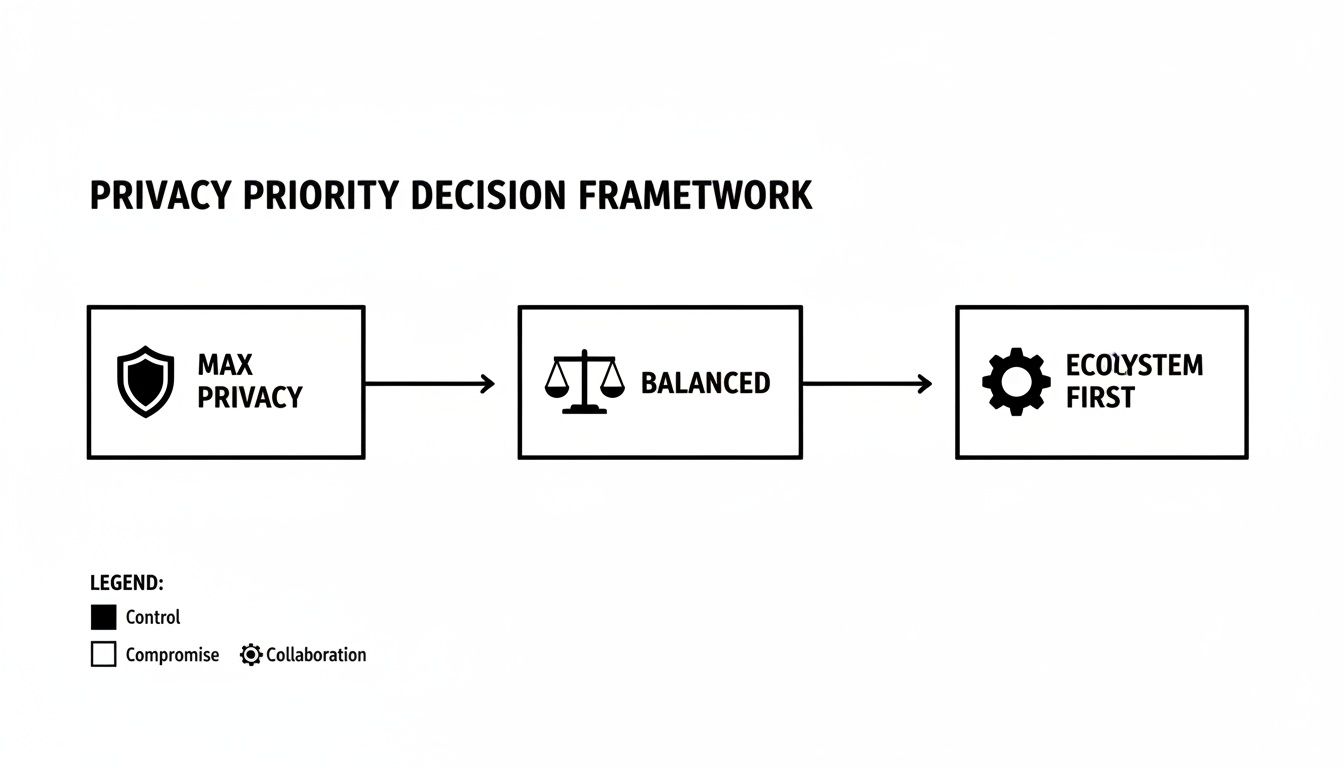
As you can see, if maximum privacy is your non-negotiable, Siri is the clear path forward. But if you're looking for a balance between features and control, you’ve got a couple of other fantastic options.
Final Recommendations And Real-World Scenarios
Ultimately, the best choice is the one that simplifies your daily habits. For example, anyone trying to manage executive functioning challenges will find that any of these assistants are a huge help for setting reminders and offloading some of that mental load.
The most important thing is to be practical. If your home is already an Apple sanctuary, sticking with Siri and HomeKit will give you the most friction-free experience. But if you want the freedom to mix and match smart gadgets from a dozen different brands, Alexa’s massive ecosystem simply can't be beaten.
Think about what you'll be doing most often. If you need a digital brainiac for homework help or settling trivia debates, Google Assistant is the undisputed champion. If you're a tinkerer who wants to automate everything with a diverse collection of devices, Amazon Alexa has the most robust toolkit. And if your world is built around Apple and you want a secure, polished smart home, Apple Siri is hands-down the right fit.
Answering Your Lingering Questions
Even with a side-by-side breakdown, you probably still have a few practical questions. Let's tackle some of the most common things people ask when deciding between Google, Alexa, and Siri for their smart home.
Can I Actually Use Different Assistants in the Same House?
Absolutely. In fact, it’s a really common setup. You might have an Amazon Echo in the kitchen because you love Alexa’s cooking skills and routines, but a Google Nest Hub in your living room for its unmatched ability to answer random questions.
Just know that they won't talk to each other. You can't ask Google to run an Alexa routine, for instance. This creates separate "zones" of control, so your smart home won't feel like one perfectly unified system. But for many, getting the best features from each platform is a worthwhile trade-off.
Which Assistant Is Best for a Multi-Language Household?
If your family switches between languages, Google Assistant is the hands-down winner. It’s the only one that can understand two languages at the same time without you having to dive into the settings.
You can ask it something in Spanish and follow up with a question in English, and it won't miss a beat. While both Alexa and Siri support numerous languages, they can only handle one at a time. You have to manually change the primary language, which is far from ideal for a bilingual home.
Is One Assistant Better for People With Executive Function Challenges?
Honestly, all three are fantastic tools for anyone dealing with executive functioning challenges, such as those that come with ADHD. Their real power lies in offloading the mental work of remembering tasks, building lists, and managing time.
Think about it: instead of trying to hold onto a thought, you can just say it out loud. The simple act of telling your assistant to set a reminder or add milk to the grocery list the second it pops into your head is a game-changer for reducing mental load and preventing things from slipping through the cracks.
Which Platform Has the Best Music and Entertainment Integration?
This one really boils down to where your subscriptions are. Each assistant is built to prioritize its own ecosystem, and that's where you'll get the most seamless experience.
- Google Assistant: The obvious choice if you live on YouTube and YouTube Music. The integration is flawless.
- Amazon Alexa: A perfect match for Amazon Prime members, with tight integration for Amazon Music and Audible.
- Apple Siri: If you're all-in on the Apple ecosystem, its connection to Apple Music and Apple Podcasts is unbeatable.
While they all support third-party services like Spotify or Pandora, the native integrations almost always work better. When it comes to entertainment, the best assistant is the one that aligns with the services you already pay for.
At Automated Home Guide, our goal is to help you build a smarter home that fits your life. Explore our guides to find the right tech for your needs.




Leave a Reply