
The concept of a 'smart home' has rapidly evolved from a futuristic novelty into a practical and accessible reality for millions. But what truly are the advantages of a smart home? Beyond the initial 'wow' factor of voice-controlled lights and automated thermostats lies a powerful ecosystem designed to enhance nearly every aspect of daily life. From significant financial savings on utility bills to providing unparalleled peace of mind through advanced security, the benefits are both tangible and transformative.
This shift isn't just about convenience; it's about creating a more responsive, secure, and efficient living space. Smart technology offers practical solutions to everyday problems, such as reducing energy waste, improving home accessibility for all family members, and providing the ability to manage your home from anywhere in the world. The integration of these systems creates a seamless environment where your home actively works for you, anticipating needs and simplifying complex routines.
In this comprehensive guide, we will explore the ten most compelling advantages that smart technology brings to modern living. We will dissect each benefit with practical examples, data-backed insights, and actionable tips to help you prioritize your own smart home journey. Whether you're a tech enthusiast, a family looking for enhanced security, an eco-conscious homeowner aiming to lower your carbon footprint, or someone seeking to future-proof your home for accessibility, this list provides a clear roadmap. We will demonstrate how these innovations work together to create a safer, more efficient, and more enjoyable living environment. Let's delve into the specific benefits that make a connected home a valuable investment.
1. Energy Savings and Reduced Utility Bills
One of the most compelling advantages of a smart home is its direct impact on your wallet through significant energy conservation. Smart home technology moves beyond manual adjustments, creating an intelligent ecosystem that actively manages your home’s energy consumption. By automating and optimizing heating, cooling, and lighting, these systems can dramatically lower your monthly utility bills.
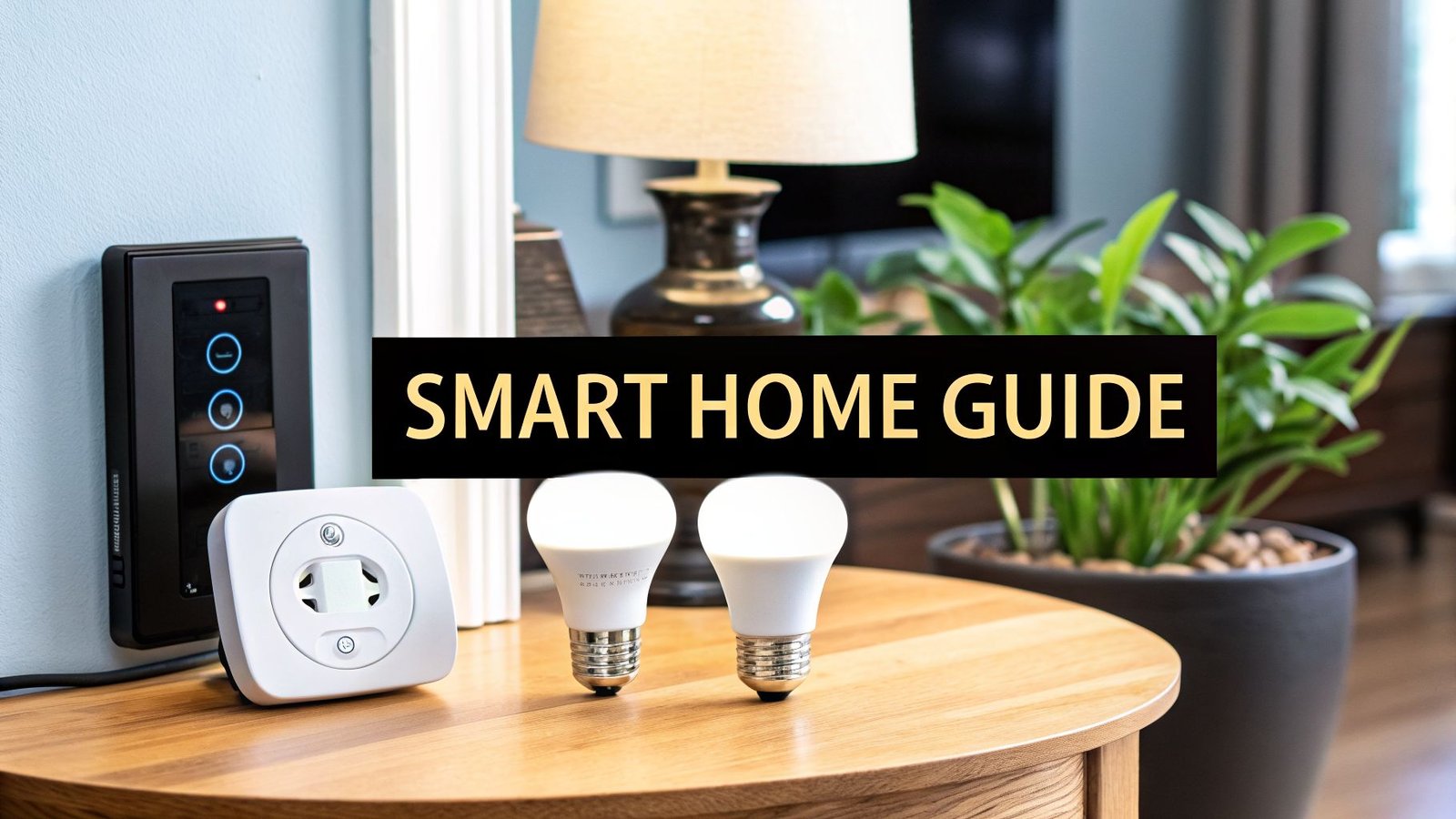
At the core of this efficiency is learning and adaptation. Devices like the Google Nest or Ecobee smart thermostats learn your daily routines, automatically lowering the temperature when you're away and preparing the home for your return. This prevents wasteful heating or cooling of an empty house. Similarly, smart lighting systems from brands like Philips Hue use occupancy sensors and scheduling to ensure lights are only on when needed, and they can use up to 80% less energy than traditional incandescent bulbs.
How to Implement Energy-Saving Automations
- Start with a Smart Thermostat: This is often the highest-impact investment for energy savings, as HVAC systems are a primary driver of utility costs. The EPA estimates that homes with smart thermostats can save between 10-12% on heating and 15% on cooling.
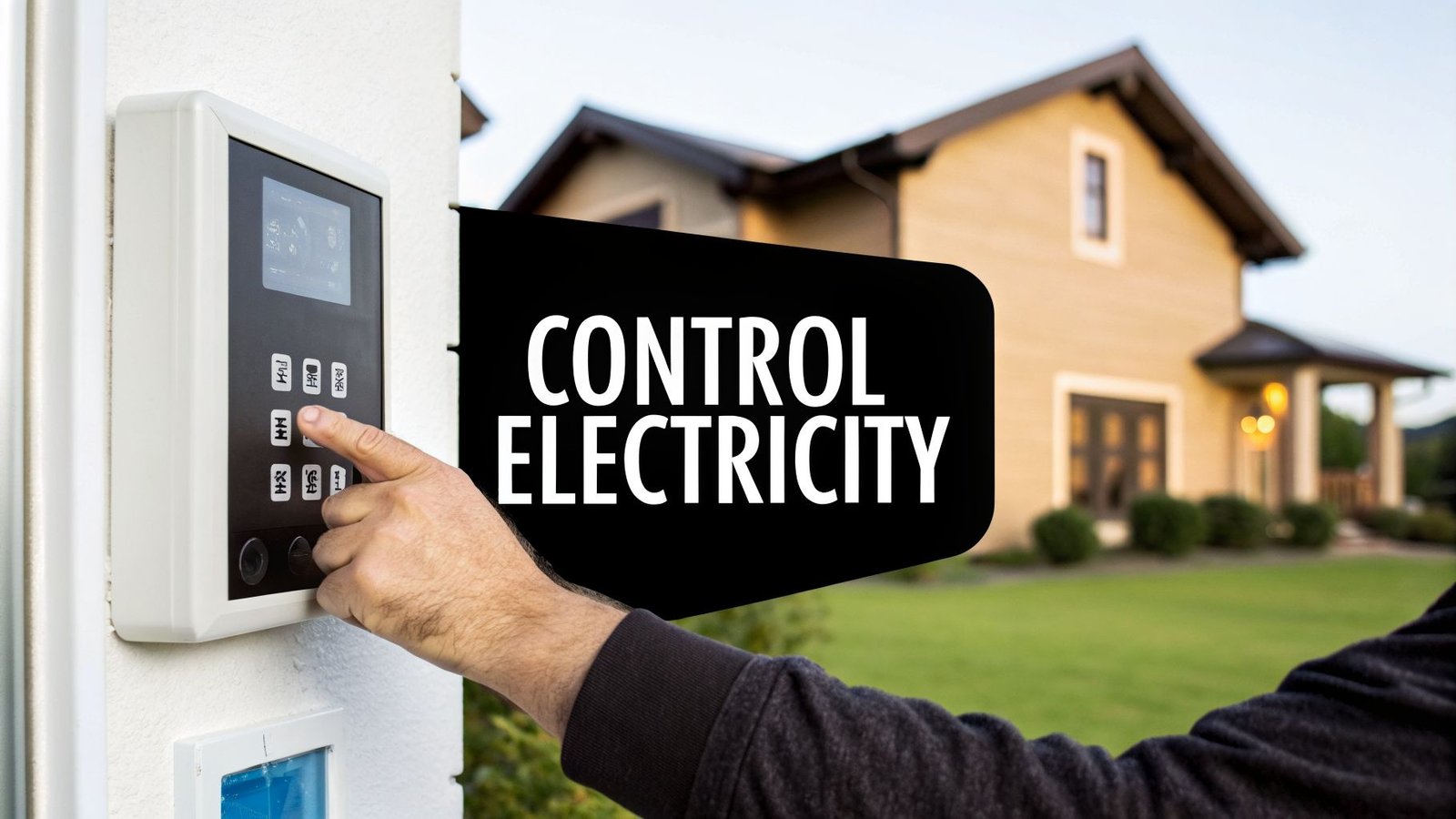
- Monitor Your Usage: Before you can optimize, you need to understand your consumption patterns. Understanding your energy usage is the first step towards saving, and a modern home relies on a smart meter to provide real-time data that can be used to pinpoint waste.
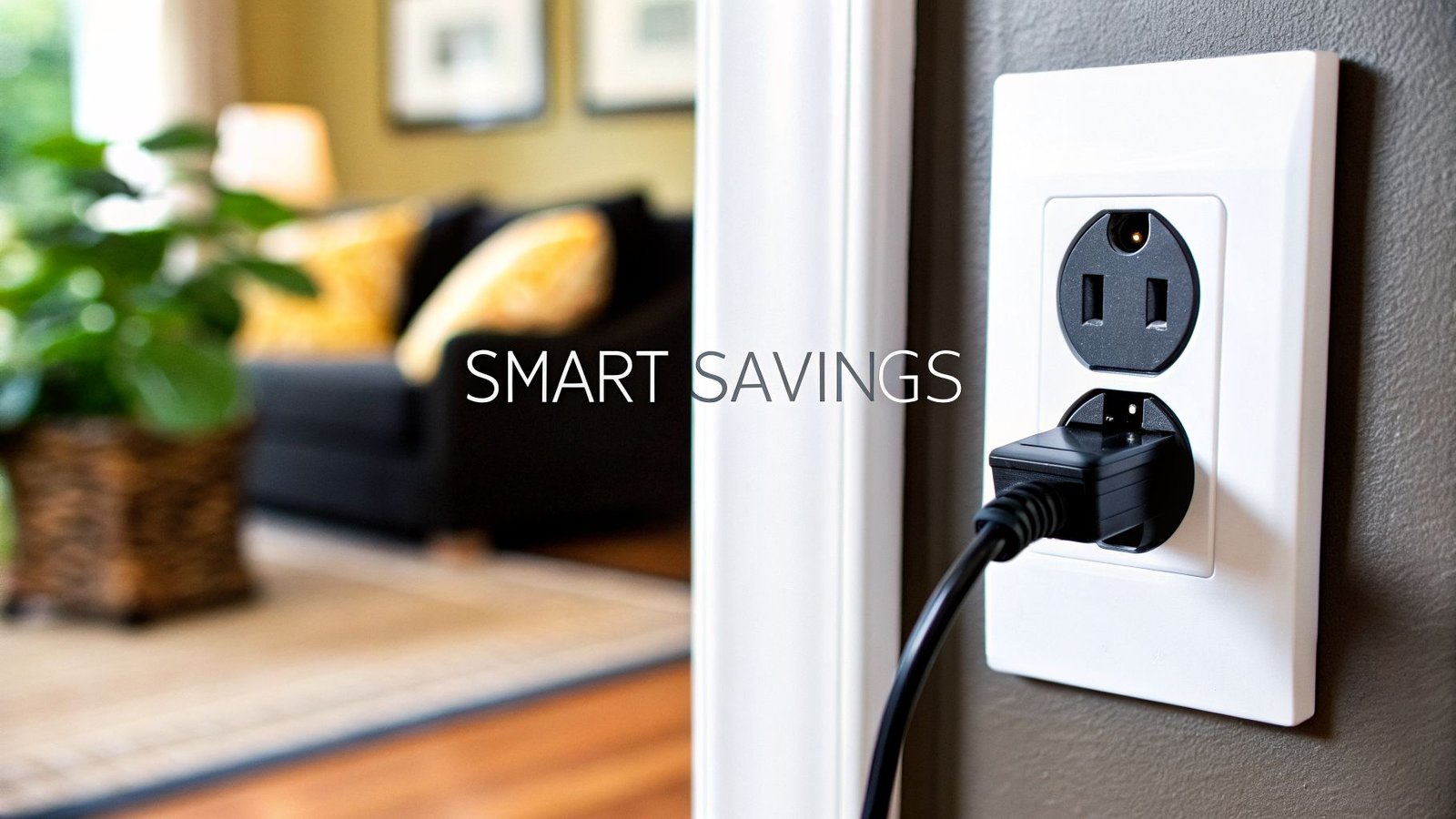
- Automate Lighting and Appliances: Use smart plugs to schedule high-draw appliances to run during off-peak hours when electricity rates are lower. Set lighting scenes that automatically dim lights in the evening or turn them off when a room is vacant.
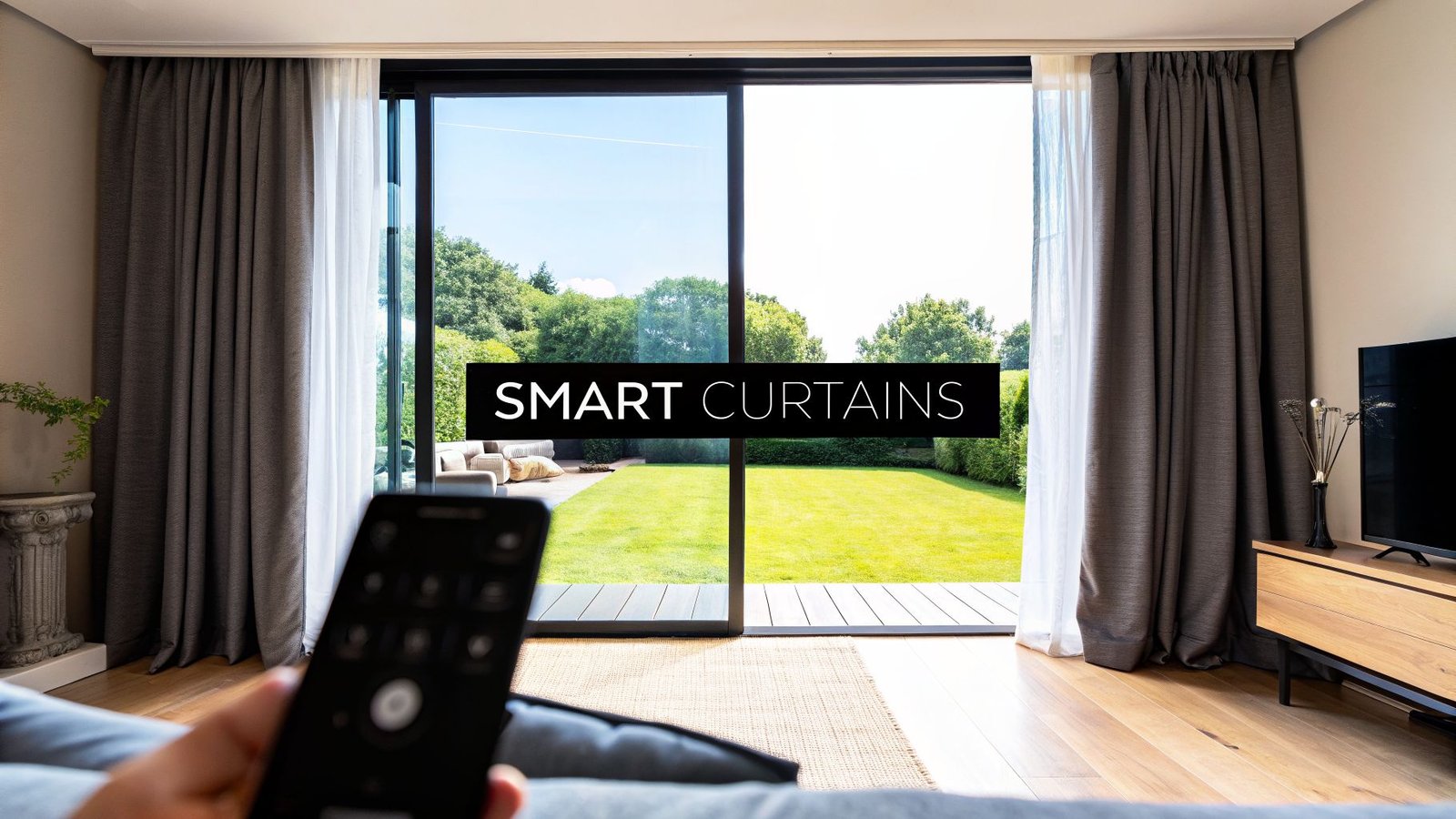
Key Insight: The real power comes from integrating these systems. When your smart thermostat, lighting, and blinds work together, they create a cohesive, energy-efficient environment. For example, automatically closing smart blinds during the hottest part of the day reduces the load on your air conditioning.
These strategic upgrades do more than just save money; they also contribute to a reduced carbon footprint, aligning financial prudence with environmental responsibility. For a deeper dive into creating an efficient living space, you can explore more strategies for building an energy-efficient smart home.
2. Enhanced Home Security and Surveillance
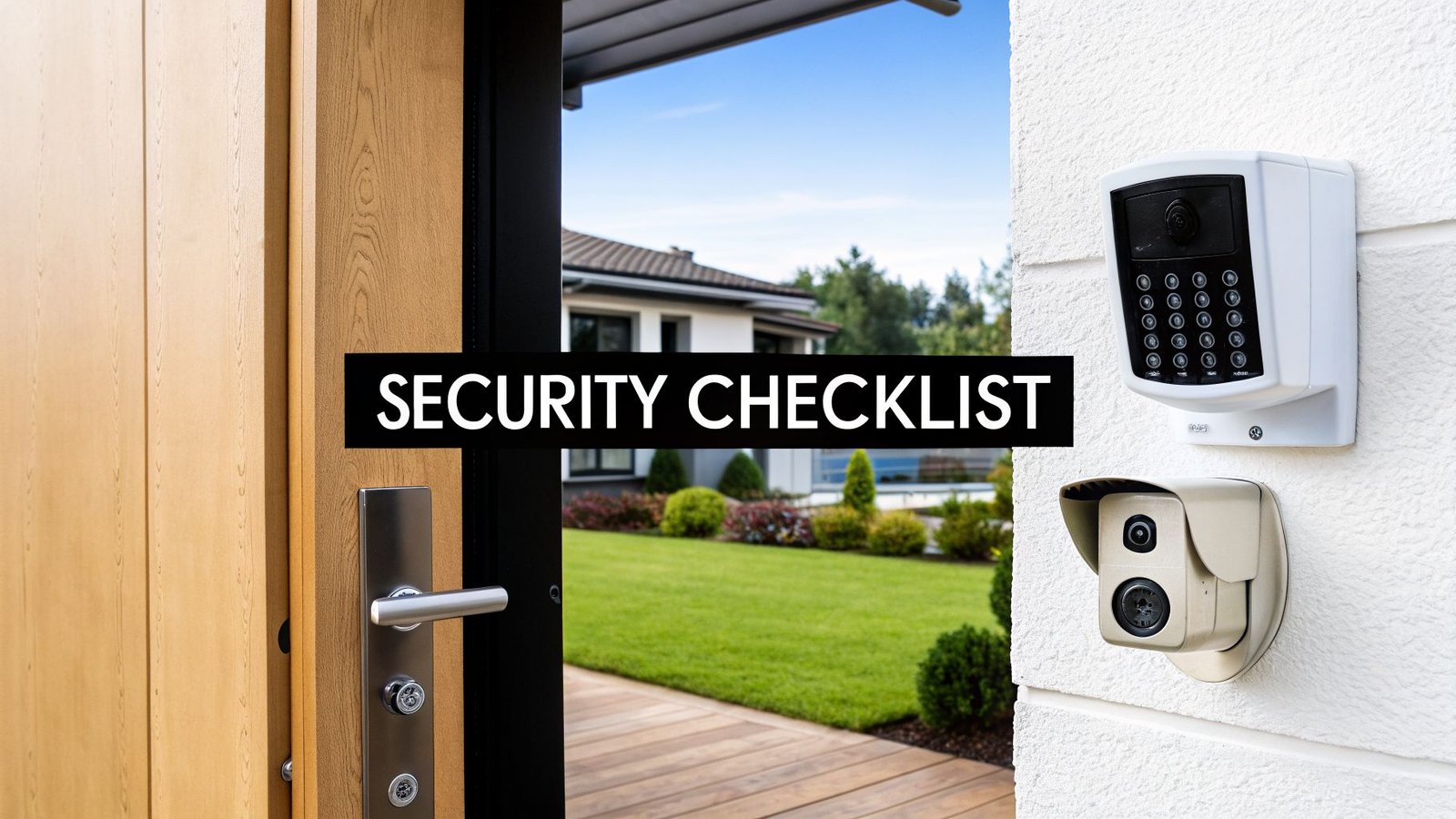
One of the most valuable advantages of a smart home is the profound peace of mind that comes from advanced, interconnected security. Smart security systems transform traditional alarms into a proactive, intelligent defense network that you can monitor and control from anywhere in the world. By integrating cameras, sensors, smart locks, and video doorbells, these systems provide a comprehensive, real-time view of your home’s safety.
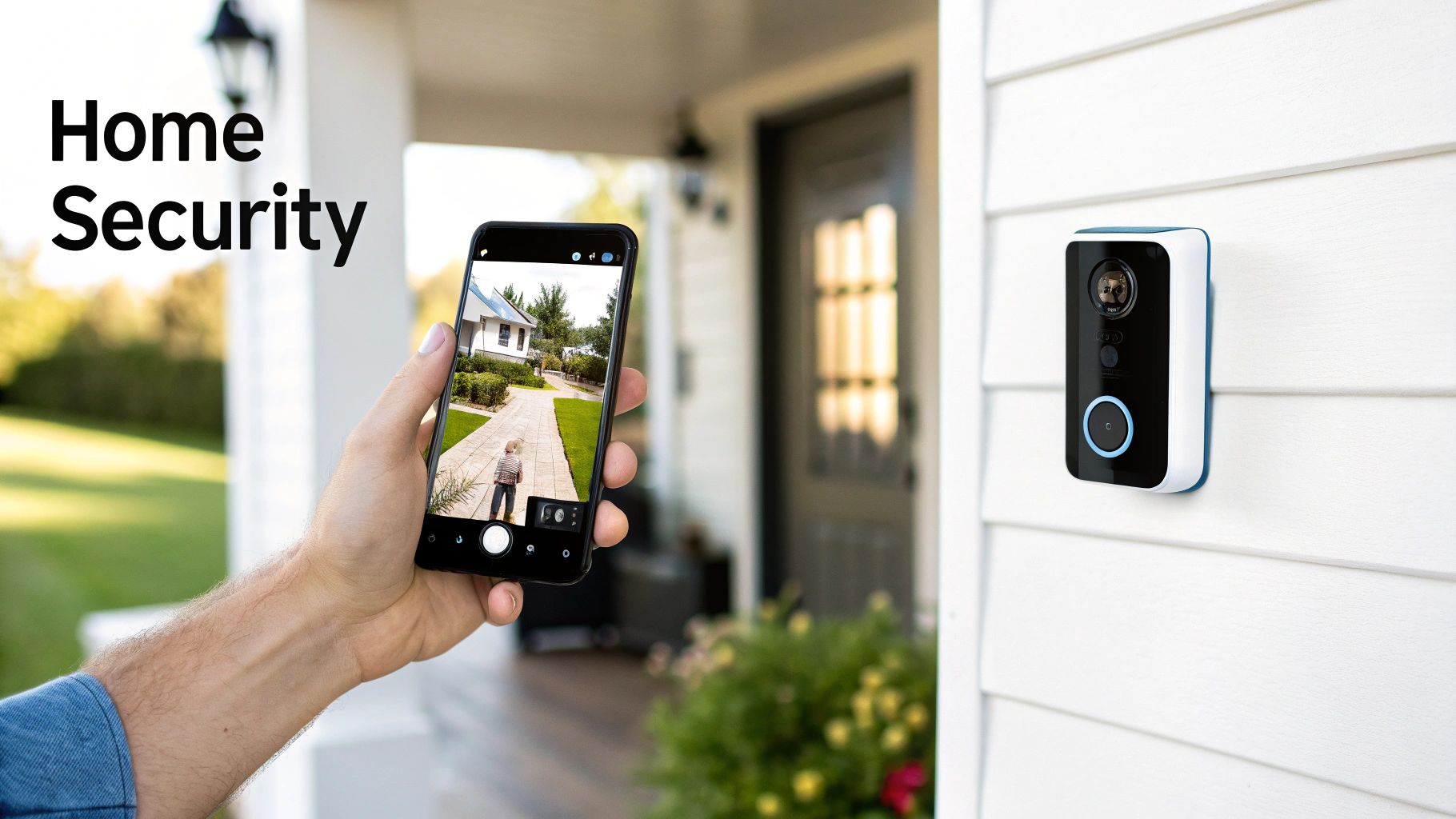
At the heart of this enhanced protection is instant awareness and remote control. Systems from brands like Ring and Arlo send immediate notifications to your phone when motion is detected, allowing you to view a live video feed and take action. August Smart Locks let you grant temporary access to a dog walker or receive alerts when your children arrive home from school. For larger properties or areas beyond the immediate home, a trail camera with remote viewing can provide robust surveillance over driveways, outbuildings, or expansive yards, integrating seamlessly into a total security strategy.
How to Implement Smart Security Measures
- Cover All Entry Points: Start by installing video doorbells and smart cameras at all doors, ground-floor windows, and other potential access points. Ensure there are no blind spots in your coverage.
- Secure Your Digital Access: Your system is only as secure as its password. Use strong, unique passwords for all security device accounts and enable two-factor authentication (2FA) for an essential extra layer of protection.
- Integrate Smart Locks and Sensors: Combine smart locks with door and window sensors. This allows you to create automations, such as locking all doors automatically when the last person leaves, and receiving an alert if a window is opened unexpectedly.
- Inform Your Insurance Provider: Many home insurance companies offer discounts for homes with professionally monitored smart security systems. Be sure to provide them with documentation of your upgrades.
Key Insight: True security comes from the ecosystem's ability to work in unison. A motion sensor on a back patio can trigger outdoor floodlights to turn on, begin recording on multiple cameras, and send an instant alert to your phone, creating a powerful and coordinated deterrent.
These integrated systems provide more than just a deterrent; they offer concrete evidence in case of an incident and give you unparalleled control over who can access your property. To explore the best options for your home, you can review a complete guide to smart home security systems.
3. Increased Convenience and Smart Automation
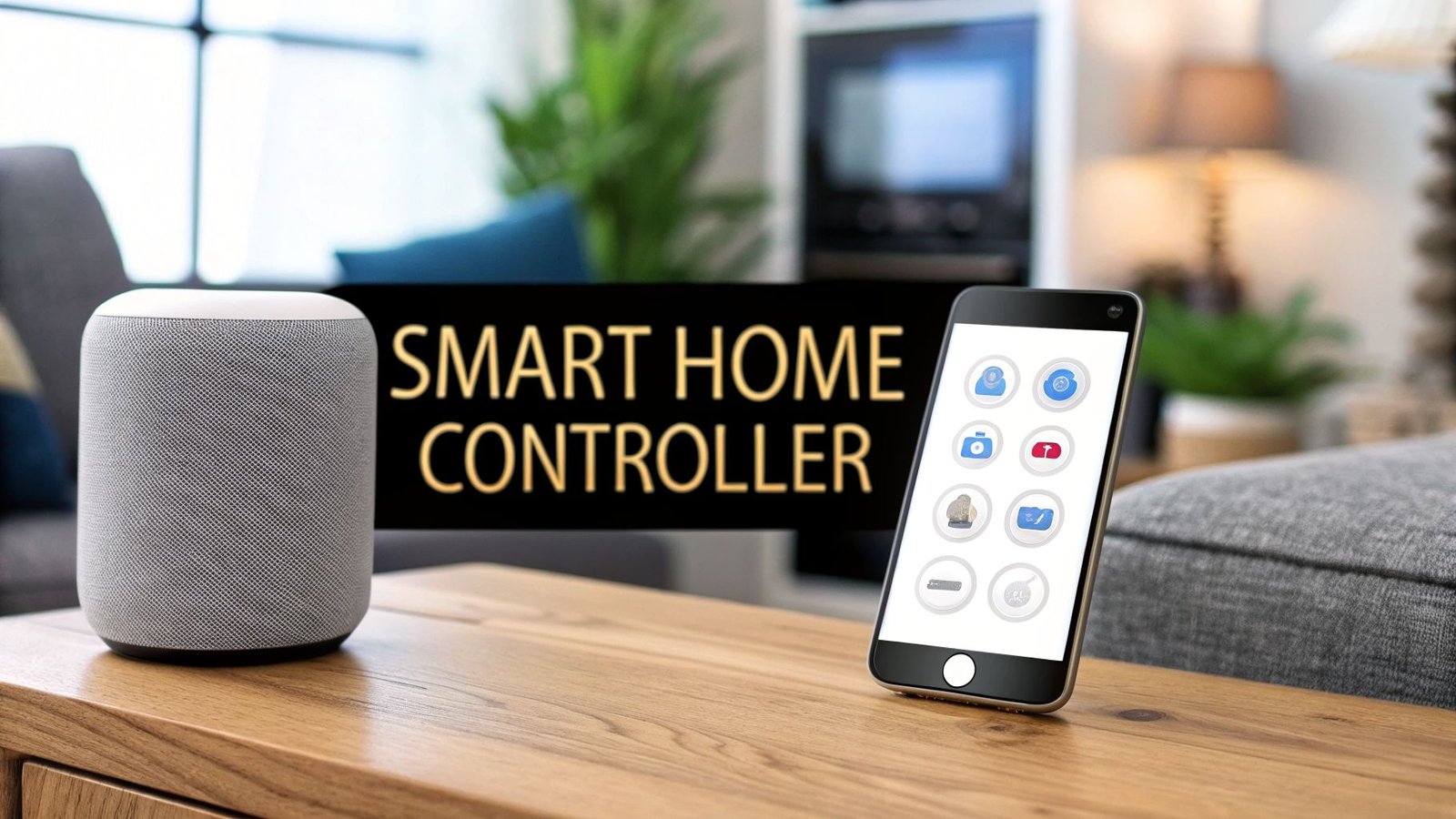
Perhaps the most celebrated of all the advantages of a smart home is the profound level of convenience it introduces into daily life. Smart automation moves beyond simple remote control, creating an integrated environment where routine tasks are handled automatically or with a single voice command. This technology streamlines your day-to-day existence by allowing you to manage lighting, climate, entertainment, and appliances from a unified hub, eliminating the friction of manual adjustments.
The power of this convenience is exemplified by ecosystems like Amazon Alexa, Google Assistant, and Apple HomeKit. These platforms enable complex sequences, often called routines or scenes. For instance, a "Goodnight" command can simultaneously lock your doors, turn off all lights, lower the thermostat, and play calming music in the bedroom. Similarly, a Sonos system can fill your entire home with synchronized audio, all controlled from one app or voice command, making multi-room entertainment effortless.
How to Implement Convenience-Focused Automations
- Start with Core Devices: Begin with high-traffic areas. Smart lighting in the living room and a smart thermostat are excellent starting points before expanding to other rooms and devices.
- Create Simple Routines First: Build foundational automations, such as turning on porch lights at sunset or starting the coffee maker at 7 AM. As you grow more comfortable, you can build more complex, multi-step scenes.
- Establish Intuitive Naming: Name your devices logically (e.g., "Living Room Lamp" instead of "LIFX A19 3"). This makes voice commands with assistants like Alexa or Google Assistant much more natural and reliable.
- Use Geofencing for Arrivals/Departures: Set up location-based triggers so your home can prepare for your arrival by adjusting the temperature and turning on lights, or enter an energy-saving mode when you leave.
Key Insight: True convenience isn't about controlling one device; it's about making multiple devices work together seamlessly. The goal is to create an environment that anticipates your needs, reducing the mental load of managing your home and freeing up your time for what matters most.
By strategically automating repetitive tasks, you transform your home from a collection of individual gadgets into a responsive, intelligent partner. To get started on your own journey, you can explore a step-by-step guide on how to automate your home.
4. Improved Home Accessibility for Elderly and Disabled Residents
A crucial advantage of a smart home is its ability to create a safer, more independent living environment for elderly and disabled individuals. Smart technology can automate daily tasks and provide a vital communication link in emergencies, empowering residents with greater autonomy. This transformation turns a house into a supportive ecosystem that adapts to the user's needs, reducing reliance on caregivers for routine actions and offering peace of mind to family members.
At the heart of this benefit are voice control and automated safety features. Voice assistants like Amazon Alexa allow users to control lights, thermostats, and entertainment systems without physical interaction. More critically, they enable hands-free emergency calls. Meanwhile, specialized devices like Lively Mobile Plus or Philips Lifeline wearables offer automatic fall detection, immediately alerting emergency services and designated family contacts when an accident occurs. This network of connected devices ensures that help is always within reach, even when a person cannot move or speak.
How to Implement Accessibility-Focused Automations
- Prioritize Voice Control: Start with a robust voice assistant like Amazon Alexa or Google Assistant. These can serve as the central hub for controlling other smart devices and initiating emergency communications.
- Install Automated Fall Detection: A dedicated device is one of the most significant safety upgrades. Systems with professional monitoring provide a 24/7 safety net that goes beyond relying on a family member to respond to an alert.
- Automate Pathways with Smart Lighting: Use motion-activated smart lights to create well-lit paths from the bedroom to the bathroom at night, significantly reducing the risk of trips and falls in the dark.
- Simplify Access with Smart Locks: A smart lock can be programmed to unlock automatically when a user's phone is near or can be opened remotely by a family member or caregiver, eliminating the struggle with physical keys.
Key Insight: The true value lies in creating layered, redundant safety systems. Combining passive monitoring, like the Care Precepts AI system that learns routines and detects anomalies, with active emergency tools like voice calling and panic buttons, creates a comprehensive support network that promotes both safety and dignified independence.
By thoughtfully integrating these technologies, a smart home becomes an indispensable partner in care. It fosters autonomy and confidence for residents while providing invaluable reassurance to loved ones, proving that one of the most significant advantages of a smart home is its capacity for compassion.
5. Remote Home Management and Monitoring
Another of the key advantages of a smart home is the ability to maintain complete control and visibility over your property, no matter where you are. Smart home systems empower homeowners to monitor and manage their environment from anywhere in the world using a simple smartphone app or web interface. This constant connection offers unparalleled peace of mind and practical benefits for a wide range of situations.
This capability is particularly transformative for frequent travelers, second-home owners, and those managing rental properties. Platforms like the Google Nest or Ring app ecosystems allow you to view live security camera feeds from an airport, grant temporary access to a dog walker from your office, or adjust the thermostat in a vacation home miles away. This level of remote control turns a passive building into an active, responsive environment you can interact with in real-time.
How to Implement Remote Management Securely
- Establish a Secure Foundation: Start by securing your home network. Use a strong, unique password for your Wi-Fi and enable multi-factor authentication on all your smart home accounts to prevent unauthorized access.
- Prioritize Critical Alerts: Configure your system to send instant notifications for high-priority events. Focus on alerts for motion detection, door and window sensors, water leaks, or smoke alarms, ensuring you can respond immediately to potential emergencies.
- Create Guest-Specific Access: For rental properties like an Airbnb, use smart locks to generate unique, time-sensitive access codes for guests. This eliminates the need for physical keys and automatically revokes access after their stay, enhancing security for everyone.
Key Insight: True remote management isn't just about monitoring; it's about interaction. The ability to not only see that a package was delivered via a video doorbell but also to remotely unlock the garage for the courier to place it inside securely is where these systems truly shine.
This remote oversight provides a powerful sense of security and control, making it easier to manage the complexities of modern life. For property managers looking to scale these benefits across multiple units, specialized platforms like Kandela offer centralized dashboards to streamline operations and enhance resident services.
6. Optimized Climate Control and Comfort
Beyond simple energy savings, a key advantage of a smart home is its ability to deliver an unparalleled level of personalized comfort. Smart HVAC systems transform your home’s climate from a static setting into a responsive, intelligent environment that adapts to your lifestyle. They move past manual thermostat adjustments, offering precise temperature management that learns your preferences and adjusts automatically for consistent comfort.
At the heart of this system are smart thermostats like the Ecobee SmartThermostat or Honeywell Home T9. These devices learn your family's routines, detect occupancy, and can even integrate with local weather forecasts to proactively heat or cool your home. More advanced systems offer zone control, allowing you to set different temperatures in specific rooms or areas, such as keeping a nursery warmer while the rest of the house remains cooler. This ensures every space is perfectly comfortable without wasting energy on unoccupied rooms.
How to Implement Smart Climate Control
- Allow for a Learning Period: Give learning thermostats like the Google Nest at least two weeks to understand your household's patterns. Manually adjust the temperature as you normally would during this time to help it learn your preferences.
- Use Geofencing Wisely: Set up geofencing to automatically adjust the temperature when you leave and return, but add a realistic buffer time to prevent the system from cycling on and off during short trips.
- Leverage Smart Sensors: Place remote sensors, like those used with Ecobee or Honeywell systems, in frequently used rooms to ensure the temperature is based on where you are, not just where the thermostat is located.
- Integrate Smart Vents: For ultimate room-by-room control, pair your smart thermostat with smart vents to direct airflow precisely where it's needed most, further enhancing both comfort and efficiency.
Key Insight: True climate optimization comes from creating a cohesive system. When your smart thermostat knows you've left the house (via geofencing) and your smart blinds close automatically to block solar heat, your HVAC system works far less to maintain a comfortable temperature, marrying comfort with deep energy savings.
This level of intelligent automation ensures your home is always at the perfect temperature the moment you walk in the door, making it a cornerstone benefit for any modern smart home.
7. Smart Lighting and Ambient Environment Control
Beyond simple on-off functionality, smart lighting offers one of the most transformative advantages of a smart home by providing complete control over your home's atmosphere. Intelligent lighting systems allow you to customize illumination to match the time of day, your current activity, or a desired mood. With millions of colors, precise dimming, and advanced scheduling, you can create a living environment that is more comfortable, productive, and visually stunning.
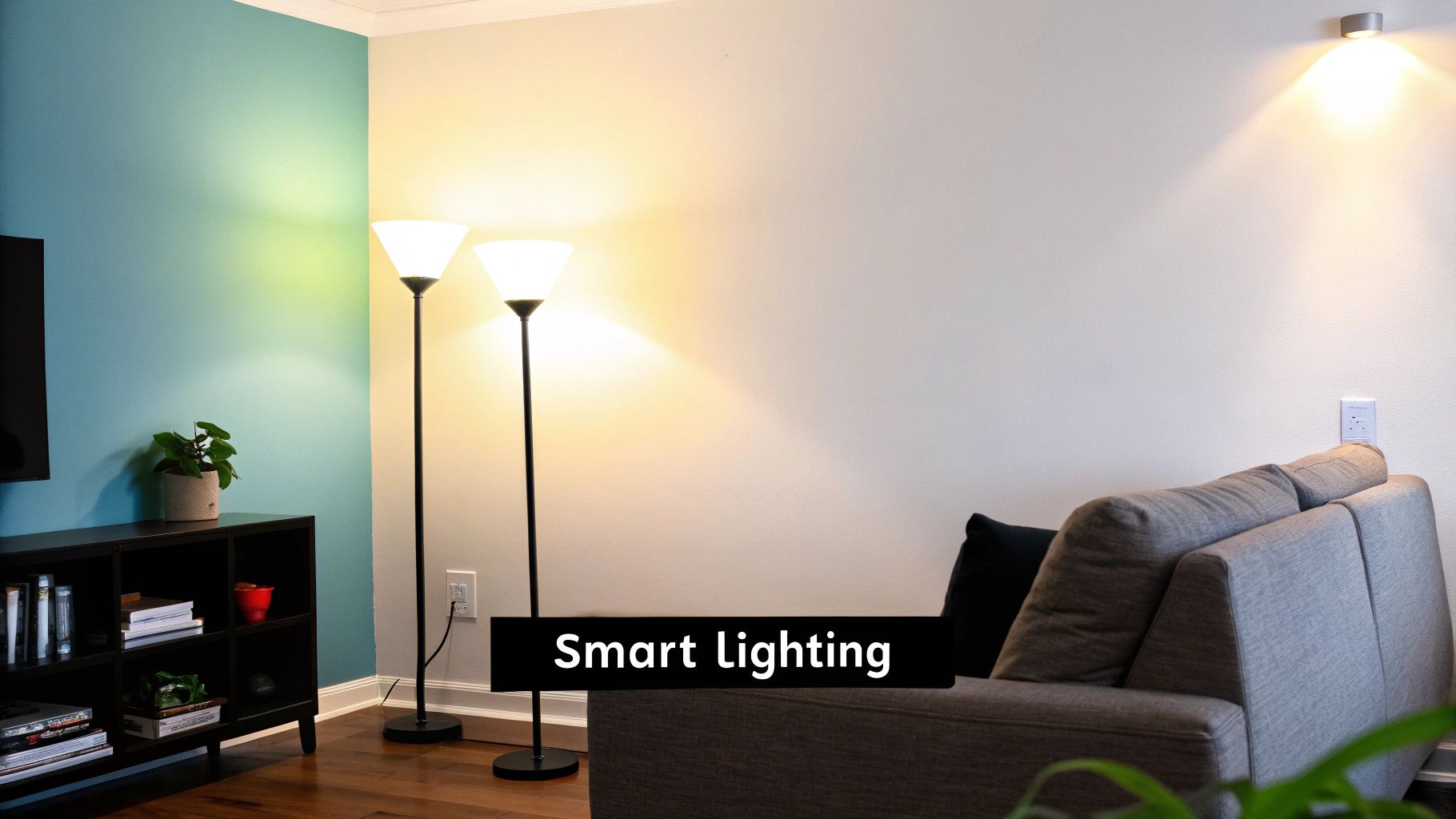
The core benefit lies in dynamic adaptation. Systems from brands like Philips Hue or LIFX can be programmed to follow circadian rhythms, producing cool, energizing light in the morning and shifting to warm, relaxing tones in the evening to promote better sleep. Modular panels from Nanoleaf can turn a wall into an interactive art piece, while affordable options from Wyze make it easy to add color and automation to any room. These systems integrate with voice assistants and motion sensors, making lighting management entirely effortless.
How to Implement Smart Lighting
- Start with Key Areas: Begin by upgrading bulbs in your main living areas and bedrooms. Focus on tunable white bulbs that can shift between warm and cool tones before investing in full-color options.
- Enhance Entertainment Spaces: Use color-capable bulbs or light strips in media rooms or game rooms. Sync them with your movies, music, or games for an immersive ambient experience.
- Automate for Convenience and Sleep: Install occupancy sensors in high-traffic areas like bathrooms and hallways so lights turn on and off automatically. Create a "Goodnight" scene that gradually dims all lights and shifts them to a warm, 2700K color temperature to help your body prepare for rest.
Key Insight: True environmental control is achieved when lighting works in concert with other smart devices. Your "Movie Night" scene could dim the lights, lower the smart blinds, and adjust the thermostat with a single voice command, creating the perfect viewing atmosphere instantly.
This level of control not only enhances your lifestyle but also delivers significant energy savings, as smart LED bulbs use far less power than traditional ones and are only active when needed. It’s an upgrade that pays dividends in both ambiance and efficiency.
8. Water Management and Leak Detection
Beyond energy and security, one of the most practical advantages of a smart home is the ability to proactively manage water usage and prevent catastrophic damage. Smart water monitoring systems act as a vigilant guard for your plumbing, detecting leaks, tracking consumption, and even automatically shutting off the water main to prevent costly floods. This level of protection can save homeowners thousands of dollars in repairs and wasted water.
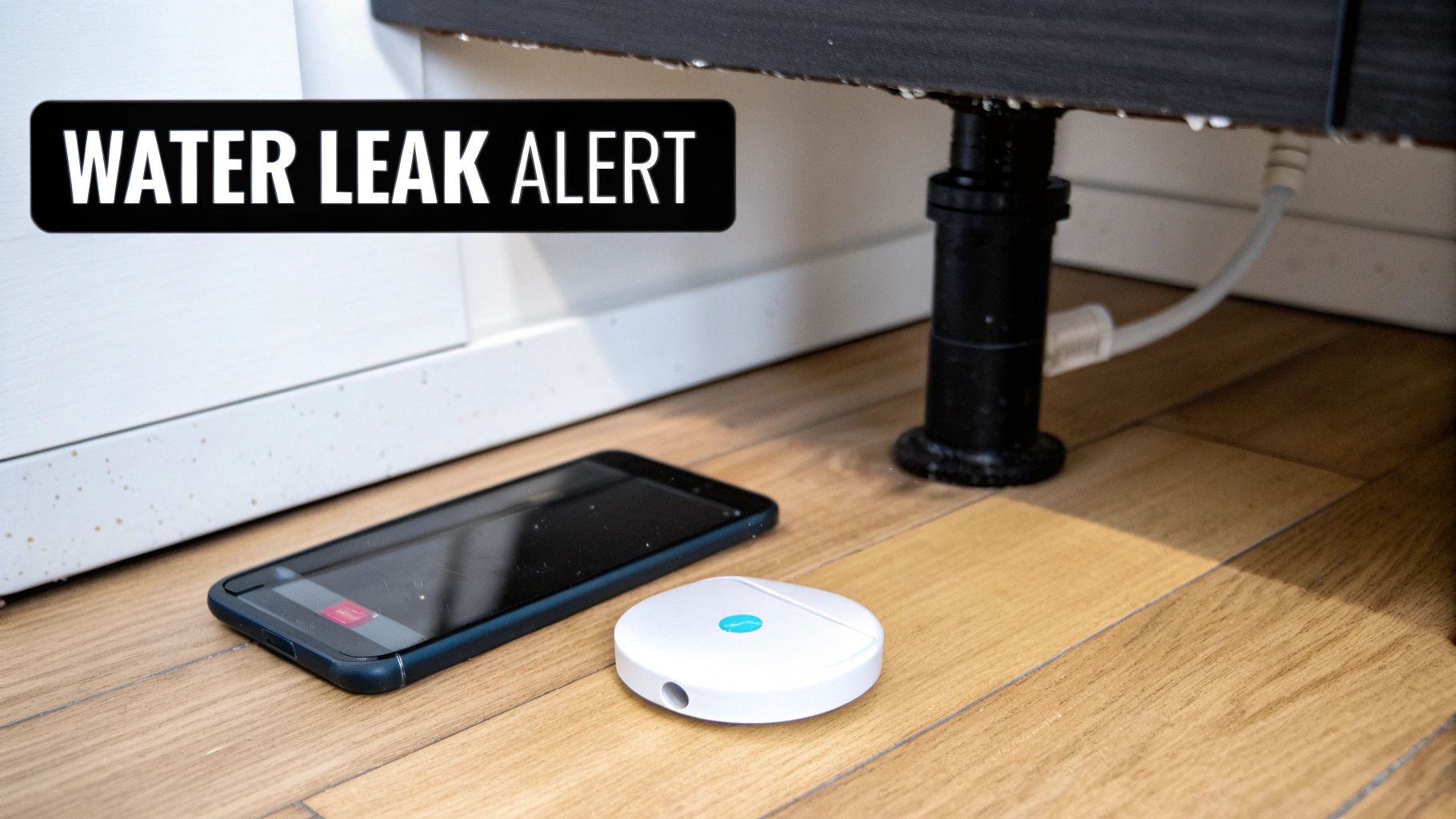
The intelligence behind these systems lies in their advanced sensors and connectivity. Devices like the Phyn Plus or Flo by Moen monitor the pressure and flow of your entire home’s water system, learning your household's typical patterns. They can identify tiny, persistent drips that might otherwise go unnoticed for months, sending an alert to your phone. For major issues like a burst pipe, these systems can automatically trigger an integrated shutoff valve, stopping the flow of water in seconds.
How to Implement Water Management and Protection
- Install Sensors in High-Risk Areas: Start by placing standalone sensors, such as those from Samsung SmartThings, in locations prone to leaks. Key spots include under sinks, behind toilets, near washing machines, and around water heaters.
- Invest in a Whole-Home Monitor: For comprehensive protection, a system like the Flo by Moen, which installs on your main water line, is a powerful investment. It provides real-time data and can automatically shut off water during a major leak event.
- Optimize Outdoor Water Use: Don't forget your lawn and garden. Smart irrigation controllers like the Rachio 3 use local weather data to adjust watering schedules automatically, preventing overwatering and potentially reducing outdoor water consumption by up to 30%.
Key Insight: The true value is realized when detection is linked directly to action. A standalone sensor alerting you to a leak while you're away is helpful, but a system that also automatically shuts off the water main provides unparalleled peace of mind and damage prevention.
By integrating these technologies, you not only protect your property from devastating water damage but also promote water conservation. This dual benefit makes smart water management a crucial component of a modern, resilient, and efficient home.
9. Entertainment, Audio, and Appliance Integration
Beyond security and energy savings, one of the most enjoyable advantages of a smart home is the ability to create a seamlessly integrated entertainment and appliance ecosystem. This technology transforms how you experience audio, video, and daily chores by unifying disparate devices into a cohesive, centrally controlled network. Imagine music following you from room to room, or your entire living room transforming into a movie theater with a single voice command.
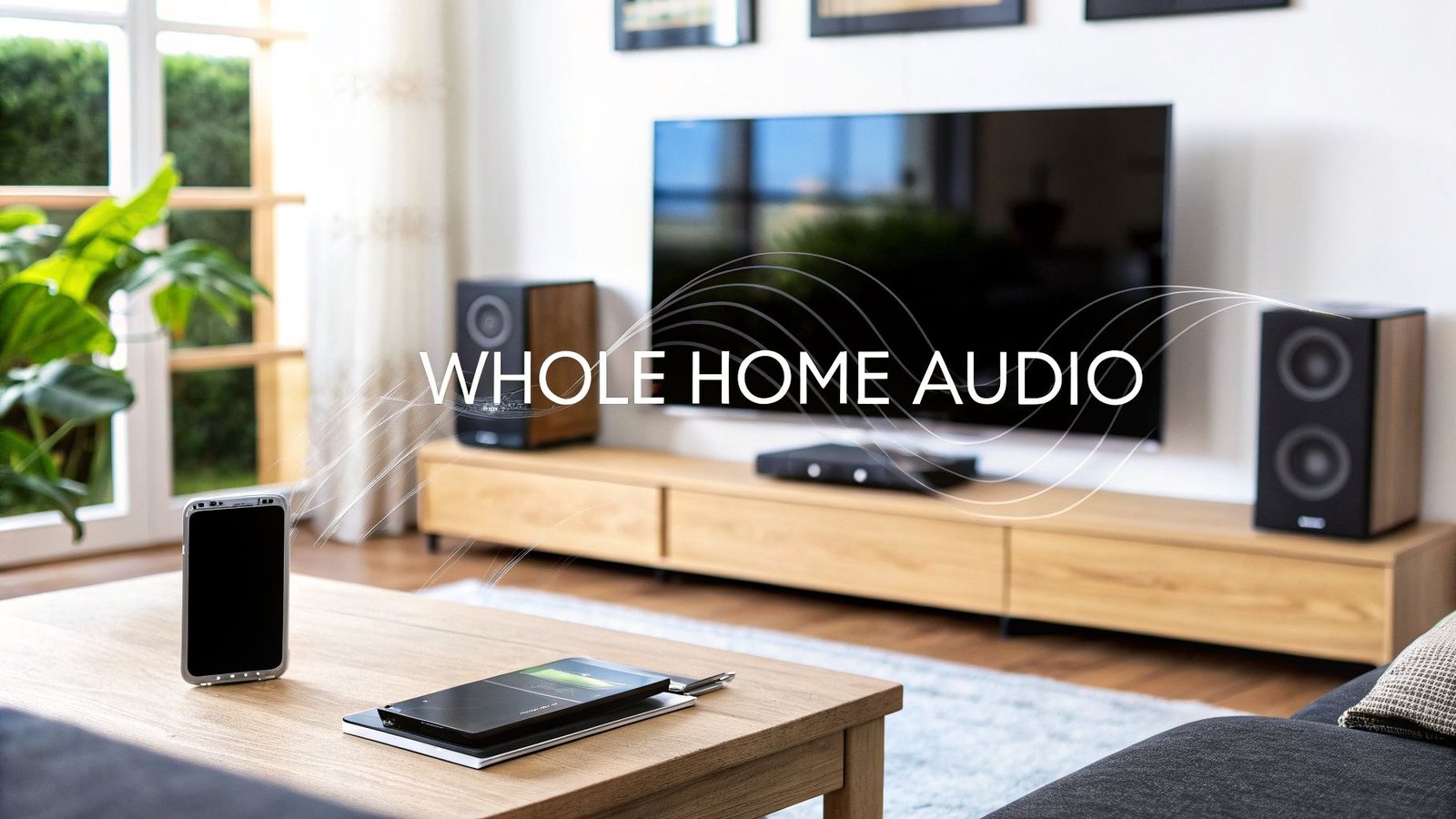
This level of integration is made possible by platforms that allow different brands and devices to communicate. Systems like Sonos for multi-room audio, Apple AirPlay for streaming across devices, and smart hubs like Samsung SmartThings create a unified experience. In the kitchen, smart appliances from LG or GE can send notifications to your phone when a laundry cycle is finished or if the refrigerator door is left open, streamlining household management and preventing minor issues from becoming major problems.
How to Implement Integrated Entertainment and Appliances
- Build Your Audio System Incrementally: You don’t need to outfit your entire home at once. Start with a high-quality smart speaker like a Google Nest Audio or Sonos One in your primary living area. You can then expand your system by adding more speakers to other rooms over time, creating different audio zones for your kitchen, bedroom, or patio.
- Create "Scenes" for Immersive Experiences: Combine entertainment with other smart devices. A "Movie Night" scene could dim the Philips Hue lights, lower the smart blinds, and turn on your TV and soundbar simultaneously. Similarly, a "Cooking" scene might play your favorite playlist and display recipes on your Samsung Family Hub refrigerator screen.
- Prioritize High-Use Appliances: When upgrading appliances, focus on the ones you use most frequently, like your washer, dryer, or dishwasher. The convenience of remote start, cycle-end notifications, and diagnostic alerts from these smart devices offers immediate, practical benefits and can help optimize their energy use.
Key Insight: The true power of this integration lies in creating a responsive environment that adapts to your lifestyle. It’s not just about controlling a single device remotely; it’s about how these devices work in concert to simplify tasks and enhance your daily living experience, from entertainment to household chores.
These integrations bring a new level of convenience and enjoyment to your home, proving that smart technology is as much about enhancing your lifestyle as it is about utility and security. By carefully selecting compatible devices, you can build a truly connected and responsive home environment.
10. Appliance Monitoring and Smart Kitchen Integration
Beyond thermostats and lighting, the advantages of a smart home extend deep into the utility room and kitchen, transforming how you interact with your major appliances. This integration brings a new level of convenience, efficiency, and proactive maintenance to devices like refrigerators, ovens, and washing machines. Smart appliances can be monitored and controlled remotely, sending you timely notifications and even diagnosing their own issues.
The core benefit is streamlined household management. A smart refrigerator like the Samsung Family Hub can show you its contents via an internal camera while you're at the grocery store. LG smart washers and dryers can be started remotely and will notify you the moment a cycle finishes, preventing clothes from sitting and developing musty odors. Similarly, a Whirlpool smart oven can be preheated on your way home, and Bosch dishwashers can alert you when it's time to add more rinse aid.
How to Implement Smart Appliance Integration
- Prioritize High-Use Appliances: Begin by upgrading the appliances you use most frequently, such as your washing machine or refrigerator, to see the most immediate impact on your daily routine.
- Check for Ecosystem Compatibility: When purchasing new appliances, verify their compatibility with your existing smart home hub, like Samsung SmartThings or Amazon Alexa, to ensure seamless voice control and automation.
- Leverage Notifications and Diagnostics: Set up alerts for cycle completions, maintenance reminders (like cleaning a filter), and critical malfunction warnings. These early diagnostics can help you address small issues before they become expensive repairs.
- Optimize for Energy Use: Use the scheduling features in your appliance's app to run high-draw cycles, such as washing clothes or dishes, during off-peak energy hours when electricity rates may be lower.
Key Insight: True smart kitchen integration isn't just about remote control; it's about creating a responsive environment. When your smart oven can download a cooking preset for a specific recipe or your dishwasher automatically orders more detergent when it runs low, your home moves from simply being connected to being truly helpful.
This level of monitoring and control not only saves time and energy but also extends the lifespan of your appliances by ensuring they are maintained properly, providing another clear financial advantage to a well-planned smart home.
Top 10 Smart Home Benefits Comparison
| Item | 🔄 Implementation Complexity | ⚡ Resource Requirements | 📊 Expected Outcomes | Ideal Use Cases | ⭐ Key Advantages / 💡 Tips |
|---|---|---|---|---|---|
| Energy Savings and Reduced Utility Bills | Medium — device setup & calibration | Smart thermostat, sensors, smart plugs, dashboard; moderate upfront cost | 10–23% energy reduction; payback ~3–5 years; lower bills | Eco-conscious homeowners; long-term residents | Lower bills & carbon footprint; tip: start with a smart thermostat and review energy reports |
| Enhanced Home Security and Surveillance | High — camera/lock integration & privacy config | Cameras, smart locks, sensors, reliable internet, monitoring subscriptions | Improved deterrence, instant alerts, evidence; possible 10–20% insurance discounts | Families, frequent travelers, higher-risk properties | Real-time monitoring & evidence collection; tip: enable 2FA and position cameras at entry points |
| Increased Convenience and Smart Automation | Medium — routine creation & ecosystem setup | Voice assistant, smart devices, optional hub, time to configure | Saves ~1–2 hours/day; streamlined daily routines | Busy households, accessibility needs, tech adopters | Unified control and time savings; tip: start with lighting/thermostat and use clear device names |
| Improved Home Accessibility for Elderly and Disabled Residents | Medium — caregiver integration; may need pro install | Voice assistants, fall detectors, emergency systems, monitoring services | Greater independence; faster emergency response; ageing-in 3–5 years longer | Elderly or disabled residents; caregivers and family members | Promotes safety and autonomy; tip: choose simple UIs and test emergency alerts monthly |
| Remote Home Management and Monitoring | Low–Medium — app setup and secure access | Cameras, smart locks, cloud apps, stable internet, subscriptions | Remote visibility/control; faster incident response and verification | Frequent travelers, second-home owners, rental/property managers | Global access and guest management; tip: use VPN/MFA and test remote access regularly |
| Optimized Climate Control and Comfort | Medium — thermostat + sensors; HVAC compatibility | Smart thermostat, remote sensors, possible professional HVAC integration | Comfort ↑20–30%; energy savings ~15–20%; reduced system strain | Homes seeking comfort and efficiency, zoned systems | Precise comfort and energy savings; tip: allow 2–3 weeks for learning and place thermostat centrally |
| Smart Lighting and Ambient Environment Control | Low–Medium — bulbs/switches and schedules; hub optional | Smart bulbs/switches, optional hub, apps; moderate per-room cost | Up to ~80% lighting energy savings; improved ambiance and circadian benefits | Entertainment spaces, bedrooms, security simulations | Energy savings and mood control; tip: start in main areas and use warm light in bedrooms |
| Water Management and Leak Detection | Medium–High — sensors + main shutoff integration | Leak sensors, smart shutoff valves, professional installation for mains | Prevents costly water damage; saves $200–$1,000+ annually; reduces waste | Older homes, rentals, properties with basements or plumbing risks | Damage prevention and conservation; tip: place sensors in high-risk areas and integrate auto shutoff |
| Entertainment, Audio, and Appliance Integration | Medium–High — multi-room sync and ecosystem setup | Speakers, streaming devices, robust WiFi (5GHz), subscriptions | Immersive audio/video; coordinated scenes; saves ~2–3 hrs/week on appliance tasks | Home theaters, music enthusiasts, connected kitchens | Seamless multi-room experience & appliance alerts; tip: start with one zone and ensure strong WiFi |
| Appliance Monitoring and Smart Kitchen Integration | Medium — appliance-specific apps and integrations | Smart appliances or retrofit modules, firmware updates, WiFi | Cycle notifications, malfunction alerts, energy optimization and maintenance reminders | Busy households, energy-aware cooks, laundry management | Prevents spoilage and extends appliance life; tip: verify compatibility before purchase and enable alerts |
Bringing It All Together: Your Next Steps into a Smarter Home
Throughout this guide, we have journeyed through the multifaceted landscape of smart home technology, uncovering a suite of benefits that redefine modern living. We've moved beyond the novelty of voice commands to appreciate the tangible, data-backed advantages of a smart home. The journey has shown us that this technology is not a monolithic luxury but a versatile toolkit capable of solving real-world problems for a diverse range of homeowners.
We've seen how smart thermostats and energy monitoring plugs can lead to significant reductions in utility bills, delivering a clear return on investment. We explored how integrated security systems, from video doorbells to smart locks, create a formidable shield around your family and property, offering unparalleled peace of mind. The discussion on convenience revealed how routine tasks can be automated, freeing up your valuable time for what truly matters. Furthermore, we highlighted the profound impact of smart technology on accessibility, empowering seniors and individuals with disabilities to live more independently and safely in their own homes.
Synthesizing the Core Benefits
The power of a connected home lies in its ability to adapt to your specific lifestyle and priorities. The ten key areas we covered, from climate control and lighting to water management and kitchen integration, are not isolated perks. They are interconnected systems that, when thoughtfully implemented, create a living environment that is more responsive, efficient, and secure.
The core takeaway is that a smart home is a personalized ecosystem.
- For the eco-conscious homeowner, it's a powerful tool for minimizing environmental impact and tracking energy consumption in real-time.
- For busy families, it’s a central command center for managing security, coordinating schedules, and ensuring everyone's comfort and safety.
- For those caring for elderly relatives, it provides a non-intrusive way to monitor well-being and provide immediate assistance when needed.
The true value of a smart home is not in owning a collection of gadgets, but in creating a cohesive system where technology works silently in the background to improve your quality of life.
Your Action Plan: A Strategic Approach to Smart Home Adoption
The sheer number of options can feel overwhelming, but the path to a smarter home is a journey, not a sprint. A successful implementation begins with a clear strategy, not a shopping spree. You don't need to automate every outlet and appliance at once. Instead, adopt a targeted, phased approach that aligns with your most immediate needs.
Here are your actionable next steps:
- Identify Your Primary Goal: What is the single biggest problem you want to solve or benefit you want to achieve? Is it reducing your high electricity bill? Gaining peace of mind while away from home? Or making daily life a little easier for an aging parent? Your answer is your starting point.
- Start with a "Hub" or a Single Solution:
- For Energy Savings: Begin with a smart thermostat like the Google Nest or Ecobee. It's a single device with a high, measurable impact.
- For Enhanced Security: A video doorbell (Ring, Arlo) or a smart lock (August, Schlage) is an excellent first step. These devices address a core security concern and provide immediate value.
- For Accessibility: Smart speakers (Amazon Echo, Google Home) combined with smart plugs can offer immediate voice-activated control over lamps, fans, and small appliances.
- Prioritize Interoperability: As you plan your first or next purchase, think about compatibility. Look for devices that work with major ecosystems like Apple HomeKit, Google Home, or Amazon Alexa. This ensures that as you expand your system, your devices can communicate and work together seamlessly, unlocking more powerful automation possibilities.
Embracing the advantages of a smart home is an investment in a more efficient, secure, and comfortable future. By starting with a clear purpose and building your ecosystem incrementally, you can avoid common pitfalls and create a connected home that truly serves you and your family for years to come.
Ready to take the next step with confidence? The world of smart home technology is constantly evolving, but you don't have to navigate it alone. At Automated Home Guide, we provide in-depth reviews, step-by-step installation guides, and expert advice to help you make informed decisions. Visit Automated Home Guide to find the perfect solutions for your home and start building your smart ecosystem today.


Leave a Reply