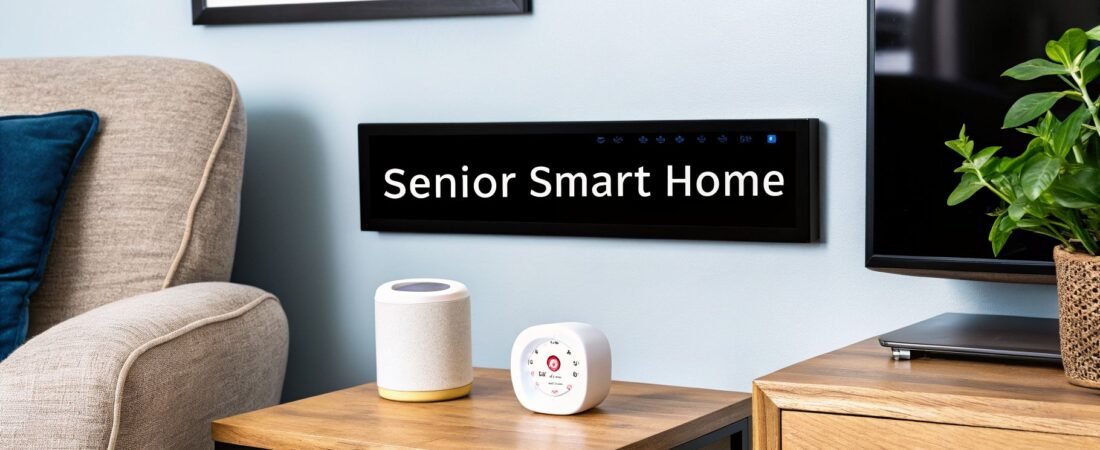
Smart home devices can be a real game-changer for seniors, acting as a digital safety net that makes everyday life safer and a lot more manageable. This technology helps create a supportive home, with features like automatic emergency alerts and simple voice commands, giving older adults the confidence to live independently.
How Smart Technology Empowers Senior Independence

Smart technology isn't just about flashy gadgets or convenience. For seniors, it's about transforming a house they know and love into a home that actively helps them stay safe, reduces physical strain, and keeps them connected to family and friends.
Think of it as a quiet, helpful assistant that’s always on duty. Instead of fumbling with tiny lamp switches or hard-to-reach thermostats, a simple voice command gets the job done. And rather than feeling isolated, a quick video call on a smart display can bring the grandkids right into the living room for a chat. These tools are designed to simplify life, not make it more complicated.
Fostering Safety and Confidence
For many families, the biggest draw of smart home tech is the peace of mind it offers. These devices create a powerful safety net, proactively addressing common risks that seniors face at home. This is a huge reason the market is growing so quickly.
In fact, the global market for smart home devices is expected to jump from $145.44 billion in 2025 to $171.62 billion in 2026, largely driven by the demand for remote monitoring and security. It’s clear that more and more people are recognizing how this technology can support independent living.
Smart technology helps bridge the gap between independence and safety. It gives seniors the freedom to live on their own terms, knowing that help is always within reach—whether it’s through an automated fall alert or a simple voice command.
Promoting Independence Through Accessibility
Staying independent is a top priority for most older adults. Smart technology is one of the most effective tools for making aging in place a safe and comfortable reality. By automating routine tasks and making the home easier to manage, these devices reduce the daily effort needed to live at home.
The benefits of home automation go well beyond just turning things on and off. A truly smart home can help by:
- Reducing physical strain: Voice commands can control lights, thermostats, and TVs, eliminating the need to get up and down.
- Enhancing security: Smart locks and video doorbells let seniors see who is at the door without having to open it.
- Preventing social isolation: Easy-to-use smart displays make video calls with family and friends simple and accessible.
- Providing emergency assistance: Medical alert systems and fall detectors can automatically call for help when it's needed most.
To give you a clearer picture, here’s a quick summary of the most impactful devices and what they do.
Key Smart Devices and Their Benefits for Seniors
| Device Type | Primary Benefit for Seniors | Example Use Case |
|---|---|---|
| Medical Alert Systems | Immediate access to emergency help | Pressing a button on a pendant to call a 24/7 monitoring center after a fall. |
| Smart Locks | Secure, key-free access and monitoring | Granting temporary access to a caregiver from a smartphone app. |
| Voice Assistants | Hands-free control and easy communication | Asking a smart speaker to "call my daughter" or "what’s the weather today?" |
| Fall Detection | Automatic alerts for falls or inactivity | A sensor automatically contacts emergency services if a fall is detected. |
| Smart Lighting | Improved visibility and fall prevention | Setting lights to turn on automatically at night when getting out of bed. |
| Smart Thermostats | Easy temperature control and comfort | Adjusting the heat using a simple voice command without getting up. |
| Smart Cameras | Remote monitoring for peace of mind | A family member checks a camera feed to ensure a loved one is safe. |
Ultimately, these devices empower seniors by giving them greater control over their environment and a much stronger sense of security. You can dig deeper into the https://automatedhomeguide.com/benefits-of-home-automation/ in our full guide.
Now, let's explore each of these devices in more detail and see how they can specifically help seniors thrive at home.
Creating a Safety Net with Core Smart Devices

Sure, smart tech brings a lot of fun and convenience into our lives, but for seniors, its real power lies in creating a robust safety net. This isn't about one fancy gadget. It's about building a small team of devices that work in concert to stand guard against common dangers and summon help the moment it's needed.
Think of it like having a digital first responder built right into the home. These devices are designed to watch for specific risks—a fall, a fire, or a medical emergency—and react instantly. They close the gap between when something happens and when help can get there.
The Evolution of Personal Emergency Response
The classic Personal Emergency Response System (PERS) is what most people picture first, and for good reason. That simple wearable pendant with a help button is still an effective and popular tool. One press, and you're connected to a 24/7 monitoring center that can call for an ambulance or alert family.
But these systems have come a long way. Today's best PERS integrate voice activation, often through a smart hub. This means someone who falls and can't reach their pendant can just call out, "Alexa, call for help." A nearby smart speaker hears the command and places the emergency call, adding a critical layer of redundancy.
The move from a purely manual button to voice-activated help is a game-changer. It means that even if a person is physically unable to press their pendant, their voice can still bridge the gap and get help on the way.
Proactive Fall Detection Technology
Falls are one of the biggest safety threats for older adults living independently. A PERS pendant is great for getting help after a fall, but what if the fall results in unconsciousness? That's where automatic fall detectors come in. These smart home devices for seniors use sophisticated sensors to identify the sudden, jarring motion of a fall and call for help on their own.
You'll generally find two kinds of fall detectors:
- Wearable Sensors: Often built into a smartwatch or a specialized pendant, these use internal accelerometers to spot the tell-tale physics of a fall.
- Ambient Sensors: These are discreet, wall-mounted units that use radar or infrared to monitor a room. They can detect a person falling without relying on cameras, which is a huge win for privacy.
When a fall is detected, the system can be set up to immediately alert a monitoring service, fire off a text message to family members, and even turn on all the lights in the house to make it easier for first responders to see. You can see how this fits into a bigger picture in our complete guide to smart home security systems.
Smart Smoke and Carbon Monoxide Alarms
A standard smoke alarm is a must-have, but its piercing shriek can be disorienting and confusing, particularly for someone with hearing loss or cognitive challenges. Smart smoke and carbon monoxide (CO) alarms offer a much clearer and calmer way to handle an emergency.
Instead of just beeping frantically, a smart alarm uses a human voice to announce the danger and where it is (e.g., "Warning. There is smoke in the kitchen."). At the same time, it sends an alert directly to a family member's or caregiver's phone, no matter where they are. This gives incredible peace of mind, knowing you'll be notified even if your loved one doesn't answer the phone.
The demand for these kinds of life-saving devices is a huge reason the smart home market is set to explode, growing from $147.52 billion in 2025 to an incredible $848.47 billion by 2034. You can dig into the numbers yourself by reviewing the latest smart home market insights on fortunebusinessinsights.com.
Put these devices together, and you have something special. A fall detector can trigger a call through the PERS, while a smart smoke alarm is alerting family who live miles away. It's this teamwork that creates what we're all after: real peace of mind.
Improving Daily Comfort and Accessibility

While safety gear like fall detectors are essential, the real day-to-day impact of a smart home comes from the small conveniences. This is where technology goes from being a safety net to a genuine helping hand, making everyday tasks easier and giving older adults more control over their environment without the physical strain.
Think about how many times a day you get up to flip a switch or adjust the thermostat. For someone with arthritis or limited mobility, those simple tasks can be a painful chore. This is where a voice assistant like Amazon Alexa or Google Assistant completely changes the game. It’s like having a helpful, universal remote for your entire home that you operate just by speaking.
Voice Assistants: The Heart of the Accessible Home
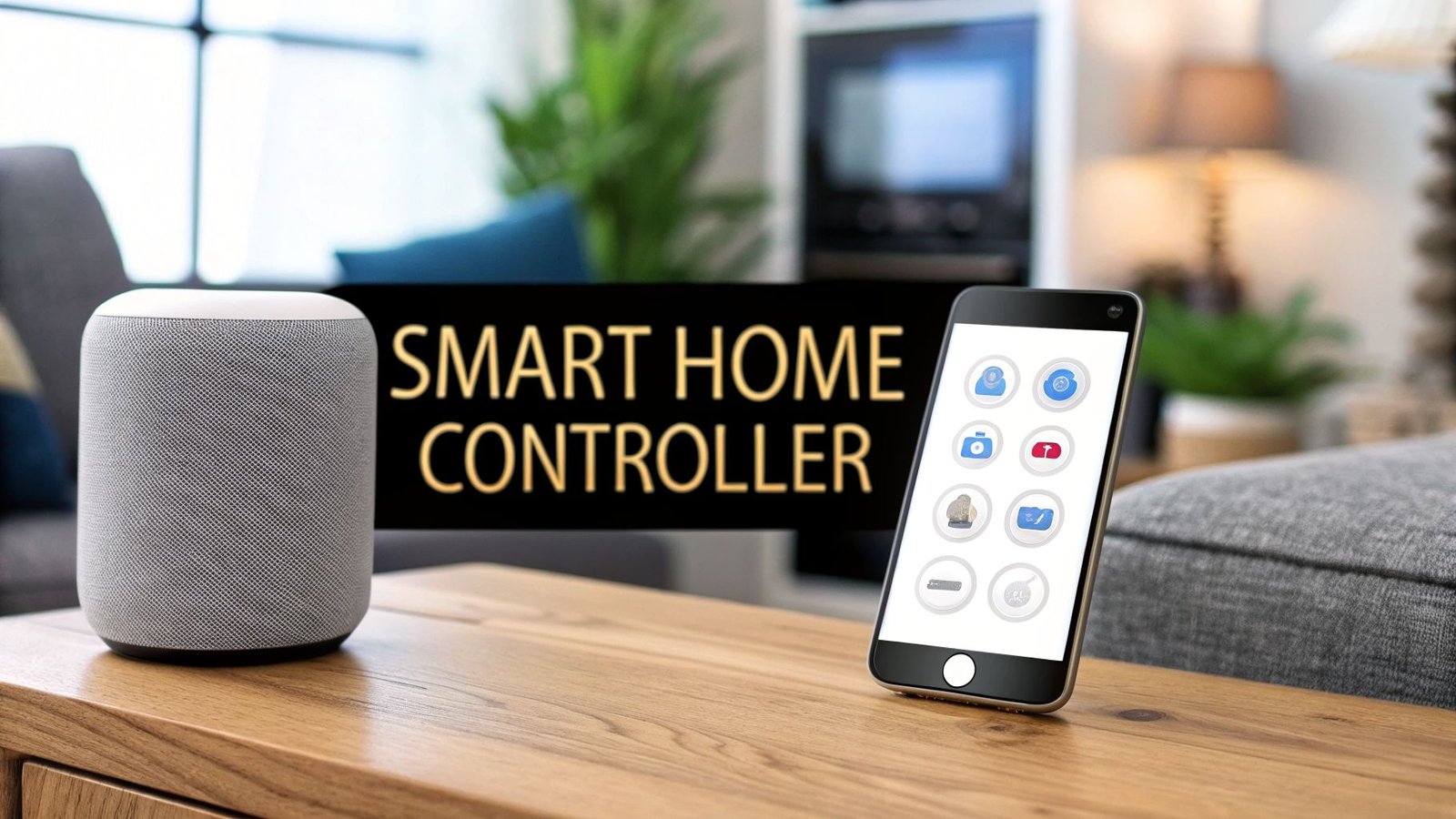
A smart speaker is really the key that unlocks all of this. It's the central hub that listens for your voice and tells all the other devices what to do, making complex technology feel incredibly simple and intuitive.
You don't need to be a tech wizard. Someone who has never been comfortable with a smartphone can easily learn to say, "Alexa, what's the weather?" or "Hey Google, play some Frank Sinatra." The hands-free nature of it removes barriers and makes it easy to feel independent and in control.
The market for these kinds of assisted living technologies is booming for a reason—it’s projected to jump from $23.45 billion in 2025 to nearly $96.85 billion by 2034. As voice control becomes more natural and reliable, older adults are embracing it as a practical tool for daily life. You can read more about these smart home market trends on marketsandmarkets.com.
Automating Comfort with Smart Lighting
One of the biggest, yet often overlooked, safety hazards at home is poor lighting. A dimly lit hallway or bedroom is a common culprit in trips and falls. Smart lighting directly addresses this risk by making sure the home is always safely lit.
You can manage connected bulbs and switches in a few incredibly useful ways:
- Voice Commands: Saying "Alexa, turn on the bedroom lamp" from bed can light up the room before a senior even takes a first step.
- Scheduled Routines: Set lights to turn on automatically around sunset and switch off at a regular bedtime. It’s one less thing to remember to do.
- Motion Activation: This is a game-changer for nighttime safety. Placing motion sensors in hallways, stairways, and bathrooms means lights pop on the instant someone gets up, illuminating the path automatically.
Better yet, you can combine these. A simple "Good Morning" routine can be set up so that when a senior says the phrase, the bedroom lights fade on gently to 30%, the heat kicks up a few degrees, and their favorite morning news station starts to play. We cover some great options in our guide to the best smart lighting systems.
Smart lighting does more than just brighten a room; it provides a predictable and safe path. By automating visibility, you significantly reduce the risk of trips and falls, especially during the night.
Effortless Temperature Control with Smart Thermostats
Keeping the house at a comfortable temperature is crucial for health and well-being. But thermostats are often installed in awkward spots or have tiny buttons and screens that are tough to see and use. A smart thermostat fixes all of that.
Instead of getting up and squinting at a tiny display, a senior can simply say, "Hey Google, set the heat to 72 degrees," right from their favorite chair. It removes the physical barrier completely.
This also provides a wonderful peace of mind for family members. From their own smartphone, a loved one can check in on the home's temperature and make adjustments remotely. If a sudden cold snap hits, you can make sure your parent's home is warm and cozy without anyone having to make a special trip. It's a simple way to provide care from a distance.
Staying Secure and Connected with Loved Ones
It's one thing to make a home safer from falls and easier to navigate, but what about feeling secure from the outside world and connected to the people you love? Smart home technology offers a brilliant answer to both of these concerns, addressing home security and the very real risk of social isolation at the same time.
The right devices can add layers of security to a home while also opening up simple, clear windows for communication with family and friends. It's a powerful combination, bolstering physical safety and emotional well-being. Let’s look at how smart locks, video doorbells, and smart displays can create an environment that’s both safe and full of connection.
Securing the Front Door with Smart Locks
Fumbling for house keys can be a massive headache, especially for anyone dealing with arthritis, limited eyesight, or shaky hands. A smart lock does away with this struggle entirely, offering secure entry without a physical key. Think of it as your own digital doorman.
For seniors, this is a game-changer. No more trying to find the right key in the dark or worrying about a lost spare. Most smart locks come with a backlit keypad, so a simple, memorable code is all it takes to get inside. Better yet, they can be controlled right from a smartphone app, which gives family members a fantastic way to help from afar.
Picture this: a caregiver is running late, or a relative needs to drop off groceries. Instead of leaving a key under the mat—a classic security mistake—you can unlock the door for them remotely. You can also grant them a temporary digital key that only works during specific hours, like a home health aide's scheduled visit, and you can revoke that access at any time.
- Keyless Entry: Seniors can use a simple code to unlock the door, eliminating the need to handle small, difficult keys.
- Remote Access: Family members can lock or unlock the door from anywhere using their smartphone.
- Temporary Codes: Grant access to caregivers, cleaners, or visiting family for specific times, enhancing security and control.
This level of control doesn't just make daily life more convenient; it also creates a log of who entered the home and when, adding a serious layer of security and peace of mind.
Screening Visitors with Video Doorbells
An unexpected knock at the door can be a real source of anxiety, particularly with scams that unfortunately target older adults. A video doorbell acts as a high-tech peephole, giving seniors the power to see and speak with anyone on their doorstep without having to open it. It’s a first line of defense that puts them firmly in control.
When a visitor presses the button, an alert pops up on a designated smartphone or a connected smart display inside. Your loved one can see a live video of who is there and have a two-way conversation with them. This is perfect for politely turning away a salesperson, confirming a package delivery, or vetting any unknown visitor, all from the safety of their favorite chair.
A video doorbell transforms the front porch from a point of vulnerability into a controlled checkpoint. It gives seniors the power of information, allowing them to make safe decisions about who to let into their home.
Some of the newer video doorbells, like those using Google's Gemini for Home, use AI to tell the difference between a person, a package, or just a passing car. This cuts down on pointless notifications and gives a much clearer picture of what’s happening outside. For family members, it’s an easy way to check in on front door activity from miles away.
Using Smart Displays as a Window for Connection
While security is crucial, battling social isolation is just as vital for a senior’s overall health. This is where smart displays like the Google Nest Hub or Amazon Echo Show truly shine. They are so much more than a security accessory; they are a simple, accessible portal for face-to-face connection.
These devices feature large screens and clear speakers that make video calls incredibly easy and enjoyable. A family member can even use a feature like "drop-in," where a video call connects automatically. It feels like just popping your head in to say hello and see that everything is okay—a wonderful, non-intrusive way for families to stay in touch without making anyone feel like they're being watched.
It’s just as easy for a senior to make a call themselves. A simple voice command like, "Hey Google, call Sarah," instantly connects them to a loved one. This removes the hassle of trying to navigate a tiny smartphone screen or a complicated computer interface. It makes spontaneous chats a natural part of the day, shrinking the distance between family and keeping those bonds strong.
How to Choose and Set Up Your Smart Home System
Jumping into the world of smart homes for an older loved one can feel a little overwhelming, but with a bit of planning, it's a very manageable project. The real goal isn't just to add gadgets; it's to build a system that genuinely helps and is easy to navigate, not one that causes more stress.
A successful setup always starts with thinking through the needs before you even click "buy." The best systems aren't the ones packed with the most devices. They're the ones where every piece works together smoothly to make daily life safer and a bit easier.
Starting with a Smart Foundation
Your very first decision—and the most important one—is picking a central smart home ecosystem. This is the brain of the whole operation, typically run by a voice assistant like Amazon Alexa or Google Home. Sticking to one ecosystem is the key to simplicity, as it ensures all your different devices can actually talk to each other.
When everything is under one roof, you can control lights, locks, and thermostats from a single app or with one consistent set of voice commands. It completely eliminates the headache of juggling multiple apps and trying to remember which system does what.
For a senior's home, you'll want to weigh these factors heavily:
- Ease of Use: How forgiving is the voice assistant? You need one that can understand commands without perfect diction and can handle various accents.
- Device Compatibility: Does the platform play well with others? You'll want a wide range of options, especially for specialized safety gear like medical alert systems.
- Reliability and Backups: What happens when the power or internet goes out? Look for systems that offer devices with battery or cellular backups for critical functions.
- Professional Monitoring: Can you connect the system to a 24/7 professional monitoring service for true peace of mind during emergencies?
I've found the best approach is to start small. Begin with one or two high-impact devices, like a smart speaker and a couple of smart plugs. This gives your loved one a chance to get comfortable with the technology on their own terms before you introduce anything more complex.
Comparing Smart Home Ecosystems for Senior Living
So, which platform should you choose? While they all have their strong points, the right one for senior living often boils down to the user interface and the specific safety features they offer.
Here’s a look at how the big three stack up for this specific use case.
Comparing Smart Home Ecosystems for Senior Living
| Feature | Amazon Alexa | Google Home | Apple HomeKit |
|---|---|---|---|
| Ease of Voice Commands | Top-notch. It's excellent at understanding natural, conversational language. | Very strong and getting smarter with contextual commands. | Good, but can sometimes require more precise phrasing. |
| Device Compatibility | The clear winner. It supports a massive range of third-party devices. | Extensive and growing quickly, especially with the new Matter standard. | More selective. It focuses on a curated list of premium, certified products. |
| Emergency Features | A standout feature is Alexa Emergency Assist, which offers professional monitoring. | You can make emergency calls, but there's no built-in monitoring service. | Relies entirely on third-party apps for emergency response. |
| Setup Simplicity | Generally very user-friendly and straightforward for most devices. | Setup is simple, particularly for Google's own Nest products and Matter devices. | Can be more involved and requires an Apple device (like an Apple TV or HomePod) to act as a hub. |
As you can see, a platform like Amazon Alexa often gets the nod for senior households. Its huge device compatibility and integrated emergency services are hard to beat.
Protecting Privacy and Building Trust
Bringing new technology into someone's home is a big deal, and it absolutely requires trust. Privacy isn't just a buzzword; it's a real and valid concern that you have to tackle head-on from day one.
First things first: lock down the network. Create a strong, unique password for the Wi-Fi and for every smart home account. A good password manager is your best friend here, helping you generate and store complex passwords you don't have to remember.
When you're setting up devices with cameras or microphones, transparency is everything.
Have an open conversation with your loved one about where each device will go and what it's for. The aim is to create a supportive safety net, not a surveillance system. Public areas like the living room or near the front door are fine for cameras; private spaces like bedrooms and bathrooms are always off-limits.
Nearly all of these devices come with clear privacy controls built-in. Smart speakers have a physical button to mute the microphone completely. Take a few minutes to walk through the app settings for every device and adjust the data and sharing permissions to a level that makes everyone feel secure.
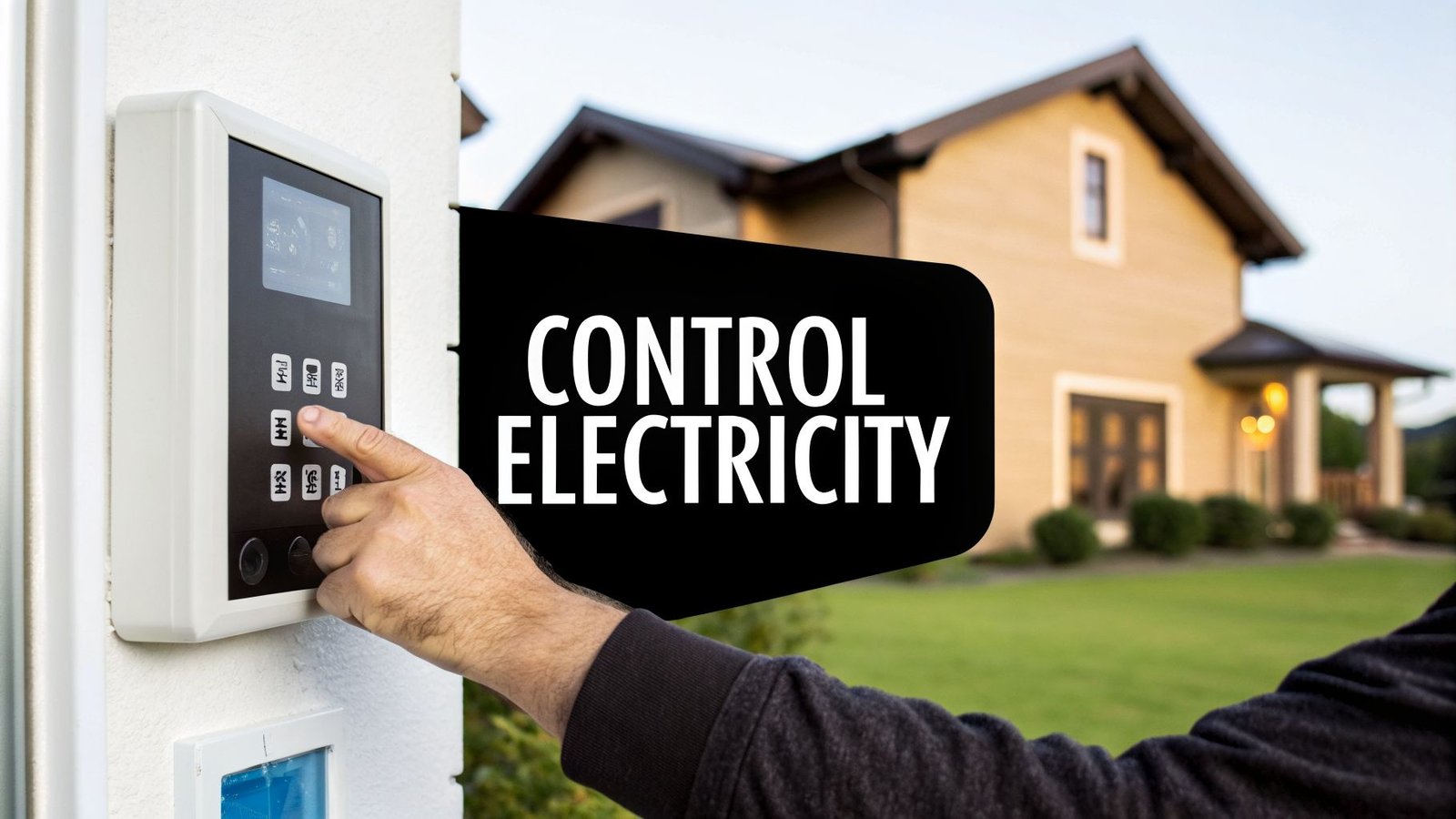
This decision tree gives a great visual of how different devices can work together to manage front door security, which is a common point of anxiety.

It clearly lays out how the right device can help in any situation, from letting in a family member to safely screening an unknown visitor. As you design your system, don't forget to include devices that offer both convenience and efficiency—for instance, it's worth looking into the best smart thermostats to help manage utility bills and maintain a comfortable temperature automatically.
Answering Your Questions About Smart Homes for Seniors
Bringing new technology into a loved one's home is a big decision, so it's only natural to have a few questions. When I talk with families about setting up smart home devices for seniors, a few concerns almost always come up: cost, privacy, and complexity.
Let's tackle those worries head-on. The whole point of this technology is to make life easier and safer, not more complicated. By getting clear, straightforward answers, you can feel confident that you're adding a powerful tool for independence, not a burden.
Are Smart Home Devices Expensive to Set Up?
This is the first question on everyone's mind, and the answer is refreshingly simple: it doesn't have to be. You can create a genuinely helpful setup for less than $100.
A great way to get your feet wet is with a single smart speaker and a couple of smart plugs. That combination alone lets you control lamps, a fan, or even the coffee maker with just your voice, which can be a huge help. Plus, most of these foundational devices are designed for a simple DIY installation, so you won't need to hire a professional.
Of course, some advanced services, like professionally monitored security, do have monthly subscription fees. But for the vast majority of devices, you buy it once and you're done—no ongoing costs.
The best approach is always to start small. Think about the one thing that would make the biggest difference—maybe it's automated lights for nighttime safety or an emergency button for peace of mind. Build your system out from there. This keeps the investment manageable and gives everyone time to get comfortable at their own pace.
How Can We Protect a Senior's Privacy?
This is, without a doubt, one of the most critical questions. Reputable brands take this very seriously, and modern devices come with strong, built-in privacy controls that give you full control.
Take smart speakers, for instance. Their microphones are engineered to do nothing until they hear a specific "wake word," like "Alexa" or "Hey Google." Only after hearing that phrase does the device begin processing what you've said. Every major smart speaker also has a physical mute button that electronically cuts power to the microphone, giving you a clear visual guarantee that it isn't listening.
When it comes to cameras, the conversation around placement is everything.
- Strategic Placement: Only install cameras in common areas, like the main living room or by the front door where deliveries are made.
- Respect Boundaries: Private spaces like bedrooms and bathrooms should always be off-limits. No exceptions.
- Open Dialogue: The most important step of all is talking it through. Have an honest conversation with your loved one about where the devices will go, what they're for, and who can view the feed.
The goal here is to enhance safety and connection, not to create a feeling of being watched. Making sure the person using the technology feels respected and in control is the key to making it work.
What Happens If the Wi-Fi or Power Goes Out?
That's a fair question—for safety devices, reliability isn't just a feature, it's a requirement. Manufacturers get this, which is why so many essential devices are built with backups for exactly this scenario.
When you're shopping, look for these two key features on the packaging or in the product description:
- Cellular Backup: Many modern Personal Emergency Response Systems (PERS) and security hubs come with their own cellular chip. This means they can still send an alert to a monitoring service or a family member, even if the home's Wi-Fi cuts out.
- Battery Backup: You'll find that critical devices like fall detectors and emergency buttons often have a built-in battery. This keeps them powered and operational for hours during a power outage, right when they might be needed most.
So while a power outage might knock out the music streaming, the core safety net is designed to stay up and running.
Is This Technology Too Complicated for Someone Who Isn't Tech-Savvy?
Not at all. In fact, the beauty of a well-designed smart home is its simplicity. The main way you interact with it is through your voice—the most natural interface we have.
There are no confusing menus or tiny buttons to deal with. Your loved one can just say what they need. Better yet, family members can set up helpful automations—like having the lights turn on automatically at sunset—that run in the background without anyone having to do a thing. Starting with just one or two simple devices is a fantastic way to show just how easy and helpful this technology can be, building confidence from day one.
At Automated Home Guide, we're committed to helping you find the right smart home solutions to enhance safety and comfort. Explore our in-depth articles and reviews to build the perfect system for your loved one.
Discover more at https://automatedhomeguide.com


Leave a Reply