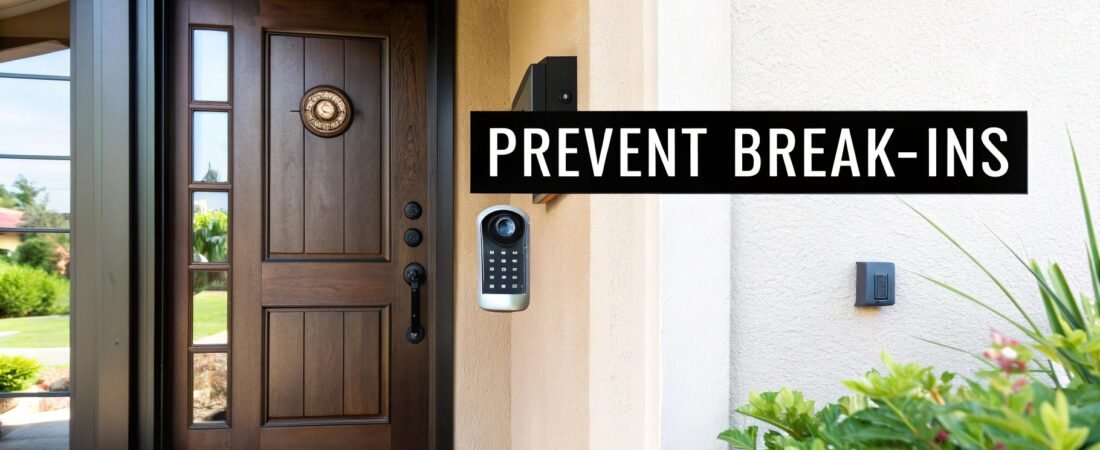
Want to stop a break-in before it even starts? The trick is to stop thinking like a homeowner and start thinking like a burglar. It’s all about making your property look occupied, difficult, and high-risk. This simple shift in mindset is your most powerful tool—far more effective than just reacting after something has already happened.
Think Like a Burglar to Spot Your Weaknesses
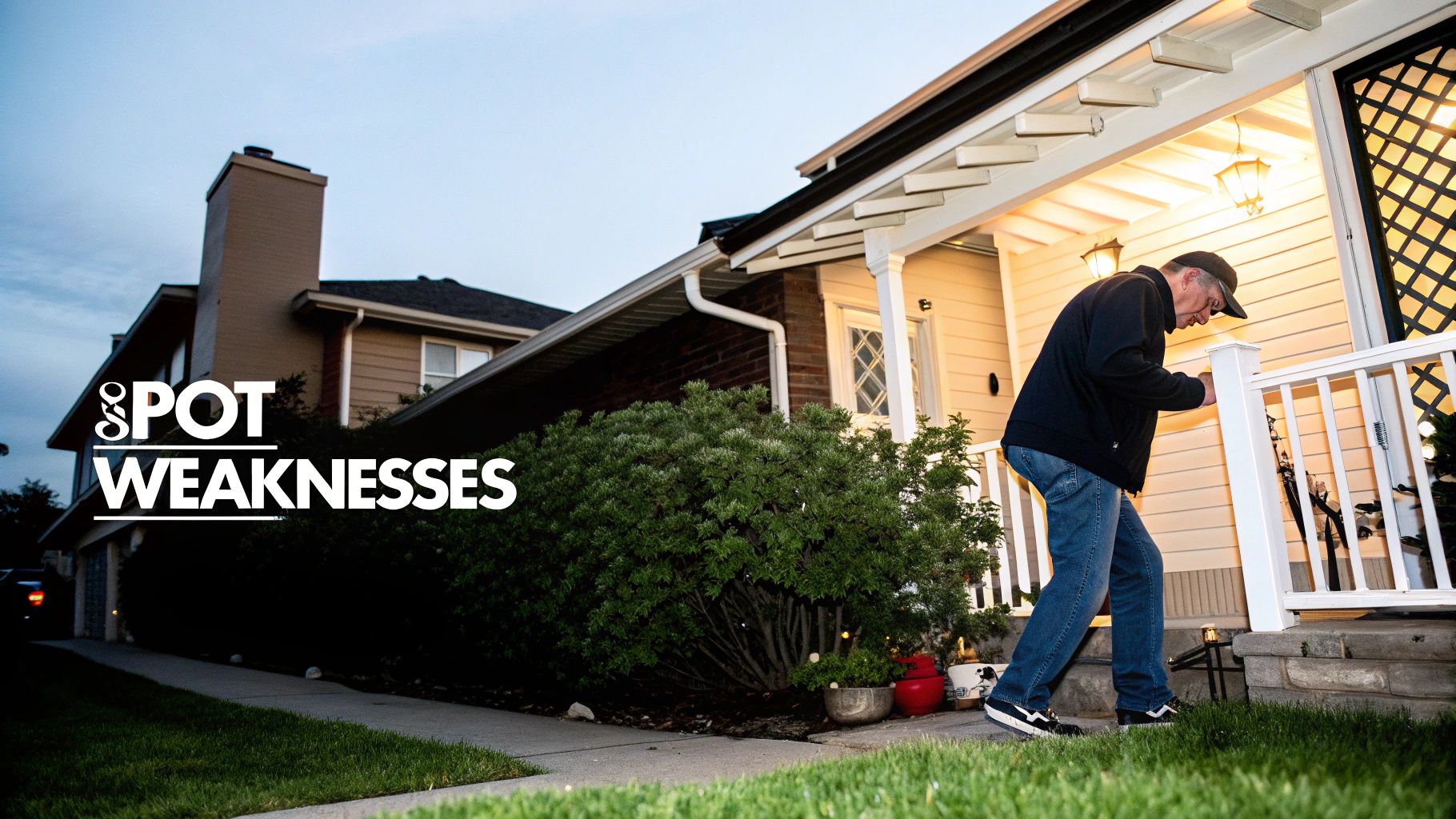
Before you spend a dime on new gadgets, the single most important thing you can do is change your perspective. To truly bulletproof your home, you need to see it through the eyes of someone scouting for the path of least resistance.
This isn’t about making you paranoid; it’s about making you prepared. The reality is, most burglars are opportunists. They aren't criminal masterminds from a heist movie. They're looking for an easy score—a way to get in and out quickly with minimal risk of being seen or heard. By spotting what makes your home an attractive target, you can systematically take away their invitations.
The Vulnerability Walkthrough
Grab a notepad and do a full lap around your property, starting from the street. Try to look at it like you’re seeing it for the first time. What’s your immediate impression? An entryway that’s well-lit and open feels much riskier to approach than one hidden in the shadows of overgrown bushes.
Your mission here is to find the "easy wins" for an intruder. These are the exact things a burglar is scanning for as they pass by:
- Landscaping and Lighting: Are there dense shrubs or trees pushed right up against your house? That's a perfect hiding spot for someone trying to pry open a window. Is your side yard or backyard pitch-black at night? Darkness is a burglar's best friend.
- Fences and Gates: Give your gate a good shake. A flimsy latch or a low fence that’s easy to hop over is hardly a deterrent. A tall, sturdy fence with a solid lock, on the other hand, sends a message: “keep moving.”
- Visible Valuables: Can you spot a laptop on the dining room table from the sidewalk? Are car keys hanging on a hook that's visible through a glass panel on your door? Simply keeping valuables out of sight is one of the easiest and most effective deterrents.
Identifying Hidden Entry Points
Now, let's look at the house itself. It's natural to focus on the front door, but intruders often look for the weak spots we forget about.
Think beyond the ground floor. A flat roof over a garage or porch is practically a staircase to second-story windows, which people often forget to lock. A sturdy trellis or even a well-placed tree can serve the same purpose.
Key Insight: A burglar wants a quiet, predictable entry. They don't want a challenge. Every little obstacle you add—from a thorny rose bush planted under a window to a motion-activated floodlight—cranks up their risk and makes your neighbor’s less-protected home look a whole lot better.
Don't forget to check for these less-obvious vulnerabilities:
- The Spare Key: That fake rock under the porch isn't fooling anyone. Burglars know every common hiding spot: under the doormat, inside the mailbox, on top of the door frame. Just get rid of the spare key entirely.
- Pet Doors: A large, unsecured pet door can be a surprisingly easy entry point for a smaller intruder.
- Mail Slots and Attached Garages: Older mail slots built into doors can sometimes be used to reach in and unlock the door. And that door leading from your attached garage into the house? It's one of the most common points of failure—people often forget to lock it.
By doing this quick audit, you'll end up with a practical, prioritized to-do list. You'll likely find that trimming back a few bushes or upgrading a deadbolt provides more real-world security than the fanciest alarm system. This proactive approach turns your weaknesses into strengths and makes your home a place burglars would rather skip.
Fortifying Your Doors and Windows
Once you’ve walked your property and spotted the obvious weak spots, it’s time to start reinforcing them. Let's be blunt: your doors and windows are the front lines in your home's defense. They're where most break-ins happen, so making them as tough as possible is the single most important thing you can do.
This whole process is called target hardening. The goal isn't to make your home an impenetrable fortress, but to make breaking in so loud, difficult, and time-consuming that a would-be burglar just gives up and moves on.
And it works. The data backs this up—a whopping 55.7% of break-ins involve some kind of forced entry. By beefing up your doors and windows, you're directly countering the most common tactic burglars rely on. You’re essentially stopping the majority of attempts before they can even get started.
Upgrading Your Main Entry Points
Think of your front door as more than just a welcome mat for guests; it's your first and best line of defense. If you have hollow-core exterior doors, which are surprisingly common, you might as well have a cardboard cutout. They offer almost no resistance. A solid-core door—whether it's solid wood, fiberglass, or steel—is an absolute must-have.
But a strong door is only as good as the hardware holding it in place.
- Beef Up Your Deadbolt: Check your deadbolt. The bolt itself should extend at least a full one-inch into the doorframe. Anything less is just asking for trouble from a well-placed kick.
- Reinforce the Strike Plate: The tiny metal plate your lock bolts into is a joke. Most are held in with short screws that barely grab the flimsy wood of the doorjamb. Rip that out and install a heavy-duty, reinforced strike plate using three-inch screws. These will anchor deep into the wall stud behind the frame, creating a rock-solid connection.
- Strengthen the Frame: Even the best door and lock can be defeated if the wooden frame itself splits. For maximum security, look into metal door frame reinforcement kits. They armor the entire jamb against brute-force attacks.
This trio—a solid door, a long-throw deadbolt, and a deeply anchored strike plate—turns a major vulnerability into a serious roadblock.
Securing Sliding Doors and Other Vulnerabilities
Everyone knows sliding glass doors are a security nightmare. Their standard latches are notoriously weak. Thankfully, the fix can be incredibly simple and cheap. Just cut a wooden dowel or an old broomstick to fit snugly in the track. A burglar can't slide the door open if it's physically blocked.
Pro Tip: For sliding doors, I always recommend a secondary lock. A foot-operated lock at the base or a "Charley bar" adds another visible layer of security. It makes prying the door from the track nearly impossible.
And don't forget the other, less obvious ways someone might try to get in.
- Pet Doors: If your pet door is big enough for a person to squeeze through, you've got a problem. Upgrade to a modern version with a secure locking cover, or even one that only opens with an electronic key on your pet's collar.
- Mail Slots: That charming old mail slot could be a security risk. If a hand can fit through, it's a liability. Swap it for a smaller one or install a protective hood on the inside to block access.
Reinforcing Your Windows
Windows are the second-favorite entry point for burglars, especially those on the ground floor or hidden from the street. The first step is simple: make sure every window has a working lock and get in the habit of using it. For older, weaker latches, adding secondary pin locks or keyed sash locks can make a world of difference.
But locks only do so much against a brick. A fantastic upgrade is shatter-resistant security film. It’s a clear adhesive layer you apply to the inside of the glass. If a burglar tries to smash the window, the film holds the broken shards together. Instead of a quiet tink and easy entry, they're left trying to bash their way through a noisy, stubborn, and now very obvious sheet of fractured glass. It's an incredible deterrent.
Beyond just locks, there are a lot of effective window burglar proofing tips you can use to really button things up. By taking the time to harden both your doors and windows, you make your home a far less appealing target.
Using Smart Technology for Active Home Defense
Physical barriers are your first line of defense, but let's be honest, modern tech is what turns your home from a passive target into an actively protected space. Smart security isn't just for sprawling estates or businesses anymore. It's affordable, incredibly effective, and gives you a real sense of control, whether you're just upstairs or on vacation.
The magic happens when you create an integrated system where your devices talk to each other. This is the difference between having a few cool gadgets and a coordinated defense network. Think about it: a motion sensor on your porch triggers a floodlight, your video doorbell starts recording, and you get an alert on your phone instantly. That’s active defense in real-time.
The Power of Visibility with Security Cameras
If you’re going to start anywhere, start with cameras. They are the cornerstone of any smart security setup. Just seeing a camera is often enough to make a potential intruder think twice and move on. But their real job is to be your eyes and ears, giving you the information you need to stay in control.
When you're shopping for cameras, don't get sidetracked by flashy marketing. Focus on the features that actually matter.
- High-Definition Video: You need to be able to see details clearly. Anything less than 1080p resolution is a waste of money.
- Clear Night Vision: A huge number of break-ins happen after dark. Make sure your camera has excellent infrared or even color night vision. It's a deal-breaker.
- Intelligent Motion Alerts: You don't want your phone blowing up every time a cat walks by. Good cameras can tell the difference between people, animals, and cars, which drastically cuts down on false alarms.
- Two-Way Audio: This is more useful than you might think. Being able to hear what's going on and speak through the camera is perfect for scaring someone off or just telling the delivery guy where to leave a package.
If you're really looking to go deep on surveillance options, it's worth reading a guide on choosing a comprehensive security camera system to get a feel for all the possibilities.
Smart Security Device Comparison
To make things a bit clearer, here's a quick rundown of the essential devices, what they do, and where they work best. This isn't an exhaustive list, but it covers the core components of a solid home security system.
| Device Type | Primary Function | Key Features | Ideal Placement |
|---|---|---|---|
| Video Doorbell | See, hear, and speak to visitors from anywhere. | HD video, motion detection, two-way audio, night vision. | Front door, at eye level. |
| Outdoor Camera | Monitor property perimeter and deter intruders. | Weatherproof, wide field of view, smart alerts, floodlight. | Overlooking driveways, backyards, side gates, and entry points. |
| Smart Lock | Remotely lock/unlock doors; manage access. | Keyless entry, activity logs, temporary access codes, auto-lock. | All primary exterior doors (front, back, garage). |
| Entry Sensors | Detect when a door or window is opened. | Small, discreet, long battery life, instant alerts. | All ground-floor windows and exterior doors. |
| Motion Sensors | Detect movement inside the home. | Pet-immune settings, wide detection range. | High-traffic areas like hallways, living rooms, and main entryways. |
Putting these pieces together is what creates that layered defense. Each device has a role, and when they work in sync, the whole system is much more effective than the sum of its parts.
Smart Locks and Modern Alarm Systems
Beyond just seeing what's happening, you need to control your access points. Smart locks are a game-changer here. They let you lock or unlock your door from your phone, grant temporary codes to a dog walker, and see a log of who came and went. You’ll never have to worry about a lost key or that "did I lock the door?" feeling again.
And forget those old, screeching alarms that just annoy the neighbors. Today's alarm systems are smart and connected.
A modern alarm system will ping your phone the second a door or window sensor is tripped. Many even come with professional monitoring options that can dispatch emergency services for you, which is a lifesaver if you're not able to respond yourself.
The presence of a security system is a powerful deterrent. According to ADT, a staggering 50% of burglars would walk away from a target if they noticed a security system. That's a huge impact, especially considering only about 34% of U.S. homes even have one.
The infographic below really drives home the importance of protecting the most common points of entry.

As you can see, it's all about a layered strategy—strong doors, secure windows, and the smart tech that watches over them.
Creating an Integrated Security Ecosystem
The real power of all this tech is unlocked when you get it working together. It’s not about having a collection of separate gadgets; it's about building a responsive ecosystem. For anyone looking to build a truly cohesive setup, our guide on smart home security systems is a great place to start.
Let's walk through a quick, real-world example:
- Someone tries to sneak into your side yard late at night.
- The motion sensor over there immediately kicks on a smart floodlight, bathing the area in light and startling the intruder.
- At the same time, the camera on that corner starts recording and shoots a "Person Detected" alert to your phone.
- You tap the notification, see the live feed, and use the two-way audio to say, "You're on camera, and I've already called the police."
In that short sequence, multiple devices worked together to detect a threat, deter the person, and document the event—all without you having to put yourself in harm's way. That’s the ultimate goal: to make your home a hard target that actively defends itself.
Making Your Home an Unappealing Target
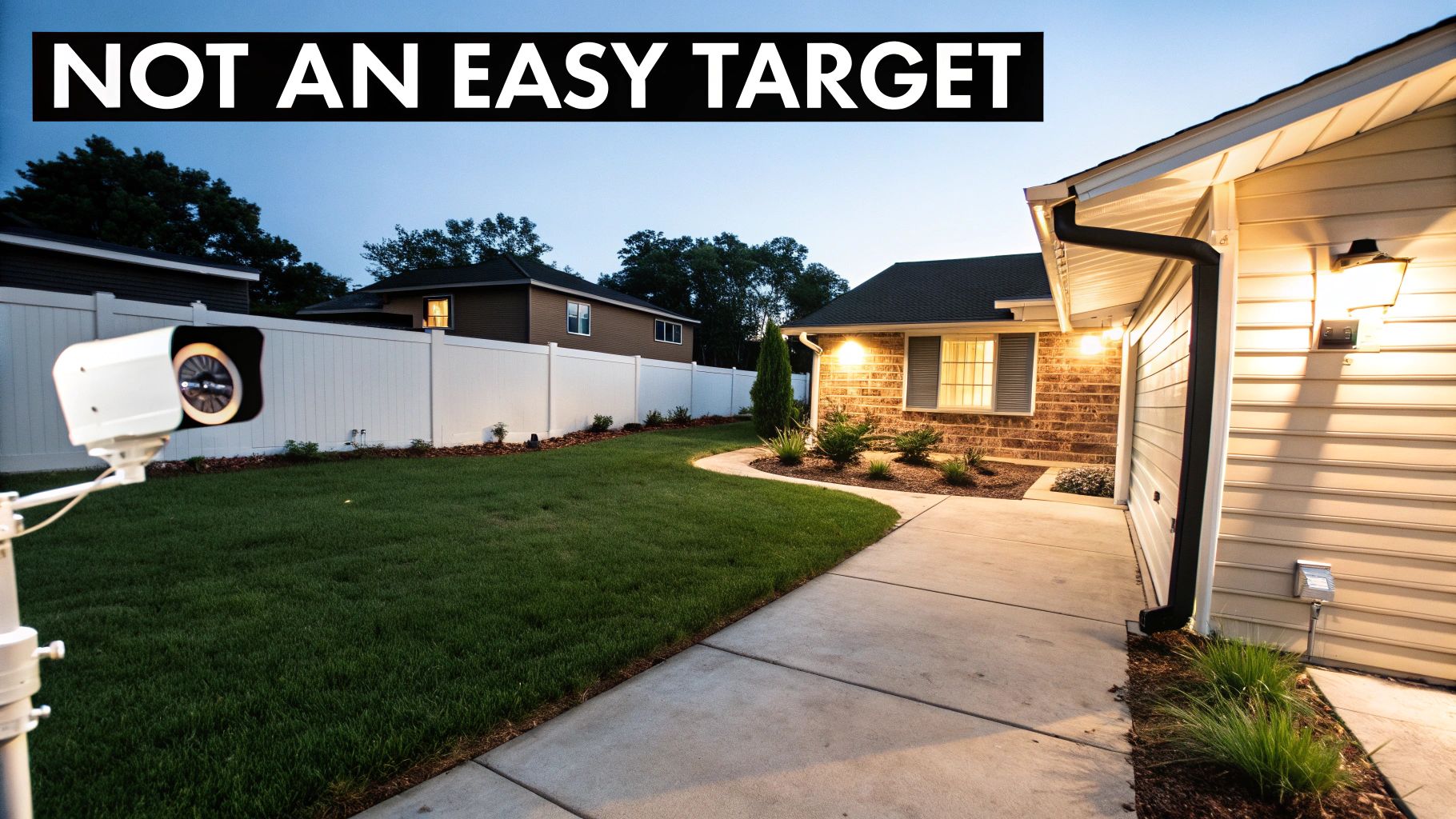
The best way to win a fight is to avoid it completely. That same idea is the foundation of smart home security. The real goal isn't just stopping a break-in; it's convincing a burglar to skip your house entirely. This is all about deterrence—using smart, visual cues to send one clear message: "This house is too risky. Move on."
Think about it from their perspective. Most burglars are opportunists looking for the easiest score. They do a quick risk-reward calculation from the curb. Your job is to stack the "risk" side of that equation so high that they don't even bother.
Light Up Your Perimeter
Darkness is a burglar's best friend. It gives them cover, hides their movements, and provides all the time they need to jimmy a lock or pry open a window unseen. Your first move should be to take that advantage away.
Motion-activated floodlights are, dollar-for-dollar, one of the most effective deterrents you can buy. Don't just stick one over the garage door; think strategically about where an intruder would try to hide.
- Side Yards: These are classic blind spots, offering a hidden path to the back of your property.
- Back Patios and Decks: Prime entry points, especially near sliding glass doors or ground-floor windows.
- Driveways: Light this area up to expose anyone walking up to your home or garage.
That sudden blast of bright light is jarring. It makes a prowler feel instantly exposed and vulnerable, which is the last thing they want. It also catches the eye of neighbors, adding another layer of risk.
The Power of Perception and Signage
What a burglar thinks is true can be just as powerful as what actually is. You can play on their assumptions with some simple, low-cost visual tricks that have a huge impact.
Key Takeaway: You don't just need security; you need visible security. A hidden camera might catch a burglar after the fact, but a visible one can stop them from ever stepping on your property.
This is where good old-fashioned signage works wonders. Displaying signs and window decals from a major security company is a classic move for a reason—it works. The same goes for a "Beware of Dog" sign. The intruder on the street has no idea if you have a chihuahua or a German Shepherd, and that uncertainty is often enough to make them look for an easier target.
Visible security cameras are another massive deterrent. Placement is everything here. Our guide on wireless security camera installation offers some great tips for making sure they are seen and effective. Just seeing that little black dome is often enough to send a clear message.
Create the Illusion of Presence
An empty house is a burglar's dream. Your single greatest weapon is making it seem like someone is always home, even when the house is empty. Smart home tech makes this incredibly easy and convincing.
- Smart Plugs and Bulbs: Forget old-school timers. Use smart devices to create a randomized schedule for your lights, lamps, and even a TV. Lights popping on and off in different rooms at different times looks far more realistic.
- Mail and Deliveries: An overflowing mailbox or a stack of Amazon boxes on the porch screams, "Nobody's home!" Ask a trusted neighbor to grab your mail and packages if you're going to be away for more than a day.
Even basic yard maintenance plays a role. Overgrown grass and messy hedges can signal that a home is unoccupied. A tidy lawn, on the other hand, suggests someone was just there. These small details add up to paint a picture of an active, occupied home—a much less appealing target. The data backs this up, too. Research consistently shows that homes without any security are nearly eight times more likely to be burgled. You can read the full research about these findings to see just how much of a difference these measures make.
Weaving Security Habits Into Your Daily Routine
You can have the most sophisticated security system on the market, but it's worthless if you forget to arm it. Technology and hardware are fantastic tools, but the most critical layer of your home's defense will always be the human element—you and your family. The goal is to weave security awareness into your daily life until it becomes an automatic reflex, not a chore.
This isn't about overhauling your entire life. It’s about adopting a few simple, powerful habits that, together, make your home a much tougher target for opportunistic criminals. Think of these routines as the glue that holds all your other security measures together.
The Lock-Up Routine
The absolute cornerstone of good security is a consistent lock-up routine. It’s a simple checklist you run through every single time you leave the house or go to bed. The whole point is to catch those simple oversights that burglars dream of finding.
Get the entire family on board so it becomes a shared responsibility. The checklist itself should be quick and easy to remember, covering the non-negotiables:
- Check all exterior doors. Don't forget the one leading from the garage into the house—it's a classic weak point people overlook.
- Secure all ground-floor windows. A quick walk through the main level to check that they're not just closed, but locked.
- Lock sliding glass doors. Make sure the main lock is engaged and any secondary security bar or pin is firmly in place.
- Arm the alarm system. This should always be the last thing you do on your way out or before you turn in for the night.
Turning this into a non-negotiable ritual eliminates the dangerous "I'm pretty sure I locked it" gamble.
Pro Tip: A great way to make this routine stick is to use "habit stacking." Just link the security check to something you already do without thinking. For example: "Right after I brush my teeth at night, I'll do a quick security sweep downstairs."
The Spare Key Problem (And How to Actually Solve It)
Let's be blunt: that spare key you have stashed under a flowerpot or inside a fake rock is a terrible idea. Burglars know every cliché hiding spot and will check them first. You might as well just leave your front door wide open.
Fortunately, there are much smarter ways to handle emergency access.
- A Trusted Neighbor: This is the old-school, tried-and-true method. Give a spare key to a neighbor you know well and trust completely. It gives you a backup plan for emergencies without creating a vulnerability on your own property.
- Smart Lock Guest Codes: If you've invested in a smart lock, you already have the perfect solution built-in. You can generate temporary, unique codes for a dog walker or visiting family, and then delete them the second they're no longer needed. You have total control.
Watch What You Share Online
Your home’s physical security and your digital life are more connected than you might think. What you post online can have real-world consequences, as burglars absolutely use social media to find their next target.
Think about it—posting your vacation photos in real-time is like hanging a giant, blinking sign on your front door that says, "Nobody's home!" It's an open invitation.
The smartest and safest approach is simple: wait until you’re back home to share all those incredible pictures and memories.
While you're at it, take a hard look at your privacy settings on social media. Restrict who can see your posts and personal details. And definitely avoid "checking in" to locations far from home, which again just broadcasts that your house is empty. A little online discretion goes a long way in making your home's status less predictable to outsiders.
Answering Your Top Home-Security Questions
Diving into the world of home security can feel like a maze. With so many gadgets, systems, and conflicting opinions, it’s tough to know where to start. Let's cut through the noise and tackle the questions I hear most often from homeowners, giving you clear, straightforward advice to help you make the right calls for your family.
What Do Burglars Actually Look For in a Target?
Forget what you see in the movies. Most burglars aren't master thieves meticulously planning a heist; they're opportunists looking for an easy score. They want the path of least resistance—a house that looks like a quick, low-risk job.
They're scanning for a few classic giveaways:
- Signs of an Empty Home: An overflowing mailbox is a huge red flag. Same goes for newspapers piling up on the driveway or a house that stays completely dark night after night.
- Poor Visibility: Overgrown shrubs blocking windows, high fences that hide the yard from the street, and a lack of outdoor lighting are a burglar's best friend. It gives them the perfect cover to work unseen.
- Easy Entry Points: They're checking for that one unlocked window, a flimsy back door, or a sliding glass door without a security bar. The goal is to get in and out in just a few minutes.
What Are the Most Effective Low-Cost Security Measures?
Securing your home doesn't have to drain your bank account. In fact, some of the smartest upgrades are surprisingly affordable and work by simply making your home look like too much trouble from the get-go.
It's a striking statistic, but The Andover Companies found that homes without a security system are 300% more likely to be broken into. While a full system is a fantastic goal, you can still tip the odds in your favor with a few simple, visible deterrents.
Here are a few budget-friendly MVPs I always recommend:
- Reinforced Strike Plates: For less than $20, you can swap the builder-grade plate on your doorframe for a heavy-duty one anchored with 3-inch screws. This tiny change makes a door incredibly difficult to kick in.
- Visible Deterrents: A few well-placed security system stickers or a prominent "Beware of Dog" sign can make a prowler skip your house and move on to the next. It’s all about perception.
- Motion-Activated Lighting: Installing motion-sensing floodlights over your driveway, back patio, and side yards instantly robs burglars of the shadows they need to operate.
Investing in your home's security is all about balancing cost with tangible benefits. To help you prioritize, here’s a quick breakdown of common upgrades and what you can expect to get for your money.
Home Security Cost vs. Benefit Analysis
| Security Upgrade | Estimated Cost Range | Primary Security Benefit |
|---|---|---|
| Deadbolt Reinforcement | $15 – $50 | Prevents door kick-ins, the most common forced entry method. |
| Motion-Sensing Lights | $30 – $100 per light | Eliminates hiding spots and startles potential intruders. |
| Window Security Film | $50 – $200 per window | Makes glass shatter-resistant, delaying and deterring entry. |
| Video Doorbell | $100 – $250 | Deters porch pirates and provides a record of all front-door activity. |
| DIY Security System | $200 – $600 | Provides entry sensors, motion detection, and a loud alarm as a major deterrent. |
| Monitored Security System | $500+ (plus monthly fees) | Offers 24/7 professional monitoring and emergency service dispatch. |
This table shows that even small investments can deliver a significant boost in protection, making it easy to start hardening your home today, no matter your budget.
How Should I Secure My Home When on Vacation?
Nothing screams "empty house" like a quiet, dark home with mail piling up. The trick to vacation security is creating a believable illusion that everything is business as usual.
Before you head out, run through this quick pre-trip checklist:
- Use Smart Timers: Don't just leave a single light on. Plug a few lamps and maybe even a radio into smart plugs set to a varied, randomized schedule. Lights popping on and off in different rooms at different times feels much more authentic.
- Stop Deliveries: Put a hold on your mail and any newspaper subscriptions. A mountain of Amazon boxes on the porch is a dead giveaway you're not around.
- Secure Your Digital Front Door: Don't forget about your Wi-Fi. A hacked home network can potentially disable your smart locks or cameras. For a deep dive, check out our essential guide on home network security best practices.
By tackling these common worries with practical, proven strategies, you can stop feeling uncertain and start taking meaningful action to protect your home.
At Automated Home Guide, our mission is to empower you to build a safer, more intelligent home. Come see us at https://automatedhomeguide.com for more expert tips, unbiased reviews, and easy-to-follow guides on the best in home security tech.



Leave a Reply to Mobile Patrol Services DFW: A Guide to Protecting Your Property – Overton Security Services Cancel reply