When you're trying to figure out how to reduce heating costs, it all boils down to two key things: keeping the heat you have and making that heat more efficiently. Before you even touch the thermostat or look at fancy new gadgets, you have to focus on plugging the leaks in your home's "envelope." If you don't, you're just throwing money out the window, trying to heat the great outdoors.
Build a Foundation with Better Home Insulation
Think of your house like a thermos. If it's sealed tight, whatever's inside stays hot for ages. But if it has cracks and gaps, you're constantly reheating it—and that’s exactly where your heating budget goes. Hands down, the most powerful way to slash your heating bills is to beef up your insulation and seal up any air leaks.
This isn't just about rolling out some fluffy pink stuff in the attic. It’s a whole strategy for creating an airtight barrier between your cozy living room and the biting winter wind. A poorly insulated home is a massive energy hog.
The numbers don't lie. Up to 35% of a home’s heat can vanish right through uninsulated walls. Another 25% can escape straight through the roof. The U.S. Department of Energy figures that just by upgrading insulation in the right places, homeowners can save anywhere from 10% to 50% on their heating bills. That's a huge chunk of change.
This infographic gives you a simple way to think about where to start—sealing leaks or checking insulation.
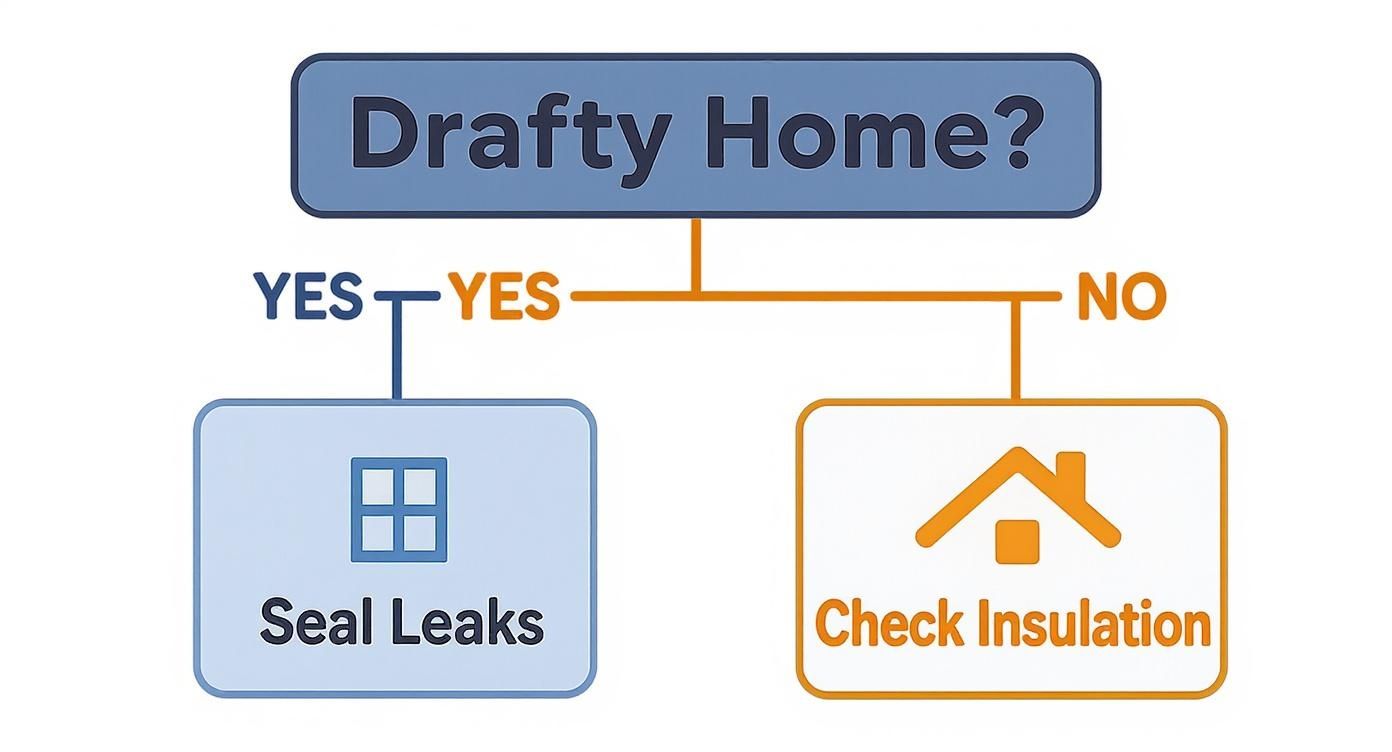
As you can see, tackling drafts should be your first move. It's often cheaper and gives you a big win right away before you dive into a larger insulation project.
Pinpointing and Sealing Costly Air Leaks
Before spending a dime on new insulation, you need to go on a mission: hunt down and destroy air leaks. These are the sneaky little thieves that make your furnace work overtime, and they pop up in the most random places.
Start with a simple visual inspection. Grab a flashlight and walk around your home, looking for obvious gaps around:
- Windows and Doors: Is the weatherstripping cracked or missing? Can you see daylight around the frame?
- Electrical Outlets: On a cold day, put your hand near an outlet on an exterior wall. Feel a draft? That’s a leak.
- Recessed Lighting: Those "can" lights in the ceiling are notorious for letting warm air pour into the attic.
- Plumbing and Wires: Check where pipes and cables come into your house from the outside—under sinks, behind the dryer, and in the basement.
For a more structured hunt, you can do your own energy audit. Our comprehensive home energy audit checklist gives you a step-by-step guide. Once you find the culprits, sealing them is usually an easy weekend job with some caulk, weatherstripping, or a can of foam sealant.
Choosing the Right Insulation for Maximum Impact
Once the drafts are dealt with, it’s time to look at the big picture: your insulation. Different parts of your house need different solutions, and picking the right material is what gets you the best bang for your buck.
Here’s a look at the most common types and where they shine:
- Fiberglass Batts: These are the classic pink or yellow rolls. They're affordable and great for DIY projects in open areas like unfinished attics or between wall studs in new construction.
- Blown-In Insulation: Made of cellulose or fiberglass, this loose-fill material is perfect for topping up existing attic insulation or getting into tight, irregular spaces. It can even be blown into finished walls without tearing them down.
- Spray Foam Insulation: This is the premium option. It costs more, but it creates a nearly perfect air seal. As it expands, it fills every single nook and cranny, which makes it unbeatable for tricky spots like the rim joists in your basement or for creating a "hot roof" system in an attic.
My Two Cents: If you do only one thing, focus on the attic. Heat rises, so a poorly insulated attic is like leaving a giant window open all winter. Getting your attic insulation up to modern R-value standards for your climate zone offers one of the fastest and biggest paybacks of any home improvement project.
To really dial things in, you'll also want to look at how heat moves through the solid parts of your house, like the wall studs. Digging into understanding and fixing thermal bridging can help you tackle those hidden energy drains that standard insulation can't always solve.
Upgrading insulation is a game-changer for your energy bills. This table breaks down where you can find the biggest problems and potential savings.
Insulation Upgrade Impact on Annual Heating Costs
| Insulation Area | Common Problem | Estimated Annual Savings | Best For |
|---|---|---|---|
| Attic | Insufficient or settled old insulation | 15% – 25% | Homes over 20 years old in cold climates |
| Exterior Walls | Empty wall cavities in older homes | 10% – 20% | Homes built before 1970 |
| Basement/Crawlspace | Uninsulated rim joists and foundation walls | 5% – 15% | Any home with an unconditioned lower level |
| Floors Over Garage | Cold floors in rooms above an unheated garage | 5% – 10% | Bedrooms or bonus rooms located over a garage |
By prioritizing these areas, you can systematically build a thermal envelope that keeps the heat your system produces right where it belongs—inside your home.
Give Your Heating System a Modern Makeover
If you've tightened up your home's insulation, you've essentially plugged the leaks in your thermal "bucket." But what about the thing that fills the bucket? Your furnace or boiler is the heart of your home's warmth, and if it's old and clunky, you’re fighting a losing battle. It’s like trying to fill that bucket with a leaky hose—you’re just wasting energy and money for less comfort.
An ancient heating system is often the single biggest energy hog in a house. Thinking about an upgrade isn't just about getting a shiny new appliance; it's a strategic investment that can pay you back month after month in lower bills.
What’s AFUE and Why Should You Care?
When you start looking at new furnaces or boilers, you’ll see a yellow ENERGY STAR sticker with a key number: the AFUE rating. That stands for Annual Fuel Utilization Efficiency, and it’s a simple percentage that tells you how much of the fuel you pay for actually turns into heat for your home.
Here’s a practical way to think about it: an old furnace with an 80% AFUE rating means that for every dollar you spend on fuel, 80 cents goes to heating your house. The other 20 cents? Poof. It’s wasted energy vented right up the chimney.
Key Takeaway: A higher AFUE rating directly translates to less wasted fuel and more money in your pocket. Today’s high-efficiency condensing units can hit AFUE ratings of 95% or higher, which means almost every bit of fuel you buy is put to work.
That leap from 80% to 95% might not seem world-changing on paper, but in reality, it can mean hundreds of dollars in savings every single year. These advanced systems are so efficient because they have a second heat exchanger that captures extra heat from the exhaust gases that older models just let escape.
The difference is staggering. Modern condensing boilers can operate at up to 98% efficiency, a massive jump from older models that might struggle to hit 70%–80%. The EPA even estimates that switching to an ENERGY STAR certified system can slash your annual heating costs by up to 15%. You can see how climate change initiatives are pushing these efficiency standards forward by checking out Wikipedia’s overview of climate change in 2025.
The Two Main Paths: High-Efficiency Furnaces vs. Modern Heat Pumps
When it's time to upgrade, you'll generally be choosing between two fantastic, high-efficiency options: a condensing furnace (usually running on natural gas) or an electric heat pump. The best fit for your home really comes down to your local climate and utility rates.
-
High-Efficiency Condensing Furnace: Think of this as the next evolution of the furnace you already know. By using that second heat exchanger I mentioned, it wrings out every last bit of heat from the combustion process, leading to those incredible 95%+ AFUE ratings. It’s a rock-solid, powerful choice, especially if you live in a place with brutally cold winters where gas heat provides reliable, intense warmth.
-
Electric Heat Pump: This is where things get really interesting. A heat pump works like a clever two-way air conditioner. Instead of burning fuel to create heat, it just moves existing heat from the outside air into your home. Because moving heat is far more efficient than generating it from scratch, a heat pump can achieve an efficiency of over 300% in milder weather. Yes, you read that right—it's not a typo!
Is a Heat Pump Right for You?
Heat pump technology has come a long way. The old knock against them was that they didn’t work well in the cold, but today's cold-climate models can operate effectively in temperatures well below freezing, making them a serious contender in regions that couldn't consider them before.
A heat pump might be the perfect choice if you:
- Live in a moderate or mixed climate without long, severe deep freezes.
- Are looking for a greener solution to move away from fossil fuels.
- Have or are planning to install solar panels, which could bring your heating operating costs close to zero.
For homeowners looking at the bigger picture, our guide on top energy-efficient home upgrades provides a wider view of improvements that deliver real, measurable returns.
At the end of the day, whether you go with a top-of-the-line furnace or a state-of-the-art heat pump, replacing an outdated system is one of the most effective moves you can make to lower your energy bills for good.
Let Smart Tech Handle the Savings for You
Heating an empty house is like leaving a tap running—it's a surefire way to watch your money go right down the drain. You can manually turn down your thermostat, of course, but that relies on you remembering to do it. Every. Single. Time.
This is where a little bit of tech makes a huge difference. By automating your heating, you turn a daily chore into a hands-off system that just works, saving you money in the background.
The heart of this setup is a smart thermostat. This isn't just your old programmable model with a slick touchscreen; it's a clever device that learns your routine and makes smart choices to cut down on heating costs without you ever having to think about it.
More Than Just a Schedule
A basic programmable thermostat is a good start, but let's be honest, life doesn't always stick to a rigid schedule. What happens when you work from home unexpectedly, or the kids get a snow day? You end up overriding the settings anyway, which kind of defeats the whole point.
Smart thermostats get around this by adapting to how you actually live.
-
They Learn Your Habits: Models like the Nest Learning Thermostat literally watch what you do for the first week. It picks up that you like it at 68°F when you wake up, prefer it cooler while you're at work, and want it toasty in the evenings. Then, it just builds a schedule around you.
-
They Know When You're Home (or Not): Geofencing is a game-changer. It uses your phone's location to tell when the house is empty. As soon as the last person leaves, it automatically dials back the heat to an energy-saving temperature. The moment it sees you’re heading home, it kicks back on, so your house is comfortable the second you walk in the door.
-
Control from Anywhere: Stuck in late-night traffic or getting home earlier than planned? Just pull out your phone and adjust the heat from an app. This gives you total control, ensuring you only burn fuel when you actually need the warmth.
Picture This: Think of a family with a chaotic schedule. One parent travels for work, the kids have different after-school activities each day. A basic programmable thermostat would be a nightmare to manage. A smart one with geofencing just adapts on the fly, saving energy on busy days and keeping things cozy on quiet ones. That's where the real savings kick in.
Does a Smart Thermostat Actually Pay for Itself?
Absolutely. This isn't just about cool tech; it's about a real return on your investment. Study after study shows that a smart thermostat can trim your heating bill by 10% to 20% each year.
The average U.S. household spends about $700 a year on heat. A smart thermostat could put $70–$140 of that right back into your wallet, every single year. It's no surprise that over 20 million of these were sold worldwide in 2023. You can see the data for yourself by checking out reports from the U.S. Energy Information Administration.
If you want to get into the nitty-gritty, we break down all the numbers in our deep dive into smart thermostat energy savings.
Connect Everything for Maximum Efficiency
A smart thermostat is great on its own, but it really shines when it’s part of a larger smart home system. When your devices can talk to each other, they can work together to slash your energy use without you lifting a finger.
Here's how it could work:
- A smart sensor on a bedroom window detects it’s been left open on a cold day.
- It instantly sends an alert to your phone and tells the thermostat to stop heating that specific room so you're not trying to heat the entire neighborhood.
- Your smart blinds can even get in on the action, opening automatically to let in the free solar heat on sunny winter days and closing at dusk to add another layer of insulation.
This kind of coordinated, intelligent automation used to be the stuff of science fiction. Now, it's a very real and accessible way to cut heating costs.
To take it to the next level, see how integrating smart home technology for HVAC systems can create a home that actively works to keep you comfortable while wasting as little energy as possible.
Adopt Simple Habits with Big Financial Payoffs
Big-ticket items like new insulation or a high-efficiency furnace are fantastic for slashing heating costs, but they aren't the only tools in your arsenal. The truth is, your daily habits can lead to some surprisingly hefty savings over a long winter. It’s all about making small, smart adjustments that add up.
Many homeowners fall into the trap of thinking you need to spend big to save big. But by just being a bit more conscious of how and when you're using heat, you can stack up tiny daily wins that make a real dent in your monthly bill.
Master Your Thermostat
Think of your thermostat as the command center for your heating budget. Learning to use it properly is probably the single most effective habit you can build. A common myth is that blasting the heat will warm up a cold house faster. It won't. Your furnace puts out the same amount of heat no matter the setting; it just runs longer, burning through fuel and money.
The real secret is the "setback." Simply turning your thermostat down by 7-10°F for eight hours a day—while you're at work or sleeping, for instance—can cut your annual heating bill by as much as 10%. Why pay top dollar to keep an empty or sleeping house toasty warm?
A Quick Word of Caution: Don't get too extreme with the setback, especially if you live in a place with punishingly cold winters. Turning the heat off completely can sometimes cost you more in the long run, as the system has to work overtime to recover from a deep freeze. It can also put your pipes at risk. That 10-degree mark is usually the sweet spot.
Use the Heat You Already Have
Your home is full of free, natural heat sources if you know where to look. The most powerful one? The sun. On those bright, chilly winter days, throw open the curtains on your south-facing windows. This is called passive solar gain, and it can do a wonderful job of warming up your rooms, giving your furnace a well-deserved break.
Just as crucial is remembering to close them as soon as the sun starts to set. Your curtains and blinds provide an extra layer of insulation, trapping all that wonderful warmth inside and keeping the cold from seeping through the glass.
Here's another trick that’s often overlooked: your ceiling fan. Most people see it as a summer-only appliance, but almost every fan has a reverse switch.
- In the summer, the blades run counter-clockwise to push air down and create a cooling breeze.
- In the winter, you want to flip the switch so they run clockwise. On a low speed, this motion gently pulls cool air up and pushes the warm air that's pooled at the ceiling back down into the room where you can actually feel it.
Dress for the Season (Indoors)
This last one might sound ridiculously simple, but it’s incredibly effective. Instead of wandering around in a t-shirt and bumping the thermostat up to a balmy 72°F, just put on a sweater. Grab a cozy blanket when you're settling in to watch a movie.
For every single degree you lower your thermostat, you can save around 1% on your heating costs. By dressing in layers, you can easily drop the temperature a few degrees and stay perfectly comfortable.
When you start combining these small, intentional habits, the savings really start to multiply. You’ll not only notice the difference on your utility bills, but you’ll also get a much better feel for how your home gains and loses heat—making you a smarter, more efficient homeowner all year round.
Keep Your Heating System Running Smoothly
You can have the most advanced furnace and the smartest thermostat on the market, but if you don't take care of them, you're still throwing money away. A neglected heating system is a lot like a car that never gets an oil change—it has to work way harder to do its job, burning through more fuel and putting itself on a fast track to an early breakdown. A little routine maintenance is one of the smartest things you can do to lower your heating costs and, more importantly, avoid that dreaded middle-of-the-night failure when it's freezing outside.
Your HVAC system needs to breathe. When its key components get clogged with dust and grime, the whole system strains. Efficiency plummets, and your energy bills will slowly but surely start to climb.
The Easiest Win: Change Your Furnace Filter
If you only do one thing on this list, make it this one. Seriously. Checking and changing your furnace filter is a five-minute task that pays huge dividends for both your wallet and your home's air quality. A dirty, clogged filter is hands-down the most common cause of furnace problems and poor performance.
Think about it: when the filter is choked with dust, pet hair, and other gunk, it's like putting a gag on your furnace. The fan motor has to struggle to pull air through, which means it uses a lot more electricity. That strain doesn't just waste energy; it can cause the motor to overheat and burn out. That's a repair bill you definitely want to avoid.
As a rule of thumb, check the filter every month during peak heating season and plan to replace it at least every 90 days. Have pets or live in a dusty area? You'll probably want to swap it out every 30 days to keep things running right.
Don't Block the Flow: Keep Vents and Registers Clear
Your furnace does the heavy lifting of creating heat, but it’s your vents and registers that deliver that cozy warmth to every room. It's so easy for them to get accidentally blocked by a sofa, a thick rug, or even heavy drapes, trapping all that precious heat and messing up the airflow.
Take a quick walk through your house with a critical eye. Is every supply and return air vent completely clear? While you're at it, grab a vacuum and suck out any dust bunnies or debris that have collected inside. This simple sweep ensures warm air can circulate freely, which helps eliminate cold spots and allows your furnace to heat your home more evenly and efficiently.
A Quick Word of Advice: It’s a common myth that closing vents in rooms you don’t use will save money. With most modern forced-air systems, this can actually backfire by increasing the pressure in your ductwork. This can lead to new leaks and force your furnace to work even harder. It's almost always better to just keep all the vents open.
Why an Annual Professional Tune-Up Is Money Well Spent
While the DIY stuff is important, some jobs really are best left to a pro. Scheduling an annual tune-up with a qualified HVAC technician is an investment that truly pays for itself, often in the first winter. A professional has the tools and training to spot tiny issues before they snowball into catastrophic (and expensive) failures.
A yearly checkup is your best bet for keeping your system running at peak efficiency and ensuring it's operating safely. Plus, catching a potential problem during a scheduled visit in October is a whole lot less stressful—and cheaper—than making an emergency call on the coldest night of the year.
Here’s a quick overview of what you can do yourself and when to call in a professional.
Seasonal Heating System Maintenance Checklist
A little proactive care for your heating system goes a long way. This checklist breaks down the essential tasks to keep everything in top shape, separating the simple DIY jobs from the tasks best left to a certified technician.
| Task | Frequency | DIY or Pro? | Impact on Efficiency |
|---|---|---|---|
| Inspect/Change Air Filter | Monthly to Quarterly | DIY | High – Prevents airflow restriction. |
| Clear Vents & Registers | As Needed | DIY | Medium – Ensures proper air distribution. |
| Test Thermostat Batteries | Annually | DIY | Medium – Avoids system shutdowns. |
| Clean Burners & Flame Sensor | Annually | Pro | High – Ensures clean, efficient combustion. |
| Inspect Heat Exchanger | Annually | Pro | High – Critical for safety and efficiency. |
| Lubricate Moving Parts | Annually | Pro | Medium – Reduces friction and energy use. |
| Check & Clean Blower Motor | Annually | Pro | High – A clean blower moves air more effectively. |
Following this checklist not only helps keep your heating bills in check but also extends the life of your equipment and gives you invaluable peace of mind.
Common Questions About Lowering Your Heating Bill
When you start digging into ways to save on heating, a lot of questions pop up. It's only natural to wonder if you're making the smartest moves. Let's tackle some of the most common things homeowners ask so you can feel confident you're on the right track.
Is It Cheaper to Keep the Heat at One Low Temperature?
This is a classic debate. Should you keep the house at a steady, low temperature all day, or turn the thermostat way down when you leave? For pretty much any time you're gone for more than a few hours, turning the heat down is the clear winner.
Think of it this way: your home is always losing heat to the cold outdoors. The energy it takes to reheat the house when you get back is far less than the energy you'd waste keeping an empty house warm for hours. This is exactly why programmable and smart thermostats are such game-changers—they do the remembering for you.
How Much Can One Degree Really Save?
A single degree might not sound like much, but it makes a surprisingly big difference on your energy bill.
The U.S. Department of Energy has found that you can save about 1% on your heating bill for every degree you lower the thermostat over an 8-hour stretch. By setting it back 7-10 degrees while you're at work or sleeping, you could slash your annual bill by up to 10%.
Honestly, this is one of the most effective, zero-cost ways to cut your heating expenses all winter long.
Are Space Heaters an Efficient Way to Save Money?
They absolutely can be, but you have to use them smartly. The secret is to use them for zone heating. That just means heating only the small, enclosed space you're actually using, like your home office during the day or the cozy corner where you read at night.
By running an efficient space heater in one room, you can turn your main thermostat down several degrees. Trying to heat a big, open-concept area or multiple rooms with one is a recipe for a sky-high electric bill. They’re meant to supplement your central system, not replace it.
Can My Gas Fireplace Lower My Heating Bill?
Yes, it's a great tool for zone heating. Firing up the gas fireplace to warm the main living area lets you drop the thermostat for the rest of the house, saving you from heating empty bedrooms and hallways.
To really make it count, try these simple tips:
- Close the doors to keep the warmth contained in the room you're in.
- Keep the flame moderate. A lower setting still provides plenty of heat while using less gas.
- Turn on the blower. If your fireplace has a fan, use it to push the warm air out into the room more effectively.
You get to enjoy the cozy vibe of a fire while making a financially savvy move.
What's the Best Humidity Level for My Home in Winter?
This is one that most people overlook. The amount of moisture in your air has a huge impact on how warm you feel. We've found that keeping your home's indoor humidity between 30% and 50% in the winter can make a lower temperature feel much more comfortable.
Moist air holds heat better than bone-dry air. Running a humidifier often means you can drop the thermostat a few degrees without even noticing a difference in comfort, and that translates directly into savings.
At Automated Home Guide, our goal is to help you create a home that's smarter, safer, and more efficient. Check out our other guides and reviews to find the right tech for your home. You can learn more at https://automatedhomeguide.com.







Leave a Reply to Anya151mn Cancel reply