
Before you can secure your windows, you need to learn to see them the way a burglar does. It’s all about identifying the path of least resistance. Start by pinpointing your home's most vulnerable entry points—typically, ground-floor windows hidden from view or equipped with flimsy, factory-installed locks. By tackling these high-risk areas first, you ensure your time and money go where they'll make the biggest difference.
Thinking Like a Burglar to Identify Your Weakest Windows
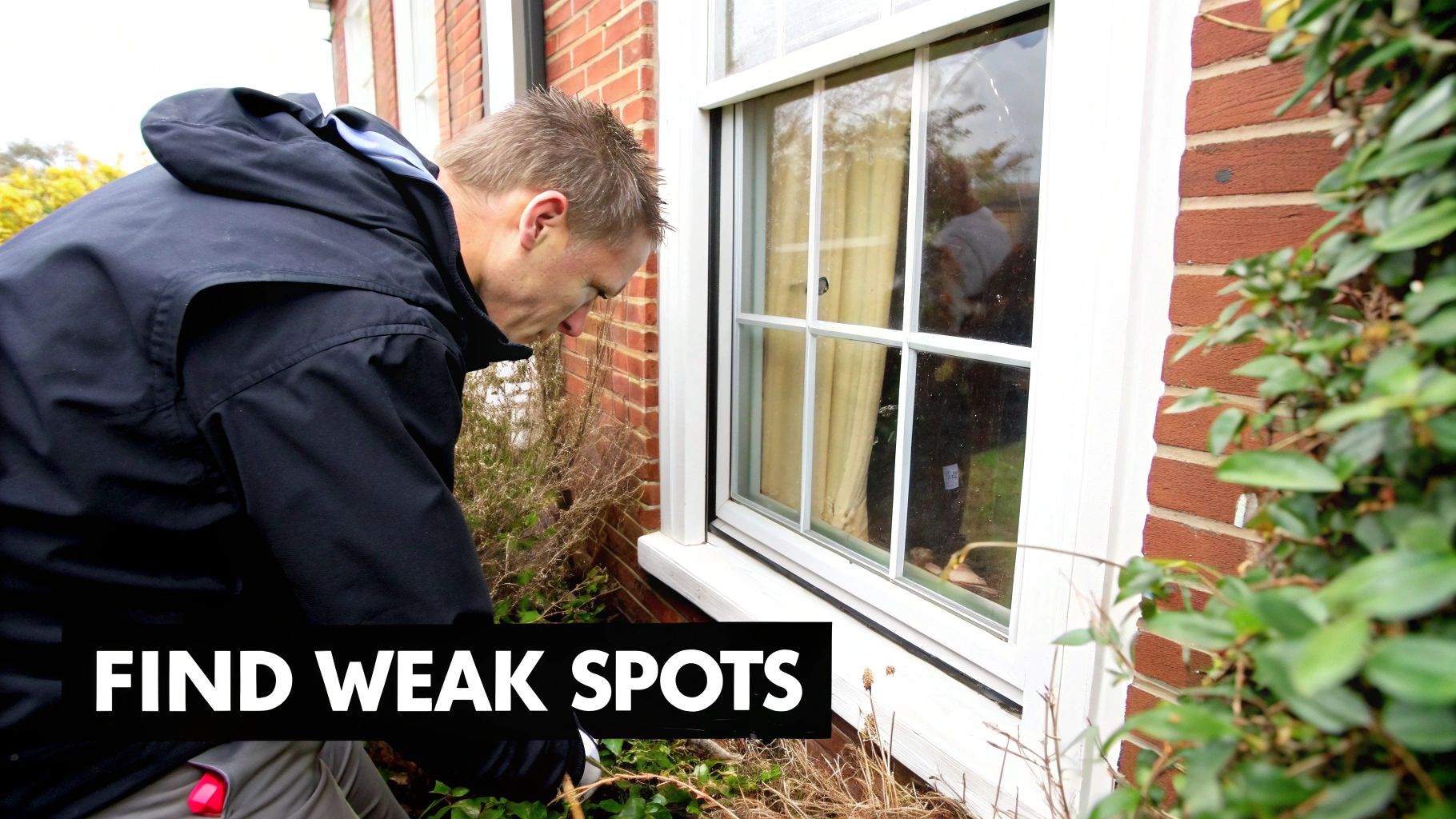
Before you buy a single new lock or sensor, the most important thing you can do is conduct a simple security audit of your own home. Take a walk around the outside of your property, but this time, force yourself to look at it through the eyes of someone trying to get in. This shift in perspective is the absolute foundation for a secure home.
An intruder’s goal is simple: get in and out fast, without being seen or heard. They are actively scanning for the easiest target. That’s why you need to understand what makes a particular window so appealing to them.
Finding Your Vulnerability Hotspots
Start your walk-through at ground level. The statistics don't lie—windows are a major weak point. In fact, 23% of all break-ins happen through a window, and a staggering 81% of those are on the first floor. These windows are popular targets because they’re easy to reach and often shielded by landscaping.
As you examine each ground-floor window, ask yourself a few key questions:
- Is this window hidden? Overgrown bushes, big trees, or even a solid privacy fence can give an intruder all the cover they need to work without being noticed.
- How's the lock holding up? If you have an older home, those original sash locks might be loose or misaligned after years of use, offering almost no real resistance.
- What condition is the frame in? A rotting wood frame or a warped vinyl one can be pried open with a basic crowbar, making the lock completely irrelevant.
Expert Insight: Your most vulnerable window isn't always the biggest one. It's the one that gives an intruder the perfect storm of easy access, poor visibility, and weak hardware. That's the one you need to secure first.
To help you get started, use this quick checklist to audit each of your windows systematically. It’ll help you spot weaknesses you might otherwise overlook.
Window Vulnerability Self-Audit Checklist
| Vulnerability Point | What to Check For | Risk Level (High/Medium/Low) |
|---|---|---|
| Visibility | Is the window obscured by shrubs, trees, or fencing? | High |
| Lock Type | Is it a basic, factory-installed latch or an older, worn-out sash lock? | High |
| Frame Condition | Check for rot, cracks, or signs of warping that could make prying easy. | High |
| Glass Type | Is it single-pane glass? Does it rattle or seem loose in the frame? | Medium |
| Accessibility | Is it on the ground floor? Is there a sturdy object nearby (like an AC unit) to stand on? | Medium |
| Proximity | Is the window located at the back or side of the house, away from street view? | Medium |
| Landscaping | Are there large, dark shadows at night? Is there loose gravel that makes noise? | Low |
Once you've walked your property with this checklist, you'll have a clear, prioritized list of exactly where you need to focus your efforts.
Know the Weaknesses of Different Window Types
Not all windows are created equal in the security department. An experienced burglar knows how to exploit the unique flaws of each style.
- Double-Hung Windows: These classic up-and-down sliding windows usually rely on a single sash lock in the middle. If that lock is weak or the frame has warped over time, it can often be jiggled or forced open.
- Sliding Windows: Much like a sliding glass door, these can sometimes be lifted right off their tracks if they aren't properly secured. The standard latches on these are often notoriously flimsy.
- Casement Windows: While these crank-operated windows are quite secure when fully closed and locked, they become a problem if left even slightly ajar for ventilation.
Thinking like a burglar means knowing your window's structural weak points, right down to understanding why window glass breaks. For a strategy that goes beyond just windows, see our full guide on how to burglar-proof your entire home for a more layered approach. This initial assessment will become the blueprint for all your security upgrades, making sure every move you make is smart and effective.
Easy DIY Window Security You Can Tackle This Weekend
You don’t need to call in a professional security crew or drain your bank account to seriously beef up your window security. Believe it or not, some of the most effective upgrades are simple projects you can knock out in an afternoon with just one trip to the hardware store.
These DIY fixes are all about reinforcing the weak spots you found during your initial walk-around. The idea is to make breaking in loud, difficult, and time-consuming—three things every burglar hates. By strengthening your locks, glass, and frames, you're building layers of defense that will convince most intruders to just move on. These are real, tangible improvements that bring immediate peace of mind.
Start with Stronger Locks for a Better First Defense
That flimsy latch that came with your window? It’s usually the first thing to fail. It was designed to keep the rain out, not a burglar. The good news is that upgrading to a serious aftermarket lock is one of the easiest and most impactful projects you can do.
What you'll need depends on your window style:
- Double-Hung Windows: Go for keyed sash locks. They replace that standard little latch and need a key to be opened from the inside. This simple change means a burglar can't just break a small pane, reach in, and flip the lock.
- Sliding Windows: A charley bar is your best friend here. It's a simple, tough, adjustable bar that you wedge into the track of the closed window. It physically blocks the window from opening, even if the main lock is broken.
- All Window Types: Pin locks (sometimes called window sash locks) are a fantastic secondary line of defense. You just drill a small hole through the overlapping parts of the window sashes and slide a metal pin through, essentially bolting them together. It’s a cheap, low-tech, and highly effective upgrade.
With these in place, you’ve moved your window from a minor inconvenience to a genuine physical obstacle. Now, getting in requires serious, noise-making force.
Reinforce Your Glass with Security Film
A burglar's favorite move is the quick, quiet smash-and-grab. Standard window glass shatters easily and with surprisingly little noise, giving them instant access. Window security film is the perfect counter-move.
This is a clear polyester film you apply directly to the inside of your window. Now, it won't make your glass bulletproof, but what it does is crucial: its powerful adhesive holds all the shattered pieces together in the frame. So instead of the glass collapsing, an intruder is faced with a spider-webbed but still solid barrier they have to keep hitting or cutting to get through.
The Real Value of Security Film: It's not about stopping the glass from breaking. It’s about stopping a fast and quiet entry after it breaks. That extra time and all the noise they have to make is a massive deterrent.
Applying the film yourself just takes a bit of patience. The process is straightforward: clean the glass like your life depends on it, spray a solution of soap and water, lay the film on, and use a squeegee to push out every last bubble. When you're done, it's virtually invisible but makes your windows incredibly tough. In fact, combining physical reinforcements like shatterproof film with smart tech can slash forcible entries by up to 60%, according to industry tests.
Simple Hardware Store Fixes That Punch Above Their Weight
Sometimes, the best security upgrades are the simplest ones. For just a few dollars and a few minutes of your time, you can close up vulnerabilities that burglars look for.
A classic weak point? The short, half-inch screws builders often use to install window frames and locks. They offer almost no resistance to a pry bar.
Just head to the hardware store and swap them out for 3-inch, heavy-duty screws. This anchors the lock and frame deep into the solid wood stud of your home's wall, not just the flimsy window jamb. It's a five-minute job that could be the difference between a window that pops open with one good shove and one that holds strong against a real attack.
For another powerful layer, consider installing quality security window screens. These aren't your average bug screens; they're heavy-duty barriers that have to be defeated before an intruder can even get to the glass.
As you start adding these layers, you might get inspired to go bigger. Our detailed guide on building a complete DIY home security system shows you how to integrate these physical upgrades with smart technology for total protection.
Using Smart Technology for Active Window Defense
Bolstering your windows with physical reinforcements is a great start, but the real game-changer is making them smart. Smart technology turns your windows from passive weak points into an active, responsive part of your home's security network. Instead of just taking a hit, they can now alert you, scare off intruders, and give you critical evidence—all in real time.
This is all about creating a web of awareness around your home's most vulnerable entry points. When a sensor trips, it can kick off a whole chain reaction: alarms blare, lights flash, and your phone buzzes with an instant notification. It's a powerful way to add a proactive layer to your security plan.
Choosing the Right Window Sensors
The heart of any smart window setup is the sensor. These small, often unnoticeable devices are your digital watchdogs, always on guard for signs of trouble. There are a few different types, and each one is built to detect a specific kind of threat.
- Contact Sensors: These are the most common and for good reason—they're simple and effective. It's a two-piece magnetic sensor. One part goes on the window, the other on the frame. When the window opens, the magnetic connection breaks, triggering an alarm. They're perfect for knowing the second a window is slid or lifted open.
- Glass-Break Sensors: These are the specialists. They use a tiny microphone tuned to listen for the specific sound frequency of shattering glass. One sensor can often cover several windows in the same room, which makes them a really efficient option for spaces with a lot of glass. They alert you at the moment of impact, not just when a window is opened.
- Vibration Sensors: You might also hear these called shock sensors. They feel the physical impact or vibration of someone trying to pry open or smash a window. This can give you an even earlier heads-up than a glass-break sensor, sending an alert while the break-in is still just an attempt.
My Two Cents: Don't just pick one. The best approach is usually a mix. I recommend putting contact sensors on every single accessible window to know if they're opened. Then, add a glass-break sensor in rooms with big, tempting targets, like a ground-floor living room window or a back patio slider.
It can be tough to know where to begin. This decision tree is a handy tool to help you figure out the best DIY path based on what you're trying to accomplish right now.
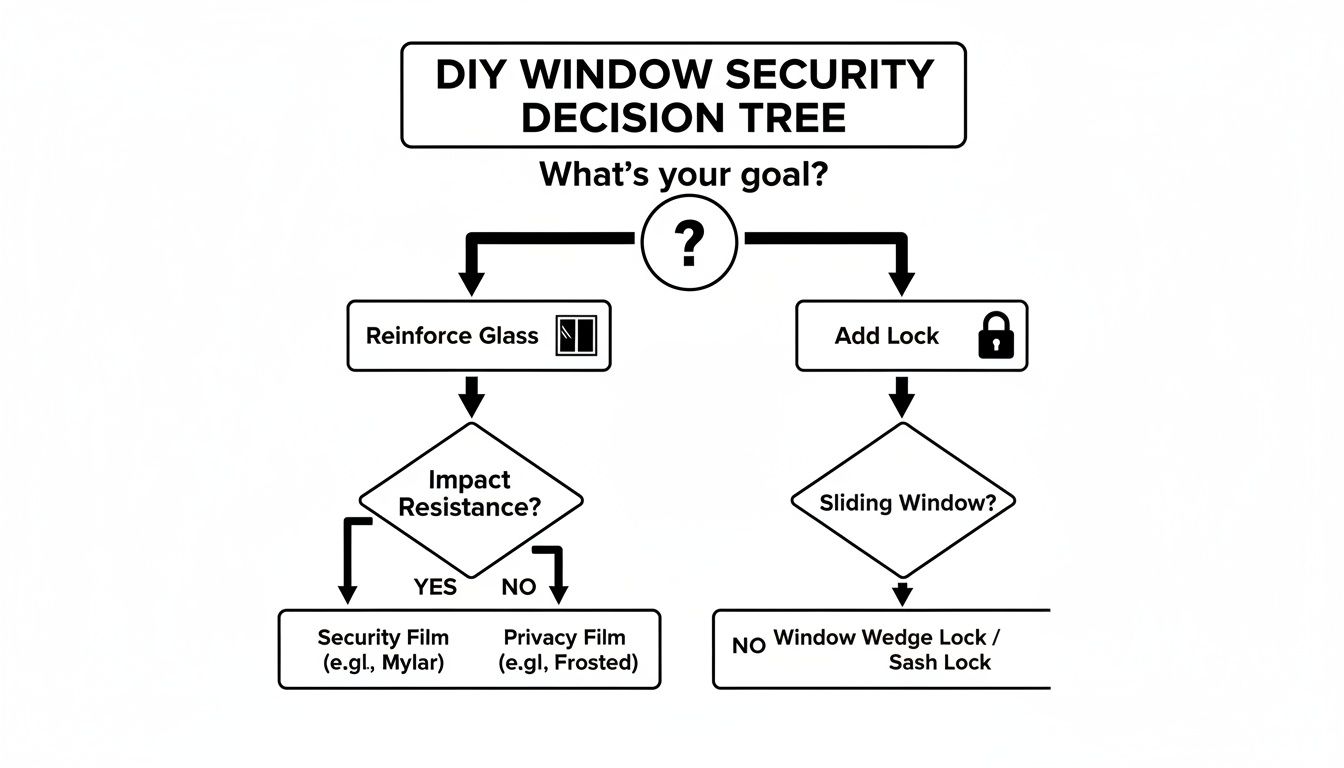
As you can see, it all starts with deciding if your priority is making the glass stronger or improving the lock. From there, the path becomes much clearer.
Smart Window Security Tech Comparison
To help you decide which smart sensor or device is the best fit for your home, here’s a quick breakdown of the most common options. Each one serves a slightly different purpose, and the right choice often depends on your specific vulnerabilities and budget.
| Technology | How It Works | Best For | Avg. Cost |
|---|---|---|---|
| Contact Sensors | A two-piece magnetic sensor detects when a window is opened, breaking the circuit. | All accessible windows and doors; knowing when any entry point is opened. | $15 – $30 per sensor |
| Glass-Break Sensors | An acoustic sensor listens for the specific sound frequency of shattering glass. | Rooms with multiple large windows or glass doors; detecting forceful entry. | $30 – $50 per sensor |
| Vibration (Shock) Sensors | Detects physical impact and vibrations on the window or frame itself. | Early warning for attempted break-ins; high-risk ground-floor windows. | $25 – $40 per sensor |
| Smart Cameras | Provides a live video feed and records motion-triggered events near windows. | Visual verification, deterring intruders, and gathering evidence. | $50 – $200+ per camera |
Ultimately, layering these technologies gives you the most robust defense. A contact sensor tells you a window is open, a glass-break sensor tells you it was smashed, and a camera shows you exactly what happened.
Integrating Sensors into Your Smart Home Ecosystem
These sensors are useful on their own, but they become incredibly powerful when you connect them to a central smart home hub. This is where you can create automated security routines that do the work for you.
Picture this: it's 2 AM, and a vibration sensor on a basement window detects someone trying to pry it open. Instantly, your system can spring into action:
- A 100-decibel siren blasts from your smart speakers.
- Every light in the house flicks on, and the outdoor floodlights start flashing.
- Your phone gets a critical alert with a direct link to the camera covering that window.
- A voice announces, "Intruder detected at the basement window," through your home's speakers.
This kind of automated chaos does more than just let you know what's happening; it creates an environment that sends most burglars running. If you're looking to build out a seamless network like this, exploring different smart home security systems can show you how all the pieces fit together.
Strategic Placement of Smart Cameras
While sensors are your first line of digital defense, cameras provide the essential visual proof. Placing cameras to overlook your most vulnerable windows is a non-negotiable part of any active security strategy.
The goal is simple: get a clear view of any window a burglar might see as an easy target. Always mount your cameras high enough to be out of reach—I always aim for above 8 feet—but make sure they're angled to capture faces and activity near the window itself. Pay special attention to windows hidden from the street, like those in your backyard or on the side of the house where someone could work undisturbed.
Today's cameras come packed with features like motion-activated recording, impressive night vision, and two-way audio. That last one is a personal favorite—it lets you verbally warn someone off right from your phone, whether you're upstairs or across the country. Just the sight of a camera is often enough to make a thief think twice.
And that's not just a guess. The numbers back it up. A UNC Charlotte study found that about 60% of convicted burglars said they'd move on to another house if they saw an alarm or cameras. Homes with visible security systems are simply less appealing targets. By pairing smart sensors with well-placed cameras, you create a formidable defense that actively works to keep you safe.
When to Call in a Security Professional
There's a lot you can do yourself to beef up your window security, and honestly, the sense of accomplishment is huge. But there’s a fine line between a smart DIY project and a job that's best left to a pro.
Knowing when to pass the torch isn't giving up; it's being smart. For the most critical layers of your home’s defense, a flawless installation is everything. Some jobs just demand a level of skill, specialized tools, and knowledge that you can't get from a weekend crash course. Trying to tackle them can backfire, leaving you with a bigger security hole than you started with—not to mention the safety risks.
Jobs That Demand Professional Expertise
So, when should you absolutely put down the power tools and pick up the phone? While you can definitely handle swapping out a lock or applying security film, some upgrades are firmly in the professional-only zone. These are the jobs that can affect your home's structure, involve tricky materials, or have to meet strict safety codes.
Here are the big ones that scream "call a pro":
- Upgrading to Laminated or Tempered Glass: This isn't your average pane of glass. High-security glazing is incredibly heavy, a nightmare to cut, and needs a perfect fit to do its job. A pro will make sure it's set correctly in the frame, giving you that maximum resistance against brute force.
- Installing Permanent Security Bars or Grilles: Done right, these are a burglar's worst enemy. Done wrong, they're a deathtrap. A professional will anchor them directly into your home's studs and, more importantly, ensure they comply with local fire codes, which often require a quick-release mechanism for emergency escapes.
- Full Window Frame Replacement: If your initial walk-through turned up rotting wood or a frame that's seen better days, that’s a job for a contractor. They'll ensure the new frame is perfectly square and sealed against the elements—a detail that's as crucial for security as it is for your heating bill.
My Two Cents: If the project involves cutting into your walls, messing with specialized safety glass, or navigating fire code red tape, step back. A botched job can cost you way more in the long run than a professional's fee.
Finding and Vetting a Reputable Security Company
Choosing the right person for the job is just as critical as picking the right hardware. You're not just looking for a handyman; you're looking for a partner who can offer solid advice tailored to your home's unique layout and vulnerabilities.
I always start by looking for local companies that have been around for a while. A good reputation in the community is worth its weight in gold. Check online reviews, sure, but don't stop there—ask for references you can actually talk to. A company that’s proud of its work will be happy to connect you with past clients.
Before you sign on the dotted line, run through this checklist with any potential hire:
- Are you licensed and insured? This is a deal-breaker. It protects you from any liability if there's an accident on your property.
- Can you give me a detailed, itemized quote? A vague "it'll be about this much" isn't good enough. You want a clear breakdown of material and labor costs.
- What kind of warranties do you offer on the products and the installation? This tells you they stand behind their work.
- Are you familiar with our local building and fire codes? This is an absolute must, especially for things like security bars.
Trust your gut. Be wary of high-pressure sales tactics, anyone demanding full payment upfront, or a refusal to put everything in writing. A little due diligence now ensures your investment in security is solid, effective, and done right the first time.
Keeping Your Window Security Strong Over Time
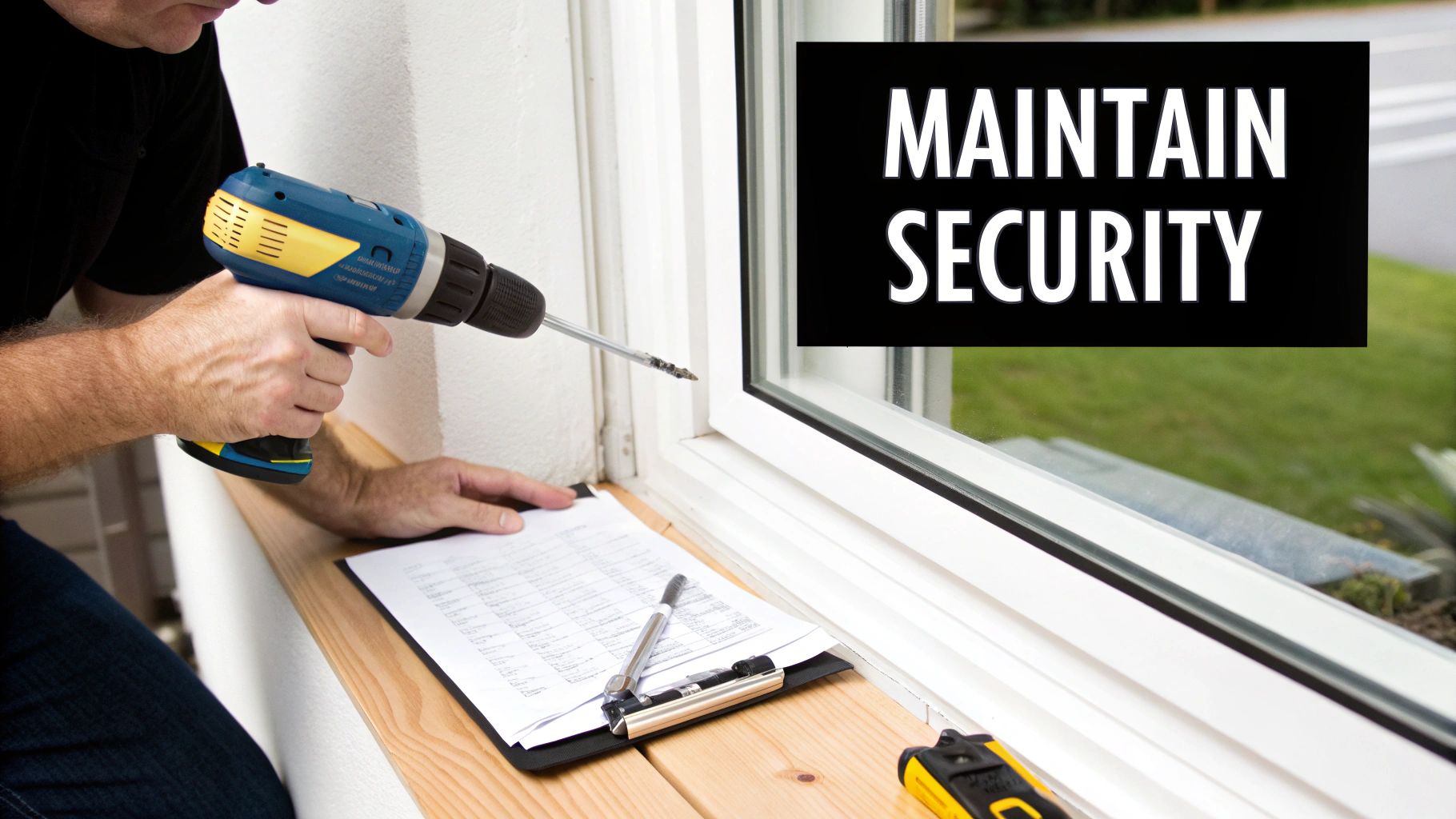
Getting your windows secured is a huge win, but don't fall into the "set it and forget it" trap. Real security isn't a one-and-done project. It’s a habit. Your locks, sensors, and even your family's routines need regular attention to make sure your home stays a tough target.
Think of it like tending a garden. You can't just plant the seeds and walk away. Consistent upkeep is what turns a few security gadgets into a reliable system that protects you year after year.
The Seasonal Hardware Checkup
Your physical hardware is on the front lines, battling everything from weather to daily wear and tear. A quick seasonal inspection is your best bet for catching small issues before they become major vulnerabilities.
I recommend doing this four times a year. A good time to do it is when you’re already tackling other seasonal chores, like swapping out storm windows or testing smoke detectors.
- Wiggle and Jiggle Every Lock: Don't just look at them. Go to every single window and physically work the lock. Does it click into place firmly, or is it loose and wobbly? A lock that doesn’t engage properly is just a piece of metal.
- Probe the Frames: Look for any sign of rot, warping, or cracking, especially on wood frames. Pay close attention to the bottom corners where water tends to sit. A weak frame can be pried open with a screwdriver, making even the beefiest lock useless.
- Do a Screw Check: Grab a screwdriver and make sure all the screws on your locks and hinges are tight. The constant expansion and contraction from temperature changes can work them loose over time.
This entire walkthrough takes maybe 15 minutes, and it’s one of the most powerful habits you can build for maintaining your home's physical defense.
Tending to Your Smart Tech
Your smart sensors and cameras are your digital lookouts, but they need their own tune-ups to stay sharp. Electronic gear isn't immune to problems.
Set a recurring reminder on your phone for these simple tasks:
- Schedule Battery Swaps: Don't wait for that annoying low-battery chirp at 3 a.m. Be proactive and replace the batteries in all your wireless sensors every 12 to 18 months, regardless of whether they seem to be working.
- Run Your Updates: Manufacturers constantly release firmware updates to patch security flaws and improve how their devices work. Pop into your security apps once a month and install any pending updates immediately.
- Test Your Connections: At least once a month, deliberately open a window to make sure the sensor actually sends an alert to your phone. For cameras, pull up the live feed to check for a clear, unobstructed view and a stable connection.
A Quick Tip: I keep a simple note on my phone listing every sensor's location and the date I last changed its batteries. It removes the guesswork and ensures no window gets forgotten.
Don't Forget the Human Element
At the end of the day, even the most sophisticated system is only as effective as the people using it. This is the part of maintenance everyone forgets: talking to your family.
Revisit your security plan every six months or so. Make sure everyone in the house, including older kids, is comfortable arming and disarming the system. More importantly, drill what to do if an alarm goes off. Who calls 911? Where is the safe meeting spot outside? A practiced, calm response is your greatest advantage in a real emergency.
This continuous cycle—checking hardware, updating tech, and talking as a family—is what truly secures your home for the long haul.
Your Top Window Security Questions Answered
Even after you've done your homework on reinforcing windows and adding smart tech, a few questions always pop up. It's totally normal. Home security can feel like a huge topic, but getting clear answers helps you make decisions with confidence. Let's dig into some of the most common things homeowners ask.
Is Security Film Really Worth It?
One hundred percent, yes. It's a total game-changer, and here's why. The point of security film isn't to make your glass bulletproof; it's to make breaking through it a noisy, frustrating, and time-consuming nightmare for a burglar.
The film's main job is to hold all the shattered pieces of glass together. So instead of a quick, quiet pop and an easy reach inside, the intruder is met with a spider-webbed, but still solid, sheet of glass. They have to keep hacking and pushing at it, which takes a ton of time and makes a racket. That delay and noise are often all it takes to convince them to give up and run. For the protection you get, it's one of the best bangs for your buck.
So, What's the Best Lock for a Window?
I get this one a lot, and the truth is, there’s no single "best" lock. The right one depends entirely on the type of window you have. The trick is to pick a lock that specifically defeats your window's weakest point.
Let’s break it down by window type:
- For Double-Hung Windows: A keyed sash lock is your best friend. It stops a burglar from breaking a small corner of the glass, reaching in, and just flipping the standard latch.
- For Sliding Windows: You absolutely need a charley bar or a dedicated sliding window lock. These physically block the window from being forced open or, a common trick, being lifted right off its track.
- For Any Window: Pin locks are a fantastic secondary layer of security. They're simple but effective, physically bolting the sashes together as a rock-solid backup to your main lock.
Honestly, the smartest approach is to layer your locks. Use a good primary lock designed for your window style, then add a secondary blocking device for good measure.
Are Window Bars a Good Idea or a Fire Hazard?
This is a tough one. Window bars are incredibly effective at stopping a break-in, but they introduce a massive safety risk: blocking your escape route in a fire. If they aren't installed correctly, they can trap your family inside when seconds count.
If you’re thinking about bars, they must have a quick-release mechanism that can be opened easily from the inside without needing a key. This is a non-negotiable safety feature, and most fire codes require it. Frankly, this is one job you should always leave to a pro who knows the local regulations and can guarantee they're both secure against intruders and safe for your family.
Think about how fast a burglary happens. A break-in occurs every 25.7 seconds in the U.S., and the thief is usually in and out in just 8-12 minutes. Anything you can do to make entry harder and slower is a huge win. You can find more eye-opening facts in these burglary statistics on getsafeandsound.com.
Will My Dog Actually Scare Off a Burglar?
Yes, a dog can be a fantastic deterrent. And it's less about the "guard dog" image and more about the noise. A barking dog draws a ton of attention from neighbors and lets everyone inside know something is wrong. It shatters the element of surprise burglars rely on.
Even a small, yappy dog does the job. In interviews, many convicted burglars say they’d skip a house with a dog—any dog—because it's an unpredictable variable that makes too much noise. A dog should never be your only defense, of course, but it’s a great addition to your overall security plan.
Do I Really Need to Worry About Second-Story Windows?
While it's true that burglars hit ground-floor windows most often, you can't just ignore the second story. Thieves are opportunists, and if they see an easy way up, they'll take it.
Take a walk around your house and look at your upstairs windows with a burglar's eye:
- Is a big, sturdy tree branch reaching right up to the window?
- Is there a flat porch or garage roof that makes for an easy climb?
- Do you leave a ladder out in the yard?
If you answered yes to any of these, then you definitely need to secure those windows. Make sure the locks are solid, at the very least. For any upper-level window that seems especially easy to get to, adding a simple contact sensor is a smart move for extra peace of mind.
At Automated Home Guide, our goal is to empower you with the practical knowledge to create a safer, smarter home. From simple DIY hardware fixes to fully integrated smart systems, we're here to help you protect what matters most. For more expert tips and in-depth guides, explore all our resources at https://automatedhomeguide.com.



Leave a Reply