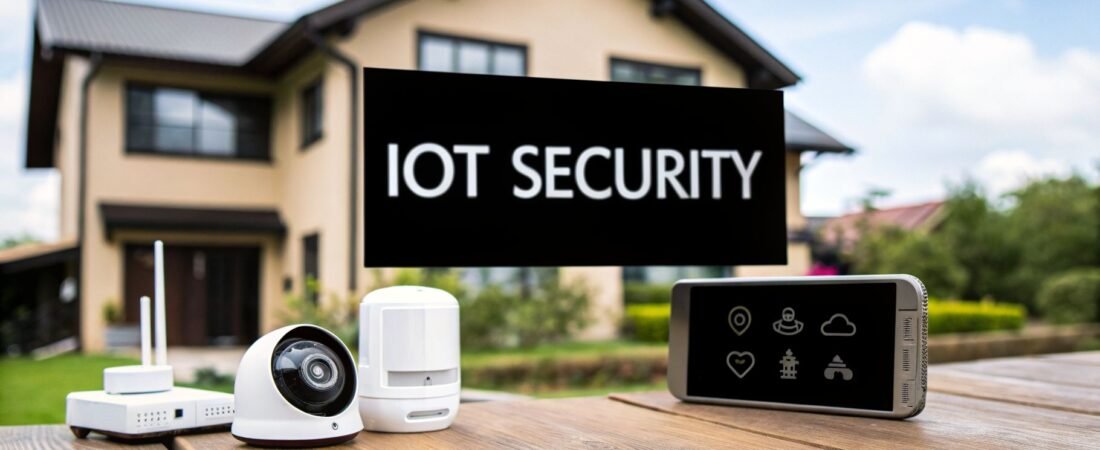
The convenience of a modern smart home, with its interconnected web of devices from smart speakers to security cameras, introduces a new frontier of potential vulnerabilities. Each connected device, while adding functionality and ease to our lives, can also serve as an entry point for digital threats if not properly secured. The stakes are higher than ever, moving beyond simple data theft to encompass the physical security and privacy of your personal sanctuary. A compromised smart lock, a hijacked baby monitor, or a manipulated thermostat are not just digital problems; they are real-world risks that can have immediate consequences.
This guide is designed to cut through the noise of generic advice. We will provide a prioritized, actionable roundup of the top 10 iot security best practices that every smart homeowner should implement. You won't find vague suggestions here. Instead, you'll discover a comprehensive checklist covering critical areas from initial device setup and network segmentation to ongoing monitoring and secure end-of-life device disposal.
By following these expert-backed strategies, you will learn to:
- Fortify your network against unauthorized access.
- Manage device credentials and software updates effectively.
- Monitor your ecosystem for suspicious activity.
- Establish protocols for adding and removing devices safely.
Our goal is to empower you with the knowledge and tools necessary to build a resilient and secure automated living space. This ensures your smart home enhances your life without compromising your safety, transforming potential vulnerabilities into a well-defended, intelligent environment. Let's begin building a stronger, safer smart home.
1. Change Default Credentials Immediately
The single most critical first step in securing any new IoT device is to change its default username and password. Manufacturers often ship devices like smart cameras, routers, and hubs with generic, easy-to-guess credentials such as "admin" and "password". These factory settings are not secrets; they are publicly documented online, creating an open invitation for automated botnets and malicious actors to gain immediate access to your network.

Leaving these credentials unchanged is akin to leaving your front door wide open. It’s a foundational vulnerability that attackers exploit first. This simple oversight has been a key factor in several high-profile security incidents, including breaches of Ring Video Doorbells and Wyze Cameras where attackers targeted devices still using their factory settings. Implementing this practice is an essential part of any robust IoT security best practices strategy.
Why This Is a Critical First Step
This action should be performed before connecting the device to your Wi-Fi network. By changing the credentials while the device is offline or connected directly to your computer for setup, you close the window of vulnerability. Once connected to the internet with default credentials, a device can be compromised in minutes by automated scans searching for exposed targets. This simple act of prevention blocks unauthorized access to the device's control panel, settings, and the data it collects.
Actionable Tips for Implementation
To effectively manage your device credentials, follow these specific guidelines:
- Use a Password Manager: Employ a trusted password manager like Bitwarden or 1Password to generate and store strong, unique credentials for every single IoT device.
- Create Complex Passwords: Ensure each password is a long, random combination of uppercase and lowercase letters, numbers, and symbols. Avoid using personal information or common phrases.
- Update Periodically: Make it a habit to change your IoT device passwords every 6 to 12 months, or immediately if you hear about a security breach related to your network or device manufacturer.
- Document Securely: If not using a password manager, keep a record of your new credentials in an encrypted digital file, stored offline or in a secure cloud vault, completely separate from the devices themselves.
2. Keep Firmware and Software Updated
Beyond initial setup, ongoing maintenance is crucial for long-term device security. Regularly updating the firmware and software on your IoT devices is as vital as changing default passwords. Manufacturers release these updates to patch security vulnerabilities discovered after a product is released, introduce new features, and improve overall performance. Neglecting these updates leaves your devices exposed to known exploits that cybercriminals actively seek to leverage.
Failing to update is like ignoring a manufacturer's recall notice for a faulty lock on your door. The flaw is known, a fix is available, but without action, the vulnerability remains. High-profile exploits, such as those targeting network hardware from brands like Ubiquiti or vulnerabilities found in Google Nest products, are often patched quickly by the vendor. However, the protection is only effective if the user applies the update. Consistent updates are a cornerstone of any effective IoT security best practices regimen.
Why This Is a Critical Ongoing Process
Firmware is the low-level software that controls a device's hardware, making it a prime target for attackers. A single vulnerability can grant an intruder complete control. Updates are the manufacturer's primary defense mechanism against newly discovered threats. By applying them promptly, you are installing the latest security patches and ensuring your device is protected against the most recent attack methods. This proactive maintenance significantly reduces the risk of your smart home devices being compromised and used in a botnet or to spy on your household.
Actionable Tips for Implementation
To ensure all your devices stay current and protected, integrate these update habits into your routine:
- Enable Automatic Updates: This is the most effective method. Wherever the option is available in a device's settings, turn on automatic updates to receive security patches as soon as they are released.
- Create a Maintenance Calendar: For devices that lack an auto-update feature, set a recurring monthly reminder to manually check the manufacturer’s website or app for new firmware versions.
- Subscribe to Security Advisories: Sign up for email notifications from your device manufacturers. This will alert you directly about critical security patches and newly discovered vulnerabilities.
- Schedule Updates Strategically: Plan manual updates for times of low network usage, like late at night, to avoid disrupting your internet connectivity or device availability.
3. Use a Dedicated IoT Network or VLAN
One of the most powerful IoT security best practices you can implement is network segmentation. This involves creating a separate, isolated network exclusively for your smart home devices. By placing all your smart speakers, cameras, and thermostats on this dedicated network, you effectively build a digital wall between them and your primary devices like computers, smartphones, and sensitive data storage drives.

This containment strategy drastically reduces your risk. If a single IoT device is compromised, the attacker's access is confined only to that isolated network segment. They are blocked from moving laterally to infect your more valuable systems, such as a laptop containing personal financial information. This professional-grade technique, popularized by enterprise IT security standards, is now accessible to homeowners through modern routers.
Why This Is a Critical First Step
Segmentation contains the potential damage from a security breach. Since many IoT devices are not built with robust security in mind and may have unpatched vulnerabilities, isolating them is a proactive defense. This is especially critical for devices from less reputable manufacturers or those that no longer receive security updates. Without segmentation, a hacked smart light bulb could theoretically become a gateway for an attacker to access your entire home network.
Actionable Tips for Implementation
To properly segment your network, consider these specific steps:
- Use Your Router's Guest Network: The easiest method is to enable the "Guest Wi-Fi" feature on your router and dedicate it to IoT devices. This is a simple but effective form of isolation available on most modern hardware.
- Create a True VLAN: For more advanced control, use a router that supports Virtual Local Area Networks (VLANs), like those from Ubiquiti or Firewalla. This allows you to create highly customized firewall rules between network segments.
- Use Separate Passwords: The IoT network's Wi-Fi password must be strong, unique, and completely different from your primary network's password.
- Configure Firewall Rules: If your router allows it, create a firewall rule that blocks all traffic initiated from the IoT network to your primary network, while still allowing your primary devices to connect to and control the IoT gadgets. To discover more advanced strategies, explore these home network security best practices.
4. Implement Strong Wi-Fi Security
Your Wi-Fi network is the central nervous system of your smart home, and securing it is a foundational pillar of any IoT security strategy. Every piece of data your smart devices send and receive travels through this network, making it a prime target for attackers. By implementing strong wireless security protocols, you create a protective barrier that shields all connected devices from eavesdropping, data interception, and unauthorized access.
Failing to properly secure your Wi-Fi network leaves every device vulnerable, regardless of its individual security features. An attacker who gains access to your network can potentially monitor, control, or compromise any IoT device connected to it. This is why using the latest encryption standards and hardening your router's settings are essential components of a robust defense, protecting your entire smart home ecosystem from the ground up.
Why This Is a Critical First Step
A compromised Wi-Fi network gives an attacker a direct line to every smart device in your home. This is the "keys to the kingdom" in an IoT environment. Using strong encryption like WPA3 (or at a minimum, WPA2-AES) ensures that the communication between your devices and the router is scrambled, making it unreadable to anyone trying to listen in. This is a critical preventative measure that protects against a wide range of attacks, from simple password cracking to more sophisticated man-in-the-middle exploits.
Actionable Tips for Implementation
To properly lock down your wireless network, configure your router with the following settings:
- Enable WPA3 Encryption: If your router and devices support it, enable WPA3 for the strongest security. If not, ensure you are using WPA2 with AES encryption, not the older and vulnerable TKIP protocol.
- Create a Strong Wi-Fi Password: Your network password (or passphrase) should be at least 16 characters long and include a complex mix of uppercase letters, lowercase letters, numbers, and symbols.
- Disable Wi-Fi Protected Setup (WPS): WPS is a convenience feature with known security vulnerabilities that can be exploited to crack your network password. Disable it completely in your router's settings.
- Change the Network Name (SSID): Change your Wi-Fi network's name from the manufacturer's default (e.g., "NETGEAR58," "TP-Link_2.4GHz") to something unique that does not reveal personal information.
- Disable Unnecessary Features: Turn off features like remote management and Universal Plug and Play (UPnP) unless you have a specific, secure reason to use them, as they can open up your network to external threats. For a deeper dive, you can learn more about how to protect your Wi-Fi from hackers and secure your digital perimeter.
5. Monitor Network Traffic and Device Activity
Actively monitoring your home network transforms it from a passive utility into an intelligent early warning system. This practice involves observing the data flowing to and from your IoT devices to detect unusual behavior, unauthorized access attempts, and potential security breaches. By establishing a baseline of normal activity, you can quickly identify anomalies, such as a smart thermostat suddenly sending large amounts of data to an unknown server, indicating it may be compromised.
Without monitoring, a compromised device can operate undetected for months, serving as a gateway for attackers to access other devices on your network or participate in a botnet. Proactive monitoring is a cornerstone of modern IoT security best practices, allowing you to catch threats before they escalate. Modern routers and security appliances like Firewalla or the Ubiquiti UniFi Dream Machine often include user-friendly dashboards that simplify this process, making it accessible even for non-technical users.
Why This Is a Critical Ongoing Practice
This proactive approach is essential for identifying threats that bypass traditional defenses. A compromised device might not trigger an antivirus alert, but its strange network traffic provides a clear red flag. By regularly reviewing logs and activity, you gain visibility into what your devices are actually doing, who they are communicating with, and how often. This insight is crucial for maintaining the long-term security and integrity of your smart home ecosystem.
Actionable Tips for Implementation
To effectively monitor your network and device activity, integrate these habits into your routine:
- Choose Monitoring-Capable Hardware: Invest in a router or network security appliance with built-in traffic analysis and alerting features, such as Eero Pro, Netgear Armor, or ASUS AiProtection.
- Enable and Review Logs: Activate logging features on your router and set a weekly reminder to review them for suspicious entries, like repeated failed login attempts or connections to unrecognized IP addresses.
- Set Up Smart Alerts: Configure alerts for unusual spikes in bandwidth usage or for when a new, unknown device joins your network. This provides immediate notification of potential issues.
- Track Your Devices: Maintain a simple spreadsheet listing all your connected devices and their MAC addresses. This helps you quickly identify any unauthorized devices that appear on your network logs.
- Establish a Baseline: Take note of what normal network activity looks like for your smart home. Understanding this baseline makes it much easier to spot deviations that could signal a problem, forming a key part of your smart home security systems strategy.
6. Disable Unnecessary Features and Remote Access
Every feature enabled on an IoT device represents a potential entry point for attackers. Disabling any functionality you don't actively use is a powerful strategy for reducing your device's attack surface. Many smart devices ship with all features enabled by default, from remote access and cloud services to microphones and UPnP (Universal Plug and Play), creating unnecessary security risks for the average user.
This principle of "least functionality" is a core tenet of cybersecurity. If a smart thermostat doesn't need remote management or a smart display isn't used for voice commands, turning those features off eliminates entire categories of potential vulnerabilities. Adopting this practice is a critical part of a proactive IoT security best practices mindset, ensuring you only expose your network to risks that are absolutely necessary for your device's intended function.
Why This Is a Critical First Step
Many vulnerabilities are discovered in secondary or convenience-oriented features, not the core function of a device. For example, a flaw in a device's remote access protocol could allow an attacker to bypass your firewall and gain control, even if the device's primary function is secure. By disabling these non-essential services during initial setup, you proactively close these backdoors before they can be exploited. This simple audit hardens the device against future threats that may target these specific, and often less-tested, features.
Actionable Tips for Implementation
To effectively minimize your device's attack surface, conduct a thorough feature audit using these guidelines:
- Review Settings Immediately: As soon as you set up a new device, navigate through every single menu and setting. Scrutinize features like cloud connectivity, remote access, guest network access, and any data-sharing or diagnostic reporting options.
- Disable Unused Sensors: If you use a smart display solely for viewing information, disable its microphone. If a security camera's audio recording is not needed, turn it off. Each active sensor is a potential eavesdropping tool.
- Turn Off UPnP: Universal Plug and Play is a network protocol that allows devices to automatically open ports on your router, a feature often exploited by malware. Disable it on both your router and your IoT devices unless you have a specific, understood need for it.
- Re-Audit After Updates: Firmware updates can sometimes reset settings or introduce new features. Make it a habit to review your device's configuration after every update to ensure your security posture remains intact.
7. Use Two-Factor Authentication (2FA)
Implementing two-factor authentication (2FA) on all IoT device accounts adds a critical security layer beyond just a password. 2FA requires a second form of verification to prove your identity before granting access to your account. Even if a malicious actor steals or guesses your password, this additional barrier prevents them from logging in, making it an essential component of any IoT security best practices strategy.

This practice is non-negotiable for accounts that control physical access to your home or sensitive data, such as those for smart locks, garage door openers, and security camera systems. For example, enabling 2FA on an August Smart Lock or Google Home account ensures that a compromised password alone is not enough for an intruder to unlock your door or disarm your system. It transforms your account from a single-lock door into a bank vault with multiple security checks.
Why This Is a Critical Security Layer
A strong password is a good start, but data breaches happen frequently, and credentials can be exposed. 2FA acts as a powerful fail-safe. By requiring a temporary code from an authenticator app, an SMS message, or a biometric scan, you ensure that only someone with physical access to your secondary device (like your smartphone) can access the account. This dramatically reduces the risk of unauthorized access from remote attackers.
Actionable Tips for Implementation
To properly secure your accounts with 2FA, follow these specific guidelines:
- Prioritize Physical Access: Immediately enable 2FA on all accounts controlling smart locks, garage doors, security cameras, and alarm systems.
- Prefer Authenticator Apps: Use apps like Google Authenticator or Authy over SMS-based 2FA. SMS messages can be intercepted through SIM-swapping attacks, making authenticator apps a more secure option.
- Save Backup Codes: When you set up 2FA, you will be given backup codes. Store these codes securely in a password manager or a locked, offline location separate from your devices. They are your only way back in if you lose your phone.
- Utilize Hardware Keys: For maximum security on critical accounts, consider using a physical hardware key like a YubiKey. This requires the physical key to be present to log in, offering the strongest protection available.
8. Create and Maintain an IoT Device Inventory
You can't protect what you don't know you have. Maintaining a comprehensive inventory of all IoT devices on your network is a fundamental practice borrowed from enterprise IT management that is crucial for home security. This living document tracks what each device is, where it is, and its current security status, transforming a chaotic collection of gadgets into a manageable ecosystem. An accurate inventory is your primary tool for spotting anomalies, managing updates, and responding quickly to security threats.
Without an inventory, it becomes nearly impossible to ensure every device is patched, or to identify an unauthorized device that has connected to your network. A well-maintained list simplifies troubleshooting, streamlines firmware updates, and provides a clear overview of your network's attack surface. This organized approach is a core component of advanced IoT security best practices, enabling proactive rather than reactive security management.
Why This Is a Critical Organizational Step
An inventory serves as the foundation for nearly all other security measures. It allows you to systematically apply security settings, track firmware versions, and ensure no device is forgotten during routine maintenance. When a new vulnerability is announced for a specific device model, your inventory allows you to immediately check if you are affected and take action. This organized record-keeping is essential for moving from basic security to a robust, long-term management strategy.
Actionable Tips for Implementation
To build and maintain an effective IoT device inventory, follow these specific guidelines:
- Build a Detailed Spreadsheet: Create a spreadsheet with columns for Device Name, Model, Manufacturer, IP and MAC Address, Firmware Version, and Last Update Date. Note which network it's on (e.g., Guest, Main, or IoT VLAN).
- Use Network Scanning Tools: Periodically use free tools like Advanced IP Scanner or your router's connected devices list to discover everything on your network. Compare the scan results against your inventory to find unauthorized or forgotten devices.
- Document Key Information: Note the purchase date and warranty information for each device. This is useful for support requests and knowing when a device may no longer receive security updates from the manufacturer.
- Review and Update Regularly: Make it a habit to update the inventory immediately when you add, remove, or reconfigure a device. Perform a full review of the inventory on a quarterly basis to ensure its accuracy.
9. Disable Universal Plug and Play (UPnP)
Universal Plug and Play (UPnP) is a common network protocol that allows devices like smart TVs, printers, and gaming consoles to automatically discover each other and open ports on your router's firewall without manual configuration. While designed for convenience, this feature introduces significant security risks by creating potential backdoors into your home network that can be exploited by malicious software or compromised devices.
Leaving UPnP enabled on your router is like giving every device on your network a master key to your digital front door. A compromised IoT device could instruct your router to open a port, making it and other devices visible and vulnerable to attackers on the internet. This protocol has been exploited in major attacks, including the Mirai botnet, which leveraged UPnP to find and infect vulnerable IoT devices. Disabling it is a fundamental part of a layered IoT security best practices approach.
Why This Is a Critical Security Measure
By default, UPnP trusts any device on the local network. It does not authenticate requests, meaning a malicious app on your phone or a compromised smart light bulb can command your router to create firewall exceptions. Disabling this protocol closes these unauthorized pathways and forces you to take manual control over which services are accessible from the outside world. This deliberate action prevents automated exploits and significantly reduces your network's attack surface, forcing any access to be explicitly configured by you.
Actionable Tips for Implementation
To properly disable UPnP and secure your network, follow these steps:
- Access Your Router’s Admin Panel: Open a web browser and navigate to your router’s IP address, typically
192.168.1.1or192.168.0.1. - Locate the UPnP Setting: Find the UPnP option, which is often located in the "Advanced," "WAN," or "NAT Forwarding" section of the router's settings.
- Disable and Save: Turn the feature off and be sure to save or apply the changes. The router may need to reboot for the setting to take effect.
- Use Manual Port Forwarding: If a device, such as a gaming console or a home server, legitimately needs external access, configure manual port forwarding for that specific device and port. This provides the same functionality as UPnP but in a controlled, secure manner.
10. Establish a Device Removal and End-of-Life Strategy
Smart home devices are not permanent fixtures; they break, become obsolete, or are replaced with newer models. A critical component of a comprehensive IoT security best practices plan is establishing a formal strategy for removing these devices from your network and home. Failing to properly decommission an old smart lock, camera, or hub can leave a digital ghost in your network, creating a potential backdoor for attackers or exposing your personal data long after you've stopped using it.
This process, often called device retirement or end-of-life management, ensures a clean break. For instance, if you sell your home without factory resetting the smart thermostat and revoking its cloud access, the new owners could potentially access your account history. A proper removal strategy protects your privacy and secures your network by ensuring old hardware cannot be exploited.
Why This Is a Critical Long-Term Step
An end-of-life strategy is about closing security loops. Devices that are no longer receiving firmware updates from the manufacturer become increasingly vulnerable over time. Beyond active usage, a crucial aspect of smart home security involves safeguarding data when devices reach their end-of-life. Understanding the principles behind data security in IT asset disposition best practices helps ensure that sensitive information stored on a device is completely sanitized before it leaves your possession, preventing data remnants from being recovered and misused.
Actionable Tips for Implementation
Create a simple checklist to follow whenever you remove, replace, or dispose of a smart device:
- Perform a Factory Reset: This is the most important step. Use the manufacturer's official instructions to wipe all personal data, settings, and network credentials from the device itself.
- De-authorize from Accounts: Log into the device's mobile app and cloud portal. Remove the specific device from your account to revoke its access credentials and break the link to your cloud data.
- Update Your Inventory: Remove the decommissioned device from your network map and password manager. This keeps your documentation accurate and prevents confusion.
- Recycle Responsibly: Never throw smart devices in the trash. Look for e-waste recycling programs offered by your local municipality or electronic retailers like Best Buy. Some manufacturers also offer their own take-back programs.
- Physical Destruction for High-Risk Data: For devices that stored highly sensitive information (like security camera footage on an SD card), consider physically destroying the storage media if a secure wipe is not possible.
10-Point IoT Security Best-Practices Comparison
| Action | 🔄 Implementation | ⚡ Resource Requirements | 📊 Expected Outcomes | ⭐ Effectiveness | 💡 Ideal Use Cases / Tips |
|---|---|---|---|---|---|
| Change Default Credentials Immediately | Very Easy — one-time setup | Minimal time; no extra hardware | Immediate reduction in unauthorized access | ⭐⭐⭐⭐⭐ | At first setup; use a password manager and unique passwords |
| Keep Firmware and Software Updated | Easy — recurring task | Bandwidth, occasional downtime, monitoring time | Protection from known vulnerabilities and performance fixes | ⭐⭐⭐⭐ | Enable automatic updates; check monthly for unsupported devices |
| Use a Dedicated IoT Network or VLAN | Moderate to Advanced — network config | VLAN-capable router, time to configure, possible hardware cost | Strong isolation; limits lateral movement from compromised devices | ⭐⭐⭐⭐⭐ | Best for tech-savvy homes or many devices; use separate SSID/password |
| Implement Strong Wi‑Fi Security | Easy to Moderate — router settings | Modern router supporting WPA3 preferred; configuration time | Prevents unauthorized network access and eavesdropping | ⭐⭐⭐⭐ | Enable WPA3/WPA2 fallback, disable WPS, use long passphrases |
| Monitor Network Traffic and Device Activity | Moderate — ongoing monitoring | Monitoring tools (free/paid), time/skill to review logs | Early detection of compromises and anomalous behavior | ⭐⭐⭐⭐ | Weekly reviews; set alerts and document baseline traffic patterns |
| Disable Unnecessary Features and Remote Access | Easy to Moderate | Time to audit device settings; no extra cost | Reduced attack surface and improved privacy | ⭐⭐⭐⭐ | Disable cloud/remote features if unused; document changes |
| Use Two‑Factor Authentication (2FA) | Easy — per-account setup | Authenticator app or hardware key; backup codes | Strong protection against account takeovers | ⭐⭐⭐⭐⭐ | Enable for locks/cameras/accounts; prefer authenticator apps or keys |
| Create and Maintain an IoT Device Inventory | Easy — initial effort, recurring updates | Spreadsheet or asset tool; periodic review time | Faster incident response and better asset visibility | ⭐⭐⭐ | Maintain spreadsheet with IP/MAC/firmware; review quarterly |
| Disable Universal Plug and Play (UPnP) | Easy — router toggle | Router admin access; manual port forwarding if needed | Prevents automatic port mapping and external exposure | ⭐⭐⭐⭐ | Disable by default; manually forward ports only when necessary |
| Establish Device Removal & End‑of‑Life Strategy | Moderate — as devices retire | Time for wiping, account revocation; possible professional help | Protects personal data and prevents orphaned vulnerabilities | ⭐⭐⭐ | Use factory reset, revoke cloud access, document removal dates |
Your Action Plan for a Secure and Smart Future
Navigating the landscape of smart home technology can feel like a high-wire act, balancing cutting-edge convenience against potential security vulnerabilities. As we've detailed, securing this digital ecosystem isn't about a single, magical solution. Instead, it's about building a robust, layered defense through a series of deliberate and consistent actions. By embracing these IoT security best practices, you are not just protecting devices; you are safeguarding your home, your privacy, and your peace of mind.
The journey from a vulnerable smart home to a secure one is a continuous process, not a destination. It begins with foundational habits: immediately changing default credentials, establishing a routine for firmware updates, and leveraging strong, unique passwords for every account. These initial steps are the digital equivalent of locking your doors and windows, forming the essential first line of defense against unauthorized access.
From Basics to Advanced Fortification
Once the fundamentals are in place, the real power comes from architectural and procedural enhancements. Implementing a dedicated IoT network or VLAN is perhaps the most impactful step you can take. This strategy effectively quarantines your smart devices, ensuring that even if one is compromised, the breach cannot easily spread to your primary network where your sensitive personal data resides. It's like building a digital moat around your most critical assets.
Similarly, actively managing your devices is non-negotiable. This involves more than just updates; it means disabling unnecessary features like Universal Plug and Play (UPnP) that prioritize convenience over security, and carefully controlling remote access. Maintaining a detailed inventory of every connected device allows you to track its purpose, age, and security status, transforming your network from an unknown territory into a well-managed estate. This proactive stance is a cornerstone of modern IoT security best practices.
Key Insight: A secure smart home is a result of intentional design. Security is not an add-on feature but a core component of your network's architecture, built upon layers of protection from device-level settings to network-wide segmentation.
Creating a Culture of Digital Vigilance
Ultimately, the most secure smart home is one managed by an informed and vigilant owner. Your ongoing commitment to these principles is what truly fortifies your environment. This includes:
- Active Monitoring: Regularly checking network logs and device activity helps you spot anomalies that could indicate a breach.
- Conscious Management: Using Two-Factor Authentication (2FA) on all associated accounts adds a critical barrier against credential theft.
- Strategic Planning: Having an end-of-life strategy for older, unsupported devices prevents them from becoming permanent, unpatched vulnerabilities in your network.
By internalizing these practices, you shift from being a passive consumer of technology to an active guardian of your digital domain. You begin to evaluate new devices not just for their features, but for their security posture and the manufacturer's commitment to ongoing support. This mindset is the ultimate defense. The goal is to create a home that is not only smart in its automation but also intelligent in its security, allowing you to enjoy the full benefits of connected living without a shadow of doubt. Your home should be a sanctuary in every sense, both physical and digital.
Ready to take your smart home from secure to optimized? For detailed, step-by-step guides, unbiased product reviews, and advanced strategies tailored to your specific devices, visit Automated Home Guide. We provide the expert resources you need to master not just IoT security best practices, but every aspect of home automation. Explore our comprehensive articles and tutorials at Automated Home Guide today.





Leave a Reply