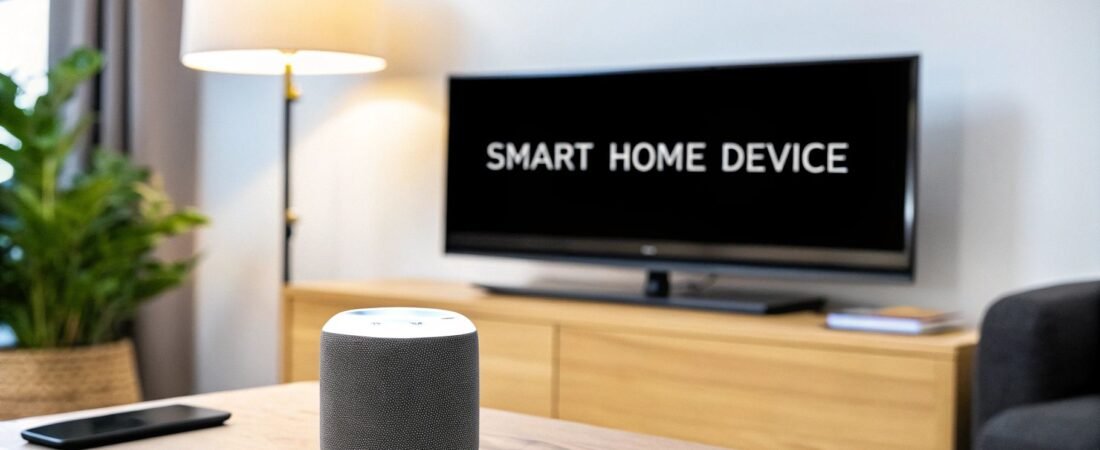
At its most basic, a smart home device is just a regular household object that's been given a brain and a voice. It connects to the internet, allowing you to control it from afar or have it operate automatically. Think of it as taking your everyday stuff—lightbulbs, thermostats, door locks—and making them a whole lot smarter and more responsive to the way you live.
What Makes a Smart Home Device "Smart"?
So, what’s really going on inside these gadgets? A smart device is essentially a bridge between your physical home and the digital world. Instead of you having to physically flip a switch or turn a dial, these devices use their connectivity (usually your home's Wi-Fi) and a set of sensors to listen for your commands.
These commands can come from an app on your phone, the sound of your voice, or even a schedule you've set up in advance. It’s this simple but powerful concept that lets you dim the lights from your couch or check your front door camera while you’re halfway across the world.
A great way to think about it is to picture your home as an orchestra. Every smart device—a smart plug, a security camera, a thermostat—is a different instrument. Your smartphone, or a smart speaker like an Amazon Echo or Google Nest, is the conductor. It's the conductor's job to make sure all the instruments play together in harmony, turning a collection of individual gadgets into a truly helpful, automated home.
To get a clearer picture, let's break down the core components that make any device "smart."
Core Components of a Smart Device
| Key Characteristic | Primary Function | Everyday Example |
|---|---|---|
| Connectivity | Connects to the internet (usually via Wi-Fi or Bluetooth) to send and receive commands. | A smart lightbulb connecting to your home Wi-Fi network. |
| Sensors | Gathers information from the physical environment (like motion, temperature, or light). | A video doorbell's motion sensor detecting someone at your door. |
| Automation | Follows pre-set rules or schedules without needing a direct command every time. | A smart coffee maker that starts brewing at 7 AM on weekdays. |
This combination is what brings the magic to life. It’s not just about one-off commands; it’s about creating a system that works for you.
It’s All About a Smarter Lifestyle
This blend of connectivity and intelligence is more than just a passing trend. The global smart home market is expected to explode to USD 537.27 billion by 2030, growing at an incredible 27.0% compound annual growth rate. That’s a clear sign of just how many people are bringing this technology into their homes. You can find more details about these smart home statistics to see the full scope of this growth.
A smart device isn't just about remote control; it's about creating a home that anticipates your needs and simplifies your daily routines. It learns your habits to save energy, bolster security, and give you back valuable time.
Ultimately, these devices are designed to make modern living more efficient and convenient. For a deeper look into the world of smart home technology and what's possible, resources like Everblog's Smart Home blog are fantastic for exploring the latest trends and ideas.
How Smart Devices Communicate and Collaborate
A single smart lightbulb is neat, but the real magic happens when it starts talking to your thermostat, your security camera, and your speakers. This isn't an accident; it's a carefully orchestrated performance that relies on a hidden network of communication protocols and central hubs.
Think of it like this: your smart devices need to speak a common language to understand each other. Without that shared language, your smart speaker would have no way of telling your smart blinds to open when you say, "Good morning." This invisible communication network is the true backbone of any smart home, making all that slick automation possible.
This flowchart breaks down the basic process, showing how connectivity and sensors work together to gather data and trigger actions.
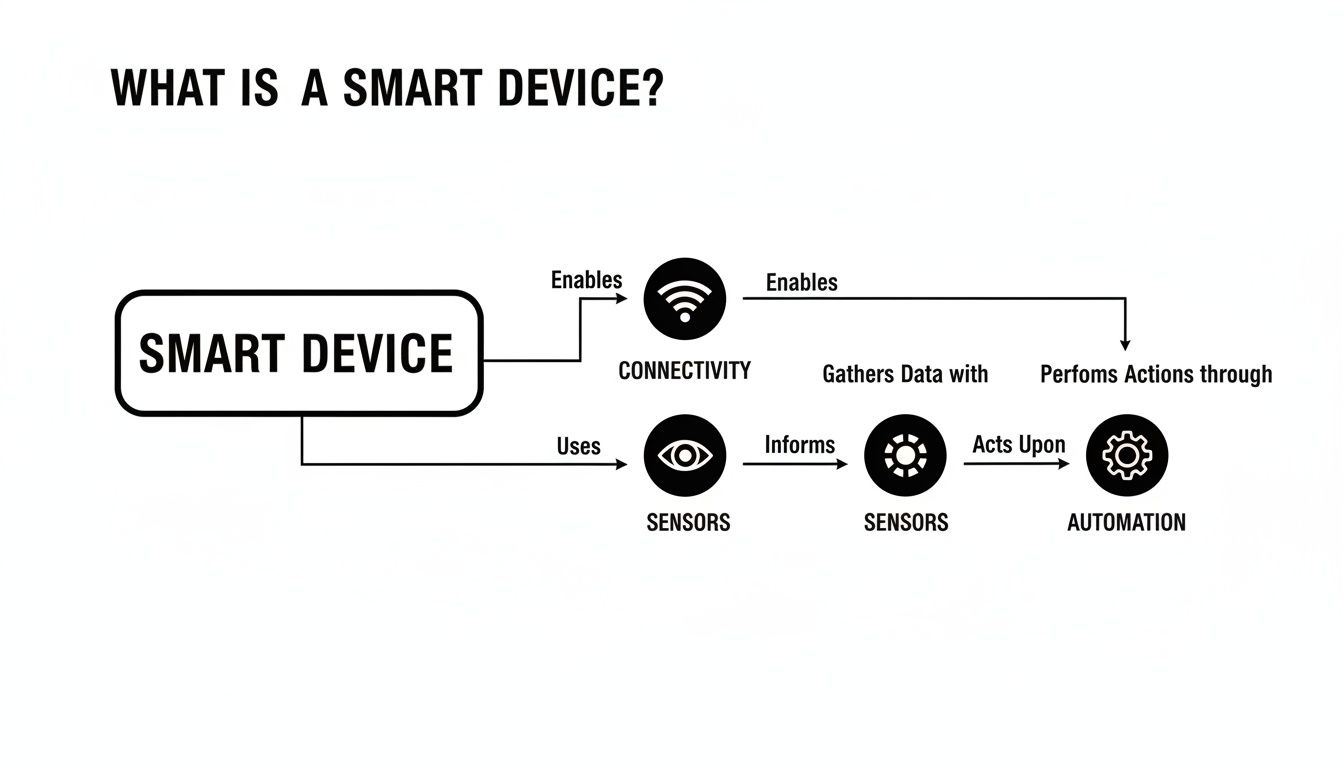
As you can see, it all starts with a connection. That connection allows a sensor to collect information—like motion, temperature, or light levels—and use that data to kick off an automated task. This simple loop is what lets a motion sensor turn on a hallway light or a temperature sensor adjust your thermostat.
The Languages Devices Speak
Just like people, smart devices use different wireless languages, or protocols, to talk to each other. Each one has its own strengths, making it a better fit for certain jobs. Knowing the basics helps you understand how all the pieces of your smart home fit together.
Here are the most common "languages" you'll run into:
- Wi-Fi: You already know this one. It’s fantastic for devices that need to move a lot of data, like a security camera streaming high-definition video or a smart speaker playing your favorite playlist.
- Bluetooth: Perfect for short-range chats, Bluetooth is often used to set up a new device for the first time or to connect gadgets that are physically close, like your smartwatch and your phone.
- Zigbee and Z-Wave: These are the unsung heroes of the smart home. They are low-power mesh networks, meaning devices can relay signals to each other instead of connecting directly to your router. This extends the network's reach and makes it super reliable—ideal for small devices like sensors and lightbulbs scattered around the house.
To keep things simple, many modern gadgets are multilingual, speaking more than one of these protocols to play nicely with a wider range of other devices. For a deeper dive, check out our guide on smart home protocols.
The Role of a Smart Hub
So, if all your devices speak different languages, how do they work together? That’s where a smart home hub steps in. A hub is the central translator and command center for your entire smart home ecosystem.
A smart hub is like the multilingual conductor of an orchestra. It takes a command from you—whether by voice or an app—and translates it into the specific language each device understands. This ensures every gadget plays its part in perfect harmony.
This central coordinator is what makes complex automations possible. For example, a "Good Morning" routine might involve a hub telling your Wi-Fi-connected coffee maker to start brewing, your Zigbee lights to slowly brighten, and your Z-Wave thermostat to warm up the house.
Smart speakers have quickly become the most popular type of hub. With over 171 million units shipped in a single year, these voice-activated devices are now the central orchestrators in millions of homes around the world.
Creating Seamless Automations
Ultimately, all this communication is in service of one goal: automation. We want our homes to handle routines for us, based on triggers we set. This is where a smart home goes from being a collection of cool gadgets to a truly intuitive environment that makes daily life just a little bit easier.
Let's picture a "Movie Night" scene:
- The Trigger: You say, "Hey Google, it's movie night."
- Hub in Action: Your smart speaker hears the command and gets to work.
- Device Collaboration: The hub instantly tells your smart lights to dim to 20% brightness, instructs your smart TV to turn on and open Netflix, and signals your smart blinds to close.
That one simple phrase kicks off a chain reaction across multiple devices, all communicating behind the scenes. It’s this powerful collaboration that transforms a house full of tech into a genuinely intelligent and responsive home.
Exploring the Categories of Smart Home Devices
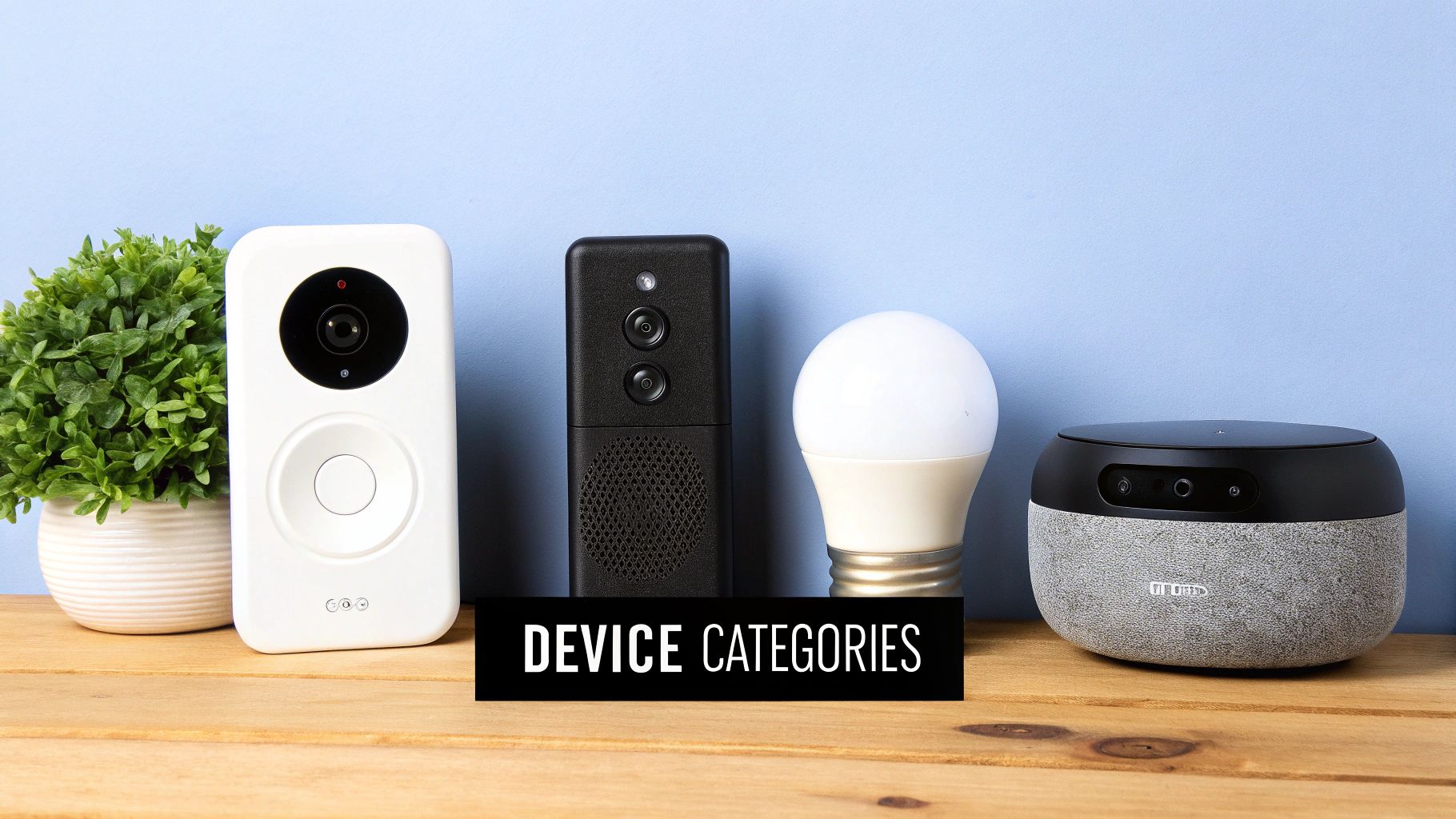
To really get a handle on what a smart home device is, it helps to see the different jobs they do in our day-to-day lives. The sheer number of connected gadgets out there can seem like a lot to take in, but it all becomes much clearer when you break them down into a few key categories based on what they actually do. This way, you can figure out which devices will make the biggest difference for you, whether you’re after better security, lower energy bills, or just making life a little easier.
I like to think of it like setting up a workshop. You've got your power tools, your hand tools, and your storage—each group has a specific job. A smart home is organized much the same way. When you group these devices, you start to see how they can work together to make your home safer, more efficient, and a more enjoyable place to be.
Smart Security and Access
For a lot of folks, this is their first step into the world of home automation. Smart security is all about giving you a handle on who's coming and going, which provides a ton of peace of mind whether you're relaxing on the couch or halfway around the world. These gadgets are your digital eyes and ears, keeping you connected to your property 24/7.
The most common devices you'll find here are:
- Video Doorbells: See who's at the door and talk to them right from your phone, even if you're not home. Most of them have motion sensors that ping you before anyone even rings the bell.
- Smart Locks: Forget fumbling for keys. You can lock and unlock your doors from anywhere, give temporary access codes to guests, and get alerts whenever the door is used.
- Security Cameras: Keep an eye on things inside and out in real-time. Modern cameras have amazing features like night vision, two-way audio, and even smart alerts that can tell the difference between a person, a pet, or a passing car.
Even the biggest door to your home—the garage—can get in on the action. As you look at different smart devices, it's worth learning about choosing a garage door opener with smart features so you can open, close, and check its status right from your phone.
Climate and Energy Management
This group of devices is focused on two things: making your home perfectly comfortable and cutting down your energy bills. They do this by learning your household's patterns and making automatic adjustments, so you’re never wasting energy heating or cooling an empty house. For instance, a good smart thermostat can trim your heating and cooling costs by an average of 10-15%.
By putting your temperature and power usage on autopilot, smart climate devices offer a fantastic return on investment. They help create a home that’s not just more comfortable, but also easier on your wallet and the environment.
The big players in this category include:
- Smart Thermostats: These learn your schedule and temperature preferences to build a super-efficient heating and cooling plan. You can also adjust them remotely from anywhere.
- Smart Plugs: These clever adapters can make almost any regular appliance "smart." Plug in a lamp, a fan, or even your coffee maker, and you can control it from your phone or set it on a schedule.
- Smart Vents: These replace your standard vent registers and can open or close automatically, pushing air only to the rooms that need it and fixing those annoying hot and cold spots.
Lighting and Ambiance
Smart lighting is easily one of the most fun and visually impactful upgrades you can make. It’s about so much more than just turning lights on and off. You get complete control over brightness, color, and scheduling to create the perfect vibe for any moment—whether that's bright, cool light for working from home or a warm, dim glow for movie night.
This includes everything from smart bulbs to in-wall switches and dimmers. You can program them to wake you up gently with a simulated sunrise or have them all turn off automatically when you head out the door. Fine-tuning your home's lighting doesn't just improve the mood; it's another great way to save on electricity.
The Real-World Benefits of a Connected Home
Knowing what a smart home device is and how it talks to other gadgets is interesting, but let's get to the real question: why should you care? The answer isn't in the tech itself, but in the real, tangible ways it can make your home a better partner in your daily life.
These benefits really boil down to three things that solve common household headaches: giving you back your time, securing your peace of mind, and saving you money. Let's break down what that actually looks like day-to-day.
Unmatched Convenience and Time Savings
The first thing you'll notice is the sheer convenience. Smart home devices are brilliant at taking over the small, repetitive tasks that slowly drain your time and energy. They help build routines that just happen, freeing you up to focus on more important things.
Think about how your morning could change:
- Instead of a blaring alarm, your smart lights gently fade in to mimic a sunrise. Your smart speaker starts playing a calm playlist while the thermostat nudges the temperature up.
- Downstairs, the smart plug on your coffee maker has already started brewing a fresh pot.
Or what about when you’re rushing out the door? A single phrase like, "Hey Google, I'm leaving," can trigger a sequence of events. The lights switch off, the thermostat drops into eco-mode, the doors lock, and the robot vacuum gets to work. No more driving back to check if you left the iron on.
It's about creating a home that anticipates what you need and handles the little things for you. Those minutes saved add up fast.
Enhanced Security and Peace of Mind
A smart home adds a powerful, modern layer of security, keeping you connected to your property no matter where you are. It's about feeling safe and knowing you can check in on your home, family, and pets with a quick tap on your phone. It’s like having a virtual guard on duty 24/7.
A connected home acts as a protective bubble, offering real-time awareness and control. From seeing who's at your door to getting immediate alerts about unusual activity, smart security puts you firmly in command.
Here are a few ways it delivers that peace of mind:
- Remote Monitoring: Pull up a live video feed from your security cameras anytime, anywhere.
- Smart Alerts: Get instant notifications when your video doorbell spots a person or someone uses the smart lock.
- Simulated Presence: While you're on vacation, schedule lights and a TV to turn on and off, making it look like someone’s home.
These aren't just features; they're genuine stress relievers.
Significant Energy and Cost Savings
Let's be honest, saving money is a huge motivator. Smart home tech is fantastic at trimming down your utility bills by intelligently managing how and when your home uses energy. These devices optimize consumption without you having to sacrifice comfort.
The market for smart energy management is exploding for a reason, projected to grow from $2.95 billion to $17.5 billion. A huge driver of this is the smart thermostat, which can cut heating and cooling costs by up to 20-30% by learning your patterns. You can find more stats on this incredible growth over at Strategic Market Research.
It doesn’t stop there. Smart lighting ensures you’re not paying to illuminate empty rooms, and smart plugs can kill the "vampire power" that electronics silently draw even when they're off. Over time, these small, automated tweaks really add up.
To help you connect these abstract benefits to your own life, here’s a quick breakdown of who gets the most out of specific smart home advantages.
Matching Smart Home Benefits to Your Needs
| Primary Benefit | Example Device | Who It Helps Most | Real-World Impact |
|---|---|---|---|
| Convenience | Smart Speaker, Smart Plugs | Busy professionals, parents | Automating morning routines, controlling devices with your voice while your hands are full. |
| Security | Video Doorbell, Smart Lock | Frequent travelers, new homeowners | Checking packages, letting in a pet sitter remotely, getting alerts for unexpected activity. |
| Energy Savings | Smart Thermostat, Smart Blinds | Budget-conscious households, eco-minded individuals | Lowering monthly utility bills, reducing your home's carbon footprint without effort. |
| Accessibility | Smart Lighting, Voice Assistants | Elderly individuals, people with mobility challenges | Controlling lights, locks, and thermostats without getting up; setting voice-activated reminders. |
As you can see, the "why" behind a smart home is deeply personal. It's about identifying your biggest pain points—whether that's a hectic schedule, security worries, or high bills—and finding the right tech to help solve them.
Choosing Your Smart Home Ecosystem
Before you buy a single smart bulb or plug, you’ve got a big decision to make: picking your team. Think of a smart home ecosystem as the operating system for your house—it’s the central platform where all your gadgets check in. Getting this right from the start is the difference between a home that works for you and one that just gives you a headache.
The three big names you'll see everywhere are Amazon Alexa, Google Home, and Apple HomeKit. Each has its own vibe and set of strengths. Honestly, the best one for you probably depends on the tech you already use and what you care about most—be it compatibility, intelligence, or privacy.
The Big Three Smart Home Platforms
Let's break down what makes each of these ecosystems tick so you can figure out which one fits your home best.
Amazon Alexa: This is the undisputed champion of compatibility. If you want the absolute largest selection of gadgets to choose from, Alexa is your safest bet. Thousands of devices from hundreds of brands work with it, making it incredibly flexible.
Google Home: Backed by Google's powerful AI, this ecosystem is fantastic at understanding what you mean, not just what you say. It excels at answering complex questions and handling routines in a more natural, conversational way. If you're an Android user or live in Google's world (Gmail, Calendar, etc.), the integration is seamless.
Apple HomeKit: For anyone who puts privacy and security above all else, HomeKit is the clear winner. It uses a strict end-to-end encryption model, and many automations run locally on a hub like an Apple TV or HomePod, not in the cloud. The trade-off is a smaller, more curated list of compatible devices, but you can be sure the ones that make the cut are reliable and secure. If you want to dive deeper into central controllers, check out our detailed smart home hub comparison.
When you're out shopping, just keep an eye out for the "Works with…" logo on the box. That little badge is your ticket to a smooth setup.
The Rise of a Universal Language Called Matter
For a long time, the number one frustration in the smart home world was getting a device from Brand A to work with a system from Brand B. A new industry standard called Matter has arrived to finally solve this problem.
Think of Matter as a universal translator for your smart home devices. It’s a shared language that allows a HomeKit-certified lightbulb to work just as seamlessly with an Amazon Alexa speaker as it does with a Google Home hub.
This protocol is a game-changer because it simplifies everything. With Matter, you don't have to be so worried about getting locked into one company's world. As more and more manufacturers get on board, you can buy a device and feel confident it will connect to your system, no matter the brand.
This move toward open standards is a huge trend. In fact, open-source platforms are projected to see the fastest growth at an 18.05% CAGR, largely because people are tired of being stuck with a single brand. You can discover more insights about this growing demand for smart home flexibility. It really shows how important standards like Matter are for building a connected home that's more adaptable and user-friendly for everyone.
How to Start Your Smart Home Journey
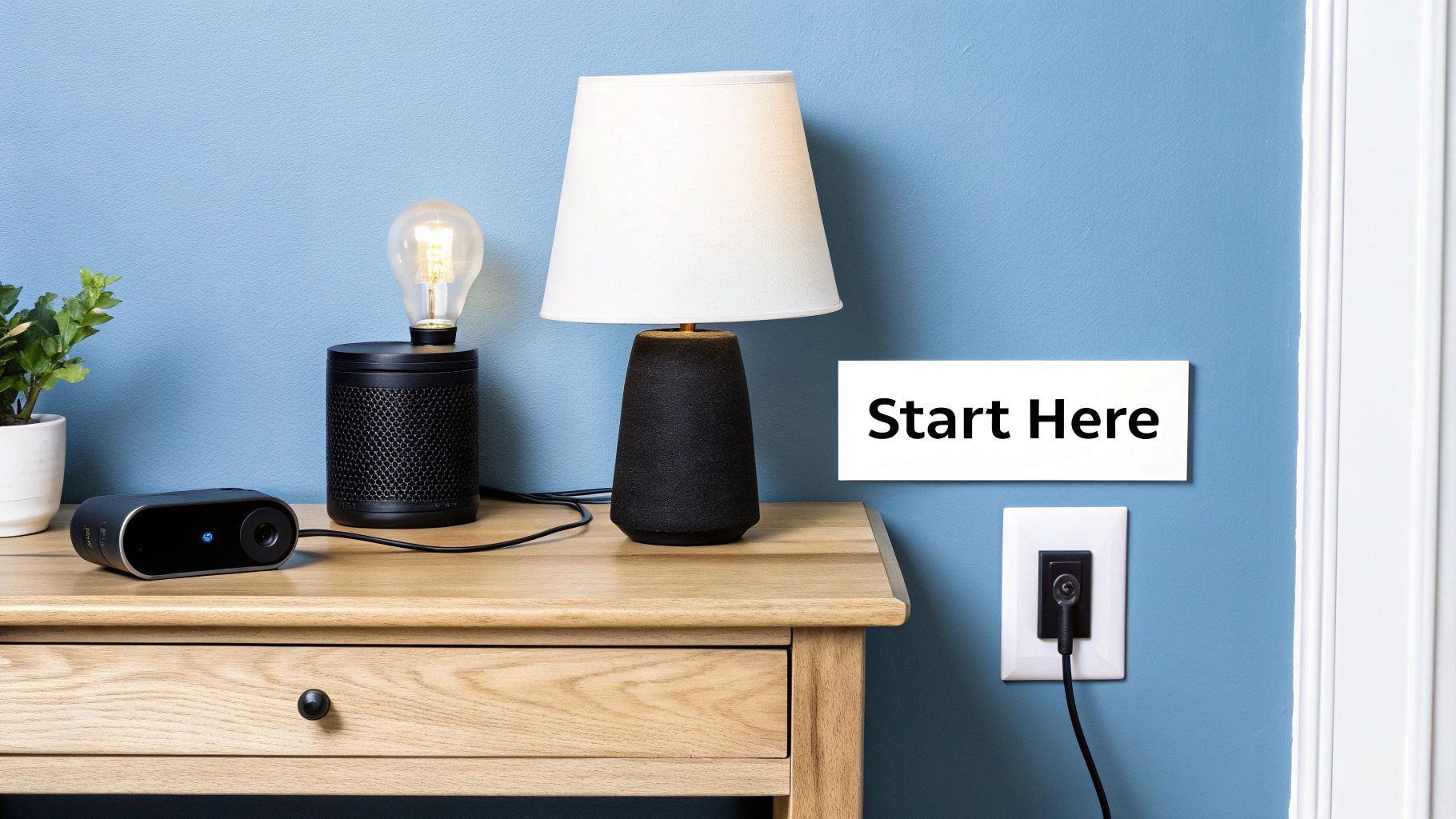
Diving into smart home tech can feel overwhelming, but it doesn't have to be. The best way to get started is to think small. Focus on a device that solves one specific, nagging problem in your daily life.
This approach gives you a quick win and lets you see the real-world benefits without getting bogged down in a complex, house-wide setup. Think of it as a low-risk experiment—one that can easily grow as you figure out what you truly value in a connected home.
Choose an Easy Entry Point
Forget about trying to automate your entire house overnight. Instead, pick one of these three simple starting points. Each delivers a big impact for very little effort, making them perfect for anyone new to smart tech.
- Smart Plugs: This is the absolute fastest way to make a "dumb" device smart. Plug it into the wall, then plug in your lamp, fan, or coffee maker. Just like that, you have app and voice control. It's a brilliant way to get a feel for scheduling and remote access.
- Smart Lighting: Swapping out a couple of regular bulbs for smart ones is another simple but powerful upgrade. Suddenly you can dim the lights for movie night, schedule them to turn on before you get home, and make sure everything is off with a single tap as you head out the door.
- Smart Speaker: A device like an Amazon Echo or Google Nest quickly becomes the command center of your home. It doesn't just play music or answer questions; it gives you a hands-free way to control all the other smart devices you'll eventually add.
A robotic vacuum is another fantastic first step. There's a reason the home robotics market is valued at $8.6 billion and is expected to hit $22 billion—these gadgets solve a real, daily chore. They give you a taste of automation without any complicated integration. You can discover more insights about the smart home device market to see just how popular these kinds of problem-solving devices are.
Build Your System Securely
As you begin adding devices, it’s critical to get the security right from day one. Good digital habits are just as important as the gadgets themselves. A little effort now ensures your smart home is a source of convenience, not a security risk.
Security isn't an afterthought; it's a core part of setting up a smart home. Simple steps taken at the beginning can prevent major headaches down the road, ensuring your connected home remains your private sanctuary.
Make these essential security practices part of your setup process:
- Use a Strong, Unique Password: Never reuse passwords from other accounts. Your Wi-Fi network and smart home apps need a complex password with a mix of letters, numbers, and symbols.
- Enable Two-Factor Authentication (2FA): This adds an essential second layer of defense. With 2FA, logging in requires both your password and a temporary code sent to your phone, making it much harder for anyone else to get in.
- Keep Firmware Updated: Manufacturers constantly release updates to fix security holes and improve how devices work. Always install these updates for your router and your smart gadgets as soon as they’re available.
By starting with these simple devices and security ground rules, you’ll be well on your way to building a smart home that's both helpful and safe. For more detailed instructions, check out our complete guide on setting up a smart home.
Got Questions About Smart Home Devices? Let's Get Them Answered.
Once you start digging into the world of smart homes, a few common-sense questions always pop up. It’s only natural. Getting straight answers to these is the key to feeling confident about bringing this tech into your house.
So, let's tackle the big ones that are probably on your mind.
Aren't These Devices Going to Jack Up My Electric Bill?
That’s a totally fair question, but the reality is actually the opposite. While any device that stays connected to your Wi-Fi will draw a tiny bit of power, we're talking about an incredibly small amount—often less than what your average LED night light uses. The real story here is how much energy they save.
Think about a smart thermostat. Sure, it uses a sliver of electricity to stay online, but its ability to learn your routine and optimize your HVAC system can cut your home's energy use by 10-20%. The tiny bit of power it consumes is nothing compared to the savings it delivers.
What Happens if My Internet Cuts Out?
Losing your internet connection is a major concern for a lot of people, but it doesn't mean your smart home grinds to a halt. What happens next really depends on the specific device and your setup.
- Local Control Still Works: A lot of devices, especially those that run on networks like Zigbee or Z-Wave through a central hub, keep on trucking. Your scheduled lighting scenes and automations that don't need to phone home to the cloud will usually work just fine.
- You Can Always Go Manual: This is a big one. Nearly every smart device, from a light switch to a deadbolt, is designed with a manual override. You can still flip the switch or turn the dial just like you always have.
- Remote Access is Down: The main thing you'll lose is the ability to control things from your phone when you're not home, or to use voice commands. Those features need the internet to connect to the cloud.
Just How Secure Are These Things, Really?
Security is, without a doubt, a huge deal. Reputable manufacturers are constantly beefing up their defenses, but it's important to remember that the security of your smart home is a partnership between you and the company.
Your habits are the first and most important line of defense. Start with the basics: use a strong, unique password for your Wi-Fi network and for each smart home account. Even better, always turn on two-factor authentication (2FA) whenever it's offered. That simple step adds a massive layer of protection, making it incredibly tough for anyone else to get into your system. A little proactivity goes a long way in creating a smart home that's as secure as it is convenient.
Ready to build a home that works for you? At Automated Home Guide, we provide the expert insights and practical tips you need to create a safer, more efficient, and more convenient living space. Explore our resources today at https://automatedhomeguide.com.


Leave a Reply